
Azelaic Acid vs Salicylic Acid for Acne: Which Is Better for Your Skin Type?
The quick answer
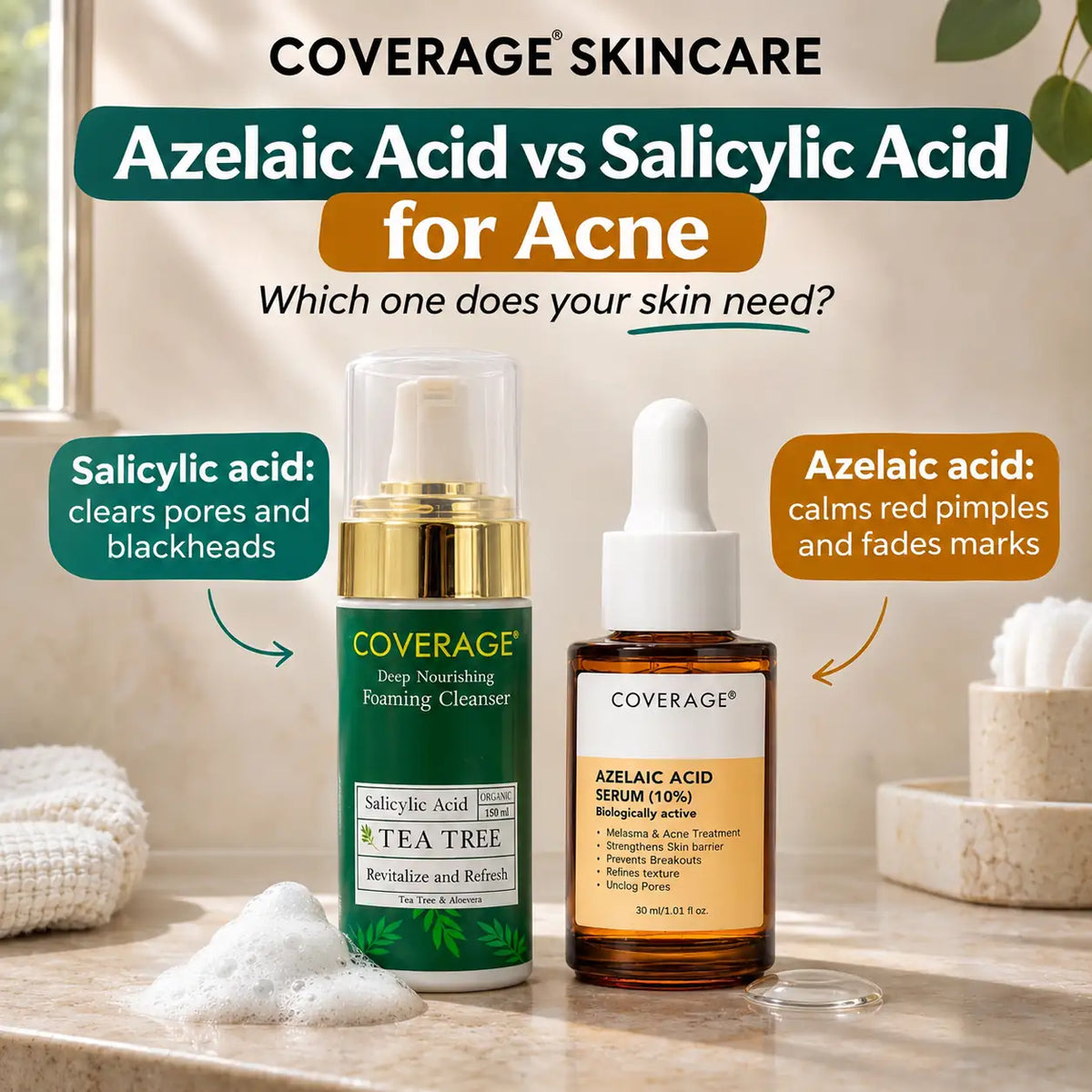
Azelaic acid or salicylic acid: which is better for acne? Neither wins for everyone. If your acne is mostly blackheads, whiteheads and an oily T-zone, salicylic acid is usually the better first choice, because it dissolves into oil and clears clogged pores. If your acne is mostly red, sore pimples on sensitive skin, especially if breakouts leave brown marks behind, azelaic acid is usually the better first choice, because it calms inflammation and also works on pigment. Many people with oily, mark-prone skin do best with both: a salicylic acid cleanser and an azelaic acid serum. No clinical trial has compared the two head to head, so this advice comes from each ingredient's own trials and from how each one works.
If you have ever wondered whether you need an azelaic acid serum or a salicylic acid face wash, you are asking the right question. Both treat acne. They just treat different parts of it.
This guide compares them properly: how each one works, what the clinical research actually shows, which suits oily, dry and sensitive skin, which helps blackheads and which helps inflamed pimples, and why the answer matters even more on brown skin, where breakouts so often leave daag dhabbe behind. We wrote it for readers in Pakistan, and every medical claim links to its source.
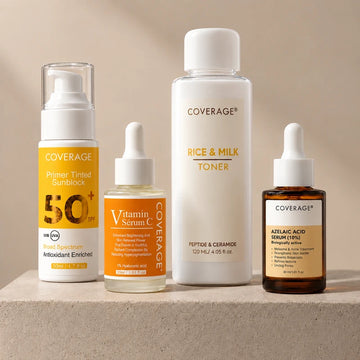
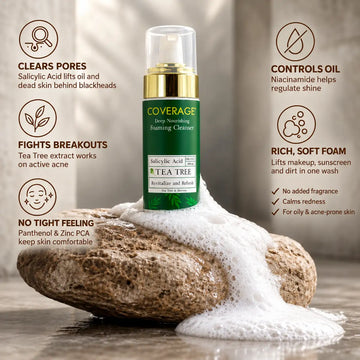
At COVERAGE®, we make both: a salicylic acid Deep Nourishing Foaming Cleanser and an Azelaic Acid Serum 10%. So we have no reason to tell you one ingredient beats the other. We would rather you use the right one for your skin.
Oily skin that breaks out and leaves marks? Our salicylic acid and tea tree Foaming Cleanser works inside the pore, and our Azelaic Acid Serum 10% works on red pimples and the dark marks they leave. Both are made in Lahore and delivered across Pakistan with cash on delivery.

Quick verdict: which one should you choose?
- Mostly blackheads, whiteheads and an oily T-zone: start with salicylic acid.
- Red, inflamed pimples, or skin that stings easily: start with azelaic acid.
- Breakouts that leave stubborn brown marks (daag dhabbe): azelaic acid, plus sunscreen every morning.
- Oily skin that also marks: a salicylic acid cleanser plus an azelaic acid serum.
- Painful lumps, scarring, or no change after about three months: see a dermatologist, because you need a stronger treatment.

What is azelaic acid?
Azelaic acid is a naturally occurring dicarboxylic acid, found in grains such as wheat, rye and barley and also made by yeast that live on the skin. It is not a strong exfoliant. Prescription medicines contain 15% (gel) or 20% (cream), and most of the clinical research uses those strengths. Cosmetic serums, including ours, usually contain 10% (King et al., 2023).
How azelaic acid works on acne
- Antibacterial: it reduces Cutibacterium acnes, the bacteria involved in inflamed spots.
- Anti-inflammatory: it calms the redness and swelling of red bumps (papules) and pus spots (pustules).
- Mildly comedolytic: it helps normalise how skin cells shed inside the pore, so fewer plugs form.
- Pigment-regulating: it slows tyrosinase, the enzyme overactive pigment cells use to make melanin. That is why it fades post-acne marks without bleaching your natural skin tone.
The American Academy of Dermatology's 2024 acne guideline notes that azelaic acid may be particularly helpful for people with sensitive skin or darker skin types, because of its effect on uneven pigmentation (Reynolds et al., 2024).
What is salicylic acid?
Salicylic acid is a beta hydroxy acid (BHA), chemically related to aspirin. Over-the-counter acne products contain 0.5% to 2%. Much higher strengths, around 20% to 30%, are used only in professional chemical peels (Arif, 2015).
How salicylic acid works on acne
Salicylic acid is lipophilic, which means it dissolves in oil. That lets it move into the oily plug inside a pore and loosen the bonds that hold dead skin cells together, an action described as desmolytic (Arif, 2015). It also has a mild anti-inflammatory effect. Its real strength is the clogged pore: in a placebo-controlled trial of a 2% salicylic acid lotion, total lesions improved by week 4 and non-inflamed lesions (blackheads and whiteheads) by week 8, but inflamed lesions only improved by week 12 (Eady et al., 1996).

Keratolytic, comedolytic, anti-inflammatory: what the words mean
- Keratolytic: loosens and sheds the outer layer of dead skin.
- Comedolytic: clears existing blackheads and whiteheads and helps stop new ones forming.
- Anti-inflammatory: reduces the redness, swelling and soreness of pimples.
Salicylic acid is mainly keratolytic and comedolytic. Azelaic acid is mainly anti-inflammatory and antibacterial, with milder comedolytic and pigment-regulating effects. That one difference explains most of this article.
Azelaic acid vs salicylic acid: the key differences
| Comparison | Azelaic acid | Salicylic acid |
|---|---|---|
| Main acne action | Calms inflammation, reduces acne bacteria, mildly unclogs pores | Dissolves into oil and unclogs pores; mildly anti-inflammatory |
| Blackheads | Helps (20% cream reduced comedones in trials) | Better fit |
| Whiteheads | Helps modestly | Better fit |
| Inflamed pimples | Better fit: 15% gel matched benzoyl peroxide 5% and clindamycin 1% in trials | Slower; benefit showed only at week 12 in one trial |
| Oily skin | Suitable | Better fit for oil-driven congestion |
| Dry, acne-prone skin | Usually easier, with moisturiser | Use a rinse-off format or fewer days a week |
| Sensitive skin | Usually better tolerated, may tingle at first | Can irritate if overused; a cleanser is gentler |
| Post-acne dark marks | Stronger evidence (15% and 20% trials) | Not enough evidence at home-use strengths |
| Exfoliation | Mild | Moderate, focused inside the pore |
| Skin barrier | Generally gentler at cosmetic strength | Overuse can cause dryness and barrier damage |
| Irritation risk | Low to moderate; itching or burning early on | Low to moderate; depends on strength and format |
| Typical home strengths | 10% cosmetic (15% to 20% prescription) | 0.5% to 2% (20% to 30% peels only) |
| Expected timeline | Inflamed acne about 12 weeks; marks 3 to 6 months | Clogged pores: early change in 2 to 4 weeks, judge at 8 |
| Good for beginners? | Yes, starting every other night | Yes, especially as a face wash |
| Head-to-head trial | None found | None found |
“Better fit” means the ingredient's mechanism and trial evidence match that problem more closely. It does not mean a trial has proved one beats the other.

What the research shows, and what it doesn't
How strong is the evidence?
The AAD's 2024 acne guideline grades each treatment by the strength of its evidence (Reynolds et al., 2024):
- Strong recommendation: benzoyl peroxide and topical retinoids such as adapalene and tretinoin, among others.
- Conditional recommendation, moderate-certainty evidence: azelaic acid.
- Conditional recommendation, low-certainty evidence: salicylic acid.
So both acids are legitimate acne treatments, and azelaic acid has the stronger evidence of the two, but neither is the most powerful option available. A 2020 Cochrane review of 49 trials and 3,880 participants found azelaic acid probably slightly less effective than benzoyl peroxide and similar to tretinoin, and rated much of the salicylic acid evidence as low quality (Liu et al., 2020).
There is no head-to-head trial
Neither the Cochrane review nor our own search found a trial comparing azelaic acid directly with salicylic acid. Any article that names a clear winner is going beyond the evidence. What we can do honestly is match each ingredient's own trials to the type of acne you have.
The trials that matter
- Azelaic acid 15% gel vs benzoyl peroxide and clindamycin: two randomised trials over four months found the gel reduced inflamed lesions by a median of about 70%, comparable to benzoyl peroxide 5% and clindamycin 1%, with less irritation than benzoyl peroxide (Gollnick et al., 2004).
- Azelaic acid 20% cream on blackheads and whiteheads: pooled data from four randomised trials showed comedones fell by about 70%, compared with 14% on the inactive cream (King et al., 2023).
- Salicylic acid 2% lotion: beat placebo on total lesions from week 4 and on blackheads and whiteheads from week 8, with inflamed lesions improving only by week 12 (Eady et al., 1996).
- Salicylic acid 2% cleanser: a small four-week study of 30 people found it reduced comedones (Shalita, 1989).

Prescription strength vs the 10% serum on your shelf
This is where most articles blur the line, so here it is clearly. The evidence comes in four levels:
- The ingredient: how azelaic acid works is well documented.
- Prescription 15% and 20%: most clinical trials, including the ones above, used these strengths.
- 10% formulas: limited data. One eight-week trial found an experimental 10% nanocrystal gel performed similarly to 20% cream on inflamed lesions, but it had no placebo group (Tomić et al., 2021).
- Any specific serum, including ours: no clinical trial has tested our serum on its own.
A 10% serum is easier for many people to use consistently for months, which matters for acne and marks. But it should not be expected to match prescription 20% results, and moderate acne is best treated under a dermatologist. Our 10% vs 20% guide compares the two strengths in detail.

Which is better for each type of acne?

Blackheads and whiteheads: salicylic acid
Blackheads and whiteheads (comedones) are pores plugged with oil and dead skin. Because salicylic acid dissolves into that oil, it is the better match. Azelaic acid also reduces comedones, but more slowly and less directly. If blackheads are still there after two to three months, a topical retinoid such as adapalene is the stronger next step (Reynolds et al., 2024).
Red, inflamed pimples: azelaic acid
Papules and pustules are inflamed. Azelaic acid's anti-inflammatory and antibacterial action fits them better, and in trials 15% gel performed comparably to benzoyl peroxide and clindamycin (Gollnick et al., 2004). For moderate inflammatory acne, benzoyl peroxide still has the strongest evidence, and a dermatologist may combine treatments.
Hormonal acne: neither on its own
Breakouts along the jawline and chin that flare with periods, or acne linked to PCOS, are driven by hormones. No topical acid changes hormone levels. Azelaic acid can calm the spots and fade the marks, and a salicylic acid cleanser can help with congestion, but the AAD guideline lists hormonal treatments such as combined oral contraceptives and spironolactone, which only a doctor can prescribe (Reynolds et al., 2024). Irregular periods, excess facial hair or sudden adult acne need a medical check.
Deep, painful lumps or cysts: see a dermatologist
Nodules and cysts sit deep in the skin and are the type most likely to scar. Neither acid is strong enough on its own, so get them treated early.
Which is better for your skin type?
Skin tone, oiliness, sensitivity and acne are separate traits. Brown skin is not automatically oily or sensitive, so choose by the traits your skin actually has.
Oily skin
Salicylic acid suits oily, congested skin, especially in Pakistani summers when heat and humidity push oil production up. Azelaic acid also suits oily skin. Despite claims you may see online, there is no good evidence that it increases oil.
Dry, acne-prone skin
Azelaic acid is usually easier, paired with a moisturiser. If you want salicylic acid, choose a rinse-off cleanser or use a leave-on product only two to three times a week.
Sensitive skin
Azelaic acid is generally better tolerated, but it is not sting-free: in prescription 15% gel trials, 29% of people reported burning, stinging or tingling, mostly in the first weeks (US prescribing information, DailyMed). Patch test first. If your skin barrier is already damaged, with stinging, tightness or flaking, pause all acids for one to two weeks and repair first. Our skin barrier repair guide explains how.
Which is better for acne marks and dark spots?
Azelaic acid has the stronger evidence here, and this is the clearest difference between the two ingredients.
- In a 24-week trial of 52 people with Fitzpatrick skin types IV to VI, 20% azelaic acid cream reduced pigmentation significantly more than an inactive cream (Lowe et al., 1998).
- In a 2024 double-blind, placebo-controlled trial of 72 people with acne, 15% gel used twice daily improved red post-acne marks, and melanin in brown marks fell significantly by week 12 (Shucheng et al., 2024).
Salicylic acid mainly helps marks indirectly, by preventing the new breakouts that cause them. Its pigment evidence comes from professional peels, not face washes.
Sunscreen matters most. UV and visible light deepen post-acne pigmentation, and no serum can outrun daily sun exposure. See our guides to the best serum for dark spots in Pakistan and whether azelaic acid lightens skin.
Marks are not scars

- Brown marks (post-inflammatory hyperpigmentation, PIH): flat, brown or dark. Azelaic acid, sunscreen and time help.
- Red or purple marks (post-inflammatory erythema, PIE): flat, red or purple. Time, sunscreen and azelaic acid help; some need laser treatment.
- Indented scars (atrophic): dips in the skin. No cream fills them; they need clinic procedures.
- Raised scars (hypertrophic or keloid): firm bumps that need dermatologist treatment.
Quick test: if the area is flat, it is a mark and it can fade. If it dips or bumps, it is a scar. Neither acid removes scars.
Brown and Pakistani skin: what changes
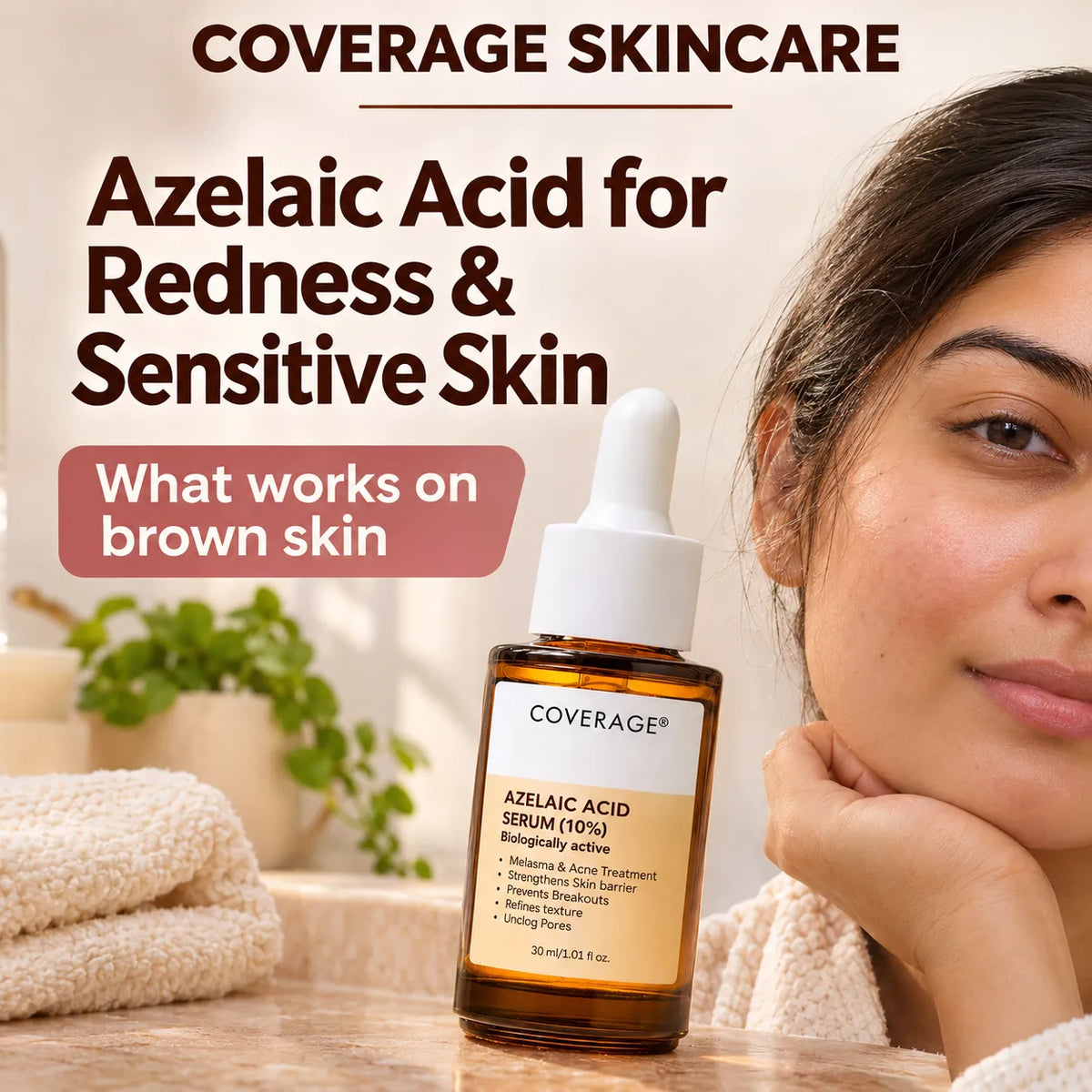
Acne often leaves longer-lasting marks on brown skin. In a US study of acne in skin of colour, acne-related hyperpigmentation affected 65.3% of Black, 52.7% of Hispanic and 47.4% of Asian patients (Taylor et al., 2002). The Asian group was small, so treat that figure as a signal, not a precise rate for Pakistan.
But “Pakistani skin” is not one skin type. Another study found acne marks in 18% of Asian and 10% of Continental Indian women (review, 2022). Research suggests the risk tracks how much pigment an individual's skin has, more than any ethnic label (review, 2022).
Fitzpatrick type is not ethnicity. It describes how skin burns and tans, and people in the same family can differ.

What this means in practice:
- Treat inflammation early and gently, because every inflamed spot is a potential mark.
- Do not over-exfoliate. Irritation itself can cause dark patches on brown skin.
- Wear broad-spectrum SPF 50 every morning. Tinted formulas with iron oxides also help block visible light. See is SPF 50 enough in Pakistan.
- Choose lightweight textures for humid weather.
- Do not pick or squeeze spots.
- Prescription azelaic acid labels note rare reports of lighter patches in darker complexions. If you notice skin lighter than your normal tone, stop and see a dermatologist (US prescribing information, 20% cream).
Where COVERAGE® fits: one product for each job
We make both sides of this comparison, so here is exactly what each product is and where it belongs. Both are cosmetics, not medicines.
For oily, blackhead-prone skin: our salicylic acid cleanser

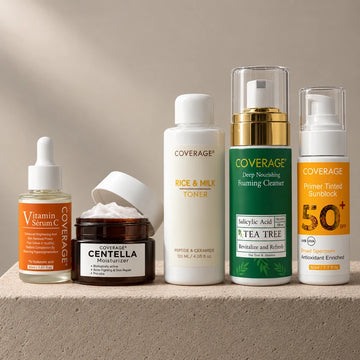
Our Deep Nourishing Foaming Cleanser is our tea tree face wash. Salicylic acid sits second in the ingredient list, alongside tea tree leaf extract, licorice extract, niacinamide, panthenol and zinc PCA, with no added fragrance. The panthenol, zinc PCA and niacinamide are there so it cleans the pore without leaving skin tight.
A cleanser stays on your skin for about 30 seconds before you rinse, so it delivers less salicylic acid than a leave-on product. That is the trade-off: a rinse-off format is gentler for daily use, which suits beginners and oily skin in the heat. A small trial found a 2% salicylic acid cleanser reduced blackheads and whiteheads (Shalita, 1989). That trial tested a different formula, so we do not claim the same results for ours.
Full ingredient list: Purified Water, Salicylic Acid, Propylene Glycol, Coco-Glucoside, Glyceryl Oleate, Licorice Extract, Melaleuca Alternifolia (Tea Tree) Leaf Extract, Phenoxyethanol, D-Panthenol, Zinc PCA, Niacinamide, Sodium Laureth Sulphate, Triethanolamine, Disodium EDTA, Cocamidopropyl Betaine.
How to use: massage onto wet skin for about 30 seconds, spending longer on the nose, chin and forehead, then rinse. Use once or twice daily. New to salicylic acid? Start once a day.
For red breakouts and dark marks: our Azelaic Acid Serum 10%

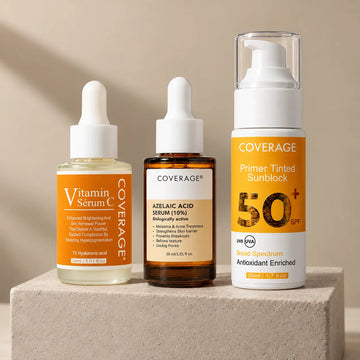
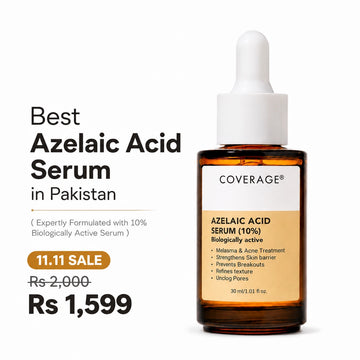
Our Azelaic Acid Serum 10% is a lightweight 30 ml serum. Aloe vera leads the ingredient list ahead of water, with sodium hyaluronate for hydration and vitamin E, and there is no fragrance, alcohol or propylene glycol in the formula. We formulate at 10% because it is the strength most people can stay consistent with for the months that marks take to fade.
The strongest acne and pigment data come from prescription 15% and 20% products, and our serum has not been tested in its own clinical trial. Many of our customers notice their first changes within 1 to 3 weeks, though every skin is different; in clinical studies, acne and marks were measured over 12 weeks or more. Moderate or severe acne needs a dermatologist.
Full ingredient list: Aloe Barbadensis Leaf Extract, Aqua (Water), Azelaic Acid, Propanediol, Bis-Ethoxydiglycol, Xylitylglucoside, Isohexadecane, Polysorbate 60, Sodium Hyaluronate, Tocopheryl Acetate, Phenoxyethanol, Triethylene Glycol.
How to use: patch test first. Apply 3 to 4 drops to clean, dry skin, avoiding the eye area, then follow with moisturiser. Start every other night and build up to once or twice daily. Finish with sunscreen every morning.
Moisturiser and sunscreen: the support steps
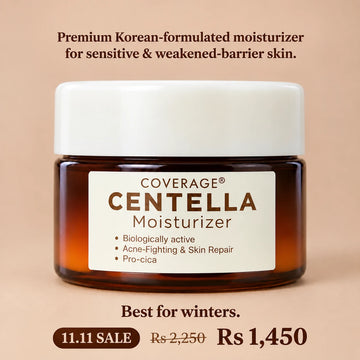
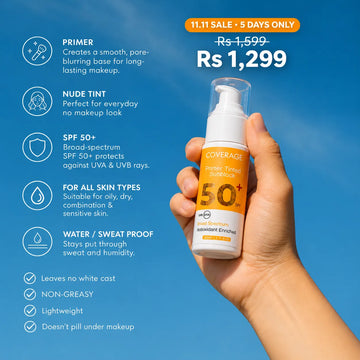
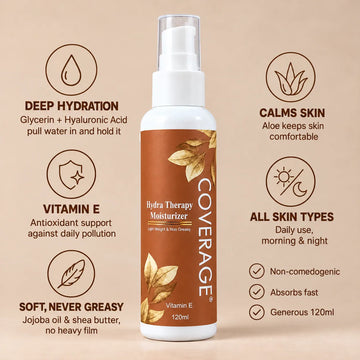
Acids work better when your skin barrier is comfortable. Our Centella Moisturizer combines centella asiatica, fermented ProBio-Cica, ceramide, niacinamide and panthenol in a light cream that sits comfortably in humidity and will not clog pores. Our Primer Tinted Sunblock SPF 50+ is 100% mineral (zinc oxide and titanium dioxide) with an iron oxide tint, so it protects acne-prone skin from UV and visible light without a white cast. More in our centella moisturizer guide and our guide to tinted sunscreen for oily, acne-prone skin.
Prefer them paired? The Daily Protection Pair puts the salicylic acid cleanser together with the Primer Tinted Sunblock, and Acne Care & Sun Protection pairs the Azelaic Acid Serum with the sunblock.
Made by us, in Lahore. Both products are made in our own manufacturing facility, which has been producing skincare for decades, and formulated by our in-house chemical engineers. The facility holds GMP and ISO 9001 certification, our products are Halal certified, and we never test on animals. We use the same high grade of raw materials Korean brands use, and we verify what goes into every product rather than relying on a label. We have now delivered over 72,000 orders across Pakistan.

You do not need any particular brand to follow this guide. Match the ingredient to your acne, introduce it slowly and stay consistent.
Can you use azelaic acid and salicylic acid together?
Yes, if you introduce them one at a time. The risk is cumulative irritation, and no trial has shown the combination works better than either acid alone. The gentlest way to use both is a salicylic acid cleanser with an azelaic acid serum, or each one in a different routine: the salicylic acid cleanser in the morning and azelaic acid at night. Avoid stacking a leave-on salicylic acid product and azelaic acid on the same night until you know your skin tolerates both. For layering order, and combining with retinoids or benzoyl peroxide, see what you can mix with azelaic acid.

How to build your routine
Add one active at a time, two to four weeks apart, so you can tell what your skin is reacting to.
Oily and congested (mostly blackheads and whiteheads)
- Morning: salicylic acid cleanser, moisturiser, SPF 50+
- Night: salicylic acid cleanser, moisturiser
Inflamed, sensitive or mark-prone
- Morning: gentle cleanser, moisturiser, SPF 50+
- Night: gentle cleanser, azelaic acid (every other night for the first two weeks), moisturiser
Oily with marks
- Morning: salicylic acid cleanser, moisturiser, SPF 50+
- Night: cleanse, azelaic acid, moisturiser

Patch test, apply actives to dry skin, and keep them away from the eyes and lips. For morning vs night details, see how to use azelaic acid serum.
Concentrations and realistic timelines
- Salicylic acid strength: 0.5% to 2% for home use. The 2% lotion and 2% cleanser have trial support. Higher is not better at home.
- Azelaic acid strength: prescription 15% to 20% has the deepest evidence, cosmetic 10% has limited evidence, and very low strengths and derivatives have even less.
- Salicylic acid for congestion: early change in 2 to 4 weeks; judge it at about 8 weeks.
- Azelaic acid for inflamed acne: trials ran 3 to 4 months.
- Azelaic acid for marks: 3 to 6 months with daily sunscreen.
- No change after about 12 weeks: time to change approach or see a dermatologist.
More detail in our guide to how long azelaic acid takes to work.
Side effects and precautions
- Both acids: tingling, mild redness and dryness are common in the first weeks. Use less often and moisturise.
- Azelaic acid: itching and burning are the most common early effects at prescription strengths. The 20% cream's US label also mentions isolated reports of lighter skin (hypopigmentation), advises monitoring people with dark complexions, and lists worsening asthma among rare reports (US prescribing information). See our azelaic acid side effects guide.
- Salicylic acid: over-exfoliation is the main risk, and true allergy is rare. If you are allergic to aspirin or other salicylates, ask a doctor or pharmacist before using it. Salicylate toxicity is linked to long use over large areas or under occlusion, not to washing your face. Do not use it on children under 2 (DermNet).
- Pregnancy and breastfeeding: ACOG lists over-the-counter azelaic acid and topical salicylic acid as options during pregnancy (ACOG; AAD). Use salicylic acid on limited areas, and avoid salicylic acid peels and retinoids. Only about 4% to 8% of topical azelaic acid is absorbed (review, 2023). Confirm with your doctor first, and see our pregnancy and breastfeeding guide.
- Purging or irritation? Controlled evidence is limited. Small spots in your usual areas that settle within four to six weeks may be purging. Burning, rash or spots in new areas are more likely irritation.
- Stop and get advice if you get swelling, hives, blistering, burning that does not settle, or lighter patches.

Common mistakes
- Starting both acids and a scrub in the same week.
- Judging results after one or two weeks.
- Skipping sunscreen while treating marks.
- Choosing by trend rather than by your type of acne.
- Assuming a 10% serum works like a 20% prescription cream.
- Calling every mark a scar, or every scar a mark.
- Skipping moisturiser because your skin is oily.
- Picking and squeezing spots.
- Staying on over-the-counter products when acne is moderate, painful or scarring.
Decision guide
- Choose azelaic acid if you have red, inflamed pimples, sensitive or dry skin, or brown and red marks after breakouts. It matched benzoyl peroxide and clindamycin in trials, the AAD singles it out for sensitive and darker skin, and it is the only one of the two with controlled pigment data.
- Consider salicylic acid if you have mostly blackheads and whiteheads or oily, congested skin, or you want a simple start with a face wash. It is oil-soluble and works inside the pore.
- Consider another treatment if acne is moderate or widespread, or unchanged after about 12 weeks. Benzoyl peroxide and topical retinoids have the strongest recommendations, retinoids are the stronger choice for stubborn blackheads, and hormonal acne may need hormonal treatment from a doctor.
- See a dermatologist if you have nodules, cysts or scarring, unusual lightening or irritation that does not settle, signs of a hormonal cause, or acne that is affecting your mood. Severe acne can need isotretinoin, which only a doctor can prescribe.
When to see a dermatologist
- Deep, painful lumps or cysts
- Any scarring, or marks that dip or bump
- No improvement after about three months of consistent use
- Widespread or unclear pigmentation, where you are not sure whether it is acne marks or melasma
- Irregular periods, excess facial hair or sudden adult acne
- Pregnancy, if you want to start any active
- Swelling, hives or any allergic reaction
For a full acne plan, read our keel muhase ka ilaj guide and our guide to the best products for acne in Pakistan.
The bottom line
Salicylic acid is the pore specialist: choose it for blackheads, whiteheads and oily, congested skin. Azelaic acid is the calm-and-fade specialist: choose it for red pimples, sensitive skin and the dark marks that breakouts leave on brown skin. Many people with oily, mark-prone skin do best with a salicylic acid cleanser and an azelaic acid serum. Whichever you choose, wear sunscreen every morning, give it 8 to 12 weeks, and see a dermatologist when acne is severe, scarring or hormonal.
Frequently asked questions
Is azelaic acid better than salicylic acid for acne?
Not overall. Azelaic acid suits red, inflamed pimples, sensitive skin and post-acne marks. Salicylic acid suits blackheads, whiteheads and oily skin. No trial has compared the two directly, so the right choice depends on your type of acne.
Can I use azelaic acid and salicylic acid together?
Yes, if you introduce them one at a time. The gentlest pairing is a salicylic acid cleanser with an azelaic acid serum, or using each in a different routine. Avoid layering a leave-on salicylic acid product with azelaic acid until your skin tolerates both.
Which is better for oily, acne-prone skin?
Salicylic acid, because it dissolves into oil and clears clogged pores. Add azelaic acid if you also get red spots or dark marks.
Which is better for sensitive skin?
Usually azelaic acid, though it can tingle or sting in the first weeks. Patch test first, start every other night and use a moisturiser.
Does azelaic acid unclog pores?
Modestly. It helps normalise how skin cells shed inside the pore, and 20% cream reduced blackheads and whiteheads in trials. Salicylic acid and topical retinoids target blackheads more directly.
Does salicylic acid help acne marks?
Mostly indirectly, by preventing new breakouts. For existing brown marks, azelaic acid and daily sunscreen have stronger evidence.
Which is better for hormonal acne?
Neither on its own. Hormonal acne often needs medical treatment such as hormonal therapy prescribed by a doctor. Azelaic acid can help calm the spots and fade the marks alongside it.
Can beginners use azelaic acid?
Yes. Start every other night on clean, dry skin, follow with moisturiser, and build up to once or twice daily as your skin adjusts.
Do azelaic acid or salicylic acid cause purging?
Some people notice small, temporary breakouts in their usual areas during the first four to six weeks. Burning, rash or spots in new areas are more likely irritation, so use the product less often or stop.
How long does azelaic acid take to work on acne?
Many of our customers notice first changes within 1 to 3 weeks, though every skin is different. In clinical studies, inflamed acne was measured over about 12 weeks, and dark marks over 3 to 6 months.
How long does salicylic acid take to work?
Clogged pores can start to improve in 2 to 4 weeks. Judge it after about 8 weeks of consistent use.
Can I use them every day?
A salicylic acid cleanser can usually be used once or twice daily. Start leave-on salicylic acid a few times a week. Build azelaic acid up to once or twice daily.
Should I use azelaic acid in the morning or at night?
Either works. If you use a salicylic acid cleanser in the morning, azelaic acid at night keeps the two apart. Always finish your morning routine with sunscreen.
Are azelaic acid and salicylic acid safe in pregnancy?
ACOG lists over-the-counter azelaic acid and topical salicylic acid as options during pregnancy. Use salicylic acid on limited areas, avoid salicylic acid peels and retinoids, and check with your doctor first.
Can azelaic acid remove acne scars?
No. It can fade flat brown and red marks, but indented or raised scars need clinic treatment from a dermatologist.
Do I need sunscreen with these acids?
Yes. Daily broad-spectrum SPF 50 protects your progress, especially on brown skin, where sun exposure darkens post-acne marks.
Related reading
- Azelaic Acid Serum in Pakistan: Acne, Melasma & Daag Dhabbe
- What Can You Mix With Azelaic Acid?
- Niacinamide vs Azelaic Acid
- How Long Does Azelaic Acid Take to Work on Acne Marks?
- Keel Muhase Ka Ilaj: The Complete Acne Treatment Guide
- Best Products for Acne in Pakistan
- Tinted Sunscreen for Oily & Acne-Prone Skin
References
- Reynolds RV, et al. Guidelines of care for the management of acne vulgaris. J Am Acad Dermatol, 2024. DOI
- Liu H, et al. Topical azelaic acid, salicylic acid, nicotinamide, sulphur, zinc and fruit acid (alpha-hydroxy acid) for acne. Cochrane Database Syst Rev, 2020. PMC
- Gollnick HP, Graupe K, Zaumseil RP. Azelaic acid 15% gel in the treatment of acne vulgaris: combined results of two double-blind clinical comparative studies. J Dtsch Dermatol Ges, 2004. PubMed
- King S, et al. A systematic review to evaluate the efficacy of azelaic acid in the management of acne, rosacea, melasma and skin aging. J Cosmet Dermatol, 2023. PubMed
- Lowe NJ, et al. Azelaic acid 20% cream in the treatment of facial hyperpigmentation in darker-skinned patients. Clin Ther, 1998. PubMed
- Shucheng H, et al. Effects of 15% azelaic acid gel in the management of post-inflammatory erythema and post-inflammatory hyperpigmentation in acne vulgaris. Dermatol Ther (Heidelb), 2024. PubMed
- Tomić I, et al. Azelaic acid 10% nanocrystal hydrogel compared with 20% cream in acne. Pharmaceutics, 2021. PMC
- Eady EA, et al. The benefit of 2% salicylic acid lotion in acne: a placebo-controlled study. J Dermatol Treat, 1996. Semantic Scholar
- Shalita AR. Comparison of a salicylic acid cleanser and a benzoyl peroxide wash in the treatment of acne vulgaris. Clin Ther, 1989. PubMed
- Arif T. Salicylic acid as a peeling agent: a comprehensive review. Clin Cosmet Investig Dermatol, 2015. DOI
- Taylor SC, et al. Acne vulgaris in skin of color. J Am Acad Dermatol, 2002. DOI
- Effects of topical retinoids on acne and post-inflammatory hyperpigmentation in patients with skin of color, 2022. PMC
- Review of post-inflammatory hyperpigmentation in dark skin and its molecular mechanism, 2022. PMC
- US prescribing information: azelaic acid gel 15%. DailyMed
- US prescribing information: azelaic acid cream 20%. DailyMed
- DermNet. Salicylic acid. DermNet
- American College of Obstetricians and Gynecologists. Skin conditions during pregnancy. ACOG
- American Academy of Dermatology. Is any acne treatment safe to use during pregnancy? AAD
- Treatment of acne during pregnancy and lactation, 2023. PMC
Medical note: This article is for education and is not a diagnosis or treatment plan. See a dermatologist for deep, painful or scarring acne, acne that has not improved after about three months, signs of a hormonal cause, or before starting any active during pregnancy or breastfeeding. Stop any product that causes swelling, hives, persistent burning or new patches of colour change.
This article is for general informational purposes only and is not a substitute for professional medical advice. All information and claims referenced above are drawn from publicly available dermatological studies and expert sources. Always consult a dermatologist for advice specific to your skin.

Leave a comment
This site is protected by hCaptcha and the hCaptcha Privacy Policy and Terms of Service apply.