
Best Serum for Dark Spots and Pigmentation in Pakistan (2026): Expert Guide to Daag Dhabbe, Acne Marks & Melasma
Dark spots, daag dhabbe, chhaiyan and uneven rangat are some of the most common skin worries in Pakistan, and the serum shelf does not make them easier to solve. Almost every bottle promises to remove pigmentation, many claim results in seven days, and some of the cheapest creams in local markets contain mercury. This guide cuts through all of it. It explains which type of pigmentation you actually have, which ingredients have real evidence behind them, how to build a routine that survives Pakistani sun and heat, and exactly which serum to choose for each concern, including where our own COVERAGE serums fit and where they do not.
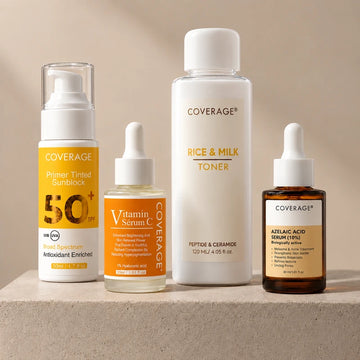
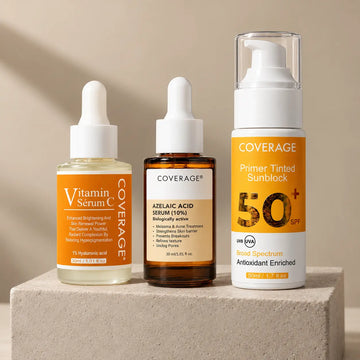
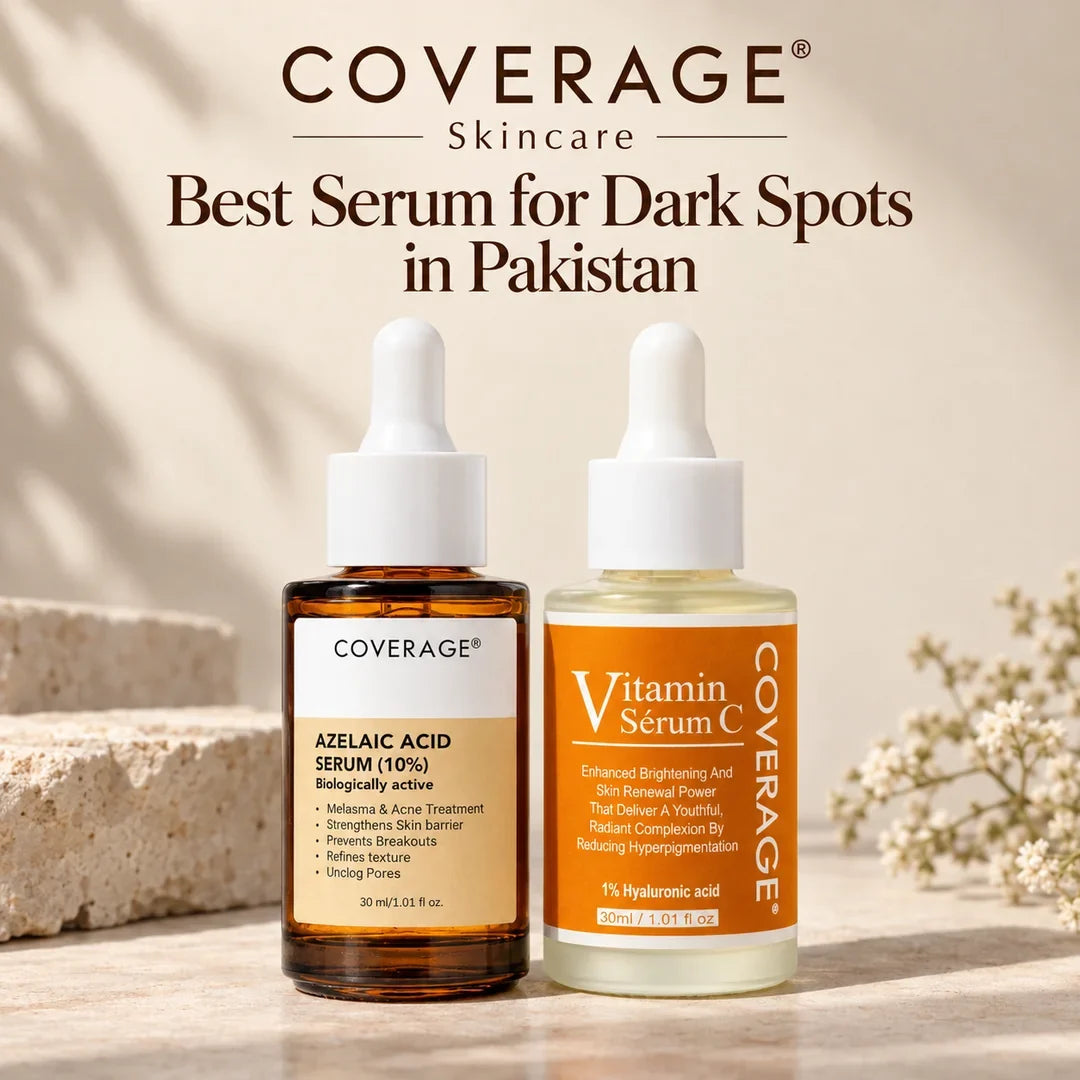
What is the best serum for dark spots and pigmentation in Pakistan? The best serum is the one whose active ingredient matches your type of pigmentation, is gentle enough to use every day for months, is genuine, and is worn under daily sunscreen. For most Pakistani skin dealing with post-acne marks, daag dhabbe or early melasma, an azelaic acid serum at night is the strongest all-rounder, a stable vitamin C serum in the morning handles dullness and early spots, and a tinted iron oxide SPF 50+ protects the progress. Our picks for those three jobs are the COVERAGE Azelaic Acid 10% Serum, the COVERAGE Vitamin C + 1% HA Serum and the Primer Tinted Sunblock SPF 50+.
COVERAGE Azelaic Acid Serum 10%
For brown acne marks, daag dhabbe, active pimples and early melasma. Lightweight, fragrance free, made for Pakistani heat. Rs.1,600, 30ml. Cash on delivery across Pakistan.
Order Azelaic Acid 10% SerumWant the full routine? Get the serum with Vitamin C and mineral SPF 50+ in the Melasma, Dark Spots & Acne Marks Treatment set.
Our picks at a glance
| Your concern | Best active | COVERAGE pick | When to use |
|---|---|---|---|
| Brown acne marks (daag dhabbe) | Azelaic acid | Azelaic Acid 10% Serum | Night |
| Acne and dark marks together | Azelaic acid | Azelaic Acid 10% Serum | Night |
| Dullness and uneven tone | Stable vitamin C with niacinamide | Vitamin C + 1% HA Serum | Morning |
| Melasma (chhaiyan) | Azelaic acid plus tinted SPF | Azelaic Acid 10% with Primer Tinted Sunblock | Serum at night, SPF every morning |
| Sun spots and tanning | Vitamin C plus daily SPF | Vitamin C + 1% HA with Primer Tinted Sunblock | Morning |
| Every type of pigmentation | Broad-spectrum tinted SPF 50+ | Primer Tinted Sunblock SPF 50+ | Every morning, reapply outdoors |
- Why most dark spot treatments fail
- What makes a pigmentation serum effective
- Which type of pigmentation do you have?
- The best ingredients for dark spots
- Best serum for dark spots: COVERAGE Azelaic Acid 10%
- Best vitamin C serum for Pakistani heat
- Sunscreen: the step that decides everything
- Which serum is best for you?
- The COVERAGE pigmentation routine
- How to start and layer actives safely
- How long pigmentation takes to fade
- Pakistan-specific realities
- What not to do
- Imported vs Pakistani serums
- When to see a dermatologist
- FAQs

Why Most Dark Spot Treatments in Pakistan Do Not Work
When people tell us a pigmentation serum did nothing for them, the reason is almost always one of these three:
- They treated the wrong condition. A red mark after a pimple and a brown mark after a pimple are different problems. Melasma and a sun spot are different again. A brightening serum can fade one and do almost nothing for another.
- They skipped sunscreen. In Pakistani sun, unprotected skin re-darkens faster than any serum can fade it. Every afternoon outdoors without SPF quietly undoes weeks of treatment.
- They quit too early, or chased impossible promises. Pigment fades over months, not days. Products that promise permanent whitening in a week are either exaggerating or, in the worst cases, contain mercury or steroids.
Get those three right and ordinary, affordable serums start to look like miracles. Get them wrong and even the best formula in the world will disappoint you.
What Actually Makes a Pigmentation Serum Effective
Judge any serum, ours or anyone else's, on these nine points:
- An active with real evidence for pigmentation, such as azelaic acid, vitamin C, niacinamide, alpha arbutin or tranexamic acid.
- A meaningful concentration, with the active high up in the ingredient list rather than sprinkled in for the label.
- Stability in heat and light, which matters enormously in a Pakistani summer.
- Tolerability, because a serum that stings every night gets abandoned in week two.
- Suitability for your skin type, especially if you are oily, acne-prone or sensitive.
- A match to your pigmentation type, whether that is PIH, PIE, melasma or sun spots.
- A texture you will actually use daily in heat and humidity.
- Daily sunscreen alongside it, without exception.
- Authenticity and fair pricing, from a brand whose ingredient list you can read and verify.
Which Type of Pigmentation Do You Have? (Daag Ki Pehchan)
Hyperpigmentation simply means extra melanin in one area of skin. Melanin is made by pigment cells called melanocytes, and the enzyme tyrosinase controls the key step in making it. Most brightening ingredients work by slowing tyrosinase or by stopping pigment moving up to the skin surface. In Pakistan, dark spots are extremely common because of intense year-round sun, frequent acne and inflammation, hormonal changes, picking, and irritation from harsh products. But dark marks are not all the same thing, and the type decides the treatment.
| Type | What it looks like | What causes it | What helps most |
|---|---|---|---|
| PIH (daag dhabbe) | Flat brown or grey-brown marks after acne, eczema or injury | Excess melanin after inflammation | Azelaic acid, vitamin C, niacinamide, SPF |
| PIE (red marks) | Flat pink, red or purple marks that fade briefly when pressed | Damaged small blood vessels, not melanin | Gentle care, niacinamide, SPF and time |
| Melasma (chhaiyan) | Symmetrical brown-grey patches on cheeks, forehead and upper lip | Hormones, UV and visible light | Azelaic or tranexamic acid, tinted SPF, dermatologist |
| Sun spots | Flat brown spots on sun-exposed areas, usually after 30 | Years of UV exposure | Vitamin C, daily SPF, clinic treatments |
| Freckles | Small light-brown spots that darken in summer | Genetics plus sun | Daily SPF, vitamin C |
| Dullness | Overall loss of glow, uneven rangat, no distinct spots | Sun, dehydration, slow cell turnover | Vitamin C, hydration, SPF |
The press test: press a clear glass or your fingertip gently on a mark. If it briefly fades, it is probably PIE, a blood-vessel mark, and brightening serums will do little. If it stays brown, it is pigment, and the ingredients in this guide can help.
PIH is especially common and long-lasting on brown skin. A well-known study of acne in skin of colour found PIH in roughly half of Asian and Hispanic patients and nearly two thirds of Black patients, which is why fading marks has to be part of any acne plan for Pakistani skin. For a deeper look at chhaiyan specifically, read our chaiyan ka ilaj guide.

When a spot is not a cosmetic problem
A pigmented spot that is new, changing in size or shape, has irregular borders, contains several colours, bleeds, itches or keeps growing should be checked by a doctor, not treated with a serum. Cosmetic brightening ingredients are for known cosmetic pigmentation only.
The Best Ingredients for Dark Spots and Pigmentation
Not every active carries equal proof. Here is how the main pigment-fading ingredients compare, with an honest note on the strength of the evidence behind each.
| Active | Best for | Irritation risk | Evidence | COVERAGE option |
|---|---|---|---|---|
| Azelaic acid | Acne and marks together, PIH, early melasma | Low to moderate | Strong at 20%; 10% chosen for tolerance | Azelaic Acid 10% Serum |
| Stable vitamin C | Dullness, prevention, early spots | Low | Moderate to strong | Vitamin C + 1% HA Serum |
| Niacinamide | Supporting active, oily skin, PIH | Very low | Moderate | Inside the Vitamin C + 1% HA Serum and Centella Moisturizer |
| Alpha arbutin | Add-on brightener | Low | Moderate | Not in the range |
| Tranexamic acid | Melasma, stubborn PIH | Low (topical) | Strong for oral under a doctor, moderate topical | Not in the range |
| Kojic acid | Spot brightening | Moderate, unstable | Moderate | Not in the range |
| Retinoids | Texture and long-term PIH | High | Strong | Not in the range |
| Licorice extract | Soothing, mild brightening | Very low | Modest | In the Centella Moisturizer and Foaming Cleanser |
This is directional guidance, not a universal ranking. The right choice depends on your pigmentation type, your skin type and what you can tolerate every day.

Azelaic acid: the all-rounder for acne-prone brown skin
Azelaic acid is a standout because it works on pigmentation and acne at the same time. It is a competitive tyrosinase inhibitor that acts mainly on overactive, abnormal melanocytes while leaving normal skin colour largely alone, which makes it well suited to deeper skin tones where aggressive brighteners can cause uneven patches. It is also antibacterial and anti-inflammatory, so it calms the breakouts that create new marks in the first place.
The evidence is real. In a 24-week double-blind trial of 329 women with melasma, 20% azelaic acid cream produced good or excellent results in 65% of patients, comparable to 4% hydroquinone and without hydroquinone's risks. In the interest of honesty: that deep clinical evidence is for the 20% prescription strength. There is no dedicated trial proving a 10% azelaic acid serum clears melasma. A 10% serum is designed as a gentler strength you can tolerate every night for months, and with pigmentation, that consistency is usually what decides the result.
Vitamin C: the morning brightener
Vitamin C is an antioxidant that also interrupts melanin production, brightens dull skin and helps fade early spots. Pure L-ascorbic acid is potent but oxidises quickly in heat and light, which is why some vitamin C serums turn orange and stop working within weeks. Stable derivatives such as ethyl ascorbic acid hold up far better in a Pakistani summer. Vitamin C is strongest for prevention, dullness and early spots, and it works best in the morning under sunscreen.
Niacinamide: the calming supporter
Niacinamide (vitamin B3) reduces the transfer of melanin from pigment cells to the skin surface and calms inflammation. In a double-blind randomised trial of 27 melasma patients over 8 weeks, 4% niacinamide produced good to excellent improvement in 44% of patients compared with 55% for 4% hydroquinone, with fewer side effects (18% vs 29%). It is an excellent, well-tolerated supporting ingredient, though modest on its own for deep pigment.
Alpha arbutin
A gentler tyrosinase inhibitor related to hydroquinone but without its ochronosis risk. It is clinically useful and usually works best combined with other actives.
Tranexamic acid
Especially relevant for melasma and stubborn PIH, because it calms the signalling that overstimulates pigment cells. Research consistently finds oral tranexamic acid gives the biggest improvement in melasma, but oral use can cause side effects and carries clotting-related risks, so it must only ever be started and monitored by a doctor. Topical tranexamic acid is a reasonable over-the-counter option.
Kojic acid
An effective tyrosinase inhibitor that can irritate sensitive skin and tends to be unstable in formulas.
Retinoids and retinol
Retinoids speed up cell turnover and genuinely help PIH and sun damage over months, but they irritate, must be introduced slowly, should be avoided in pregnancy and demand daily SPF.
AHAs and BHA (glycolic, lactic, salicylic acid)
Exfoliating acids can help surface pigment, and salicylic acid helps acne, but over-exfoliation triggers inflammation, and on brown skin inflammation means more pigment. Restraint wins. A rinse-off salicylic cleanser is usually enough.
Hydroquinone: why we do not recommend it without a doctor
Hydroquinone is an effective prescription brightener, but long-term or high-strength use can cause exogenous ochronosis, a blue-black darkening that is especially hard to reverse on darker skin. It is also one of the ingredients most often hidden in unregulated whitening creams. Use it only if a dermatologist prescribes it and supervises the course.
The Best Serum for Dark Spots in Pakistan: COVERAGE Azelaic Acid 10%
We make COVERAGE, so we will be transparent: we are recommending our own products here, and only for the concerns their formulas genuinely support. For most Pakistani skin dealing with daag dhabbe, post-acne marks and the occasional breakout, this is the serum we would start with.

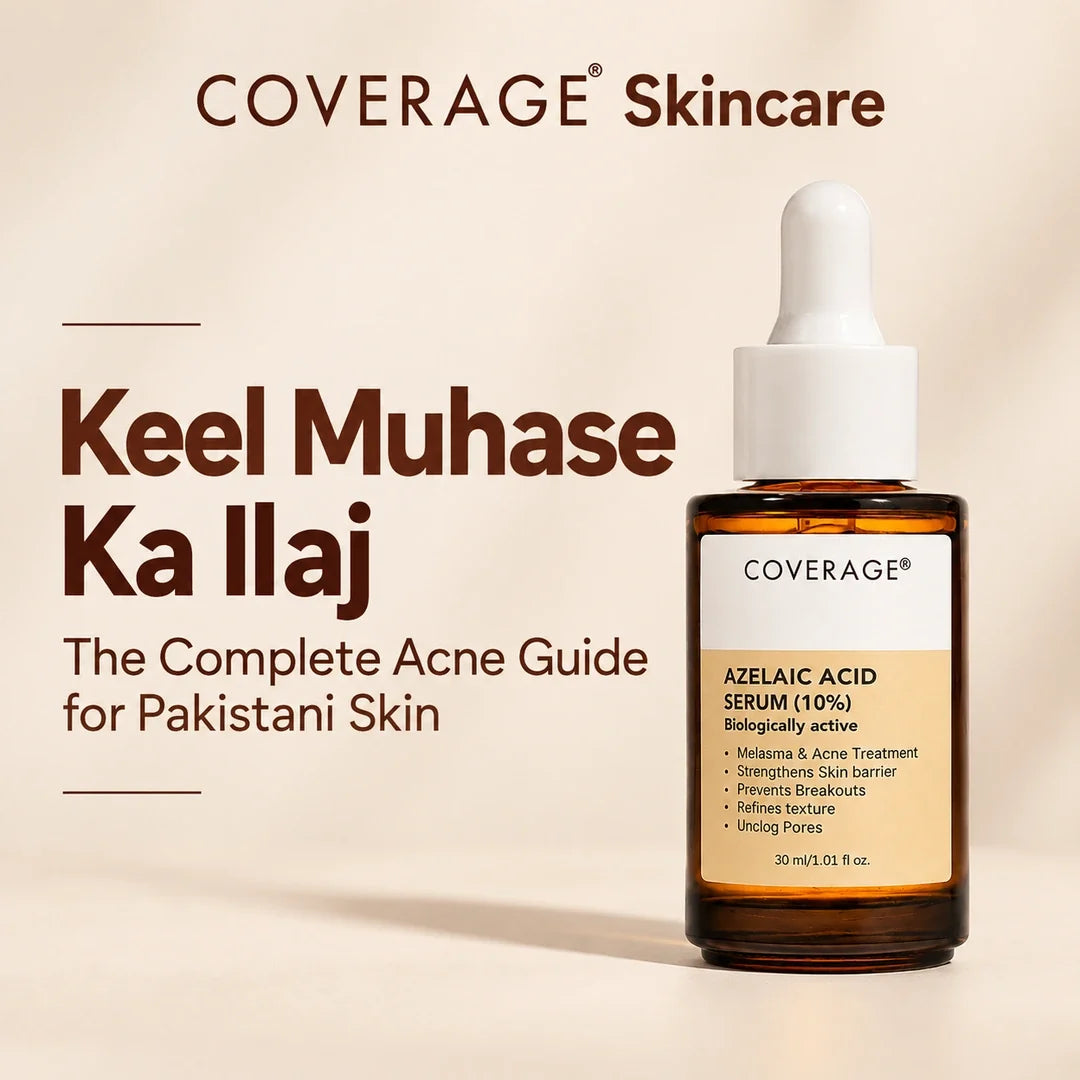
COVERAGE Azelaic Acid Serum 10% (Pigmentation, Melasma and Acne)
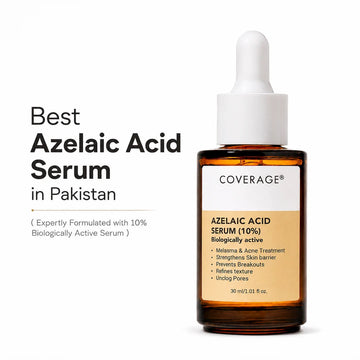
A lightweight serum with 10% azelaic acid in an aloe vera base, with sodium hyaluronate for hydration and vitamin E (tocopheryl acetate) for antioxidant support. It contains no added fragrance and no propylene glycol, two of the most common irritants in heavier prescription creams. The fluid texture spreads easily and does not sit heavily on oily skin in heat and humidity.
- Fades brown post-acne marks and daag dhabbe by slowing overactive pigment cells.
- Treats active pimples and redness at the same time, so fewer new marks form.
- Suits early melasma when paired with a tinted SPF and, for stubborn patches, a dermatologist.
- Gentle enough for nightly use on oily, combination and sensitive skin once you have built up.
Why 10% and not 20%? The deepest published melasma evidence is for 20% azelaic acid, and a 20% cream remains the stronger choice for moderate acne under a dermatologist's care. A 10% serum is chosen for tolerance, so you can actually use it every night for the months pigmentation needs. We compare the two directly in Skinoren vs COVERAGE Azelaic Acid 10%, and our complete azelaic acid serum guide covers the ingredient in depth.
How to use: 3 to 4 drops at night after cleansing, over the whole face rather than only on individual spots, followed by moisturiser. Sunscreen every morning is not optional.
See the Azelaic Acid 10% SerumThe Best Vitamin C Serum for Pakistani Heat: COVERAGE Vitamin C + 1% HA
If your main concern is dullness, uneven rangat, early spots or tanning, or if you want a morning partner for azelaic acid, this is the serum for the day shift.

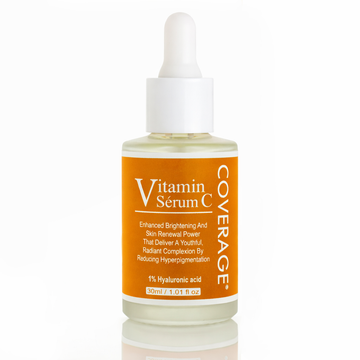
COVERAGE Vitamin C + 1% HA Skin Serum
Built on ethyl ascorbic acid, a heat-stable form of vitamin C that holds up far better in Pakistani summers than pure L-ascorbic acid, with niacinamide second in the ingredient list and hyaluronic acid for hydration. That makes it two pigment-fighting actives in one bottle: vitamin C to interrupt melanin production and add antioxidant protection, and niacinamide to reduce pigment transfer and calm the skin.
- Brightens dull, tired-looking skin and evens out rangat.
- Helps fade early spots and post-acne marks.
- Adds antioxidant protection under your sunscreen during the day.
- Hydrates without heaviness, so it layers well in humidity.
How to use: 3 to 4 drops every morning after cleansing, then moisturiser and sunscreen.
See the Vitamin C + 1% HA SerumAzelaic acid or vitamin C: which should you buy first?
If you have acne and marks together, or early melasma, start with azelaic acid. If your skin is clear but dull, uneven or tanned, start with vitamin C. If you can manage both, use vitamin C in the morning and azelaic acid at night, which is the combination most people get the best results from. We break the choice down in detail in azelaic acid vs vitamin C for Pakistani skin.
Sunscreen: The Step That Decides Everything
Short answer: pigmentation treatment fails without daily sun protection, because sunlight keeps re-stimulating the pigment you are trying to fade. The American Academy of Dermatology advises that sun protection helps melasma fade and helps stop it returning, and recommends combining it with treatments applied to the skin.
What to actually do
- Broad-spectrum SPF 50+ is the sensible choice in Pakistan. UVB burns, while UVA drives ageing and pigment.
- Use enough. About two finger-lengths for the face and neck. Most people apply a third of that.
- Reapply every 2 to 3 hours outdoors, and after sweating or washing your face.
- Add shade, a cap or a dupatta. Sunscreen is one layer of protection, not the whole strategy.
- For melasma and deeper skin tones, go tinted.
Why tinted, iron oxide sunscreen matters for dark spots
Standard sunscreens protect against UV but offer little protection against visible light, the ordinary light your eyes can see. Visible light causes stronger and longer-lasting pigmentation in medium to deep skin, which describes most Pakistani skin. Iron oxides, the pigments that give tinted sunscreens their colour, block visible light in a way plain sunscreen cannot.
The research supports this. A double-blind randomised trial published in 2014 found that melasma patients using a sunscreen that protected against both UV and visible light improved more than those using a UV-only sunscreen. A 2025 randomised, investigator-blinded study followed 42 women with melasma through five summer months and found that pigmentation worsened significantly less with a tinted, visible-light protective sunscreen than with an untinted one of similar SPF. The AAD specifically advises people with melasma to use a tinted sunscreen containing iron oxide.


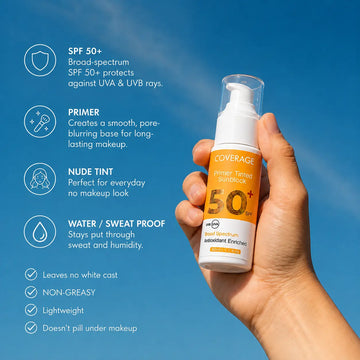
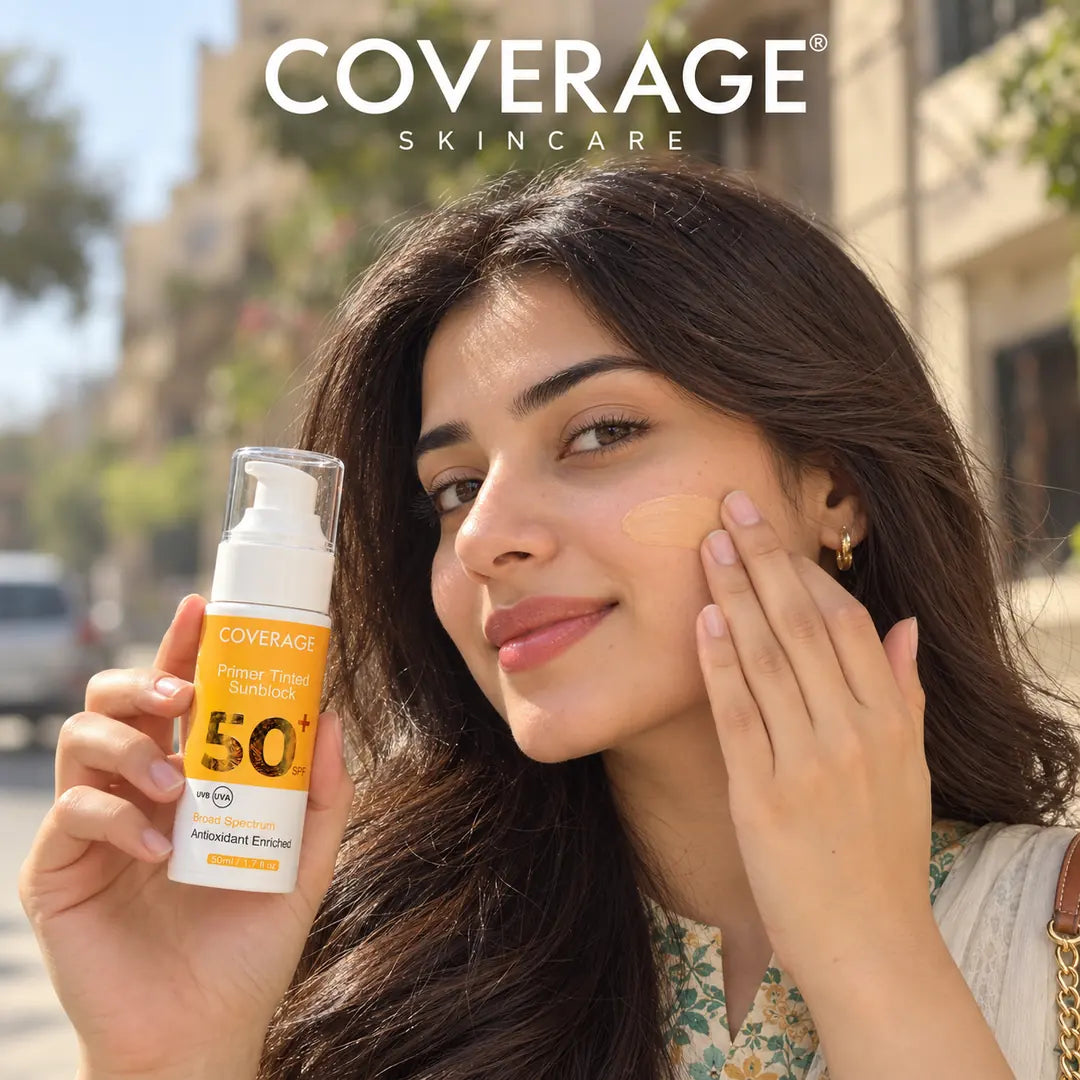
COVERAGE Primer Tinted Sunblock SPF 50+
A 100% mineral sunscreen with micronized zinc oxide and micronized titanium dioxide as its only UV filters, tinted with iron oxides so it blends into brown skin without a white cast. Those iron oxides are also what give it visible-light protection, which matters specifically for melasma and stubborn dark spots. It doubles as a primer, so it sits well under makeup.
Read more in our tinted sunscreen buyer's guide and the full tinted sunscreen guide for Pakistani skin.
See the Primer Tinted SunblockSunscreen does not cure pigmentation. It stops the constant re-triggering so your active ingredient can finally win.
Which Serum Is Best for You? A Simple Decision Guide
- Fresh red or pink acne marks (PIE): gentle care, niacinamide, sunscreen and time. The Vitamin C + 1% HA Serum supports this, but brightening serums do less here.
- Brown post-acne marks (PIH, daag dhabbe): azelaic acid at night, vitamin C in the morning. Start with the Azelaic Acid 10% Serum.
- Melasma (chhaiyan): azelaic acid and/or tranexamic acid, a tinted iron oxide SPF 50+ every day, and a dermatologist for stubborn patches.
- Dullness and uneven tone: a stable vitamin C serum every morning.
- Sun spots and tanning: vitamin C plus strict daily SPF. Older, established sun spots often need clinic treatment.
- Sensitive skin: niacinamide or a gentle azelaic acid serum used every other night at first. Patch test before full use.
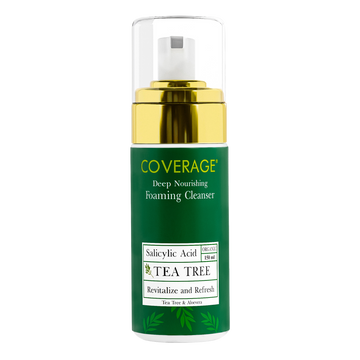
- Oily and acne-prone skin: azelaic acid, plus a salicylic acid cleanser such as the Deep Nourishing Foaming Cleanser.
- Pigmentation and acne together: azelaic acid is the clear standout, because it treats both at once.
- Stubborn pigmentation after months of care: layered actives, strict SPF and a dermatologist.

The COVERAGE Pigmentation Routine (Morning and Night)
You do not need ten steps. You need the right five, done every day. This routine is built for Pakistani heat, humidity and sun, and it keeps the skin barrier comfortable so you can stay consistent.
Morning (subah)
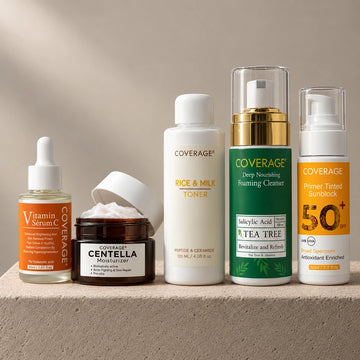
- Cleanse with the Deep Nourishing Foaming Cleanser, which pairs salicylic acid and tea tree with niacinamide, zinc PCA, licorice and panthenol to clear oil without stripping.
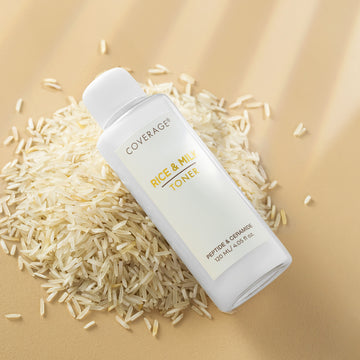
- Hydrate (optional) with the Rice and Milk Toner, with rice extract, almond milk, sodium hyaluronate and ceramide NP.
- Brighten with 3 to 4 drops of the Vitamin C + 1% HA Serum.
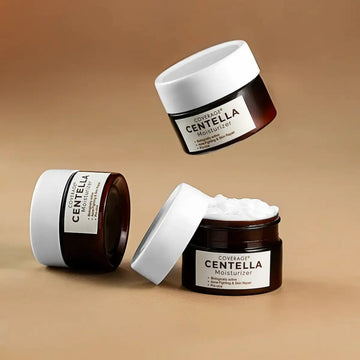
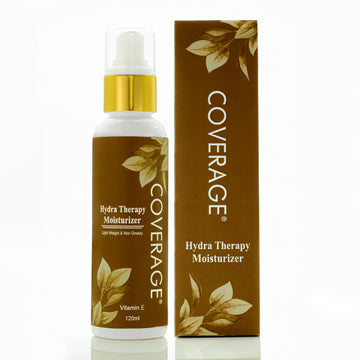
- Moisturise with a light layer of the Centella Moisturizer, made with centella asiatica, niacinamide, squalane, ceramide and licorice leaf extract to calm and support the barrier.
- Protect with the Primer Tinted Sunblock SPF 50+. Reapply outdoors.
Night (raat)
- Cleanse to remove sunscreen, sweat and pollution.
- Hydrate (optional) with the Rice and Milk Toner.
- Treat with 3 to 4 drops of the Azelaic Acid 10% Serum over the whole face.
- Moisturise with the Centella Moisturizer to seal in hydration.

Prefer the routine in one box?
The Pigmentation and Melasma + Acne Bundle brings together the Azelaic Acid 10% Serum, the Rice and Milk Toner and the Centella Moisturizer, so the serum works on a comfortable, well-hydrated base. For the morning side, the Bright Shield Duo pairs the Vitamin C + 1% HA Serum with the Primer Tinted Sunblock, and the Daily Protection Pair puts the Foaming Cleanser and the sunblock together for a simple morning. You can also browse the whole pigmentation and melasma collection.

How to Start and Layer Actives Safely
- Patch test first. Apply a little of any new serum to the jawline or inner forearm for 24 hours.
- Weeks 1 and 2: use azelaic acid every other night. Mild tingling for a few minutes is normal.
- Week 3 onwards: move to every night if your skin feels comfortable.
- Vitamin C and niacinamide work well together, which is why they share one bottle in our serum.
- Vitamin C and azelaic acid can be layered (lighter texture first) or split between morning and night. Splitting is simpler and gentler.
- Retinoids: if a dermatologist has prescribed one, use it on alternate nights with azelaic acid rather than stacking both.
- Do not pile up strong actives. Irritation creates inflammation, and inflammation creates new pigment.
How Long Does Pigmentation Take to Fade?
Pigment sits at different depths in the skin and skin cells turn over slowly, so fading is a gradual process. Here is a realistic timeline with consistent use and daily SPF.
| Timeframe | What to expect |
|---|---|
| Weeks 1 to 4 | Skin adjusts; texture and glow may improve; spots look the same |
| Weeks 3 to 8 | Active acne keeps calming with azelaic acid; early softening of fresh marks. Most of our customers see a visible difference in 1 to 3 weeks. Every skin is different, so some people need more time. |
| Weeks 12 to 16 | Visible fading of most post-acne marks and daag dhabbe |
| 6 to 12 months | Deeper PIH and melasma improve; melasma needs ongoing maintenance |
If you see no change after 3 to 6 consistent months, or pigment spreads or darkens, stop guessing and see a dermatologist, because the diagnosis may need revisiting. Our guide on how long azelaic acid takes to work covers the timeline in more detail.

Pakistan-Specific Realities
Pakistani skin faces a particular set of pressures. Peak UV in cities like Lahore, Karachi and Islamabad is frequently reported in the very high to extreme range for much of the year. Heat and humidity make heavy creams unwearable, dust and smog add irritation, and daily sunscreen use is still low. Most Pakistani skin falls in the medium to deep range, where inflammation and aggressive treatments carry a higher risk of leaving PIH behind, so gentle, consistent routines usually beat harsh ones. Melasma is also common in women here, often around pregnancy and hormonal changes.
A serious warning about whitening creams
In October 2025 the Zero Mercury Working Group published a report on skin-whitening creams manufactured in Pakistan. Of 37 creams tested in accredited laboratories in the EU and US, 35 contained mercury at levels up to thousands of times higher than the previous legal limit of 1 part per million, with one reaching 24,000 ppm. Pakistan's Competition Commission has launched investigations into these products. Mercury can damage the kidneys and nervous system, and steroid and hydroquinone-laced creams can thin the skin and cause stubborn pigmentation over time.
Buy ingredient-transparent products from brands you can verify, and treat any promise of instant or permanent whitening as a red flag.
What Not to Do When Treating Dark Spots
| Common habit | Why it backfires |
|---|---|
| Lemon juice (nimboo) | Acidic and irritating; can burn and darken skin in the sun |
| Toothpaste on spots | Not made for skin; causes irritation and new marks |
| Baking soda scrubs | Disrupts the skin barrier and pH |
| Gritty scrubs every day | Micro-irritation triggers more pigment on brown skin |
| Steroid creams without a doctor | Thin the skin, cause acne and rebound pigmentation |
| Unregulated whitening creams | Risk of mercury, steroids and hydroquinone damage |
| Stacking many strong actives | Irritation undoes the brightening |
| Picking pimples | The single biggest cause of dark marks and scars |
| Skipping sunscreen | Marks darken and last much longer |
| Buying from unverified sellers | Counterfeit serums are common in Pakistan |
Imported vs Pakistani Serums: What Actually Matters
Imported single-active serums, such as an ascorbic acid and alpha arbutin formula, can be excellent, but in Pakistan their availability and authenticity vary, and prices run higher once import costs are added. Prescription treatments and in-clinic procedures such as chemical peels and lasers outperform any cosmetic serum for severe melasma, but they cost more and need medical supervision. What matters most is not the country on the label but the formula, the stability of the active in heat, and whether the product in your hand is genuine.
COVERAGE is a Korean-formulated skincare brand from Lahore, built for Pakistani skin and Pakistani weather. The family behind it has worked in skincare manufacturing for around 40 years, and our products are made in our own GMP and ISO certified facility with in-house lab testing, not through third-party white-label. Every ingredient list is published on our product pages so you can check exactly what you are putting on your skin. More than 5,000 customers have reviewed COVERAGE across our website and social channels, and every order comes with cash on delivery across Pakistan.
When to See a Dermatologist
Home care handles most post-acne marks and mild pigmentation. See a dermatologist (jild ke doctor) if you have:
- Stubborn or deep melasma that has not responded to careful home care
- No improvement after 3 to 6 months of consistent treatment and daily SPF
- Pigmentation that is spreading or getting darker
- Any spot that is new, changing, bleeding, itchy or irregular in colour or shape
- Interest in prescription options such as oral tranexamic acid, hydroquinone or retinoids
- There is no single best serum for everyone; the right one matches your pigmentation type.
- For daag dhabbe and acne marks on Pakistani skin, azelaic acid at night is the strongest all-rounder.
- For dullness and early spots, a heat-stable vitamin C serum in the morning works best.
- Daily tinted SPF 50+ with iron oxides is the step that decides whether any serum works.
- Expect visible fading over 12 to 16 weeks, and longer for melasma. No honest serum works in 7 days.
- Avoid lemon, toothpaste, unsupervised steroids and unregulated whitening creams.
Begin with the serum that fits most Pakistani skin
Azelaic Acid 10% at night, Primer Tinted Sunblock SPF 50+ every morning. That one pairing covers acne marks, daag dhabbe and early chhaiyan for most readers. Cash on delivery across Pakistan.
Order Azelaic Acid 10% SerumOr save with both together in the Acne Care & Sun Protection set.
Frequently Asked Questions About Serums for Dark Spots and Pigmentation
What is the best serum for dark spots in Pakistan?
The best serum is the one whose active ingredient matches your type of pigmentation and that you use every day under sunscreen. For most Pakistani skin with post-acne marks or early melasma, azelaic acid at night is the strongest all-rounder, and a stable vitamin C serum in the morning handles dullness and early spots. The COVERAGE Azelaic Acid 10% Serum and Vitamin C + 1% HA Serum are built for exactly these two jobs.
Chehre ke daag dhabbe ke liye best serum kaun sa hai?
For brown daag dhabbe left behind by pimples, azelaic acid is usually the best first choice because it fades marks and also treats the breakouts that create new ones. Use it at night, add a vitamin C serum in the morning if your skin also looks dull, and wear SPF 50 every day so the marks do not darken again.
Can a serum remove dark spots permanently?
No serum can promise permanent removal. Serums fade the appearance of dark spots and help prevent new ones, but sun exposure, new breakouts and hormones can bring pigmentation back. Consistent use with daily sunscreen keeps results, and melasma in particular needs long-term maintenance.
How long does pigmentation take to fade?
Post-acne marks usually show visible fading over 12 to 16 weeks of consistent treatment with daily sunscreen. Early changes can appear after a few weeks, while deep marks and melasma can take 6 to 12 months or longer. If nothing changes after 3 to 6 months of consistent use, see a dermatologist.
Which serum is best for acne marks?
For brown acne marks (PIH), azelaic acid is the best all-rounder because it fades marks and treats active acne at the same time. Vitamin C with niacinamide is a good morning partner. For red or pink marks (PIE), brightening serums do less; gentle care, niacinamide, sunscreen and time matter more.
Is azelaic acid or vitamin C better for pigmentation?
Azelaic acid is better if you have pigmentation and acne together, or early melasma, because it targets overactive pigment cells and calms breakouts. Vitamin C is better for dullness, prevention and early spots, and works best in the morning under sunscreen. Many people get the best results using both: vitamin C in the morning and azelaic acid at night.
Is niacinamide good for pigmentation?
Yes. Niacinamide reduces the transfer of pigment to the skin surface and calms inflammation. In a randomised trial, 4% niacinamide improved melasma in 44% of patients compared with 55% for 4% hydroquinone, with fewer side effects. It works best as a supporting ingredient alongside azelaic acid or vitamin C.
Can I use azelaic acid and vitamin C together?
Yes. The simplest way is to split them: vitamin C in the morning under sunscreen and azelaic acid at night. If you want to layer them, apply the lighter serum first and let it absorb. Vitamin C and niacinamide also work well together, which is why they share one bottle in the COVERAGE Vitamin C + 1% HA Serum.
Does sunscreen help pigmentation?
Yes, and it is the most important step. Sunlight keeps re-triggering the pigment you are trying to fade, so without daily sunscreen most serums cannot win. For melasma and deeper skin tones, a tinted sunscreen with iron oxides adds protection against visible light that plain sunscreen does not give.
What SPF is best for pigmentation in Pakistan?
Use a broad-spectrum SPF 50+ in Pakistan, apply a generous amount every morning and reapply every 2 to 3 hours outdoors. If you have melasma or stubborn dark spots, choose a tinted formula with iron oxides, such as the COVERAGE Primer Tinted Sunblock SPF 50+, for added visible-light protection.
What is the difference between acne marks and acne scars?
Acne marks are flat changes in colour, brown (PIH) or red (PIE), and they fade over months. Acne scars are changes in texture, such as pits, dents or raised bumps, and they need in-clinic procedures. Run a finger over the spot: if it is flat, it is a mark; if you feel a dip or bump, it is a scar.
Chhaiyan (melasma) ke liye kaun sa serum best hai?
For chhaiyan, azelaic acid is one of the best-studied gentle options, and tranexamic acid is another. Neither works without a tinted, iron oxide SPF 50+ every day, because both sunlight and visible light re-trigger melasma. Stubborn or deep melasma should be assessed by a dermatologist.
Is tranexamic acid good for melasma?
Yes, tranexamic acid has good evidence for melasma. Topical tranexamic acid is a reasonable over-the-counter option. Oral tranexamic acid works more strongly but can cause side effects and has clotting-related risks, so it must only be started and monitored by a doctor.
Kya lemon ya toothpaste se daag khatam hote hain?
No. Lemon juice is acidic and can burn and irritate skin, especially in the sun, and toothpaste is not made for skin at all. Both can cause inflammation, which on brown skin often leaves darker marks than before. Use proven ingredients such as azelaic acid, vitamin C or niacinamide instead.
Can I use a pigmentation serum every day?
Usually yes, once your skin adjusts. Start azelaic acid every other night for the first two weeks, then move to every night if your skin is comfortable. Vitamin C can be used every morning. Patch test any new serum on the jawline for 24 hours first.
Should I apply my pigmentation serum in the morning or at night?
Apply vitamin C in the morning, because its antioxidant protection works best under sunscreen during the day. Apply azelaic acid and retinoids at night. Sunscreen is always the last step of your morning routine.
Are imported serums better than Pakistani serums?
Not necessarily. The formula, the stability of the active ingredient in heat, and whether the product is genuine matter far more than the country on the label. Imported serums can be excellent, but counterfeits are common in Pakistan and prices run higher. A well-formulated, locally made serum from a transparent brand can perform just as well.
When should I see a dermatologist for pigmentation?
See a dermatologist for stubborn melasma, no improvement after 3 to 6 months of consistent treatment, pigmentation that is spreading or worsening, or any spot that is new, changing, bleeding, itchy or irregular in colour or shape.
The Bottom Line
The best serum for dark spots and pigmentation in Pakistan is not the one with the loudest promise. It is the one that matches your type of pigmentation, that your skin tolerates every day, and that you protect with sunscreen every single morning. For most Pakistani skin with daag dhabbe, post-acne marks or early chhaiyan, that means azelaic acid at night, vitamin C in the morning and a tinted SPF 50+ on top. If you are unsure where to begin, start with the COVERAGE Azelaic Acid 10% Serum and the Primer Tinted Sunblock SPF 50+, then add the Vitamin C + 1% HA Serum when you are ready for a full morning routine.
References
- Navarrete-Solis J, et al. A double-blind, randomized clinical trial of niacinamide 4% versus hydroquinone 4% in the treatment of melasma. Dermatol Res Pract. 2011.
- Hakozaki T, et al. The effect of niacinamide on reducing cutaneous pigmentation and suppression of melanosome transfer. Br J Dermatol. 2002;147(1):20-31.
- Balina LM, Graupe K. The treatment of melasma: 20% azelaic acid versus 4% hydroquinone cream. Int J Dermatol. 1991;30(12):893-895.
- Castanedo-Cazares JP, et al. Near-visible light and UV photoprotection in the treatment of melasma: a double-blind randomized trial. Photodermatol Photoimmunol Photomed. 2014;30(1):35-42.
- Polena H, et al. Comparison of visible light-protective tinted sunscreen to untinted sunscreen to protect melasma patients during summer. J Cosmet Dermatol. 2025;24(10):e70450.
- Lyons AB, et al. Photoprotection beyond ultraviolet radiation: a review of tinted sunscreens. J Am Acad Dermatol. 2021;84(5):1393-1397.
- Taylor SC, et al. Acne vulgaris in skin of color. J Am Acad Dermatol. 2002;46(2 Suppl):S98-106.
- American Academy of Dermatology. Melasma: diagnosis and treatment; Melasma: self-care.
- Zero Mercury Working Group. Zero Out Toxic Production. October 2025.
This article is for general informational purposes only and is not a substitute for professional medical advice. All information and claims referenced above are drawn from publicly available dermatological studies and expert sources. Always consult a dermatologist for advice specific to your skin.

Leave a comment
This site is protected by hCaptcha and the hCaptcha Privacy Policy and Terms of Service apply.