
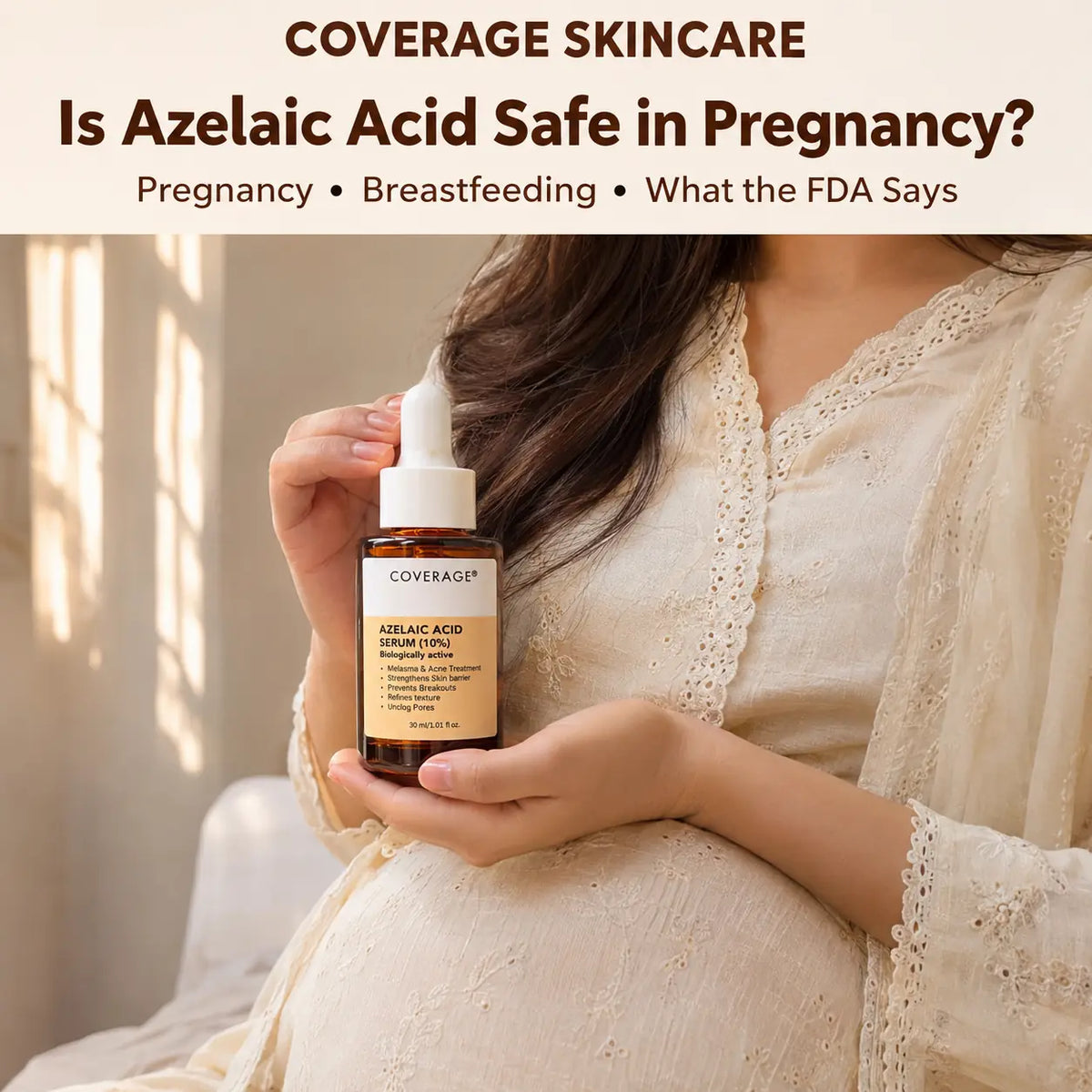
Is Azelaic Acid Safe in Pregnancy and Breastfeeding? What the FDA Labels and Studies Actually Say
Short answer: yes. Topical azelaic acid is one of the very few skincare actives that dermatology and obstetric bodies consider suitable pregnancy mein and feeding ke dauran. But every pregnant or nursing mother deserves to see the evidence, not just hear “it’s fine”. So we went to the primary sources: the US FDA labels, the UK prescribing information, the American Academy of Dermatology, ACOG, LactMed and the published studies. Here is what they actually say, in plain English, with the Pakistani context nobody else covers.
Is azelaic acid safe in pregnancy and breastfeeding? Yes, according to current evidence. The FDA label for azelaic acid 15% states it “is minimally absorbed systemically” and “maternal use is not expected to result in fetal exposure”. The AAD calls it “thought to be safe to use during pregnancy”, and NIH LactMed rates it low risk for nursing babies. Just never apply it on the breast or nipple.
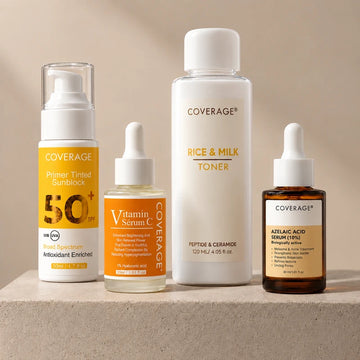
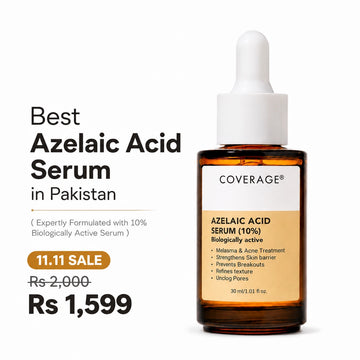
Looking for a pregnancy-friendly option for daane and chaiyan? Our COVERAGE Azelaic Acid Serum 10% is a lightweight, fragrance-free, alcohol-free serum made at our own facility in Lahore. Azelaic acid is one of the ingredients dermatologists consider suitable in pregnancy. Take the bottle to your gynae and check together.
See the serumSee the mineral sunblock
In this guide
- Why so many Pakistani mothers ask this
- What the FDA label actually says
- Why labels sound more cautious than dermatologists
- How much azelaic acid reaches your blood
- What the human studies show
- Is it safe in the first trimester?
- Breastfeeding: the practical rules
- 10% vs 15% vs 20%
- Our Azelaic Acid 10% Serum, explained
- A pregnancy-friendly routine
- What to avoid in pregnancy
- How to start safely
- FAQs
Why do so many pregnant and nursing women in Pakistan ask about azelaic acid?
Pregnancy changes skin fast. The EADV Skin Diseases in Pregnancy Task Force says more than one in two pregnant women can expect to develop acne. Hormonal daane on the jawline, chin and back are among the most common complaints in the first and second trimesters.
Then comes chaiyan (melasma), the brown patches on the cheeks, forehead and upper lip that doctors call the “mask of pregnancy”. Studies of Pakistani pregnant women have reported melasma in 46% (cited in a 2014 epidemiology review in Anais Brasileiros de Dermatologia) and 63.5% (Journal of Pakistan Association of Dermatologists, 2018) of women. Both figures are among the highest reported anywhere. Add our long summers and strong sun, and pregnancy pigmentation in Pakistan is not a small cosmetic issue. For many women it is the most visible change of the whole pregnancy.
At the same time, the usual tools are suddenly off the table. Your doctor tells you to stop retinol and tretinoin. Hydroquinone creams are out. And many women are rightly scared of the “formula creams” sold for chaiyan and daag dhabbe. That leaves a real question: what can I actually use? Azelaic acid keeps coming up in that answer. This guide explains exactly why.
What does the FDA label for azelaic acid actually say about pregnancy?
Most articles say “azelaic acid is Category B” and stop there. That is outdated. The current US labels for azelaic acid 15% follow the FDA’s newer Pregnancy and Lactation Labeling Rule format. Here is what they say, in the label’s own words, and what it means for you.
The pregnancy section (8.1)
In plain English: so little azelaic acid gets from your skin into your bloodstream that the regulator does not expect your baby to be exposed to it.

The animal studies, and why the numbers matter
The same label reports embryofetal toxicity only at oral doses 162, 19 and 65 times the maximum recommended human dose (MRHD) in rats, rabbits and monkeys. Maternal toxicity was seen at those doses, but no malformations were observed. The rats received 2,500 mg/kg/day, the rabbits 150 or 500 mg/kg/day and the monkeys 500 mg/kg/day.
Three points competitors rarely explain:
- The route was oral, not skin. The animals were fed azelaic acid. A serum on your face is a very different exposure.
- The doses were enormous. Effects appeared at 19 to 162 times the maximum human dose, and the mother animals themselves were already showing toxicity.
- No birth defects were seen. Not at any of those doses, in any of the three species. A rat study covering late pregnancy and nursing found slight postnatal effects only at 32 and 162 times the MRHD, again with maternal toxicity.
The label also reminds readers that in the general US population, the background risk of major birth defects is 2 to 4% and of miscarriage 15 to 20%, whatever a mother uses. This matters because any problem in any pregnancy can feel like “it must have been the cream”. The science says that background risk exists for everyone.

The lactation section (8.2)
What the older 20% cream label and the UK leaflet say
The older AZELEX 20% cream label predates the new format. It carries the old wording: “no adequate and well-controlled studies in pregnant women”, so use “only if clearly needed”. The same label notes that about 4% of topically applied azelaic acid is absorbed, and that plasma levels and urinary excretion stay at baseline. That is because azelaic acid is already in your diet (whole grain cereals, animal products) and is made by your own body.
The UK prescribing information for Finacea 15% gel advises caution in pregnancy because of the animal data. It also confirms azelaic acid is not concentrated in milk, under 4% is absorbed, and exposure does not rise above natural physiological levels. Its one firm practical rule: infants must not come into contact with treated skin or breast. The Skinoren leaflet uses similar wording.
Why do drug labels sound more cautious than dermatologists?
This is the single most confusing part for mothers, and almost no article explains it. The answer is ethics and law, not hidden danger.
So almost every medicine label, even for very low-risk products, says something like “no adequate and well-controlled studies in pregnant women”. That sentence describes a gap in trial design, not a finding of harm.
The old letter system made this worse. The FDA’s Pregnancy and Lactation Labeling Rule was published on 3 December 2014 and took effect on 30 June 2015, and it removed the pregnancy letter categories (A, B, C, D and X) because they were too simplistic and often misread as a safety grade. So if someone tells you azelaic acid “is Category B”, the history is right but the system is retired. The modern label wording quoted above is more reassuring, not less.
Dermatologists read the whole picture: minimal absorption, natural presence in food and breast milk, animal data at huge oral doses, and decades of use. That is why their guidance is clearer than a label’s legal default:
- AAD (patients): azelaic acid “is thought to be safe to use during pregnancy”, and in animal studies researchers haven’t seen birth defects.
- AAD Guidelines of Care for acne (Reynolds et al., JAAD 2024): a conditional recommendation for azelaic acid in acne, and the statement that in pregnant patients, fetal harm from topical azelaic acid is not expected because of limited systemic absorption.
- ACOG and MotherToBaby: ACOG’s patient guidance lists azelaic acid among over-the-counter topical ingredients that may be used during pregnancy if needed.
- EADV 2023 patient leaflet: lists azelaic acid gel or cream once or twice daily as safe for use in pregnancy, noting it is also used for pigmentation in darker skin types.
- MSD Manual: “During pregnancy, azelaic acid cream and chemical peels with glycolic acid are safe to use.”
How much azelaic acid actually reaches your bloodstream?
Very little, and what does is indistinguishable from what is already there:
- About 4% of a topical dose is absorbed, according to the AZELEX label and NIH LactMed. Reviews give a range of about 3 to 8% depending on the base (around 3% for cream or emulsion, up to 8% for gel).
- It is a normal part of your diet and body chemistry. Azelaic acid is found in wheat, rye and barley, and is present in human blood and breast milk.
- Your body clears it quickly. The AZELEX label gives a half-life of about 45 minutes after an oral dose and about 12 hours after skin application, reflecting slow uptake through the skin.
- Compare that with hydroquinone. A 2014 review in the Journal of the American Academy of Dermatology (Murase et al.) estimated 35 to 45% of topical hydroquinone is absorbed. That difference is a big reason the two are treated so differently in pregnancy.

What do studies in pregnant women show?
There are no large randomised trials of any acne treatment in pregnancy, for the ethical reasons above. What exists is a body of real-world clinical evidence, and it all points the same way.
- Narrative review, 2023 (Ly et al., Dermatology and Therapy): no adverse fetal effects have been reported and azelaic acid is considered safe during all trimesters. It is listed as a first-line option for mild to moderate acne in pregnancy and lactation, twice-daily use up to 20% is considered acceptable, and it is safe to combine with benzoyl peroxide. The review also notes azelaic acid may be preferred for post-inflammatory hyperpigmentation, particularly in skin of colour, which describes most Pakistani skin.
- Retrospective study, 2025 (Hasanbeyzade, Journal of Cosmetic Dermatology): records of 197 pregnant women with acne, 26 of whom used 20% azelaic acid. The azelaic acid group showed the greatest improvement in lesions and the highest patient satisfaction compared with topical clindamycin and erythromycin, and the author concluded it is a good option for mild to moderate acne during pregnancy. Side effects, mainly burning and itching, were not statistically different between groups. It is a small, single-centre study, so read it as supportive rather than final.
- Melasma in pregnancy, 2017 (Vestnik Dermatologii i Venerologii): 28 pregnant women with chloasma used 15% azelaic acid gel twice daily for four months, and the authors judged the treatment effective and safe.
Our honest reading: this is reassuring, consistent evidence rather than definitive proof, which is true of almost everything used in pregnancy. Its strength comes from many independent lines (pharmacology, animal data, guideline bodies, clinical experience) all agreeing with each other.
Can I use azelaic acid in the first trimester?
Most reviews say yes. The 2023 Dermatology and Therapy review considers azelaic acid safe during all trimesters, and the FDA labels give no separate first-trimester restriction. One 2022 review in the Journal of Clinical and Aesthetic Dermatology takes a more conservative line and suggests small skin areas and preferably not the first trimester. If you want extra caution in the first 12 weeks, simply confirm with your gynaecologist before starting. A face-only serum covers a small skin area either way.

Is azelaic acid safe while breastfeeding? The practical rules
NIH LactMed is clear: topical azelaic acid has not been formally studied in breastfeeding, but because only about 4% is absorbed and it appears naturally in foods, blood and breast milk, it is considered low risk to the nursing infant. If a mother needs it, it is not a reason to stop breastfeeding. The Spanish lactation database e-lactancia rates it “Compatible”.
Feeding ke dauran, the risk is not your milk. It is your baby’s skin and mouth touching treated skin. Follow these rules:
- Never apply it to the breast, nipple or areola. LactMed and the UK leaflet both say so.
- Apply at night after the last close cuddle where you can, and let it absorb fully before holding the baby.
- Mind the cheek-to-cheek moments. Babies rest their faces on yours. Keep a soft cloth between baby and your treated face, or apply after baby sleeps.
- Wash your hands straight after applying. The FDA label instructs this too.
- Near the chest area, LactMed advises only water-miscible creams or gels, never ointments.

Many women first notice chaiyan after delivery or during feeding. Postpartum skin and hair go through a lot. If shedding is worrying you too, read our guide to postpartum hair fall in Pakistan.
10% vs 15% vs 20%: which azelaic acid strength suits pregnancy?
The pregnancy guidance and studies above mostly involve prescription 15% gel and 20% cream, and the 2023 review considers up to 20% twice daily acceptable. So where does a 10% serum fit?
- Less azelaic acid per application. Using the same amount of product, a 10% formula puts less azelaic acid on your skin each time than a 15% or 20% one. That is a simple, logical comfort for mothers who want the lowest effective exposure.
- Gentler on reactive pregnancy skin. Stinging and itching are the most common azelaic acid side effects, and pregnancy skin is often more sensitive. A gentler strength is easier to use every night without giving up.
- Consistency beats intensity. Azelaic acid works through steady use. A lightweight serum you actually apply every night often does more than a heavy cream you skip.
- 20% is the stronger, prescription-strength option. If your daane or chaiyan need more, your dermatologist can guide you. For a side-by-side, see Skinoren vs COVERAGE Azelaic Acid Serum.
COVERAGE Azelaic Acid Serum 10%: what is inside and why it suits this stage

We make our Azelaic Acid Serum 10% (Pigmentation, Melasma & Acne) at our own family-owned manufacturing facility in Lahore, built on around 40 years in skincare manufacturing. Our facility is GMP and ISO 9001 certified, our products are Halal certified and cruelty-free, and our in-house chemical engineers work with the highest-grade raw materials we can source. More than 72,000 orders have gone out across Pakistan, with cash on delivery nationwide.
The formula, ingredient by ingredient
Full INCI: Aloe Barbadensis Leaf Extract, Aqua, Azelaic Acid, Propanediol, Bis-Ethoxydiglycol, Xylitylglucoside, Isohexadecane, Polysorbate 60, Sodium Hyaluronate, Tocopheryl Acetate, Phenoxyethanol, Triethylene Glycol.
- 10% azelaic acid in a lightweight water-based serum, the active the guidance above discusses.
- Aloe vera leaf extract first on the list, for a soothing base.
- Sodium hyaluronate (a form of hyaluronic acid) for hydration through Pakistani heat.
- Tocopheryl acetate (vitamin E) as an antioxidant.
- No fragrance, no alcohol, no propylene glycol. Pregnancy often makes skin and noses more sensitive, and fragrance is a common irritant.
- No retinoids and no hydroquinone, the two ingredient groups most commonly flagged for avoidance in pregnancy.
- Non-comedogenic, so it won’t clog pores, and it layers under sunscreen without pilling.

What it is designed to help with
- Pregnancy daane: azelaic acid is antibacterial, anti-inflammatory and keeps pores clear.
- Chaiyan and daag dhabbe: it slows tyrosinase, the pigment-forming enzyme, working on melasma and on the brown marks acne leaves behind.
- Redness and uneven tone around breakouts.
Timeline: many people notice visible results in 1 to 3 weeks. Every skin type and condition is different and some customers need more time. For the detail, read how long azelaic acid takes to work, and for application tips, how to use azelaic acid serum.
Our advice: azelaic acid is one of the ingredients dermatologists consider suitable in pregnancy. Take our serum to your gynae, show the ingredient list above, and decide together.
See the serumWhy the sunblock matters as much as the serum

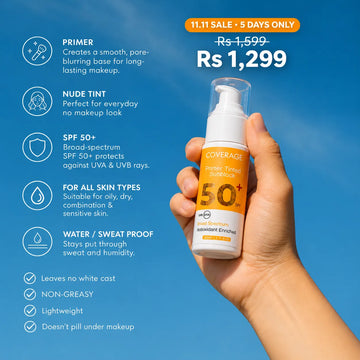
Treating chaiyan without daily sun protection is like mopping with the tap open. Our Primer Tinted Sunblock SPF 50+ is 100% mineral: its only UV filters are micronized zinc oxide and titanium dioxide, with no chemical filters at all. A 2025 review in Frontiers in Medicine on photoprotection in pregnancy notes that mineral filters like these are often recommended as the first choice in pregnancy because of their minimal systemic absorption, and that mineral tinted sunscreens with iron oxides are particularly suitable for pregnant women with skin of colour.
Why the tint matters: iron oxides add protection against visible light, which also drives melasma. In a randomised trial (Castanedo-Cázares et al., Photodermatology, Photoimmunology & Photomedicine, 2014), melasma patients using an iron oxide sunscreen improved more on MASI scores than those using UV-only sunscreen. The British Association of Dermatologists’ melasma leaflet also notes that iron oxide sunscreen protects against visible light.
Our sunblock is water and sweat resistant for Pakistani heat, contains glycerin, aloe vera and panthenol, is non-comedogenic, and suits oily, combination, sensitive and acne-prone skin. Read more in our guides to mineral tinted sunscreen in Pakistan, tinted sunscreen for Pakistani skin and whether SPF 50 is enough in Pakistan.
See the mineral sunblockSets that match pregnancy skin concerns
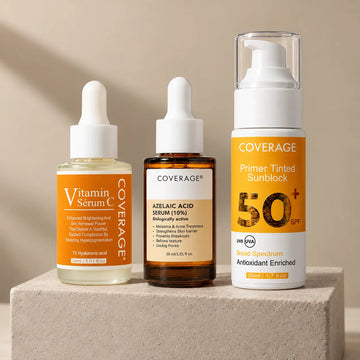
- Daane plus sun protection: the Acne Care & Sun Protection set pairs the Azelaic Acid 10% Serum with the Primer Tinted Sunblock SPF 50+.
- Chaiyan, dark spots and acne marks: the Melasma, Dark Spots & Acne Marks Treatment combines the Azelaic Acid 10% Serum, the Vitamin C + 1% HA Serum and the Primer Tinted Sunblock SPF 50+.
Check the product pages for current pricing and offers. To make sure you are getting the real thing, read how to check if skincare is genuine in Pakistan.
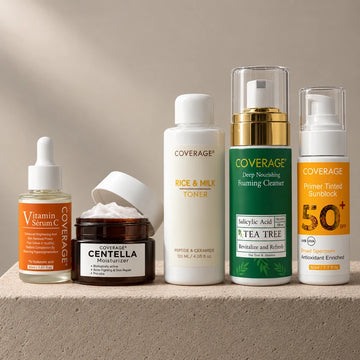
A simple pregnancy-friendly routine with COVERAGE
In pregnancy, fewer steps mean fewer chances of irritation. Here is the routine we suggest discussing with your gynae.

Morning
- Rinse with lukewarm water or use a gentle cleanser.
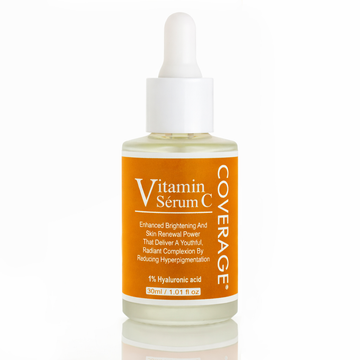
- Optional: Vitamin C + 1% HA Serum for brightening. Vitamin C does not appear on the pregnancy avoid lists we reviewed.
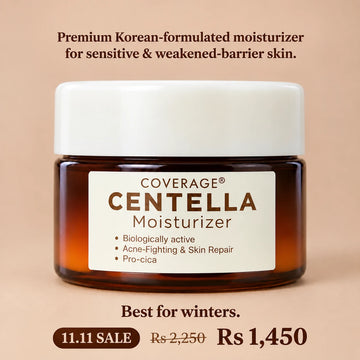
- Centella Moisturizer if your skin feels dry or tight.
- Primer Tinted Sunblock SPF 50+, a generous layer, reapplied when outdoors. Add a hat or dupatta in strong sun.
Night
- Gentle cleanse.
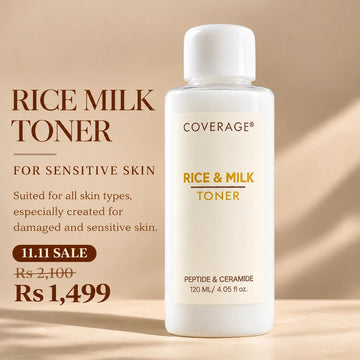
- Optional: Rice & Milk Toner with ceramide NP, peptide and fermented rice extract, no retinoids.
- Azelaic Acid 10% Serum, a thin layer over affected areas, avoiding eyes and lips.
- Centella Moisturizer on top if needed.
If you are breastfeeding, keep all of this to the face and neck, never the breast, and wash your hands afterwards. For more, see azelaic acid vs vitamin C, our sensitive skin guide and why centella helps.
Pregnancy daane and chaiyan: what azelaic acid helps with
For daane: azelaic acid reduces acne bacteria and inflammation and helps unclog pores, and it is listed as first-line for mild to moderate pregnancy acne. Deep, painful cysts or widespread acne need a dermatologist. See keel muhase ka ilaj for general acne care.
For chaiyan: azelaic acid slows tyrosinase and has a long track record in melasma. In a 2011 trial in the Journal of Cosmetic Dermatology (Farshi, 29 non-pregnant women), 20% azelaic acid cream gave lower melasma severity scores than 4% hydroquinone after two months. Two realistic notes:
- ACOG notes that dark spots and melasma usually fade on their own after birth, though some persists. Treatment during pregnancy is about control and prevention.
- Melasma is driven by hormones plus UV and visible light. Without daily sunblock, no serum can keep up. Our full guide: melasma treatment and chaiyan ka ilaj in Pakistan. For dark spots generally: best serum for dark spots and pigmentation.
One label point for darker skin: the FDA label notes isolated reports of hypopigmentation (lightening) after azelaic acid use. If patches become lighter than your normal skin tone, stop and see a dermatologist. More on what to expect in azelaic acid side effects.
What should you avoid on your skin during pregnancy?

- Retinoids, including retinol, tretinoin, adapalene and tazarotene. The EADV says topical retinoids must be avoided in pregnancy, but adds that short accidental use is unlikely to harm the baby. So don’t panic: stop and tell your doctor. Oral isotretinoin is strictly contraindicated.
- Hydroquinone. Highly absorbed (35 to 45%), and the MSD Manual lists it as not safe in pregnancy.
- Steroid and mercury “formula creams” sold for gorapan, chaiyan or daag dhabbe. This is the biggest pregnancy skin risk in Pakistan. A Lahore study in the Journal of Pakistan Association of Dermatologists (Majeed et al., 2021) found mercury and hydroquinone in locally sold whitening creams. Never use unlabelled or “mixed” creams pregnancy mein or feeding ke dauran.
- Oral tranexamic acid and TCA peels. The MSD Manual lists both as not safe in pregnancy.
- Strong salicylic acid peels or large-area salicylic use. AAD guidance accepts salicylic acid only when the area and duration are limited. Ask your gynae about any salicylic product.
- Oral tetracyclines (doxycycline, minocycline). The AAD says to stop these by week 15 of pregnancy.
How should I start azelaic acid during pregnancy?
- Show your gynae the product and its ingredient list.
- Patch test behind the ear or on the jawline for 2 to 3 nights.
- Start every other night, then move to nightly as your skin settles.
- Expect mild tingling in the first week or two. Burning, swelling or rash means stop.
- Use sunblock every morning, without exception.
- Don’t stack actives. Keep vitamin C to the morning and azelaic acid to the night.
- Be patient. Visible results often appear in 1 to 3 weeks. Every skin type and condition is different and some customers need more time.
When should you see a gynaecologist or dermatologist?
- Painful cysts, nodules or acne that is scarring.
- Sudden widespread itching or rash (pregnancy-specific skin conditions need a proper diagnosis).
- Patches that change rapidly, bleed, or look different from typical melasma.
- Any lightening of the skin while using azelaic acid.
- If you used a “formula cream” from an unknown source during pregnancy, tell your gynae.
Still deciding? Our complete azelaic acid guide, niacinamide vs azelaic acid and azelaic acid price in Pakistan answer most follow-up questions.
Frequently asked questions
Is azelaic acid safe during pregnancy?
Current evidence says yes. The FDA label for azelaic acid 15% states it is minimally absorbed and maternal use is not expected to result in fetal exposure. The American Academy of Dermatology says it is thought to be safe in pregnancy, and ACOG lists it among topical ingredients that may be used if needed. Always confirm with your gynaecologist.
Can I use azelaic acid in the first trimester?
Most reviews, including a 2023 narrative review in Dermatology and Therapy, consider azelaic acid safe in all trimesters, and the FDA labels give no separate first-trimester restriction. One 2022 review suggested avoiding the first trimester where possible, so if you want extra caution in the first 12 weeks, confirm with your gynaecologist.
Is azelaic acid safe while breastfeeding?
Yes. NIH LactMed rates topical azelaic acid as low risk to the nursing infant and says it is not a reason to stop breastfeeding, because only about 4% is absorbed and azelaic acid is naturally present in breast milk. Never apply it to the breast or nipple, and keep your baby’s skin away from treated areas.
Is 10% azelaic acid safe in pregnancy?
Pregnancy guidance and studies mostly involve 15% gel and 20% cream, and a 2023 review considers up to 20% twice daily acceptable. A 10% serum applies less azelaic acid per use than those strengths, which is reassuring logic. Show the product to your gynae and decide together.
Can I use 20% azelaic acid when pregnant?
A 2023 review in Dermatology and Therapy states that twice-daily use up to 20% is acceptable in pregnancy and lactation, and a 2025 study of pregnant acne patients used 20% azelaic acid. Higher strengths can sting more, so many women prefer a gentler strength for nightly use. Your dermatologist can advise.
Why does the label say use only if clearly needed?
Older labels use standard wording because pregnant women are not enrolled in drug trials, so no adequate and well-controlled human studies exist. That describes a research gap, not evidence of harm. The newer FDA label wording states that maternal use is not expected to result in fetal exposure.
Is azelaic acid Pregnancy Category B?
It was previously labelled Category B, meaning animal studies showed no fetal risk. The FDA removed letter categories under its Pregnancy and Lactation Labeling Rule, effective 30 June 2015, and current azelaic acid labels use a narrative risk summary instead.
Can azelaic acid treat chaiyan (melasma) during pregnancy?
Azelaic acid slows tyrosinase, the enzyme behind pigment, and the MSD Manual lists azelaic acid cream as safe for melasma in pregnancy. Results depend heavily on daily sun protection, ideally a mineral tinted sunscreen with iron oxides. Pregnancy melasma often fades after delivery, but not always.
Can I use azelaic acid with vitamin C during pregnancy?
Many dermatologists suggest vitamin C in the morning and azelaic acid at night. Neither appears on the major pregnancy avoid lists. Introduce one product at a time, about two weeks apart, so you know what your skin is reacting to, and check with your gynae.
Which sunscreen is best during pregnancy?
A 2025 review in Frontiers in Medicine states that mineral filters like zinc oxide and titanium dioxide are often recommended as first choice in pregnancy because of minimal systemic absorption. Tinted mineral sunscreens with iron oxides also protect against visible light, which matters for melasma.
I used retinol before I knew I was pregnant. What now?
Stop using it and tell your gynaecologist. The EADV patient leaflet says topical retinoids must be avoided in pregnancy, but if a topical product was used by accident for a short period, harm to the unborn baby is unlikely. Azelaic acid is a commonly suggested switch.
Is hydroquinone safe in pregnancy?
It is generally avoided. Reviews estimate 35 to 45 percent of topical hydroquinone is absorbed, far more than azelaic acid, and the MSD Manual lists it as not safe in pregnancy. Avoid unlabelled formula creams too, as a Lahore study found mercury and hydroquinone in locally sold whitening creams.
Can I apply azelaic acid on my chest or breasts while nursing?
Do not apply it to the breast, nipple or areola. LactMed advises keeping the infant’s skin away from treated areas and using only water-miscible creams or gels near the breast, never ointments. Face-only use, applied after feeds, is the simplest approach.
How long does azelaic acid take to show results?
Many people notice visible results in 1 to 3 weeks. Every skin type and condition is different and some customers need more time. Consistent nightly use with daily sunblock gives the best chance of steady improvement.
Does azelaic acid cause side effects in pregnancy?
The common side effects are local: tingling, stinging, itching or dryness, usually in the first weeks. In a 2025 study of pregnant acne patients, side effect rates were not statistically different from topical antibiotics. Stop and see a doctor if you get a rash, swelling or skin lightening.
The bottom line
Azelaic acid is one of the best-supported options for skincare pregnancy mein and feeding ke dauran. The FDA labels say fetal exposure is not expected, LactMed calls it low risk, and dermatology and obstetric bodies list it among usable treatments. Keep it off the breast and nipple, pair it with a mineral tinted sunblock, stay away from formula creams, and make your gynae part of the decision.
See the Azelaic Acid 10% SerumSee the melasma routine setSources
- US FDA: FINACEA (azelaic acid) Gel 15% prescribing information, 2021
- FINACEA Foam 15% prescribing information (FDA label)
- US FDA: AZELEX 20% cream label
- UK SmPC: Finacea 15% Gel
- US FDA: Pregnancy and Lactation Labeling Rule
- NIH LactMed: Azelaic Acid
- American Academy of Dermatology: acne treatment during pregnancy
- Reynolds et al. Guidelines of care for the management of acne vulgaris, JAAD 2024
- MotherToBaby: topical acne treatments
- EADV: Acne in pregnancy patient leaflet, 2023
- Ly et al. Treatment of Acne Vulgaris During Pregnancy and Lactation, Dermatol Ther 2023
- Hasanbeyzade. Topical erythromycin vs clindamycin vs 20% azelaic acid in pregnancy, J Cosmet Dermatol 2025
- Azelaic acid 15% gel for chloasma in pregnant women, Vestnik Dermatologii 2017
- Skin Changes and Safety Profile of Topical Products During Pregnancy, JCAD 2022
- Fitton and Goa. Azelaic acid: a review, Drugs 1991
- MSD Manual: Melasma
- Photoprotection in pregnancy, Frontiers in Medicine 2025
- Castanedo-Cázares et al. Near-visible light and UV photoprotection in melasma, 2014
- Farshi. 20% azelaic acid vs 4% hydroquinone in melasma, 2011
- Handel et al. Melasma: a clinical and epidemiological review, 2014
- Majeed et al. Mercury and hydroquinone in skin whitening creams in Lahore, JPAD 2021
- British Association of Dermatologists: Melasma patient leaflet, 2024
This article is for general informational purposes only and is not a substitute for professional medical advice. All information and claims referenced above are drawn from publicly available dermatological studies and expert sources. Always consult a dermatologist for advice specific to your skin.

Leave a comment
This site is protected by hCaptcha and the hCaptcha Privacy Policy and Terms of Service apply.