
Tinted Sunscreen for Oily & Acne-Prone Skin: An Honest, Science-First Guide
If you have oily, breakout-prone skin, sunscreen can feel like a trap. You know you need it, yet every greasy, pore-clogging, white-casting formula you have tried seems to punish you for wearing it. Tinted sunscreen is often sold as the fix. Sometimes it genuinely is. Sometimes it is just clever marketing.
This guide is written for skin that turns shiny by mid-morning, that marks easily into daag dhabbe, and that has learned to be suspicious of anything stamped "won't clog pores." We will separate what is scientifically established from what is plausible and what is simply sales talk, so you can decide with clear eyes.
Key takeaways
- Oily skin feeling greasier in heat is mostly physiology. Sebum output rises measurably as skin temperature climbs.
- Sunscreen does not cause acne as a concept. Specific heavy or irritating ingredients can, either by clogging pores or by causing irritation that looks like acne.
- "Non-comedogenic" is an unregulated claim with no standardised human test behind it. It is a useful signal, not a guarantee.
- Lightweight mineral formulas using zinc oxide and titanium dioxide tend to suit reactive, acne-prone skin.
- A tint gives light coverage over post-acne marks and lets you skip heavier foundation.
- The best sunscreen for you is the one you will apply generously and actually reapply.
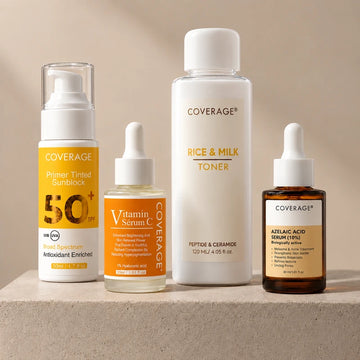
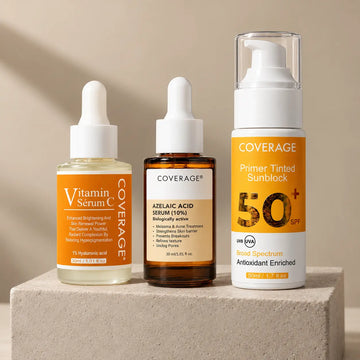
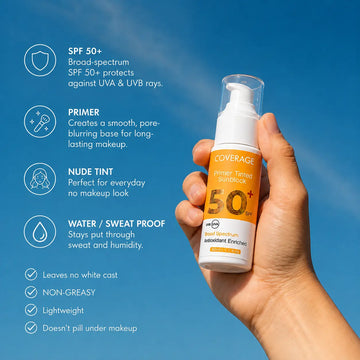
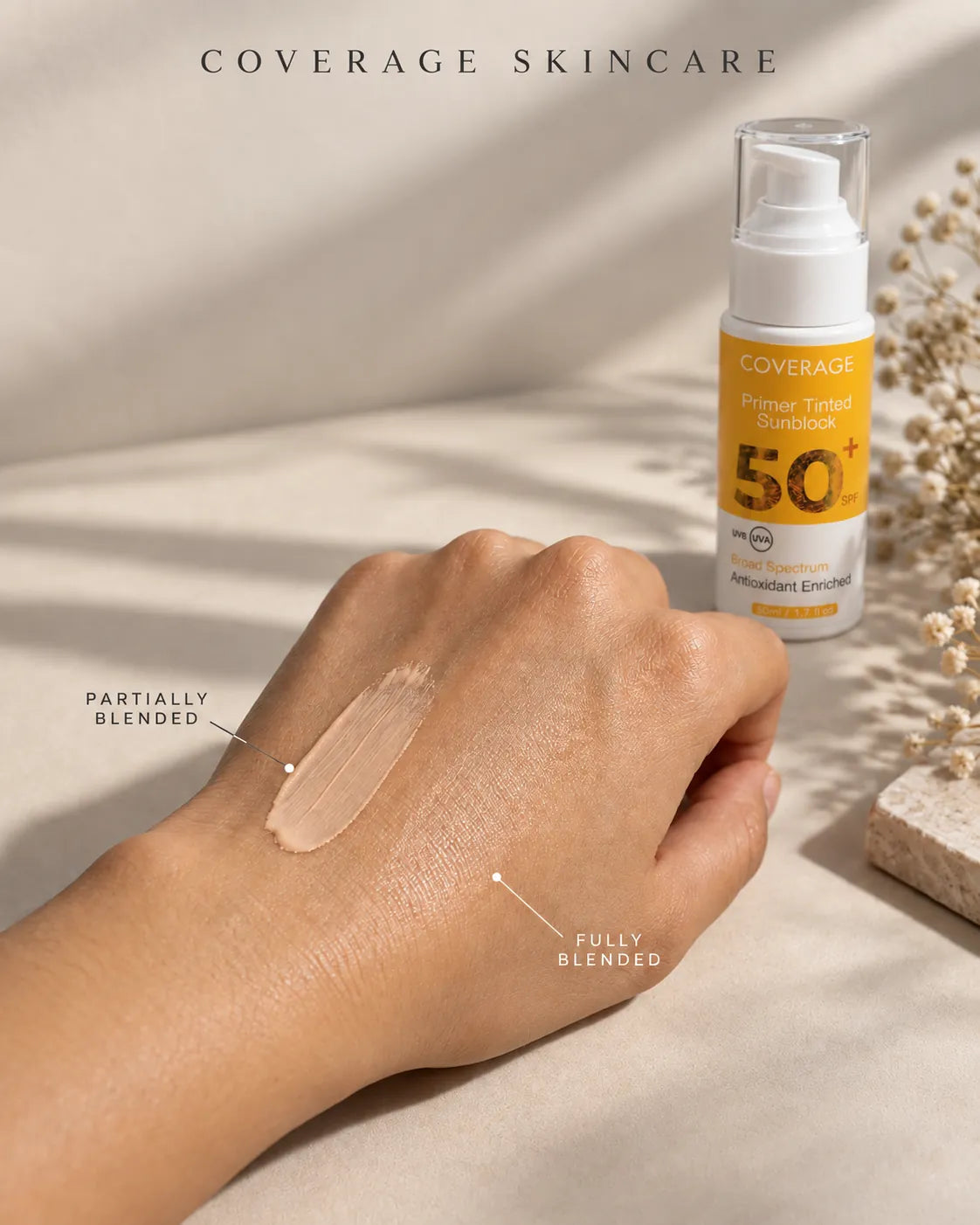
If you already know your skin and just want a mineral, non-comedogenic tinted option built for Pakistani heat, the COVERAGE® Primer Tinted Sunblock SPF 50+ is a 100% mineral, no-white-cast formula that doubles as a primer. The rest of this article explains why each of those words matters for oily and acne-prone skin.
Why oily skin feels greasy in the first place

Before blaming your sunscreen, understand your skin. Oiliness is driven heavily by temperature. Classic dermatology research measured that the rate of sebum reaching the skin surface changes on the order of 10% for every 1°C change in skin temperature. A 2019 study on summer environments found that outdoor heat measurably raised sebum secretion and greasiness compared with indoor conditions. A 2025 controlled crossover trial went further, finding that at 32°C sebum secretion rose significantly compared with a cooler 22°C, alongside a rise in inflammatory markers.
In plain terms: in Lahore or Karachi in June, your face is warmer, so your oil glands run faster. That slick feeling by lunchtime is largely your own sebum responding to heat, not proof that your sunscreen "went oily." This matters, because the real fix is choosing a light formula and blotting, not abandoning SPF.
Can tinted sunscreen actually cause acne?

Here is the honest answer most pages skip. Sunscreen, as a category, does not cause acne. The SPF concept does not stimulate oil glands or block pores. What can trigger breakouts are specific ingredients or reactions, and two different things often get lumped together:
1. True pore-clogging breakouts (acne cosmetica)
Heavy emollients and certain oils and waxes can sit in the follicle, mix with sebum and dead skin cells, and contribute to congestion and comedones over days to weeks. This is a recognised phenomenon called acne cosmetica. It builds up slowly.
2. Irritation and folliculitis that mimic acne
Some formulas cause an irritant reaction, small itchy bumps, or sterile pustules that look like acne but are not caused by pore-clogging at all. Fragrance and some chemical filters are common triggers for reactive skin. This appears quickly.
Telling these apart matters, because the solution differs. If a product genuinely clogs you, change the formula. If it irritates you, simplify your routine and choose fragrance-free mineral filters. And remember that sunscreen is a protector, not a cure. If your main concern is treating the keel muhase themselves, our acne treatment guide and acne range cover that properly.
The honest truth about "non-comedogenic"
This is where we will not insult your intelligence. "Non-comedogenic" sounds clinical and reassuring. It is neither regulated nor standardised.
The term traces back to comedogenicity ratings built largely on the rabbit ear assay, in which single ingredients were applied, often at full concentration, to rabbit ear skin and graded for follicular changes. A 2025 clinical review in JAAD Reviews put it bluntly: later studies revealed inconsistent results when the assay was applied to human skin, and the lack of standardised testing and regulatory oversight allows companies to label products non-comedogenic regardless of their actual potential to cause acne. Separate analysis suggests only around 30% of ingredients rated highly comedogenic in the rabbit model actually produced comedones in human testing.
So what should you do with the label? Treat it as a helpful signal that a brand designed with congestion in mind, not as a cast-iron promise. Your own skin over two to three weeks is the real test. A finished formula behaves very differently from any single ingredient inside it, which is exactly why the isolated "comedogenic ratings" for individual ingredients shared online are unreliable for judging a real product.
Mineral versus chemical filters, and why texture matters more

For oily and acne-prone skin, the formulation matters more than the mineral-versus-chemical label. That said, there are sensible defaults.
Cleveland Clinic notes that mineral sunscreens using zinc oxide and titanium dioxide are less likely to clog pores and are a good option for oily or acne-prone skin, and that they work on contact. Zinc oxide additionally has documented anti-inflammatory properties that can help calm irritated skin, though this is supportive comfort rather than a treatment. Chemical filters are not villains, but for skin that stings or breaks out easily, fragrance-free mineral filters are the lower-risk starting point.
Texture is the part people underrate. Lightweight, fluid or gel-cream textures sit far better on oily skin than thick, heavy creams. And the American Academy of Dermatology's core advice still holds: choose a broad-spectrum SPF 30 or higher that you will actually wear.
The full breakdown of SPF numbers, whether SPF 50 is enough for Pakistan, and how much to apply lives in our SPF 50 guide. Here we stay focused on oil and acne.
The COVERAGE® approach: protection oily skin will actually wear

The COVERAGE® Primer Tinted Sunblock SPF 50+ was built around exactly these concerns. It is a 100% mineral formula: the only UV filters are micronized zinc oxide and micronized titanium dioxide, with no chemical filters at all, which is why it suits sensitive and reactive skin that reacts to conventional sunscreen.
It is broad-spectrum SPF 50+, water and sweat resistant so it holds through heat and humidity, and lightweight and non-comedogenic. Hydrating ingredients such as glycerin, aloe vera extract and panthenol keep skin comfortable rather than tight, which is what makes daily reapplication realistic in the first place. The natural nude tint evens skin tone for a no-makeup finish and doubles as a makeup primer, and it is formulated to avoid a white cast on medium and fair tones, with any slight cast on deeper tones settling within about ten seconds.
Because it contains iron oxides, it also helps shield against visible light, which plain sunscreen does not. Visible light is a genuine driver of pigmentation, and we cover that science in full in our tinted sunscreen guide. If you are comparing options or looking for your shade, the best tinted sunscreen buyer's guide walks through that, and there is a separate price guide too.
Matte or dewy: what oily skin should actually choose

For oily and acne-prone skin, a matte or natural soft-satin finish is usually the more comfortable daily choice. Matte formulas use oil-absorbing agents to reduce shine and blur the look of pores, which is why dermatology sources consistently point oily and combination skin toward them.
There is a nuance worth knowing. In very high humidity, a heavy occlusive matte cream can feel suffocating, while a lighter formula lets skin breathe. So the practical question is not really "matte versus dewy" but lightweight versus heavy. A light, non-greasy tinted formula with a natural finish gives you shine control without feeling like a mask. What you want to avoid, if you already fight midday shine, is a wet, glossy dewy finish that adds to it.
Does the tint help with active breakouts and post-acne marks?

Two honest points here.
For active breakouts, a sheer tint can visually soften redness and help you feel less self-conscious, and mineral pigment sits on top of skin rather than being absorbed into it. It will not treat the pimple itself.
For post-acne marks, the daag dhabbe that linger after a spot heals, the story matters far more for Pakistani skin. Post-inflammatory hyperpigmentation is more common and more stubborn in medium-to-deep skin tones. Its incidence after acne has been reported as high as 65% in darker skin tones, and up to 85% of people with Fitzpatrick IV to VI skin can develop it following inflammatory acne. Daily sun protection is the single most important step for stopping those marks from darkening further, because both UV and visible light drive pigment production. The tint covers marks cosmetically today while the SPF protects the fading you are working on.
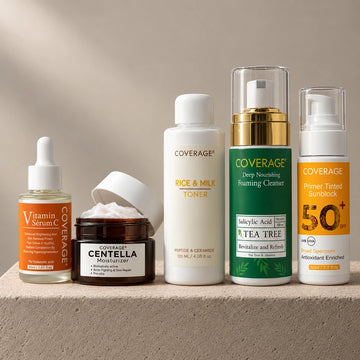
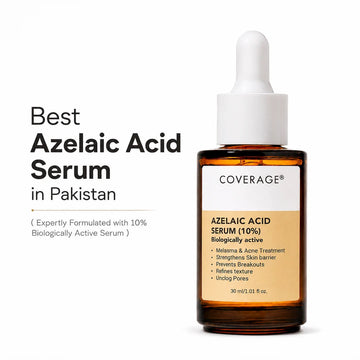
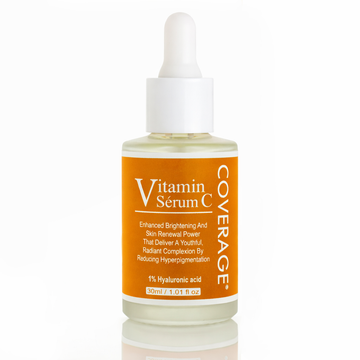
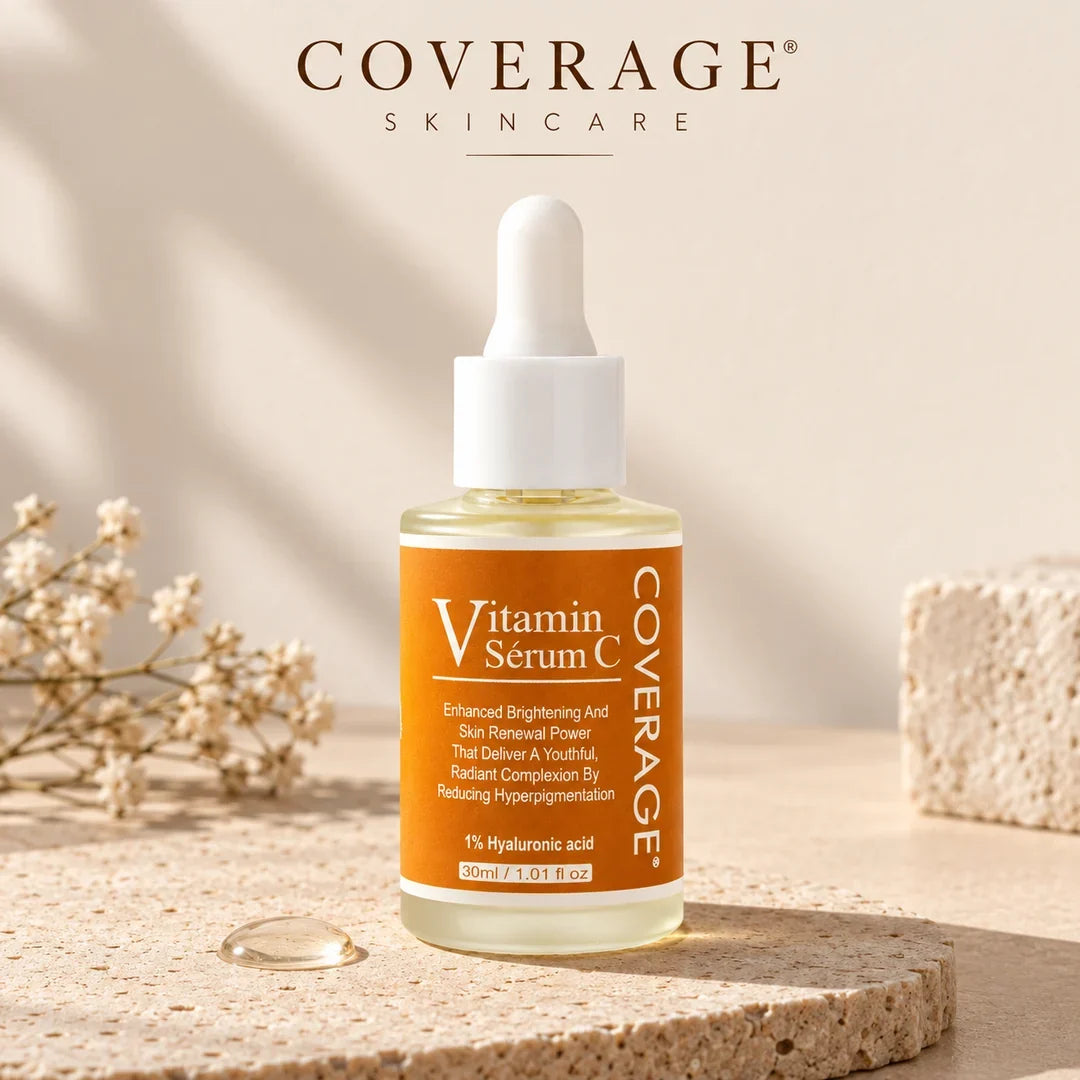
To actively fade marks, sunscreen pairs with ingredients that have real evidence, such as azelaic acid: a 16-week controlled study of 15% azelaic acid gel demonstrated reduction in both acne and post-inflammatory hyperpigmentation. See our Azelaic Acid 10% Serum, the Vitamin C + 1% HA Serum and the pigmentation and melasma range. The clean way to think about it: sunscreen protects the work, the actives do the fading.
Can tinted sunscreen replace foundation?
For everyday university, work or errands, yes, for many people. A tinted sunscreen gives light, even coverage and a natural finish, which is often all you want in heat. Crucially, you get a full, deliberate layer of SPF, whereas foundation that happens to contain SPF is almost never applied thickly enough to deliver its labelled protection.
For a heavy, full-coverage event look, foundation still wins, and a tinted sunblock makes an excellent primer underneath it. The point is that for daily life you no longer have to choose between protection and looking put-together.
How to reapply over an oily face and over makeup

This is the question that actually decides whether you stay protected. Reapplication matters because sweat, oil and face-touching degrade your morning layer, yet almost nobody reapplies a cream over a full face of makeup.
A practical method for oily skin:
- Blot first. Press a clean tissue or blotting paper over the shiny zones to lift surface oil. Press, do not rub.
- Reapply in thin taps, or use a powder SPF for a purely matte touch-up. Powder formats buff over makeup without disturbing it and are a favourite for oily skin, though you must apply enough, with several passes, for them to count as protection.
- On a bare or lightly tinted face, a thin re-layer of the tinted sunblock refreshes both colour and protection at once.

The goal is realistic protection you will actually repeat, not one perfect morning application you never top up.
Sweat, humidity and Pakistani heat
Pakistan gives skin a hard test. UV in Lahore and Karachi regularly reaches very high to extreme levels through summer. Combine that with humidity that stops sweat from evaporating and you have the exact conditions that make oily skin greasier and can aggravate breakouts.
Two features earn their place here. First, water and sweat resistance, so the protective film holds instead of sliding off. Second, a light texture that does not feel heavy when you are already hot. A hydrating but light mineral formula covers both. Explore the full sun protection range for options.
Is daily tinted sunscreen safe for acne-prone skin?
Yes, and for acne-prone skin it is arguably more important, not less. If you use any acne actives such as retinoids, exfoliating acids or benzoyl peroxide, your skin becomes more sun-sensitive, and unprotected sun worsens the very marks you are treating.
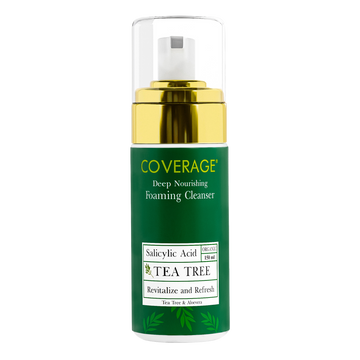
The caveats are simple. Choose a non-comedogenic, fragrance-free, lightweight formula. Apply enough. Remove it properly at night with a gentle cleanser such as our Deep Nourishing Foaming Cleanser or something from the face wash range. And watch your own skin over two to three weeks before judging it.
A simple routine for oily, acne-prone skin
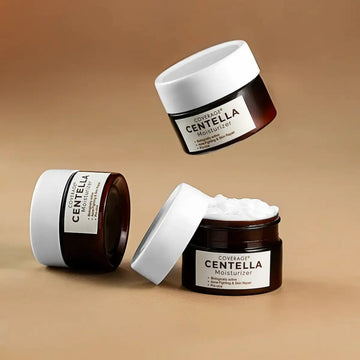
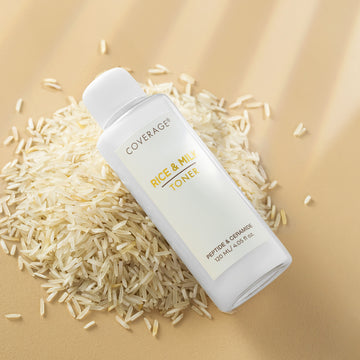
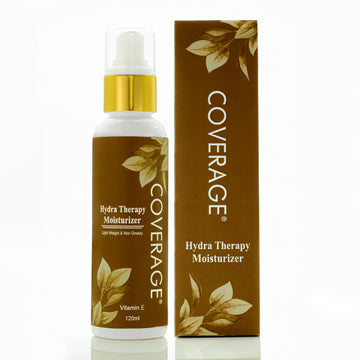
Morning: gentle cleanse, an optional ceramide-peptide toner, a light hydrating layer such as the Centella Barrier Repair Moisturizer or Hydra Therapy Moisturizer, then tinted sunblock as the final morning step.
Evening: cleanse thoroughly, treat with actives like azelaic acid or vitamin C, then a light moisturizer. Sunscreen protects; the actives do the correcting.
Frequently asked questions
Will tinted sunscreen make my oily skin greasier?
Not if it is lightweight. The midday shine is mostly your own sebum responding to heat, which research links directly to skin temperature. Choose a light, matte or natural-finish formula and blot rather than rub.
Can tinted sunscreen cause acne?
The concept of sunscreen does not, but specific heavy or irritating ingredients can, either through pore-clogging known as acne cosmetica, or through irritation and folliculitis that only look like acne. Choose non-comedogenic, fragrance-free mineral formulas and observe your own skin over two to three weeks.
Does "non-comedogenic" guarantee it will not break me out?
No. It is an unregulated marketing term with no standardised human test behind it. Treat it as a useful signal that a brand designed the formula with congestion in mind, then trial the product on your own skin.
Is tinted sunscreen good for oily skin?
Yes, provided the texture is light. Oily skin does best with fluid or gel-cream textures and a matte or natural finish rather than thick, heavy creams or a wet dewy finish.
Does the tint help post-acne marks and daag dhabbe?
It covers marks cosmetically today, and the SPF plus iron oxides help prevent them from darkening further. To actively fade them, pair sunscreen with proven actives such as azelaic acid.
Can I wear tinted sunscreen instead of foundation?
For daily wear, yes, for many people, and you get a proper SPF layer that makeup alone never provides. It also works well as a primer under foundation for events.
How do I reapply over makeup without going cakey?
Blot surface oil first, then either tap on more tinted sunblock in thin layers or buff a powder SPF over your makeup with several passes.
Is daily tinted sunscreen safe for acne-prone skin?
Yes, and it is especially important if you use acne actives, which increase sun sensitivity. Choose a light, non-comedogenic, fragrance-free formula and cleanse it off properly at night.
Is mineral or chemical sunscreen better for acne-prone skin?
Mineral filters such as zinc oxide and titanium dioxide are the lower-risk starting point for reactive, acne-prone skin, as they are less likely to clog pores. But formulation and texture matter more than the category label.
Oily skin ke liye tinted sunblock theek hai?
Ji haan, agar formula halka ho. Garmi mein skin ka apna tel barhta hai, is liye bhaari cream ki bajaye halki, matte ya natural finish wali tinted sunblock behtar hai. Blotting paper saath rakhein aur din mein dobara lagayein.
This article is for general informational purposes only and is not a substitute for professional medical advice. All information and claims referenced above are drawn from publicly available dermatological studies and expert sources. Always consult a dermatologist for advice specific to your skin.

Leave a comment
This site is protected by hCaptcha and the hCaptcha Privacy Policy and Terms of Service apply.