
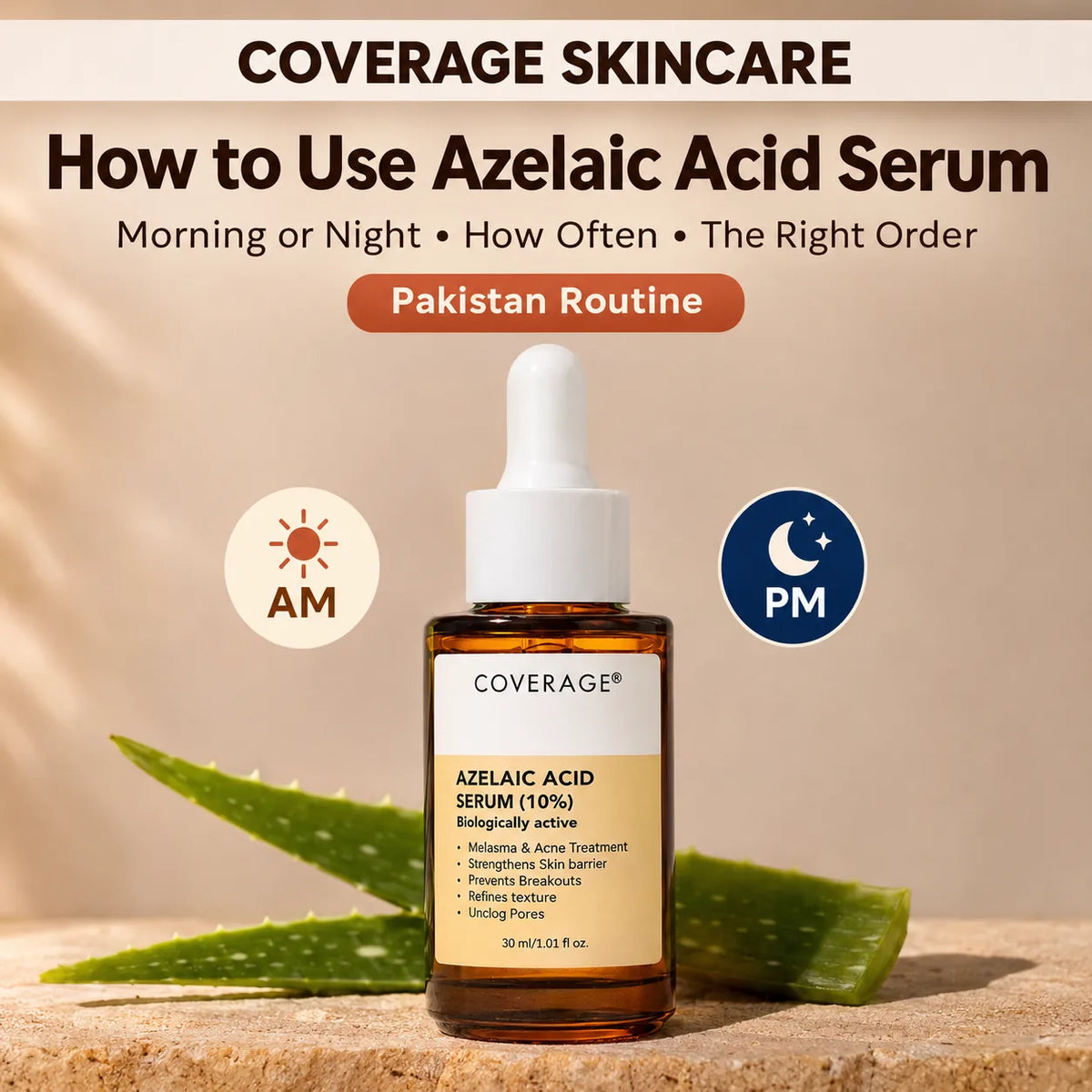
How to Use Azelaic Acid Serum: Morning or Night, How Often and the Right Order (Pakistan Routine)
Short answer: you can use azelaic acid serum in the morning, at night, or both. Apply it to clean, dry skin after cleansing (and toner, if you use one), let it settle for about a minute, then follow with moisturizer. In the morning, finish with SPF 50 sunscreen every single time. If you are new to azelaic acid, start every other night for the first one to two weeks, move to once daily, and go to twice daily only once your skin feels completely comfortable.
That is the whole routine in one paragraph. The rest of this guide explains the reason behind every step, and how to adjust it for your skin type, for Pakistani heat, humidity and winter smog, and for the other products already on your shelf: niacinamide, vitamin C, salicylic acid, retinol and benzoyl peroxide. We formulate and manufacture our own COVERAGE Azelaic Acid 10% Serum, so we also answer the questions our customers send us on WhatsApp every day, in plain language.
The azelaic acid routine at a glance
When: morning, night, or both. Azelaic acid is not known to cause sun sensitivity, so daytime use is fine with sunscreen on top.
How often: every other night for 1 to 2 weeks, then every night. Twice daily once your skin is used to it.
Order: cleanser → toner (optional) → azelaic acid serum → moisturizer → sunscreen (morning only).
How much: 3 to 4 drops for the whole face, kept away from the eye area and the corners of the nose and lips.
Dry or damp skin: dry. Pat your face dry and let any toner absorb first.
Results: most of our customers see a visible difference within 1 to 3 weeks of consistent daily use. Every skin type and every concern is different, so some people need more time, especially for older marks and melasma.

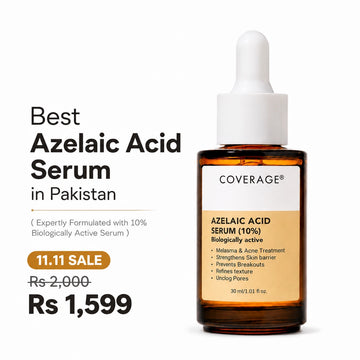
Looking for an azelaic acid serum you can use every day? Our COVERAGE Azelaic Acid 10% Serum is a lightweight, fast-absorbing serum for keel muhase, daag dhabbe, chhaiyan and uneven tone. Aloe leads the formula ahead of water, Sodium Hyaluronate keeps skin hydrated, and it layers under sunscreen without pilling. No fragrance, no alcohol, no propylene glycol. 30ml, cash on delivery across Pakistan.
What Does Azelaic Acid Do in Your Skincare Routine?
Azelaic acid is a naturally occurring dicarboxylic acid. Small amounts are found in grains such as wheat, rye and barley, and it is also produced by a yeast that lives on normal skin. For skincare it is made in the lab, so its purity and strength stay consistent from batch to batch.
It does several jobs at once, which is why it fits so many of the skin concerns we see in Pakistan:
- It works on acne bacteria. Azelaic acid is antibacterial against Cutibacterium acnes, the bacteria linked to acne, and it is not known to create the bacterial resistance seen with antibiotics (Schulte, Wu and Rosen, Journal of Drugs in Dermatology, 2015).
- It helps keep pores clear. It normalises the way skin cells shed inside the pore, which reduces blackheads, whiteheads and congestion.
- It calms inflammation and redness. A 15% azelaic acid gel is approved in the US for the bumps and redness of rosacea.
- It targets overactive pigment cells. Azelaic acid inhibits tyrosinase, the enzyme behind melanin production, and acts mainly on hyperactive pigment cells rather than normal ones (Sauer et al., Advances in Dermatology and Allergology, 2023). This is why it is used for chhaiyan (melasma) and for the brown marks acne leaves behind.
The American Academy of Dermatology's 2024 acne guideline includes topical azelaic acid among its recommended treatments and notes it can be especially useful for darker skin types, because it also works on the pigmentation acne leaves behind (AAD guidelines of care for acne, 2024).
For the full background on benefits and uses, read our complete azelaic acid serum guide for Pakistan. This article focuses on one thing: using it correctly, every day.
Should You Use Azelaic Acid Serum in the Morning or at Night?
Direct answer: either works, and so does both. Azelaic acid is not known to make skin sensitive to sunlight, so it can go into your morning routine as long as sunscreen follows it.
The evidence behind this is clear:
- No sun-sensitivity signal. Bayer's product monograph for its 15% azelaic acid gel reports no phototoxicity or photoallergy in its controlled clinical studies and human skin safety studies (Finacea product monograph, Bayer).
- Prescription azelaic acid is used morning and evening. Both the UK directions for the 20% cream (Skinoren 20% Cream SmPC) and the US directions for the 15% gel (US FDA prescribing information, azelaic acid gel 15%) specify twice-daily use, morning and evening.
You will find guides online that say azelaic acid makes skin more sensitive to the sun. The regulatory safety data does not support that. Sunscreen is still essential with azelaic acid, but for a different reason: UV and visible light keep creating new pigment while you are fading the old.
So the real question is not which time is allowed, but which time fits the rest of your routine.
| Option | Best for | Why |
|---|---|---|
| Night only | Beginners, sensitive skin, people using vitamin C in the morning | The easiest way to build tolerance. Any early tingling happens while you sleep, and there is no rush to layer sunscreen and makeup on top. |
| Morning only | People using a retinoid or an exfoliating acid at night | Keeps the two strongest steps in separate routines, which lowers the risk of irritation. |
| Morning and night | Experienced users with active acne, post-acne marks or melasma | Twice daily is how azelaic acid is used in most clinical research. Move here only once daily use feels completely comfortable. |
A practical point for Pakistan: if your mornings involve a long commute, heavy sweating or full makeup, night use is often simpler. If your nights are already taken by a retinoid, give azelaic acid the morning slot and protect it with sunscreen.
Where our serum fits: the directions for COVERAGE Azelaic Acid 10% Serum are once or twice daily, and if you are new to actives, every other night to begin with, building up as your skin adjusts. It is fragrance-free, alcohol-free and propylene glycol-free, and light enough to sit under sunscreen and makeup, so it works in either slot.

How Often Should You Use Azelaic Acid Serum? A Beginner Schedule
Direct answer: start every other night, move to every night after one to two weeks, and use it up to twice daily once your skin is comfortable. That is also the direction on our own serum.
The reason for the slow start is simple. Mild tingling, itching or stinging in the first few weeks is the most common reaction to azelaic acid, and the prescribing information notes it usually happens early and settles as skin adjusts (US FDA prescribing information, azelaic acid gel 15%). The UK directions for the 20% cream go further and advise people with sensitive skin to use it only once a day, in the evening, for the first week (Skinoren 20% Cream SmPC). Building up gently gets you through that phase without giving up.
| Stage | How often | What to watch for |
|---|---|---|
| Before day 1 | Patch test on the inner forearm or jawline, then wait 24 hours | Redness, swelling or itching means do not continue. |
| Weeks 1 to 2 | Every other night, after cleansing, followed by moisturizer | Mild tingling that fades within minutes is common. |
| Weeks 3 to 4 | Every night | Skin should feel comfortable, not tight or flaky. |
| Week 5 onwards | Once daily, or morning and night if you want | Sunscreen every morning. Any lasting stinging means step back one stage. |
If your skin is oily, resilient and already used to actives, you can begin at once daily. If it is sensitive or reactive, stay on every other night for longer. Moving slowly does not cost you results. Stopping because of irritation does.
Using it more often than twice a day will not speed anything up. Even prescription azelaic acid stops at twice daily.
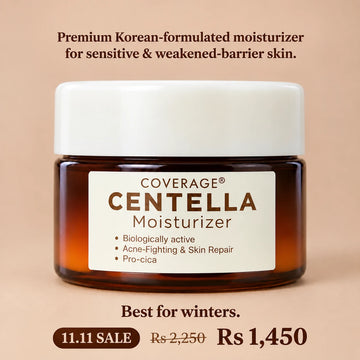
When to step back: if your skin stings for more than a few minutes, turns red and stays red, or starts flaking, drop back to every other night and use a soothing moisturizer such as our Centella Moisturizer. If swelling, blistering, a rash or hives appear, stop and see a doctor.

The Correct Order: Where Azelaic Acid Goes in Your Routine
Direct answer: azelaic acid serum goes after cleansing and toning, before moisturizer, and before sunscreen. The general rule is thinnest texture first and thickest last, so a light, water-based serum goes on before a cream.
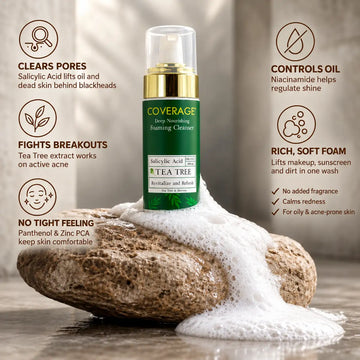
- Cleanse. Use a gentle face wash and pat your face dry with a clean towel. If your cleanser contains salicylic acid, like our Deep Nourishing Foaming Cleanser, that is usually fine because it rinses off. If your skin stings in your first weeks of azelaic acid, use it once a day and a plain wash the other time.
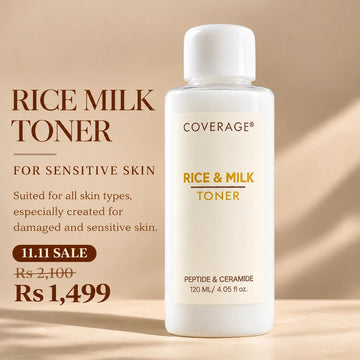
- Tone (optional). A hydrating toner such as our Rice & Milk Toner can go on first. Let it absorb fully.
- Azelaic acid serum. 3 to 4 drops for the whole face. Press it in with your fingertips, avoiding the eye area, the inner nostrils and the corners of the lips, which are thinner and sting more easily.
- Moisturizer. Once the serum has settled, seal it in. Oily skin in summer: a light gel cream. Dry or winter skin: something more nourishing.
- Sunscreen (morning only). The last step every morning, whatever the weather, indoors as well as out.
How many drops of azelaic acid serum should you use?
For our serum, 3 to 4 drops cover the whole face. More product does not mean faster results, it mainly raises the chance of stinging. For comparison, the UK directions for the 20% cream treat about 2.5 cm of cream, roughly half a gram, as enough for the whole face (Skinoren 20% Cream SmPC).

Do you apply azelaic acid on dry or damp skin?
Dry. The UK directions for the 20% cream say skin should be cleaned and dried before application (Skinoren 20% Cream SmPC), and MedlinePlus advises washing with a mild cleanser and patting dry (MedlinePlus, azelaic acid topical). Our own directions say the same: cleanse and pat skin dry. Many people also find that actives sting more on damp skin. If you use a toner first, wait until it has sunk in.
Do you need to wait between layers?
There is no evidence that a long wait changes how well azelaic acid works. The practical reason to pause for a minute or so is texture: letting each layer settle stops products pilling (rolling into small balls), especially under sunscreen. Wait until the serum no longer feels wet, then move on.
The buffer method for very sensitive skin
If even every-other-night use stings, apply a thin layer of moisturizer first, then the serum, then a little more moisturizer. This softens the contact and is a common way to build tolerance. Once your skin settles, go back to the standard order.
If it pills under sunscreen
Pilling is almost always a layering problem. Use only 3 to 4 drops, press rather than rub, let each layer settle until it no longer feels wet, and use a lighter moisturizer (or less of it) in summer. Apply sunscreen with light patting strokes instead of rubbing back and forth.
Can you wear makeup on top?
Yes. Once your sunscreen has set, makeup can go on as normal. Remove it properly at night so the serum goes onto clean skin.
Why Our Azelaic Acid 10% Serum Is Easy to Build Into a Routine
We built the COVERAGE Azelaic Acid 10% Serum for the way people in Pakistan actually live: heat, humidity, sweat, sunscreen on top, and skin that has often been stressed by fairness creams or strong treatments in the past. Every step of the routine above works better when the serum itself is light and comfortable.
- 10% biologically active azelaic acid, a strength chosen so you can use it daily for months. With pigmentation, consistency is what decides the outcome.
- Aloe Barbadensis Leaf Extract is the first ingredient, ahead of water, so the formula soothes while it works.
- Sodium Hyaluronate holds water in the skin through air-conditioned offices and Lahore and Karachi summers.
- Tocopheryl Acetate (vitamin E) adds antioxidant support.
- No fragrance, no alcohol and no propylene glycol, three common sources of stinging in heavier creams.
- Lightweight, non-comedogenic and fast-absorbing, so it sits under moisturizer and sunscreen without pilling or clogging pores.
- Suits oily, combination, acne-prone and sensitive skin, with a patch test before you start.
- No prescription needed.
Full ingredient list: Aloe Barbadensis Leaf Extract, Aqua (Water), Azelaic Acid, Propanediol, Bis-Ethoxydiglycol, Xylitylglucoside, Isohexadecane, Polysorbate 60, Sodium Hyaluronate, Tocopheryl Acetate, Phenoxyethanol, Triethylene Glycol.
We manufacture it ourselves, through our in-house chemical engineers, at our own GMP certified, ISO 9001 facility in Lahore, with lab testing and high-grade raw materials. COVERAGE is Halal certified and cruelty-free. That means the azelaic acid on the label is the azelaic acid in the bottle, at the strength stated. COVERAGE has now delivered more than 72,000 orders across Pakistan, and azelaic acid is one of the products our customers reorder most.
See the full directions, reviews and current offer on the COVERAGE Azelaic Acid 10% Serum page.
What Strength of Azelaic Acid Should You Choose: 10%, 15% or 20%?
Azelaic acid comes in two broad groups:
- Prescription medicines at 15% (gel or foam) and 20% (cream), used under a doctor's direction for diagnosed conditions such as acne and rosacea.
- Cosmetic serums, most often at 10%, made for daily use without a prescription.
The prescription strengths are stronger, and if a dermatologist has prescribed one for you, follow their plan. A 10% serum earns its place through everyday consistency. With pigmentation and post-acne marks, the routine you can follow every day for months matters most, and a gentle, lightweight 10% serum is easy to stay with: it is comfortable on oily skin in summer, it does not feel heavy under sunscreen, and it suits people whose skin reacted to strong creams before.
Concentration is also only one part of the picture. The base the acid sits in changes how it feels and how much of it reaches the skin, which is why laboratory testing found markedly greater skin penetration from the 15% gel than from the older 20% cream (Del Rosso, Journal of Clinical and Aesthetic Dermatology, 2017).
If you have used a 20% cream before, our Skinoren vs COVERAGE Azelaic Acid 10% comparison covers the difference properly, and our azelaic acid 10% price guide covers what you should expect to pay in Pakistan.
Morning Azelaic Acid Routine for Pakistan
The morning routine has one goal: get the serum on, then protect your skin from the sun. Sunlight is one of the strongest triggers of pigmentation, and Pakistan gets a lot of it. Sun exposure darkens melasma and post-acne marks, so any pigment treatment without daily sunscreen is working against itself.
- Cleanse with a gentle face wash, or just rinse with water if your skin is dry.
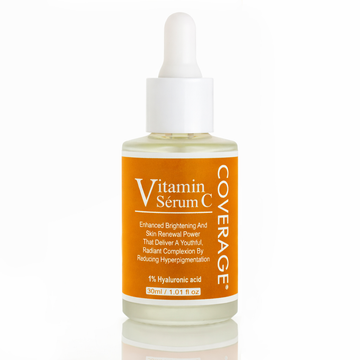
- Vitamin C (optional). If you use our Vitamin C + 1% HA Serum, apply the lighter vitamin C first, let it absorb, then the azelaic acid. If that feels like too much, keep vitamin C for the morning and move azelaic acid to night.
- Azelaic acid serum, 3 to 4 drops.
- Moisturizer. In July humidity, oily skin may prefer a very light layer. In winter, or if you sit under air conditioning all day, do not skip it.
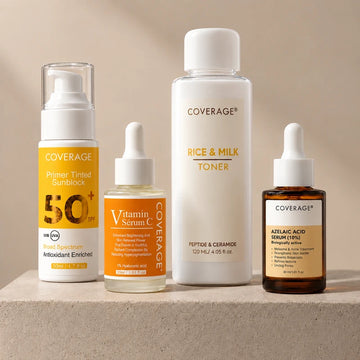
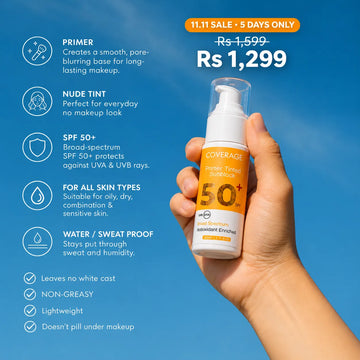
- Sunscreen, SPF 50. Use a generous amount, roughly two finger-lengths for the face and neck. Our Primer Tinted Sunblock SPF 50+ is 100% mineral, with micronized zinc oxide and titanium dioxide, and its iron oxide tint adds protection against visible light while it doubles as a light base.
- Reapply about every two hours when you are outdoors, and straight after sweating or washing your face, as the American Academy of Dermatology advises.
Why a tinted sunscreen matters for brown skin
UV is not the only light that drives pigmentation. Visible light also contributes, especially in darker skin tones, and untinted sunscreens give little protection against it. Tinted sunscreens made with iron oxides help close that gap (International Journal of Dermatology, 2024). In a 2025 randomised summer study of women with melasma, a tinted SPF 50+ with iron oxides improved the evenness of pigment more than an untinted sunscreen (Polena et al., Journal of Cosmetic Dermatology, 2025).
More on this in our tinted sunscreen guide and our mineral tinted sunscreen guide. Not sure whether SPF 50 is enough for your city and routine? Read Is SPF 50 Enough in Pakistan?

Night Azelaic Acid Routine
Night is the easiest place to start, and it is where most beginners should stay for the first month.
Beginner night routine, three steps:
- Cleanse. If you wore sunscreen or makeup, wash twice: the first pass lifts the layer on top, the second cleans your skin.
- Azelaic acid serum, 3 to 4 drops.
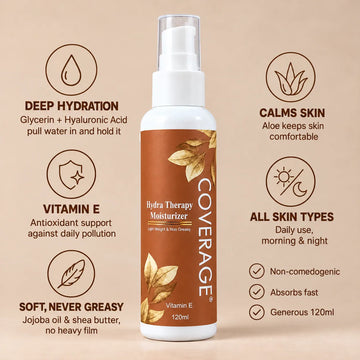
- Moisturizer. Our Centella Moisturizer suits oily, acne-prone and sensitive skin. For dry skin, our Hydra Therapy Moisturizer adds deeper hydration with glycerin, hyaluronic acid, jojoba oil and shea butter.
Experienced night routine: if you also use a retinoid or an exfoliating acid, do not stack them on the same night at first. Alternate nights (azelaic acid one night, the retinoid the next), or keep azelaic acid in the morning and the retinoid at night. Once your skin tolerates both well, some people layer them on the same night, but that is a step to take slowly, not a starting point.

Azelaic Acid Routines by Skin Type
First, a point many people get wrong: skin tone does not decide skin type. Fair, wheatish and deeper skin tones can all be oily, dry, combination or sensitive. What brown skin does share is a stronger tendency to develop post-inflammatory hyperpigmentation, the brown marks that stay after a pimple, a scratch or irritation heals. That is one more reason to introduce actives gently.
You do not need every product below. A cleanser, our serum, a moisturizer and sunscreen is a complete routine.
Oily and acne-prone skin
- Morning: Deep Nourishing Foaming Cleanser, Azelaic Acid 10% Serum, a light layer of Centella Moisturizer, Primer Tinted Sunblock SPF 50+.
- Night: double cleanse, Azelaic Acid 10% Serum, Centella Moisturizer.
- Why it works: our cleanser has salicylic acid second in the formula, with tea tree, zinc PCA and niacinamide, and as a wash-off step its contact time is short. Do not skip moisturizer just because your skin is oily. Our Centella Moisturizer is lightweight and non-comedogenic.
Dry skin
- Morning: gentle wash or a water rinse, Rice & Milk Toner, Azelaic Acid 10% Serum, Hydra Therapy Moisturizer, Primer Tinted Sunblock SPF 50+.
- Night: gentle cleanse, Rice & Milk Toner, Azelaic Acid 10% Serum, Hydra Therapy Moisturizer.
- Why it works: dryness is one of the reactions people notice when starting azelaic acid, so dry skin needs the moisturizer step most. Our Rice & Milk Toner adds glycerin, sodium hyaluronate, panthenol and Ceramide NP before the serum.
Sensitive skin
- Morning: water rinse or gentle cleanser, Azelaic Acid 10% Serum (only once nights feel comfortable), Centella Moisturizer, Primer Tinted Sunblock SPF 50+.
- Night: gentle cleanser, a thin buffer layer of Centella Moisturizer (optional), Azelaic Acid 10% Serum, Centella Moisturizer.
- Why it works: DermNet notes that people with very sensitive or eczema-prone skin may find azelaic acid irritating (DermNet, azelaic acid), so patch test, go slowly and keep the rest of the routine simple. Our serum leaves out fragrance, alcohol and propylene glycol, so there are fewer common irritants in the bottle. If your skin is already irritated, calm it first with our skin barrier repair guide.
Combination skin
- Morning: cleanser, Azelaic Acid 10% Serum, Centella Moisturizer, Primer Tinted Sunblock SPF 50+.
- Night: cleanser, Rice & Milk Toner, Azelaic Acid 10% Serum, a little more moisturizer on dry cheeks and less on the T-zone.
- Why it works: apply the serum across the whole face, not just the T-zone. Marks and pigment often sit on the cheeks.
Azelaic Acid Routines by Concern: Keel Muhase, Daag Dhabbe and Chhaiyan
The basic routine stays the same for everyone. What changes is what you build around it. These are general examples, not a prescription, so adjust them to your skin and to any treatment a doctor has given you.
For keel muhase (active acne)
- Morning: Deep Nourishing Foaming Cleanser, azelaic acid, a light moisturizer, Primer Tinted Sunblock SPF 50+.
- Night: gentle cleanse, azelaic acid, Centella Moisturizer.
- Tip: do not pick or squeeze. Every picked spot is a future mark on brown skin. Our Keel Muhase Ka Ilaj guide covers the full acne plan.
For daag dhabbe (post-acne marks)
- Morning: cleanse, Vitamin C + 1% HA Serum, moisturizer, SPF 50.
- Night: cleanse, azelaic acid, moisturizer.
- Tip: sunscreen does half the work here. Marks fade far more slowly if they keep getting sun every day. See our dark spots and pigmentation serum guide.
For chhaiyan (melasma)
- Morning: cleanse, vitamin C, azelaic acid, moisturizer, a tinted SPF 50 applied generously and reapplied through the day.
- Night: cleanse, azelaic acid, moisturizer.
- Tip: melasma reacts to heat and visible light as well as UV, so a cap, dupatta and shade matter on top of sunscreen. For the full plan, read our chhaiyan ka ilaj guide.
Flat marks vs acne scars: azelaic acid helps flat discolouration, the brown or reddish marks that sit level with the skin. Indented (pitted) or raised scars are changes in the skin's structure and are treated in clinic with procedures.

Can You Use Azelaic Acid With Other Skincare Ingredients?
Yes, with most of them. Azelaic acid is one of the more cooperative actives. The real risk is not a chemical clash but irritation adding up when several strong products land on the same skin at once. Introduce one new active at a time, every two to three weeks.
| Ingredient | Can you combine? | How to do it |
|---|---|---|
| Niacinamide | Yes, generally well tolerated together | Same routine is fine. Apply the thinner product first. Our azelaic acid serum does not contain niacinamide, while our Vitamin C serum, Centella Moisturizer and cleanser do. Compared in depth in Niacinamide vs Azelaic Acid. |
| Hyaluronic acid | Yes | Same routine. Hydrators make azelaic acid more comfortable, especially for dry or sensitive skin. |
| Vitamin C | Yes, with care | Vitamin C first, let it absorb, then azelaic acid. If you get stinging, split them: vitamin C in the morning, azelaic acid at night. See Azelaic Acid vs Vitamin C. |
| Salicylic acid (BHA) | Yes, with care | A salicylic face wash is usually fine because it rinses off. A leave-on BHA serum is better on alternate nights at first. |
| Glycolic, lactic and other AHAs | Usually better separated | Use the exfoliating acid on different nights, two or three times a week. Layering both on the same night raises irritation risk. |
| Retinol and other retinoids | Yes, but separate at first | Alternate nights, or azelaic acid in the morning and the retinoid at night. Both can cause dryness early on. |
| Benzoyl peroxide | Yes, with care | Both fight acne bacteria. Use benzoyl peroxide in one routine and azelaic acid in the other to limit dryness. |
If a doctor has prescribed a treatment for you, follow their instructions about combining it with skincare.

How to Adjust Your Azelaic Acid Routine for Pakistan's Summer and Winter
Azelaic acid itself works the same everywhere. What changes in Pakistan is everything around it. Lahore's average maximum UV index sits at 11 or above, the World Health Organization's 'extreme' band, through the peak summer months, and even winter months stay in the moderate range (Weather Atlas, Lahore climate).
| Summer (roughly April to September) | Winter (roughly November to February) | |
|---|---|---|
| Serum timing | Night is often more comfortable on hot, sweaty days. Morning use is still fine under SPF. | Morning, night or both. |
| Moisturizer | Lightweight, such as Centella Moisturizer. | More nourishing, such as Hydra Therapy Moisturizer. Consider the buffer method. |
| Sunscreen | SPF 50+, reapplied about every two hours outdoors and after heavy sweating. | SPF 50+ every morning. UV is lower but still there. |
| Main risk | Sweat-related stinging, and pigment darkening from intense UV and visible light. | Dry, tight skin that stings when actives go on. |
| Tip | Let the serum dry fully before sunscreen so layers do not pill in humidity. Blot sweat before reapplying. | Cleanse thoroughly in the evening during smog season, and drop to every other night if your skin turns flaky. |
Storage: keep the bottle capped and away from direct sun and heat, such as a car dashboard or a sunny window sill. Room temperature, away from heat and light, is the standard storage direction for azelaic acid (Mayo Clinic).
Tingling, Purging and Skin Colour: What Is Normal?
Tingling: mild tingling, itching or stinging in the first few weeks is the most common reaction to azelaic acid, and it usually settles as your skin adjusts (US FDA prescribing information, azelaic acid gel 15%). Brief tingling that fades within minutes is fine. Lasting burning is your cue to slow down.
Purging: 'purging' means a short burst of breakouts when an ingredient speeds up skin-cell turnover, and it is classically linked to retinoids and exfoliating acids. It is not a documented effect of azelaic acid in its prescribing information, so do not assume new breakouts are 'just purging'. Use this rule of thumb:
- Likely an early adjustment: a few small spots in areas where you usually break out, settling within the first few weeks.
- Likely irritation: burning that lasts, redness, flaking, itching or a rash, especially where you do not normally break out. Reduce frequency and check your other products.
- Stop and see a doctor: swelling, hives, blistering, or acne that keeps getting worse after the first few weeks.
Skin colour: azelaic acid is not known to darken skin. It works by calming overactive pigment cells. What can cause new marks is irritation: if a product inflames brown skin and you keep using it, post-inflammatory marks can follow, which is another reason to start slowly. The prescribing information for the 20% cream also mentions isolated reports of skin lightening and advises watching for it (US FDA prescribing information, azelaic acid cream 20%). If you notice patches turning lighter than your normal tone, stop and see a dermatologist. Azelaic acid fades excess pigment. It does not change your natural skin colour, and it should never be used to try.
Common Azelaic Acid Mistakes to Avoid
- Starting at full speed. Twice daily from day one is the fastest way to sting, panic and quit. Build up.
- Skipping the patch test. Test on the inner forearm or jawline and wait 24 hours.
- Applying to damp skin. Pat dry first.
- Using too much. 3 to 4 drops cover the face. More product means more tingling, not faster results.
- Stacking every active at once. Azelaic acid, a glycolic toner, a retinol and a salicylic serum on the same night is a recipe for a damaged barrier.
- Skipping sunscreen. Without it, the sun keeps creating new pigment while you treat the old.
- Applying to broken skin. Avoid freshly picked spots, cuts, sunburn, and skin straight after waxing, threading or a peel.
- Using it for fungal acne. Itchy, uniform small bumps on the forehead, chest or back can be Malassezia folliculitis, a yeast problem treated with antifungals, not acne care.
- Quitting in week one. Mild tingling early on is common and usually fades.
- Buying unverified products. Choose a brand that publishes its full ingredient list and stands behind its manufacturing. Our guide on how to check if a skincare product is genuine walks you through it.
How Long Does Azelaic Acid Take to Work, and How Long Should You Use It?
Most of our customers see a visible difference within 1 to 3 weeks of consistent daily use: fewer new breakouts, calmer redness and smoother texture. Every skin type and every concern is different, so some people need more time. Older marks and melasma keep fading with steady daily use and sunscreen over the following months, and the deeper and longer-standing the pigment, the longer it takes.
The research points the same way. The UK directions for the 20% cream describe a clear improvement after about four weeks and recommend continuous use over several months for the best result (Skinoren 20% Cream SmPC). In a 16-week study in patients with skin of colour, 15% azelaic acid gel improved both acne and its pigmentation, with progress visible from week 4 (Kircik, Journal of Drugs in Dermatology, 2011). For melasma, a 24-week double-blind trial of 155 patients found good to excellent results in 73% of those using 20% azelaic acid twice daily alongside a broad-spectrum sunscreen (Verallo-Rowell et al., Acta Dermato-Venereologica, 1989).
Once your skin is where you want it, many people keep azelaic acid in their routine as maintenance, because pigmentation returns easily with sun and heat.
For a full breakdown by concern, read How Long Does Azelaic Acid Take to Work on Acne Marks?

COVERAGE customer results with Azelaic Acid 10%, acne and post-acne marks. Customer's own photos. Individual results vary.
How to Choose an Azelaic Acid Serum in Pakistan
When you compare azelaic acid serums, check for:
- A stated concentration. If the label does not give the percentage, you cannot compare it.
- A full ingredient list on the product page, so you can check for anything your skin reacts to.
- A texture you will actually use daily in heat and humidity. A heavy cream you avoid in July does nothing for your skin.
- Clear directions, including a beginner schedule and a sunscreen instruction.
- A traceable maker. Imported products sold through unofficial channels can be counterfeit or badly stored in summer heat. Buy from the brand or an authorised seller.
Our COVERAGE Azelaic Acid 10% Serum ticks every box: 10% stated on the label, the full ingredient list published, a lightweight aloe-led serum made for Pakistani weather, clear directions on the product page, and manufacturing in our own certified facility in Lahore.
Your Complete COVERAGE Azelaic Acid Routine
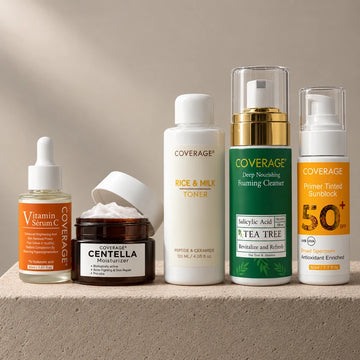
You can build a full azelaic acid routine from our own range, made in our own facility, so every step is designed to sit comfortably with the next:
- Treatment: COVERAGE Azelaic Acid 10% Serum, morning, night or both.
- Protection: Primer Tinted Sunblock SPF 50+, every morning.
- Barrier and hydration: Centella Moisturizer for oily, acne-prone or sensitive skin, or Hydra Therapy Moisturizer for dry skin.
- Morning brightening: Vitamin C + 1% HA Serum, before azelaic acid or in the morning while azelaic acid takes the night.
- Prep: Rice & Milk Toner before your serum, and the Deep Nourishing Foaming Cleanser for oily and acne-prone skin.
Prefer a ready-made routine? These sets are built around azelaic acid:
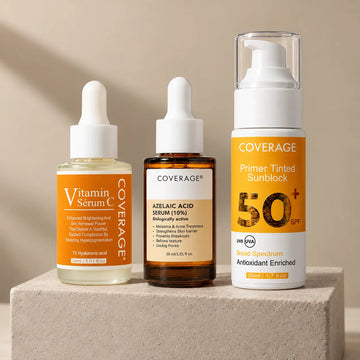
- Acne Care & Sun Protection: Azelaic Acid 10% Serum and Primer Tinted Sunblock SPF 50+, the two essential steps.
- Melasma, Dark Spots & Acne Marks Treatment: Azelaic Acid 10% Serum, Vitamin C + 1% HA Serum and Primer Tinted Sunblock SPF 50+, a full morning and night pigment routine.
- Full Skin Clarity Regimen: Rice & Milk Toner, Vitamin C + 1% HA Serum, Azelaic Acid 10% Serum and Primer Tinted Sunblock SPF 50+.
When to See a Dermatologist
A good serum routine handles a lot, but some situations need a doctor. Book a dermatologist visit if:
- Your acne is severe, painful, deep (nodules or cysts) or leaving scars.
- Irritation does not settle after you cut back to every other night, or you get swelling, hives or blisters at any point.
- Marks or melasma show no improvement after about three months of consistent use with daily sunscreen.
- You suspect fungal acne: itchy, uniform small bumps that do not respond to acne care.
- Any spot changes shape or colour, bleeds, or looks different from the rest.
- Patches start looking lighter than your normal skin tone.
- You are pregnant, breastfeeding, or already using a prescription skin treatment and want to add azelaic acid.
- You have asthma and notice it worsening after starting azelaic acid, which has been reported rarely (Skinoren 20% Cream SmPC).
Frequently Asked Questions About Using Azelaic Acid Serum
Can I use azelaic acid serum every day?
Yes. Once your skin is used to it, azelaic acid suits daily, long-term use, once or twice a day. If you are new to it, start every other night for one to two weeks first, then move to every night.
Should I use azelaic acid in the morning or at night?
Either, or both. Azelaic acid is not known to make skin sensitive to the sun, so morning use is fine as long as you finish with SPF 50 sunscreen. Night is the easiest time for beginners. If you use a retinoid at night, put azelaic acid in the morning.
Can I apply azelaic acid twice a day?
Yes. Prescription azelaic acid creams and gels are directed twice daily, morning and evening, and our serum is directed for once or twice daily use. Build up to it gradually and do not go beyond twice a day, because more frequent use only raises the chance of irritation.
Does azelaic acid go before or after moisturizer?
Before. The order is cleanser, toner if you use one, azelaic acid serum, moisturizer, and sunscreen last in the morning. If your skin is very sensitive, you can apply a thin layer of moisturizer before the serum as a buffer.
How long should I wait between azelaic acid and moisturizer?
About a minute, until the serum no longer feels wet. The pause is mainly to stop pilling under sunscreen and makeup, not because the serum needs a set time to work.
Do I apply azelaic acid on dry or damp skin?
Dry skin. Cleanse, pat your face dry with a clean towel, and let any toner absorb fully before applying the serum. Many people find actives sting more on damp skin.
How many drops of azelaic acid serum should I use?
For COVERAGE Azelaic Acid 10% Serum, 3 to 4 drops cover the whole face. Avoid the area directly around the eyes and the corners of the nose and lips. Using more does not speed up results.
Does azelaic acid make skin sensitive to the sun?
No phototoxicity or photoallergy was reported in the clinical and dermal safety studies of prescription azelaic acid gel. Daily sunscreen is still essential, because UV and visible light keep creating new pigment while you treat the old.
Do I need sunscreen when using azelaic acid?
Yes, every morning. Sun exposure darkens melasma and post-acne marks, so sunscreen is what lets azelaic acid do its job. For pigment-prone brown skin, a tinted mineral SPF 50 with iron oxides also helps against visible light.
Can I use azelaic acid with niacinamide?
Yes. They are generally well tolerated together and can go in the same routine. Apply the thinner product first. Our azelaic acid serum does not contain niacinamide, so it pairs easily with our niacinamide-containing Vitamin C serum, Centella Moisturizer and cleanser.
Can azelaic acid be used with vitamin C?
Yes. Apply the lighter vitamin C serum first, let it absorb, then azelaic acid. If you notice stinging, split them: vitamin C in the morning and azelaic acid at night.
Can I use azelaic acid with retinol?
Yes, but separate them at first: alternate nights, or azelaic acid in the morning and retinol at night. Both can cause dryness when you start, so introduce one at a time.
Is tingling normal when I start azelaic acid?
Mild, brief tingling in the first few weeks is the most common reaction to azelaic acid and usually settles as your skin adjusts. If stinging lasts, use it less often. Stop and seek advice if you get swelling, hives or blistering.
Does azelaic acid cause purging?
Purging is not a documented effect of azelaic acid in its prescribing information. A few small spots early on can happen, but lasting burning, redness, flaking or a rash is irritation, not purging, and means you should reduce use. Acne that keeps worsening after the first few weeks needs a dermatologist.
Can azelaic acid make my skin darker?
It is not known to. Azelaic acid works by calming overactive pigment cells. Irritation from overuse can leave new marks on brown skin, so start slowly and wear sunscreen every morning.
How long does azelaic acid take to work?
Most of our customers see a visible difference within 1 to 3 weeks of consistent daily use. Every skin type and every concern is different, so some people need more time. Older marks and melasma keep improving over the following months with daily use and sunscreen.
Can I use azelaic acid during the day in Pakistan's heat?
Yes. Use a lightweight serum, a light gel moisturizer if your skin is oily, and a generous SPF 50 sunscreen. Reapply sunscreen about every two hours outdoors and after sweating.
Is azelaic acid safe for sensitive skin?
Many people with sensitive skin tolerate it well, but very sensitive or eczema-prone skin can sting. Patch test first, start every other night, and use the moisturizer buffer method until your skin settles.
Can azelaic acid treat fungal acne?
No. Fungal acne (Malassezia folliculitis) is a yeast problem inside the hair follicles and is treated with antifungals. If you have itchy, uniform small bumps on the forehead, chest or back that do not respond to acne care, see a dermatologist.
Is azelaic acid safe during pregnancy?
The American Academy of Dermatology lists azelaic acid among the acne treatments considered safe to use during pregnancy, and only a small amount is absorbed through the skin. Always check with your doctor before starting any new treatment while pregnant or breastfeeding.
What if I miss a dose?
Apply it when you remember, unless your next application is close, in which case skip it. Never apply a double amount to make up for it.
Can I wear makeup over azelaic acid?
Yes. Let the serum settle, apply moisturizer and sunscreen in the morning, then makeup as normal. Remove makeup properly at night so the serum goes onto clean skin.
Can men use azelaic acid serum?
Yes. The routine is the same. If you shave, apply the serum at night or after shaving once any nicks have settled, so it does not sting freshly shaved skin.
How should I store azelaic acid serum in Pakistan's heat?
Keep it capped, out of direct sunlight and away from heat, such as a car dashboard or a sunny window sill. Room temperature away from heat and light is the standard storage direction for azelaic acid.
What strength of azelaic acid should beginners use?
A 10% serum is a comfortable starting point for daily use without a prescription. 15% and 20% are prescription medicines used under a doctor's direction.
Azelaic acid kab lagana chahiye, subah ya raat?
Dono waqt laga sakte hain. Shuru mein raat ko, ek din chhor kar lagayein. Subah lagayein to aakhir mein SPF 50 sunscreen zaroor lagayein.
Azelaic acid serum kaise use karein?
Chehra dho kar achi tarah sukha lein, 3 se 4 drops poore chehre par lagayein, phir moisturizer lagayein. Subah aakhir mein SPF 50 sunscreen lagayein.
Kya azelaic acid serum rozana laga sakte hain?
Ji haan. Pehle 1 se 2 hafte ek din chhor kar lagayein, phir rozana. Skin comfortable rahe to din mein do baar bhi laga sakte hain.
The Bottom Line
Using azelaic acid serum well comes down to a few habits: apply it to clean, dry skin, follow with moisturizer, finish with SPF 50 every morning, and build from every other night to daily at your skin's pace. Morning, night or both are all valid, so choose the timing that fits your other products. Adjust for the season, keep the routine simple, and give it consistent use. If your skin ever moves from tingling to genuinely irritated, slow down rather than give up.
When you are ready to start, our COVERAGE Azelaic Acid 10% Serum is made to slot straight into this routine, and our Primer Tinted Sunblock SPF 50+ protects the work it does. If you have a question about your own skin, send us a message on WhatsApp. Our team answers azelaic acid questions every day.
References
- Bayer Inc. Finacea (azelaic acid) 15% gel product monograph. Bayer, 2020.
- Medicines and Healthcare products Regulatory Agency (UK) via eMC. Skinoren 20% Cream: Summary of Product Characteristics. Updated 2023.
- US Food and Drug Administration. Prescribing information, azelaic acid gel 15%. Revised 2021.
- US Food and Drug Administration. Prescribing information, azelaic acid cream 20%. Revised 2024.
- Reynolds RV, Yeung H, Cheng CE, et al. Guidelines of care for the management of acne vulgaris. Journal of the American Academy of Dermatology, 2024;90(5):1006.e1-1006.e30.
- Schulte BC, Wu W, Rosen T. Azelaic Acid: Evidence-based Update on Mechanism of Action and Clinical Application. Journal of Drugs in Dermatology, 2015;14(9):964-968.
- Sauer N, Oślizło M, et al. The multiple uses of azelaic acid in dermatology: mechanism of action, preparations, and potential therapeutic applications. Advances in Dermatology and Allergology, 2023;40(6):716-724.
- Feng et al. Azelaic Acid: Mechanisms of Action and Clinical Applications. Clinical, Cosmetic and Investigational Dermatology, 2024;17.
- Kircik LH. Efficacy and safety of azelaic acid gel 15% in the treatment of post-inflammatory hyperpigmentation and acne: a 16-week, baseline-controlled study. Journal of Drugs in Dermatology, 2011;10(6):586-590.
- Verallo-Rowell VM, Verallo V, Graupe K, et al. Double-blind comparison of azelaic acid and hydroquinone in the treatment of melasma. Acta Dermato-Venereologica Supplementum, 1989;143:58-61.
- Polena H, Queille-Roussel C, et al. Comparison of Visible Light-Protective Tinted Sunscreen to Untinted Sunscreen to Protect Melasma Patients During Summer. Journal of Cosmetic Dermatology, 2025.
- International Journal of Dermatology. Guide to tinted sunscreens in skin of color. International Journal of Dermatology, 2024.
- DermNet. Azelaic acid. DermNet NZ.
- MedlinePlus. Azelaic Acid Topical. US National Library of Medicine.
- Mayo Clinic. Azelaic acid (topical route): description and proper use. Mayo Clinic.
- American Academy of Dermatology. How to apply sunscreen. AAD.
- American Academy of Dermatology. Is any acne treatment safe to use during pregnancy? AAD.
- Del Rosso JQ. Azelaic Acid Topical Formulations: Differentiation of 15% Gel and 15% Foam. Journal of Clinical and Aesthetic Dermatology, 2017;10(3):37-40.
- Weather Atlas. Lahore, Pakistan: climate and average monthly UV index. Weather Atlas.
This article is for general informational purposes only and is not a substitute for professional medical advice. All information and claims referenced above are drawn from publicly available dermatological studies and expert sources. Always consult a dermatologist for advice specific to your skin.


Leave a comment
This site is protected by hCaptcha and the hCaptcha Privacy Policy and Terms of Service apply.