

How Long Does Azelaic Acid Take to Work on Acne Marks?
Most of our customers see a visible difference within 1 to 3 weeks of consistent daily use. Every skin type and every concern is different, so some people need more time. Active acne usually responds first. Deeper, older brown marks take longer to fade fully, and clinical studies of azelaic acid for acne-related pigmentation have measured results over 12 to 16 weeks of consistent daily use.
That gap between "my pimples are better" and "my marks are gone" is the single most common reason people quit azelaic acid too early. This guide is only about the timeline: what changes in which week, how to measure it properly, why yours might be slower, and what to do at the 12 week mark if nothing has moved.
The short answer
- Weeks 1 to 3: Most of our customers see a visible difference in 1 to 3 weeks. Every skin is different, so some people need more time.
- Weeks 3 to 8: active acne and inflammation typically keep improving.
- Weeks 8 to 12: a good point to judge how far deeper, older marks have faded.
- Weeks 12 to 16: the window clinical studies use to measure pigmentation change.
- Beyond 16 weeks: stubborn or deep pigmentation may need a dermatologist, not a longer wait.
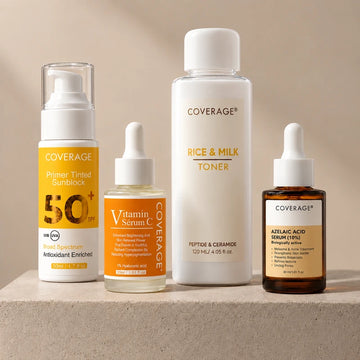
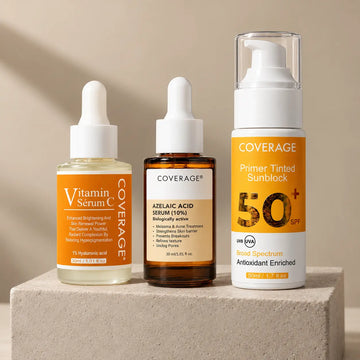
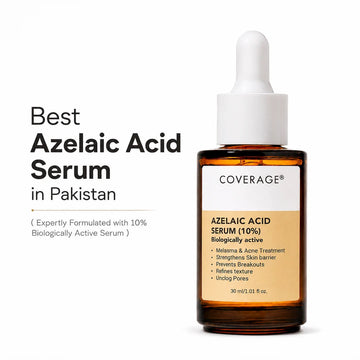
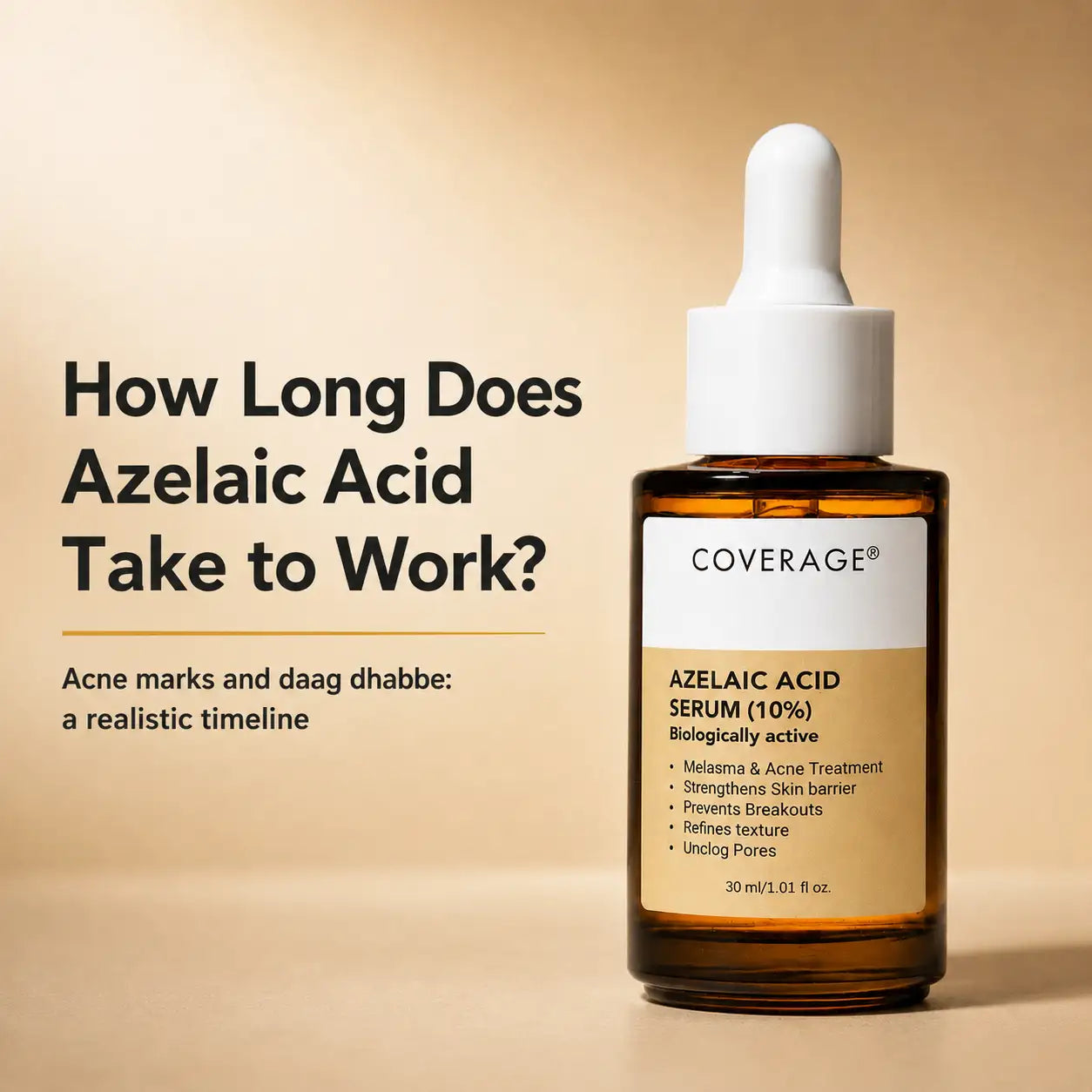
The uncomfortable implication: the strength of your serum matters far less than whether you are still using it in week 12. Most people who fail at this do not fail because their product was too weak. They fail because it stung, or dried them out, or felt heavy in the heat, and they stopped in week three. The COVERAGE Azelaic Acid 10% Serum was formulated around that exact problem: a strength most skin tolerates nightly, in a lightweight base built for Pakistani weather. Full ingredient list and directions are on the product page.

The realistic week-by-week timeline
There is no fixed number of days, because the answer depends on how deep the pigment sits, whether new acne is still forming, and how consistently the product is actually applied. The table below is the pattern most people follow.
| Period | What usually happens | What to do |
|---|---|---|
| Week 1 to 3 | Possible mild stinging, dryness or flaking as skin adjusts. Most of our customers see a visible difference in 1 to 3 weeks. Every skin is different, so some people need more time. | Every other night. Moisturise. Do not add anything new. |
| Week 3 to 4 | Fewer new pimples for some users. Existing inflammation calms down. Deeper, older marks can take longer to change. | Move to nightly if comfortable. Take your week 4 photo. |
| Week 6 to 8 | Breakouts less frequent. The newest, freshest marks keep looking lighter. | Stay consistent. Resist the urge to add a second active. |
| Week 8 to 12 | A good checkpoint for deeper pigmentation. Older marks look softer, less sharply defined. | Compare photos side by side, not memory against mirror. |
| Week 12 to 16 | The window used in clinical studies of azelaic acid for post-acne pigmentation. | Make a decision: continue, adjust, or get assessed. |
| Beyond 16 weeks | Deep or long-standing pigmentation may still be visible. | See a dermatologist rather than waiting another three months. |
Treat these as expectations, not promises. Nobody can guarantee a specific result in a specific number of weeks, and any brand that gives you a fixed date is guessing.
Why the marks take so much longer than the pimple
A pimple is an active inflammatory event. It comes, it peaks, it settles, usually within days to a couple of weeks. The mark is what is left behind afterwards, and it is a different problem on a different clock.
When acne inflames the skin, pigment-producing cells respond by depositing extra melanin in the area. That pigment then has to be broken down and cleared by the skin's own turnover, which is slow and gradual. A topical can interrupt new pigment being made and calm the inflammation driving it, but it cannot instantly remove pigment already sitting there.
This is why the sequence almost always runs the same way: acne improves, then marks fade. If your acne is still active, you are producing new marks while trying to fade old ones, and the timeline stretches accordingly. If you want the full mechanism, we cover it in our complete guide to azelaic acid serum in Pakistan.

Brown mark or red mark? Your timeline depends on which one you have
Before judging whether anything is working, you need to know what you are looking at, because the three things people call "acne marks" behave very differently over time.
Brown or greyish flat marks are post-inflammatory hyperpigmentation. Excess melanin left after inflammation, more common and more persistent in medium to deep skin tones, and the one azelaic acid is most relevant to. Most of our customers see a visible difference in 1 to 3 weeks. Every skin is different, so some people need more time, and deeper, older marks can take months to fade fully.
Red or pink flat marks are post-inflammatory erythema. The colour comes from vascular change rather than excess melanin, so a pigment-focused ingredient works on a different mechanism here. Many fade on their own with time and strict sun protection, but unpredictably.
Indented marks that catch the light and cast a shadow are structural scarring. No serum fills these. Press the skin flat: if the mark is a dent rather than a colour, a topical is the wrong tool and you are waiting for something that will not happen.
The serum you can actually finish
Once you accept that deeper, older marks can keep improving for 12 to 16 weeks, the question changes. It stops being "what is the strongest option" and becomes "what will I still be applying in month four."
Pharmacy-strength azelaic acid at 15 or 20 percent carries the deeper clinical evidence base, and for moderate acne under a dermatologist it is the stronger choice. We say that openly in our comparison of Skinoren and COVERAGE Azelaic Acid 10%. But it is prescription-only in Pakistan, and the burning and redness some people get is precisely what makes them stop after three weeks. A course abandoned in week three delivers nothing, however strong it was.

The COVERAGE Azelaic Acid 10% Serum is built for the other side of that trade. Ten percent azelaic acid, paired with aloe barbadensis leaf extract, sodium hyaluronate and tocopheryl acetate in a lightweight, fast-absorbing base rather than a thick occlusive cream that sits on the skin in 40 degree heat. No prescription needed, and the complete ingredient list is published openly on the page rather than hidden behind a marketing claim.
It is a cosmetic serum, not a prescription medicine, and we would rather say that plainly than blur the line. What it is designed to be is the version you can use every night for four months without giving up, which for deeper marks that can keep improving over 12 to 16 weeks is the thing that actually decides your outcome.
For mild acne, fresh post-acne marks or early pigmentation, that is the case for 10 percent. For moderate to severe acne, or pigmentation that has not moved in months, see a dermatologist first.
How to actually measure whether it is working
Most people cannot tell whether a mark has faded 20 percent, because they look at their face every day and the change is gradual. The mirror is the worst possible measuring instrument. Here is a protocol that works.
- Take a baseline photo on day one. Before your first application, not a week in.
- Fix your conditions. Same spot, same time of day, same light. Daylight near a window is ideal. Never a mirror selfie, never a filter.
- No makeup, no flash. Flash flattens pigment and will make you think you have improved when you have not.
- Shoot three angles. Straight on, left three-quarter, right three-quarter. Marks read very differently by angle.
- Repeat at week 4, week 8 and week 12. Not weekly. Weekly photos show noise, not trend.
- Compare only baseline against the latest. Side by side, same screen, same size.
Count your marks in the baseline photo and write the number down. At week 12, count again. Fewer marks, or the same number but visibly lighter, is progress. This is roughly how clinical studies do it, and it is the only way to answer the question honestly.

Seven reasons your marks are taking longer than they should
If you are past week 12 with no meaningful change, the problem is usually one of these rather than the ingredient itself.
- Your acne is still active. Every new inflamed spot creates a new mark. You cannot win a fading race while the source keeps generating fresh pigment.
- You are not applying it consistently. Four nights one week and one the next is not a 12 week course. This is the most common failure by a distance, and it is usually a product problem rather than a discipline problem: something that stings or feels heavy will get skipped. A serum light enough to use nightly removes the excuse.
- You are skipping sunscreen. UV and visible light drive pigment production directly. Treating pigmentation without daily protection is filling a bucket with a hole in it.
- You are picking or squeezing. Every squeeze deepens the inflammation and therefore deepens and prolongs the mark that follows.
- You started too many actives at once. Irritation is itself inflammatory, and inflammation drives pigmentation. More actives can make marks worse, not faster.
- The pigment is deeper than you think. Long-standing marks sit deeper and clear far more slowly than a mark from last month.
- It is not what you think it is. Symmetrical patches across the cheeks, forehead or upper lip may be melasma rather than acne pigmentation, which is a different condition with a different path. See our guide to melasma and chhaiyan ka ilaj.

Sunscreen is the difference between weeks and forever
This is the part people skip, and it is the part that decides your timeline. UV and visible light both stimulate pigment production. Treat marks at night, expose them unprotected by day, and you are running the treatment and the cause simultaneously.
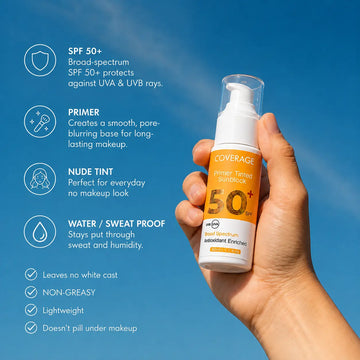
Daily broad-spectrum protection is not an optional extra alongside a pigmentation routine, it is half of the routine. For pigmentation specifically, a tinted sunscreen containing iron oxides also offers some protection against visible light, which matters more for pigment-prone skin than most people realise. That is why COVERAGE Primer Tinted Sunblock SPF 50+ is the morning half of this routine, and why we go into the detail in our guide to choosing a tinted sunscreen in Pakistan.
If you take one thing from this article: a mediocre pigmentation routine with daily sunscreen will outperform an excellent one without it, every single time. Correct at night, protect in the morning.

What the clinical studies actually measured
The 12 to 16 week figure is not a marketing number. It comes from how the research was designed.
The American Academy of Dermatology's updated acne guidelines include a conditional recommendation for topical azelaic acid, noting its role in unclogging pores, reducing acne-causing bacteria and fading the dark spots that can persist after an acne spot clears.
On timing specifically, two studies matter. A clinical study of 15 percent azelaic acid gel in people with acne and post-inflammatory hyperpigmentation ran over 16 weeks. A separate single-blinded randomised trial comparing 20 percent azelaic acid cream against 5 percent tranexamic acid for acne-related post-inflammatory hyperpigmentation ran over 12 weeks, scoring pigmentation at baseline and at weeks 4, 8 and 12, with both groups improving across the study period.
Note what that means in practice. Researchers built these studies around 12 and 16 week endpoints, which shows how long deeper, older pigmentation can keep improving. Most of our customers see a visible difference within 1 to 3 weeks of consistent daily use. Every skin type and every concern is different, so some people need more time.
One honest limitation: most of this research uses 15 and 20 percent pharmaceutical formulations. Evidence for azelaic acid as an ingredient is not the same thing as evidence for any particular cosmetic serum, and we are not going to pretend otherwise.

The week 12 checkpoint: continue, adjust, or get assessed
At 12 weeks, take your photos, put them beside your baseline, and pick one of three outcomes.
Marks are visibly lighter. It is working. Keep going without changing anything. Pigmentation improvement is cumulative, and week 12 to week 20 often delivers more visible change than week 1 to week 12 did.
Acne is better but marks have barely moved. The ingredient is doing something, but pigment clearance is lagging. Before changing products, audit the seven reasons above honestly. Nine times out of ten it is missed nights or missing sunscreen. Give it another 4 to 6 weeks with those fixed.
Nothing has changed, or things look worse. Stop guessing and get it looked at. Either the diagnosis is wrong, the pigmentation is deeper than a topical can reach, or your skin is not tolerating the routine. Continuing another six months out of stubbornness is not persistence, it is lost time.
See a dermatologist sooner than 12 weeks for severe or cystic acne, painful nodules, rapidly worsening breakouts, pigmentation that is spreading or changing shape, or significant irritation, swelling or a suspected allergic reaction.

Daag dhabbe kitne din mein jate hain?
Yeh sawal humein sab se zyada poocha jata hai, aur seedha jawab yeh hai: keel muhase pehle theek hotay hain, unke baad chhorey hue daag dhabbe. Humare zyada tar customers ko rozana istemal ke 1 se 3 hafton mein wazeh farq nazar aata hai. Har skin aur har masla alag hota hai, is liye kuch logon ko zyada waqt lagta hai. Purane ya gehre nishan 12 se 16 haftay ya is se bhi zyada waqt le saktay hain.
South Asian skin tones mein post-inflammatory hyperpigmentation zyada common hai aur zyada dair tak rehti hai. Iska matlab yeh nahi ke ilaj kaam nahi kar raha. Iska matlab yeh hai ke gehre nishan zyada waqt le saktay hain, aur consistency hi asli farq daalti hai.
Teen cheezen sab se zyada important hain: roz sunscreen, daane ko haath na lagana, aur serum ko rozana istemal karna. Isi liye hum COVERAGE Azelaic Acid 10% Serum ko halka aur rozana istemal ke qabil banaya hai, taake char mahine tak chalana mushkil na ho.
Agar aapke chehre par symmetrical patches hain, khaas taur par gaalon, mathay ya upper lip par, to woh chhaiyan yani melasma ho sakti hai, jo acne ke daag se alag masla hai aur alag ilaj mangta hai.
Frequently asked questions
How long does azelaic acid take to fade acne marks?
Most of our customers see a visible difference within 1 to 3 weeks of consistent daily use. Every skin type and every concern is different, so some people need more time. Deeper, older marks take longer to fade fully. Clinical studies of azelaic acid for acne-related pigmentation have measured results over 12 to 16 weeks.
How soon will I see any change at all?
Most of our customers see a visible difference in 1 to 3 weeks. Every skin is different, so some people need more time. The first change most people notice is fewer new breakouts and less inflammation. Deeper, older marks generally take longer to fade fully.
Is it normal to see nothing after one month?
It can happen. Most of our customers see a visible difference in 1 to 3 weeks. Every skin is different, so some people need more time. Older, deeper marks take longer to fade fully than the first visible difference. At four weeks, check whether your skin tolerates the product and whether acne is settling.
Should I use azelaic acid every day for faster results?
Frequency should follow tolerance, not impatience. Beginners often start every other night and build up. Applying more product or more often does not speed up pigment clearance and can cause irritation, which makes pigmentation worse.
Why are my acne marks taking months to fade?
Persistent marks are common, particularly in deeper skin tones. Ongoing acne, inconsistent application, missing sunscreen, picking and pigment sitting deeper in the skin all extend the timeline.
How do I know if it is working?
Compare fixed photographs taken in the same light at day 0, week 4, week 8 and week 12. Counting marks in a baseline photo and recounting at week 12 is far more reliable than judging in the mirror.
What should I do if there is no improvement after 12 weeks?
Audit consistency, sunscreen use, picking and whether acne is still active before changing products. If the routine has been followed properly and nothing has changed, see a dermatologist rather than waiting longer.
Do red marks and brown marks take the same time?
No. Brown and greyish marks are pigment-related. Red or pink marks come from vascular changes after inflammation and follow a different, less predictable course.
Will azelaic acid remove indented acne scars?
No. Indented scars are structural changes in the skin. A topical serum can help with discolouration but will not fill or remove an indentation.
Does sunscreen actually change how fast marks fade?
Yes. UV and visible light stimulate pigment production, so skipping daily protection works directly against the treatment and lengthens the timeline.
Do new breakouts in the first few weeks mean it is purging?
Not automatically. Burning, stinging, dryness and redness are recognised effects of topical azelaic acid. If irritation is increasing rather than settling, reduce frequency, and seek advice if the reaction is significant or persistent.
Does a 10 percent serum take longer than a 20 percent cream?
Possibly, but the more useful comparison is what you will actually finish. Most clinical evidence involves 15 and 20 percent pharmaceutical formulations. A lower-strength cosmetic serum you tolerate nightly for four months may serve you better than a stronger one you abandon in week three.
Can I speed it up by adding more actives?
Layering several potentially irritating actives at once often backfires, because irritation is inflammatory and inflammation drives pigmentation. Add one thing at a time and give it several weeks.
The bottom line
Patience is not a personality trait here, it is part of the treatment. Most of our customers see a visible difference within 1 to 3 weeks of consistent daily use. Every skin type and every concern is different, so some people need more time. Deeper, older post-acne marks can keep improving over the 12 to 16 weeks that clinical studies measured.
- Treat the active acne, or you keep making new marks.
- Apply consistently. Missed nights are the most common reason a routine fails.
- Wear broad-spectrum sunscreen every single day.
- Do not pick, and do not stack new actives on top of each other.
- Photograph at day 0, week 4, week 8 and week 12 in fixed light.
- Make a real decision at week 12 instead of drifting.
- See a dermatologist for severe acne, spreading pigmentation, indented scarring or anything you cannot identify.
The serum that works is the one still in your routine in month four. If that is what you are looking for, the full formula, ingredient list and directions are on the COVERAGE Azelaic Acid 10% Serum page.
This article is for general informational purposes only and is not a substitute for professional medical advice. All information and claims referenced above are drawn from publicly available dermatological studies and expert sources. Always consult a dermatologist for advice specific to your skin.



Leave a comment
This site is protected by hCaptcha and the hCaptcha Privacy Policy and Terms of Service apply.