
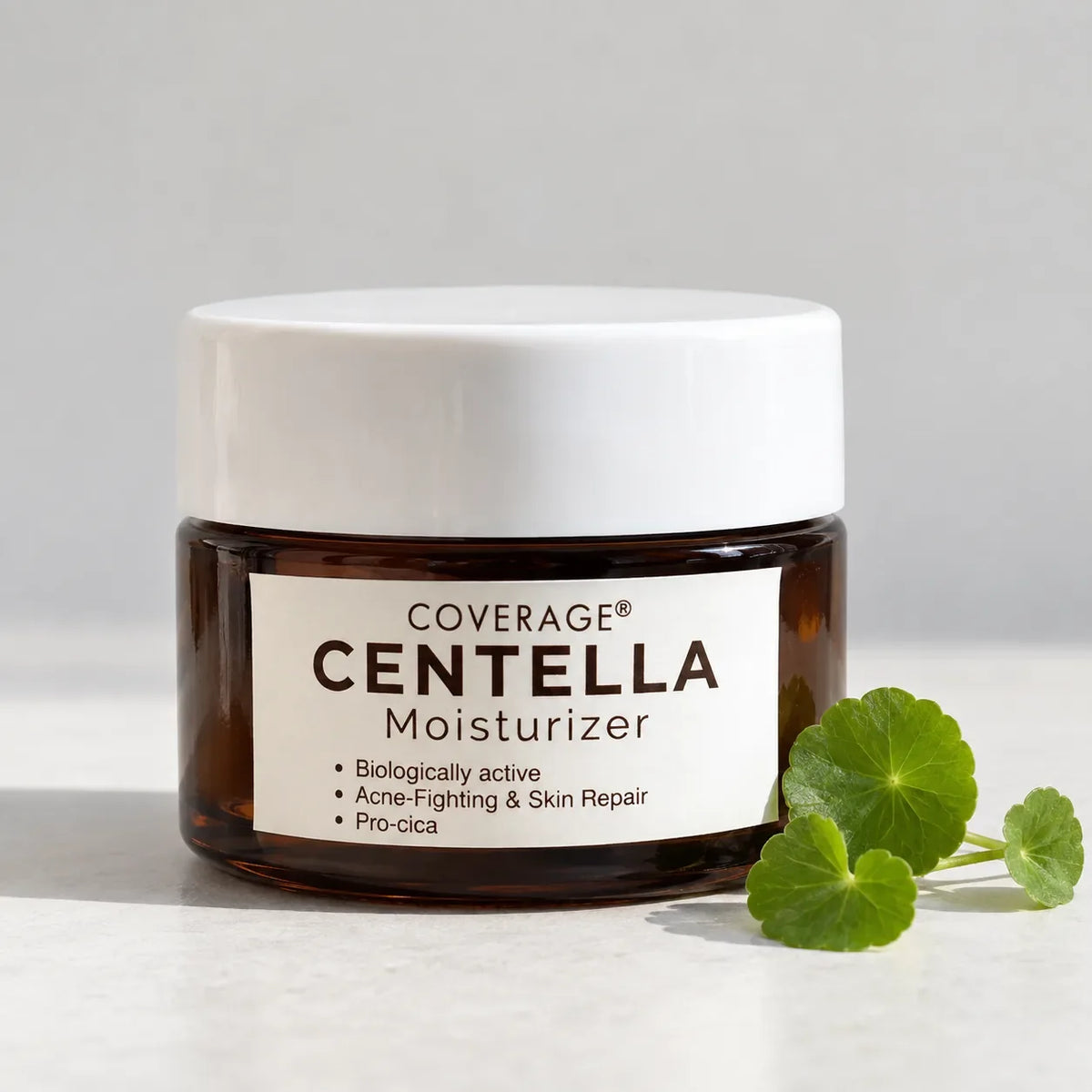
Centella Moisturizer in Pakistan: What Cica Actually Does for Oily, Acne-Prone and Sensitive Skin
Your skin can be oily and dehydrated at the same time.
Shiny by noon, tight the second you step out of the shower. Breaking out, and stinging from the product meant to stop the breakouts. Perfectly fine with a cream for four months, then burning from it on a Tuesday for no reason you can name.
The instinct at that point is to add something. Another serum, another exfoliant, another face wash promising oil control.
But skin behaving like that is often not short of active ingredients. It is short of a working barrier. And no amount of treatment lands well on skin that has stopped holding on to water.
That is the gap Centella Asiatica, the ingredient most people know as cica, usually gets brought in to fill. This guide covers what centella is and what it is not, why oily skin still needs a moisturizer, how a barrier-focused formula is actually put together, and how to choose one that survives a Pakistani summer instead of one designed for a Seoul winter.
The short version
Oil and hydration are two different measurements. Skin can produce plenty of one and still be short of the other.
Centella is a soothing-focused botanical. Ceramides are barrier lipids. They do different jobs, which is why good formulas tend to contain both rather than choosing between them.
In hot, humid weather, texture decides everything. A rich cream you abandon in July is not supporting anything.
A moisturizer supports an acne routine. It does not replace one.
Oily is not the same as hydrated
Start with the belief that causes the most damage:
"My skin is oily, so I do not need a moisturizer."
It sounds like common sense. It is not, because oil and water are being measured separately.
Sebum is oil, produced by the sebaceous glands. Hydration refers to water content in the upper layers of the skin. Having a lot of the first tells you nothing about the second. This is why dermatologists talk about oily skin and dehydrated skin as two conditions that can appear on the same face, and why the combination is so easy to misread.
Skin in that state often looks like this:
- Shine by mid-morning, tightness immediately after cleansing
- Small flakes sitting on oily areas, particularly around the nose
- Foundation separating or clinging in patches by afternoon
- Jalan or stinging from products that never used to sting
- A persistent sense that something is wrong and one more product might fix it
That last one is what keeps the cycle running. You see oil, so you cleanse harder. Harder cleansing strips the skin, so it feels tight. Tight skin reads as a problem, so you add products. More products means more irritation, more irritation means more discomfort, and you are back at the sink.
The American Academy of Dermatology is direct about this. It advises that people with acne can benefit from moisturizer, particularly when acne treatments such as benzoyl peroxide, salicylic acid or retinoids are causing dryness and peeling, and it recommends that acne-prone skin look for products labelled non-comedogenic or described as not clogging pores.
Removing every trace of oil was never the goal. A routine your skin can tolerate for months is.

What the skin barrier is, and what disrupts it
The skin barrier is the outermost layer of the skin, and one of its main jobs is helping to hold water in while keeping irritants out.
The usual analogy is a brick wall. Skin cells are the bricks, and a mixture of lipids including ceramides, cholesterol and fatty acids is the mortar between them. When the mortar is intact, water stays where it should and most of what lands on your face never gets far enough in to cause trouble.
When that structure is disrupted, water escapes more easily and irritants get through more easily. This is why a compromised barrier tends to show several of these at once:
- Tightness, and khushk papery patches
- Redness, often across the cheeks
- Stinging or burning from products that were previously fine
- Flaking sitting on top of oiliness
- Sensitivity that seems to have arrived from nowhere
This is rarely a medical condition. Far more often the cause is ordinary: too much skincare, applied too often. Over-exfoliation, harsh foaming cleansers, several acids layered together, or a retinoid started at full strength will do it to most people eventually.
Which is the reason barrier support should mean something at the formulation level rather than only on the front of a jar. Ceramides are relevant here because they are already part of that lipid mortar, and ceramide-containing moisturizers have been studied specifically in relation to hydration and barrier-related measures. That is a better reason to include them than the fact that the word performs well in marketing.

Centella Asiatica, cica, and what asiaticoside is
Some plain definitions, because these words get used interchangeably and they should not be.
Centella Asiatica is the botanical ingredient itself, a herb used in traditional medicine across Asia long before the Korean skincare industry made it a headline ingredient.
Cica is not a separate ingredient. It is the shorthand the skincare industry uses for centella-focused products. A cica cream is a centella cream.
Asiaticoside is one of the naturally occurring triterpenoid compounds associated with Centella Asiatica, and one of the compounds most often studied when researchers look at what centella does. Madecassoside is another compound in the same family, which you will see on some other brands' labels.
Centella-containing formulations have been studied in relation to skin hydration, barrier function and irritation, and centella has become one of the standard ingredients in products aimed at reactive, easily upset skin.
Now the caveat that most brands skip, and the one that matters most in this whole article.
Evidence for an ingredient is not evidence for a product. A study showing that a particular centella formulation improved hydration in a particular group of people tells you the ingredient class is worth taking seriously. It does not tell you that every jar with a green leaf on the label will do the same thing. Concentration matters, raw material grade matters, the rest of the formula matters, and your own skin matters.
It also means centella on its own does not rebuild a barrier. Soothing and rebuilding are different tasks, which brings us to the ingredient centella is most often paired with.
Centella and ceramide are not competitors
These two get compared constantly, usually by someone trying to sell one of them. They are not alternatives. They sit in different parts of a formula and do different work.
| Ingredient | Role in a formula | Why formulators use it |
|---|---|---|
| Centella Asiatica | Soothing focus | The core ingredient in cica products, commonly used for skin comfort |
| Asiaticoside | Centella-derived compound | One of the compounds most associated with centella's soothing reputation |
| Ceramide | Barrier lipid | Part of the skin's own lipid structure, helps support moisture retention |
| Niacinamide | Multifunctional | Used for barrier support, the appearance of uneven tone, and oily-looking skin |
| Panthenol | Hydration and comfort | A long-established soothing and moisturizing ingredient |
| Glycerin | Humectant | Draws and holds water in the upper layers of the skin |
| Sodium Hyaluronate | Humectant | Hydration in a lightweight, fast-absorbing form |
| Squalane | Emollient | Softens skin and helps reduce water loss |
| Licorice extract | Comfort and appearance | Common in soothing-focused formulations |
So a moisturizer containing both centella and ceramide is not doubling up. It is soothing with one hand and supporting the barrier structure with the other. That combination is the entire logic behind a modern cica cream, and it is why shopping for one hero ingredient tends to disappoint people.

Why Pakistan makes this harder than the reviews suggest
A moisturizer that feels beautiful in a cold, dry climate can feel like cling film in Lahore in June. Most of the international reviews you read were not written by anyone walking to a car at 43 degrees.
Heat. Sweat sits on top of a rich cream instead of absorbing through it, and the whole face feels coated.
Humidity. Karachi air and monsoon weather can make skin feel sticky while it is still short of water, which leads people to cut moisturizer at what may be exactly the wrong time of year.
Air conditioning. Part of the day outdoors sweating, part of it in dry AC air. Skin gets both extremes daily, and the dry half is easy to overlook.
Sunscreen. Sun protection matters year round here. But a heavy moisturizer under sunscreen can pill, roll or slide, and when that happens people tend to drop one of the two. Usually the sunscreen.
Makeup. Foundation needs a base that grips rather than a greasy film that separates by lunch.
Active ingredients. Acids, retinoids and acne treatments can leave skin drier and more reactive, and heat does not make that easier.
So when someone searches for the best moisturizer in Pakistan, the useful answer is not a single product name. It is a question: best for which skin, under which routine, in which season?
What a barrier-focused formula should actually contain
Before looking at any specific product, it is worth knowing what you are looking for. A formula built for a compromised barrier generally needs four things working together, not one hero ingredient carrying the label.
Water, held in place. Humectants such as glycerin and sodium hyaluronate draw water into the upper layers and help keep it there.
Lipids and emollients. Ingredients such as squalane and plant oils soften the skin and help reduce how quickly water escapes.
Barrier lipids. Ceramides contribute to the skin's own protective lipid structure, which is the part that humectants alone cannot replace.
Comfort ingredients. Centella and panthenol are the ones most commonly used in formulas aimed at soothing and skin comfort.
Miss one of those categories and the formula tends to underperform in a predictable way. All humectant and no lipid feels lovely for twenty minutes and then tight. All oil and no humectant feels rich and still leaves skin dehydrated underneath. The interesting question about any moisturizer is not which ingredient is on the front, it is whether all four jobs are covered.
How the COVERAGE Centella Moisturizer is built
With that framework in place, here is our own formula and the reasoning behind each part of it.
The COVERAGE Centella Moisturizer is a 60ml barrier repair cream. Rather than relying on a single centella extract, it is formulated with three centella-derived components, with the supporting cast behind them.
Three centella-derived components rather than one
Most products marketed on cica carry one line of Centella Asiatica extract and stop there. This formula lists Centella Asiatica Extract, Lactobacillus/Centella Asiatica Extract Ferment Filtrate, which is the fermented centella the industry calls ProBio-Cica, and Asiaticoside in its own right.
That last point is the one worth understanding. When a formula relies purely on unspecified extract, how much asiaticoside you actually get depends on the raw material batch. Listing it separately means it is there deliberately rather than by chance.
Ceramide for the structural half
Centella is a comfort ingredient. It does not replace lipids. Ceramide is in this formula to cover the structural side of barrier support, because a cream aimed at compromised barriers that contains no barrier lipids is a soothing cream wearing a repair label.
Niacinamide, Panthenol and Licorice
Niacinamide is the multi-tasker: it is used for barrier support, for the appearance of uneven tone, and for helping keep oily-looking skin in check, which matters when the same person has both a stressed barrier and chikni skin. Panthenol adds hydration and comfort. Licorice leaf extract is a long-standing soothing-focused botanical.
Glycerin, Sodium Hyaluronate, Squalane and Macadamia
This is the hydration and softness layer, and the part chosen with weight in mind. Glycerin and Sodium Hyaluronate handle the water side. Squalane, macadamia seed oil and almond oil handle softness and help slow water loss, without the heavy film that makes many repair creams unwearable in humidity.
Texture, which decides whether any of it matters
A moisturizer you stop wearing in June does nothing for your barrier in July. This one is formulated to be lightweight and non-sticky, to absorb quickly, and to sit under sunscreen or makeup without pilling. In this climate that is not a nice-to-have, it is the difference between a product that gets used and one that sits on a shelf.
The point is not that any single ingredient does everything. The point is how they cover for each other.

| Detail | Specification |
|---|---|
| Size | 60ml jar |
| Centella components | Centella Asiatica Extract, ProBio-Cica fermented centella, Asiaticoside |
| Barrier support | Ceramide |
| Hydration | Glycerin, Sodium Hyaluronate, Panthenol |
| Emollients | Squalane, Macadamia seed oil, Almond oil |
| Tone and comfort | Niacinamide, Licorice leaf extract |
| Texture | Lightweight and non-sticky, absorbs quickly |
| Layering | Formulated to sit under sunscreen and makeup without pilling |
| Pore claim | Non-comedogenic |
| Positioned for | Weakened barriers, and sensitive, oily, acne-prone, combination and normal skin |
| Use | Morning and night, after serums |
Is a centella moisturizer good for oily skin?
Yes, provided the formula is lightweight. That qualifier is carrying most of the sentence.
Oily skin in a hot climate does not respond well to a rich, occlusive cream. What it needs is water and barrier support without another layer of weight. This is why texture deserves as much attention as the ingredient list when you are choosing, and why a highly rated cream from a cold-climate brand can perform badly on your face while performing beautifully on someone else's.
Our Centella Moisturizer is formulated as a lightweight, non-sticky cream and is positioned for oily and acne-prone skin for that reason.
One point worth being precise about, since it is widely misunderstood. Non-comedogenic means a formula is designed and tested not to clog pores. It does not mean no person will ever break out from it. Skin is individual, and a product can be genuinely non-comedogenic and still not agree with one particular face. Anyone promising you a guarantee there is selling rather than explaining.
It is also worth saying plainly what a moisturizer does not do. It is not formulated to reduce how much oil your skin produces. Its job is comfort and hydration, and comfortable skin is simply easier to keep in a routine.
Is centella suitable for acne-prone skin?
It is a reasonable type of moisturizer for kil muhase, with one line we will not cross:
A moisturizer is not an acne treatment.
Its role in an acne routine is to make the actual treatment survivable. Salicylic acid, benzoyl peroxide, adapalene and azelaic acid all commonly cause dryness and irritation, and that discomfort is one of the most common reasons people abandon a treatment before it has had time to work. A moisturizer that keeps skin comfortable is often the difference between a routine that lasts three months and one that lasts three weeks.
If you are looking for the treatment side of that pairing, our Azelaic Acid 10% Serum is the product most of our acne and daag dhabbe customers use, and we have written a longer guide to azelaic acid covering how to introduce it without wrecking your barrier. For cleansing that clears without stripping, the Deep Nourishing Foaming Cleanser places salicylic acid high in its formula.
Treat the acne. Support the skin. Do not punish the skin for having acne.

Is centella suitable for sensitive skin?
Centella is one of the most widely used ingredients in skincare aimed at sensitive and reactive skin, and combinations of centella, ceramide and panthenol are the sort of pairing that soothing and barrier-focused formulations are usually built on.
The caveat from earlier applies here too, and it is worth repeating rather than burying. Research findings belong to the specific formulations tested and the specific groups of people tested. They are a sound reason to take an ingredient combination seriously. They are not a guarantee attached to every product containing those names, including ours.
What we will say is that these are the right ingredients to reach for when skin is reactive, and this formula was built around them deliberately. It is not a treatment for a skin condition, and we are not going to describe it as one.
Practical advice: patch test on the inner forearm or behind the ear for a few days before putting anything new across your whole face. And if your skin is badly inflamed, cracked or persistently painful, see a dermatologist rather than shopping for a cream.
How to use it
Nothing complicated. Twice a day, after your serums.
Morning: cleanse, apply toner and let it absorb, apply serums and let them sink in, then the moisturizer, then sunscreen as the final step.
Night: cleanse, treatment or serum, then the moisturizer.
Take a small amount and press it gently over the face and neck rather than rubbing it in. On very dry or irritated days, press a second thin layer over the areas that need it most rather than applying more everywhere.
In summer you will use less. In winter, or in heavy air conditioning, you will use more. The amount is meant to change with the season.

Layering it with active ingredients
A barrier-supportive moisturizer earns its place once your routine contains actives.
With vitamin C. Serum first, then moisturizer, then sunscreen. Our Vitamin C + 1% HA Serum is formulated to hold up in Pakistani heat rather than oxidising in the bottle, and sits under this moisturizer comfortably.
With azelaic acid. Serum first, then moisturizer. If azelaic acid stings when you begin, applying the moisturizer first and the acid on top is a legitimate way to buffer it while your skin adjusts.
With niacinamide. This moisturizer already contains niacinamide. Using a niacinamide serum as well is not a problem, but you probably do not need to keep stacking more of the same ingredient. More is not a strategy.
With exfoliating acids. A moisturizer helps keep an acid routine comfortable. But if skin is burning, peeling or getting worse week on week, the answer is to exfoliate less rather than to add a repair cream on top and carry on. Fix the cause.
With retinoids. Dryness and flaking are common when starting a retinoid, and using a moisturizer alongside one is standard practice. Introduce the retinoid gradually, a few nights a week to begin with, and follow the guidance on your specific product.
With sunscreen. Moisturizer first, give it a minute to absorb, then sunscreen. If you want a sunscreen that layers cleanly over a moisturizer, our Primer Tinted Sunblock SPF 50+ is a fully mineral formula, and we have covered how to choose one in our tinted sunscreen buyer's guide.
Lightweight or rich: which is better?
Neither, and treating it as a competition is how people end up with the wrong texture for their weather.
A lightweight moisturizer tends to suit oily and combination skin, humid conditions, summer routines, and layering under sunscreen or makeup.
A richer moisturizer tends to suit very dry skin, cold weather, visible flaking, and anyone who simply prefers a more cushioned finish.
Plenty of people here want both across a single year. If your need is straightforward daily hydration in a larger size rather than barrier support, our Hydra Therapy Moisturizer is the 120ml everyday option. The Centella is the one to reach for when skin is reactive, stinging or recovering from a routine that went too hard.
Eight habits that work against your barrier
Sometimes the moisturizer is not the problem. The routine around it is.
- Skipping moisturizer because your skin is oily. The most common mistake, and the reason this article opens where it does.
- Washing until your face squeaks. Squeaky is stripped. Clean skin should feel comfortable, not tight.
- Scrubbing acne. The AAD specifically warns that scrubbing irritates acne-prone skin. Gentle cleansing, twice a day.
- Exfoliating several times a week on top of daily actives. Most people using a daily active do not need a separate exfoliant at all.
- Starting three new products in the same week. When something reacts you will have no idea which one caused it. One at a time, two weeks apart.
- Washing your face with hot water. Hot showers in winter strip lipids quickly. Lukewarm, always.
- Skipping sunscreen while using actives. Acids and retinoids can increase sun sensitivity, and skipping SPF works against the treatment while adding pigmentation on top. It is a large part of why melasma and chhaiyan are so stubborn here.
- Chasing every ingredient that trends. Four products used consistently will beat eleven used erratically.
Who this may suit, and who should look elsewhere
This moisturizer makes sense if your skin feels tight after cleansing, stings when you apply things, looks red across the cheeks, or has been through a routine that asked too much of it, and if you want something light enough to wear under sunscreen through a Pakistani summer.
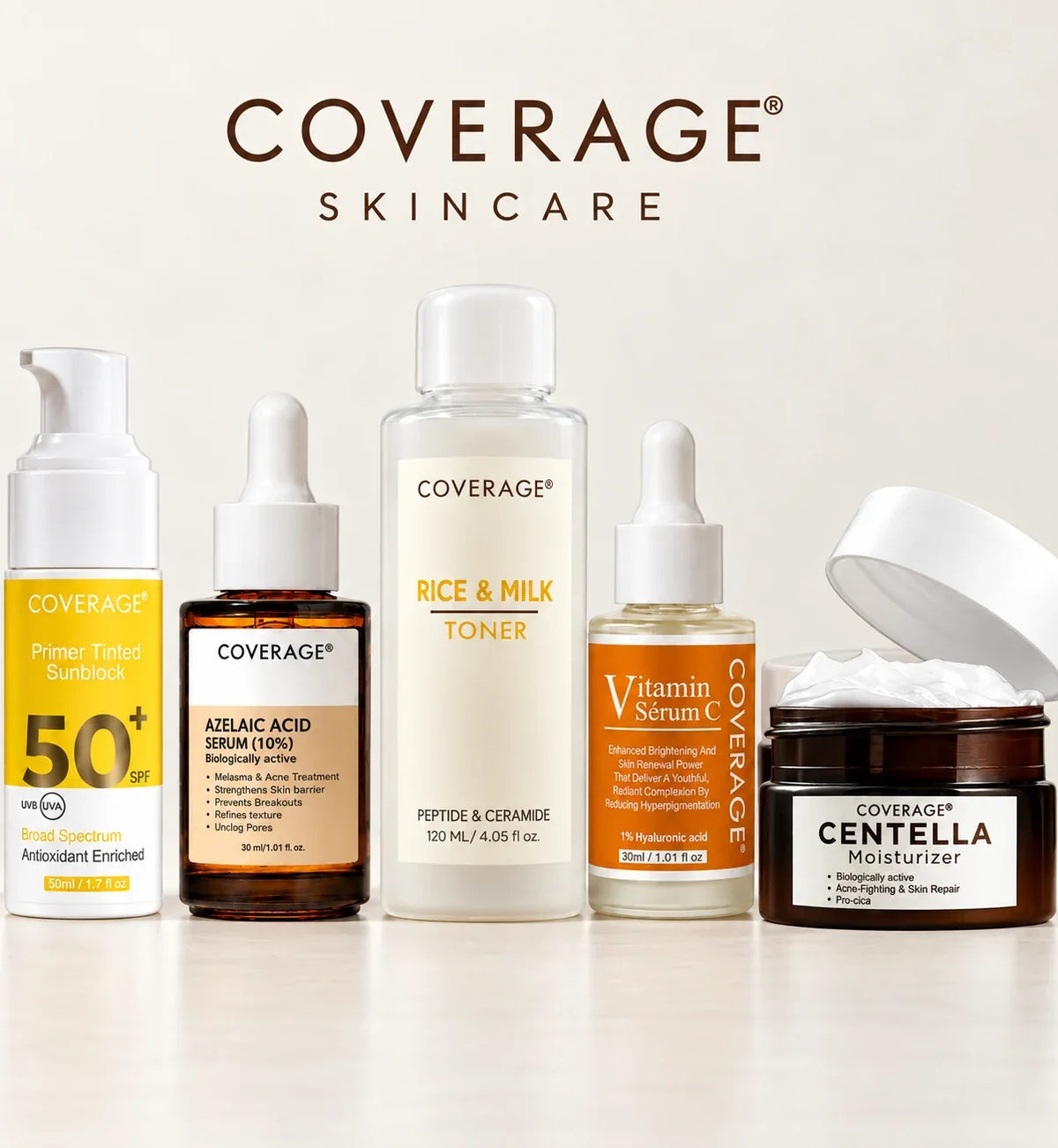
If your only concern is everyday hydration with no barrier trouble, the Hydra Therapy Moisturizer covers that in a larger size. If you want the full barrier routine, the Barrier Repair Set pairs it with the Rice and Milk Toner, and the Barrier Repair and Shield Set pairs it with the mineral sunblock for skin that reacts to most sunscreens.
If your skin is severely inflamed, cracked or persistently painful, that is a dermatologist visit. No moisturizer is the right answer to it.

Frequently asked questions
Is a centella moisturizer good for oily skin?
Yes, as long as the texture is lightweight. Oily skin still needs water and barrier support. What it does not need is a heavy occlusive cream in humid weather.
Is centella good for acne-prone skin?
It is a suitable type of moisturizer for acne-prone skin when the formula is lightweight and non-comedogenic. It supports the routine around an acne treatment rather than treating acne itself.
Does centella repair the skin barrier?
Centella is used for soothing and skin comfort rather than for supplying barrier lipids. Barrier-focused formulas usually combine centella with ceramides, panthenol and humectants, which together support barrier function.
Is centella suitable for sensitive skin?
Centella is widely used in products formulated for sensitive and reactive skin. Patch test first if your skin reacts easily, and see a dermatologist if it is badly inflamed.
What is the difference between centella and cica?
None. Cica is simply the common skincare shorthand for Centella Asiatica. A cica cream is a centella cream.
What is ProBio-Cica?
Fermented Centella Asiatica, produced using Lactobacillus, and listed on the label as Lactobacillus/Centella Asiatica Extract Ferment Filtrate. It gives a formula a second centella-derived component alongside the plain extract.
What is asiaticoside?
One of the naturally occurring compounds associated with Centella Asiatica, and one of the compounds most often studied when researchers look at what centella does.
What is the difference between centella and ceramide?
Centella is a soothing-focused botanical. Ceramides are lipids that form part of the skin's own barrier structure and help it hold on to moisture. They do different jobs and work well together.
Can I use a centella moisturizer every day?
Yes. This one is formulated for daily use, morning and night, applied after your serums.
Can I use it in a Pakistani summer?
Yes. It is formulated to be lightweight and non-sticky specifically so it stays wearable in heat and humidity.
Can oily skin use a barrier moisturizer?
Yes. A weakened barrier and oily skin frequently occur together. What matters is choosing a light texture rather than skipping moisturizer altogether.
Can I use it under sunscreen?
Yes. Apply the moisturizer, give it a minute to absorb, then sunscreen as your final morning step. It is formulated not to pill underneath.
Can I use it under makeup?
Yes. It is formulated to sit under makeup without pilling. Let it absorb before applying base.
Can I use it with vitamin C?
Yes. Vitamin C serum first, then the moisturizer, then sunscreen in the morning.
Can I use it with azelaic acid?
Yes. Apply the serum first and the moisturizer after. If the acid stings at first, applying moisturizer before it can help buffer while your skin adjusts.
Can I use it with niacinamide?
Yes, though this formula already contains niacinamide. Adding a separate niacinamide serum is optional rather than necessary.
Can I use it with retinoids?
Yes. Dryness and flaking are common when starting a retinoid, and a moisturizer alongside is standard practice. Introduce the retinoid gradually and follow its own instructions.
Is it non-comedogenic?
Yes, it is formulated as non-comedogenic, meaning it is designed not to clog pores. That is a formulation standard rather than a promise that no individual will ever break out.
What size is it, and how much does it cost?
A 60ml jar. Pricing and any current offer are shown on the product page, and cash on delivery is available across Pakistan.
The part worth remembering
Most skincare trouble in Pakistan is not caused by a missing ingredient. It is caused by a routine pushed harder than the skin can handle, in a climate that punishes heavy products.
Your skin probably does not need more products. It needs a routine that makes sense, and one step in that routine whose entire job is keeping the skin comfortable enough to stay on everything else.
That is what this formula was built to do: Centella Asiatica, ProBio-Cica and Asiaticoside for the soothing side, Ceramide for barrier structure, Niacinamide and Panthenol for comfort and tone, and Glycerin, Sodium Hyaluronate, Squalane and Macadamia for hydration that stays light enough to actually wear here.
If that is the step your routine has been missing, you can see the full COVERAGE Centella Moisturizer formula, ingredient list and customer reviews here.
This article is for general informational purposes only and is not a substitute for professional medical advice. All information and claims referenced above are drawn from publicly available dermatological studies and expert sources. Always consult a dermatologist for advice specific to your skin.

Leave a comment
This site is protected by hCaptcha and the hCaptcha Privacy Policy and Terms of Service apply.