
Niacinamide vs Azelaic Acid: Which Is Better for Acne, Dark Spots & Oily Skin?
If you have spent any time researching acne, dark spots, or oily skin in Pakistan, you have run into both of these ingredients. Azelaic acid and niacinamide show up in nearly every "what should I actually use" conversation, and the honest answer is that they are not competing for the same job.
What is azelaic acid?
Azelaic acid is a naturally occurring dicarboxylic acid, originally identified in wheat, rye, and barley, and produced by a yeast (Malassezia furfur) that lives on skin. In skincare and prescription dermatology, it is used at concentrations from 10% (cosmetic serums) up to 15–20% (prescription creams and gels such as Finacea and Skinoren).
It works through a few distinct, well-studied mechanisms: it has antimicrobial activity against Cutibacterium acnes, the bacteria implicated in acne; it normalizes the abnormal keratinization inside pores that leads to blackheads and clogged follicles; it has anti-inflammatory effects; and it inhibits tyrosinase, the enzyme that drives excess melanin production, which is why it is used for post-acne marks and melasma. Prescription-strength azelaic acid (15–20%) is approved by the FDA for acne and rosacea, and is used off-label for hyperpigmentation.

What is niacinamide?
Niacinamide is the amide form of vitamin B3, one of the most researched multi-tasking ingredients in skincare. It is generally used at 2–10% concentrations and is known for being well tolerated across almost every skin type, including sensitive and reactive skin.
Its main documented effects: it supports the skin barrier by helping the skin produce more ceramides and ceramide precursors, which improves moisture retention and reduces transepidermal water loss; it has been shown in clinical studies to help regulate sebum (oil) production over several weeks of use; it calms visible redness and reactivity; and at higher concentrations it has shown modest skin-brightening effects by interrupting the transfer of pigment (melanosomes) from melanocytes to skin cells — a different mechanism from azelaic acid's tyrosinase inhibition.

Azelaic acid vs niacinamide: the honest comparison
There is no published head-to-head randomized controlled trial comparing azelaic acid directly against niacinamide. What exists is a body of evidence for each ingredient studied on its own, mostly against a vehicle/placebo or against other actives like benzoyl peroxide, tretinoin, or hydroquinone. So this comparison is built from the evidence available for each ingredient individually, not from a study that pitted them against each other. Where we say one is "generally stronger," we mean the evidence base for that specific concern is deeper and more direct — not that a controlled trial has proven superiority.
| Concern | Azelaic acid | Niacinamide |
|---|---|---|
| Acne (active breakouts) | Strong, direct evidence — antibacterial + anti-keratinizing | Supportive — anti-inflammatory, not a primary acne treatment |
| Dark spots / PIH | Strong — tyrosinase inhibition, most-studied for this | Moderate — melanosome-transfer inhibition, milder effect |
| Melasma | Used off-label with reasonable evidence, usually alongside sun protection | Limited direct evidence, more often a supporting ingredient |
| Oiliness | Some effect via anti-inflammatory action | Strong — the better-studied ingredient for sebum regulation |
| Enlarged pores | Indirect, via reduced congestion and inflammation | Indirect, via oil regulation and barrier support |
| Redness / reactivity | Anti-inflammatory, approved for rosacea | Strong — one of the best-tolerated calming actives |
| Barrier support | Not its primary role | Strong — its core, most consistent benefit |
| Sensitive skin | Generally well tolerated at 10%, can still sting on very reactive skin | Excellent tolerability, rarely a source of irritation |
| Combining the two | Considered compatible by dermatologists; no known negative interaction | |
Azelaic acid vs niacinamide for acne
Azelaic acid is the more direct acne treatment of the two. It targets the bacteria and the abnormal shedding of skin cells inside the pore that cause breakouts in the first place, which is why 15–20% formulations carry regulatory approval for acne. Niacinamide does not treat the root causes of acne the same way; its role is calming the inflammation and redness that surrounds a breakout and, over time, helping regulate the oil that feeds it. Kil muhase se pareshan logon ke liye azelaic acid usually does more of the heavy lifting, with niacinamide working well alongside it.
Azelaic acid vs niacinamide for dark spots and PIH
For post-acne marks and general pigmentation (daag dhabbe), azelaic acid has the deeper evidence base — its tyrosinase-inhibiting mechanism is one of the more established pathways for fading hyperpigmentation, and it is often positioned as a gentler long-term alternative to hydroquinone. Niacinamide helps too, through a different route, but its brightening effect is generally considered milder and slower. Many routines use both: azelaic acid as the corrective step, niacinamide as a barrier-supporting step that helps the skin tolerate correction without becoming reactive.
Azelaic acid vs niacinamide for melasma
Melasma (chaiyan) is stubborn and multifactorial — hormones, heat, and UV exposure all play a role, and no single ingredient reliably clears it. Azelaic acid has reasonable evidence for melasma when used consistently over months, generally alongside strict daily sun protection. Niacinamide is more often used as a supporting ingredient in a melasma routine than as the main corrective one. Deep or long-standing melasma usually needs a dermatologist's input rather than an over-the-counter routine alone.
Azelaic acid vs niacinamide for oily skin
Niacinamide is the better-studied ingredient specifically for oil regulation, with clinical work showing a measurable reduction in sebum output over consistent use. Azelaic acid's anti-inflammatory action can indirectly calm the visible shine and irritation that come with oily, acne-prone skin, but oil control is not its main mechanism.
Azelaic acid vs niacinamide for pores
Neither ingredient physically "shrinks" pores — pore size is largely structural. Both can make pores look less congested and less prominent: azelaic acid by clearing the buildup that stretches them out, niacinamide by regulating the oil that makes them appear larger.
Azelaic acid vs niacinamide for sensitive or reactive skin
Niacinamide is generally the gentler, more universally tolerated of the two — it is often the ingredient dermatologists reach for first on reactive or compromised skin. Azelaic acid at 10% is well tolerated by most people, and its aloe-based, alcohol-free, fragrance-free formulation matters here, but a small number of users still report mild tingling in the first week, especially if the skin barrier is already compromised.
Azelaic acid vs niacinamide for redness
Both calm redness, through different mechanisms. Azelaic acid carries regulatory approval for rosacea specifically, which is a strong signal for its anti-inflammatory effect on visibly reactive, flushed skin. Niacinamide calms general redness and irritation and is often layered in for its barrier-support role, which reduces the kind of low-grade reactivity that shows up as persistent pink or blotchy skin.

Can you use azelaic acid and niacinamide together?
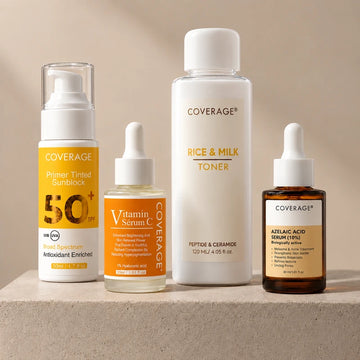
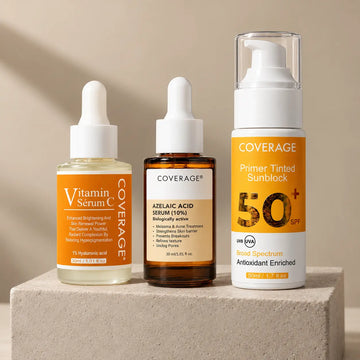
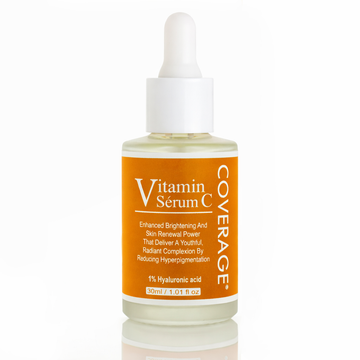
Yes. Dermatologists generally consider azelaic acid and niacinamide a compatible, complementary pairing — one is corrective, the other is supportive, and there is no known negative interaction between them. This is exactly why COVERAGE positions them as two different tools rather than as competing products: azelaic acid for the specific concern you're correcting, niacinamide (via our Vitamin C + 1% HA Serum) for the everyday barrier and antioxidant support that makes correction easier to tolerate.
How to layer them in a routine
A simple, low-irritation way to combine both:
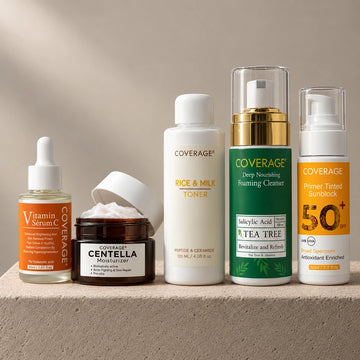
- AM: gentle cleanser → Vitamin C + 1% HA Serum (niacinamide + antioxidant defence) → moisturizer → SPF (non-negotiable, especially if you are treating pigmentation)
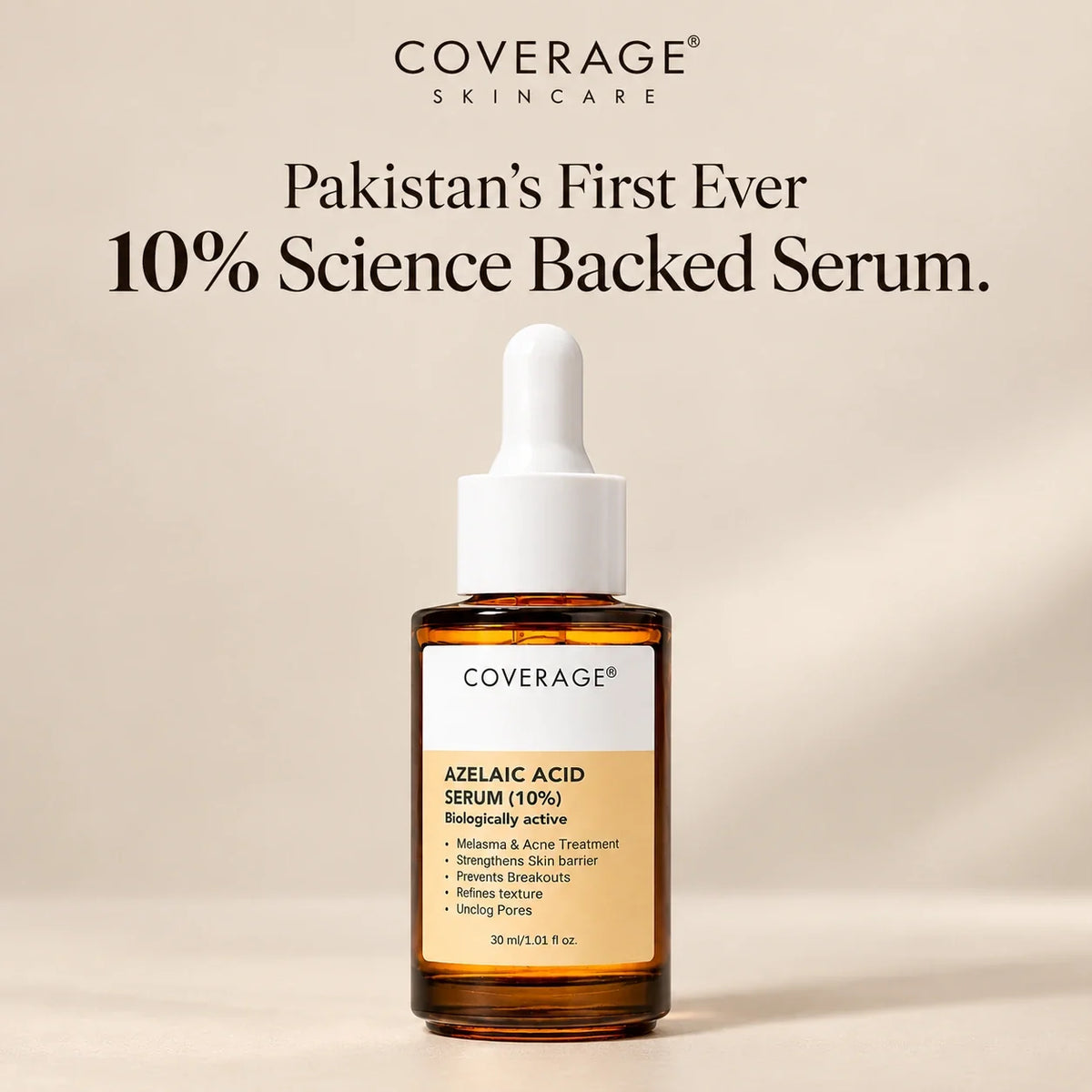
- PM: gentle cleanser → COVERAGE Azelaic Acid 10% Serum → moisturizer
If your skin is new to actives, start azelaic acid 3–4 nights a week and build up to nightly as tolerance allows. Niacinamide rarely needs this kind of ramp-up.
How to use COVERAGE Azelaic Acid 10% Serum

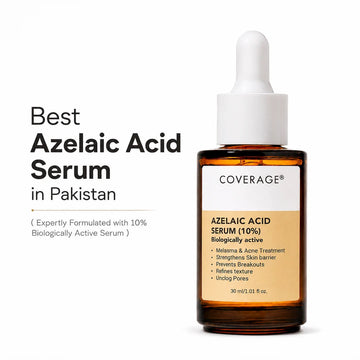
Apply a few drops to clean, dry skin at night, after cleansing and before moisturizer. The formula is a lightweight, fast-absorbing aloe-led aqueous base with Sodium Hyaluronate for hydration and Tocopheryl Acetate (vitamin E), with no fragrance, no alcohol, and no propylene glycol — three ingredients that commonly cause irritation in prescription-strength azelaic formulas. Start a few nights a week if you are new to actives, and always follow with SPF the next morning since you are actively working on pigmentation and the skin is slightly more sensitive to sun exposure during treatment.
Realistic results timeline
With the COVERAGE Azelaic Acid 10% Serum, most of our customers see a visible difference within 1 to 3 weeks of consistent daily use. Every skin type and every concern is different, so some people need more time. Older dark spots and post-acne marks take longer to fade fully, and melasma or deeper pigmentation keeps improving over a few months. Niacinamide's barrier and oil-control benefits tend to build gradually over similar timeframes with consistent daily use. None of this is instant, and consistency matters more than concentration.
Common mistakes
- Expecting azelaic acid to work as fast as a spot treatment — it is a cumulative, corrective ingredient, not an overnight fix.
- Skipping SPF while treating pigmentation, which undoes weeks of progress in a single sunny afternoon.
- Assuming niacinamide alone will clear active acne — it supports the skin, it does not replace a targeted acne ingredient.
- Stacking too many new actives at once, making it impossible to tell what is working (or what is irritating your skin).
Who should choose which?
Choose azelaic acid first if your main concern is active acne, post-acne marks, or melasma — it is the more corrective, targeted ingredient for those specific problems. Choose niacinamide first if your main concern is a compromised barrier, general oiliness, or reactive/sensitive skin that cannot tolerate stronger actives yet. If you are dealing with more than one of these at once — which is common with acne-prone, oily, pigmented skin — using both is usually the better answer than choosing one.
The COVERAGE approach

We formulate the COVERAGE Azelaic Acid 10% Serum as a targeted corrective step — 10% azelaic acid in a lightweight, fast-absorbing aloe-led base with Sodium Hyaluronate and Tocopheryl Acetate, no fragrance, no alcohol, no propylene glycol. It does not contain niacinamide, and we are not going to pretend it does.
For niacinamide, our relevant product is the Vitamin C + 1% HA Skin Serum, which combines niacinamide with stable Ethyl Ascorbic Acid and 1% Hyaluronic Acid for daytime antioxidant defence and hydration. We do not currently sell a standalone niacinamide serum, and we would rather tell you that plainly than stretch a claim about a product we don't make.

What real customers say
"Your azelaic acid serum is amazing. It has really helped with my acne, pigmentation and melasma. It’s so lightweight, non-comedogenic, doesn’t irritate my skin and gives the perfect balance of results and hydration. I can use it daily without any issues and it has visibly improved my skin texture and marks."


Customer's own photos, unedited, taken at home. Individual results vary.
Customer experiences are individual results, not scientific evidence — they sit alongside the research above, not in place of it.
Frequently asked questions
Is azelaic acid or niacinamide better for acne?
Azelaic acid is the more direct, evidence-backed acne treatment — it targets acne-causing bacteria and abnormal pore shedding. Niacinamide supports the skin around an active breakout but is not a primary acne treatment on its own.
Is azelaic acid or niacinamide better for dark spots?
Azelaic acid has the deeper evidence base for fading dark spots and post-acne marks through tyrosinase inhibition. Niacinamide helps through a different, generally milder mechanism.
Can I use azelaic acid and niacinamide together?
Yes. They are considered a compatible pairing by dermatologists, with no known negative interaction. Many routines use niacinamide in the morning and azelaic acid at night.
Does niacinamide help with oily skin?
Yes — niacinamide is the better-studied of the two ingredients specifically for regulating sebum production, with visible effects generally building over several weeks of consistent use.
Is azelaic acid safe for sensitive skin?
Most people tolerate 10% azelaic acid well, especially in an alcohol-free, fragrance-free formula. A small number of people with very reactive skin may notice mild tingling in the first week — niacinamide is usually the gentler starting point if your skin is highly reactive.
Does COVERAGE Azelaic Acid 10% Serum contain niacinamide?
No. It is formulated as a standalone azelaic acid serum. Our Vitamin C + 1% HA Skin Serum is the COVERAGE product that contains niacinamide.
Which is better for melasma, azelaic acid or niacinamide?
Azelaic acid has more direct evidence for melasma and is often used off-label for it, generally alongside strict sun protection. Niacinamide is more commonly a supporting ingredient in a melasma routine than the primary treatment.
How long does azelaic acid take to work?
Most of our customers see a visible difference within 1 to 3 weeks of consistent daily use. Every skin type and every concern is different, so some people need more time. Older marks take longer to fade fully, and melasma or deeper pigmentation keeps improving over a few months of consistent use.
Can I use azelaic acid every day?
Yes, once your skin has built tolerance. If you are new to actives, start 3–4 nights a week and build up to nightly.
Do I need a prescription for azelaic acid in Pakistan?
Prescription-strength azelaic acid (15–20%, like Skinoren) generally requires a prescription in Pakistan. A 10% cosmetic serum, like COVERAGE's, does not.
Conclusion
Azelaic acid and niacinamide are not rivals — they solve different problems. Azelaic acid is the corrective ingredient for acne, dark spots, and melasma. Niacinamide is the foundational ingredient for barrier strength, oil balance, and calm. If your skin only needs one thing right now, pick based on your dominant concern from the sections above. If you're dealing with more than one, layering both — azelaic acid at night, niacinamide-based Vitamin C serum in the morning — is the more evidence-aligned way to build a routine.
This article is for general information and is not a substitute for professional medical advice. If you have persistent acne, melasma, or a skin condition that isn't responding to over-the-counter care, please consult a dermatologist. Claims drawn from publicly available dermatological research and expert sources; individual results vary.
This article is for general informational purposes only and is not a substitute for professional medical advice. All information and claims referenced above are drawn from publicly available dermatological studies and expert sources. Always consult a dermatologist for advice specific to your skin.


Leave a comment
This site is protected by hCaptcha and the hCaptcha Privacy Policy and Terms of Service apply.