
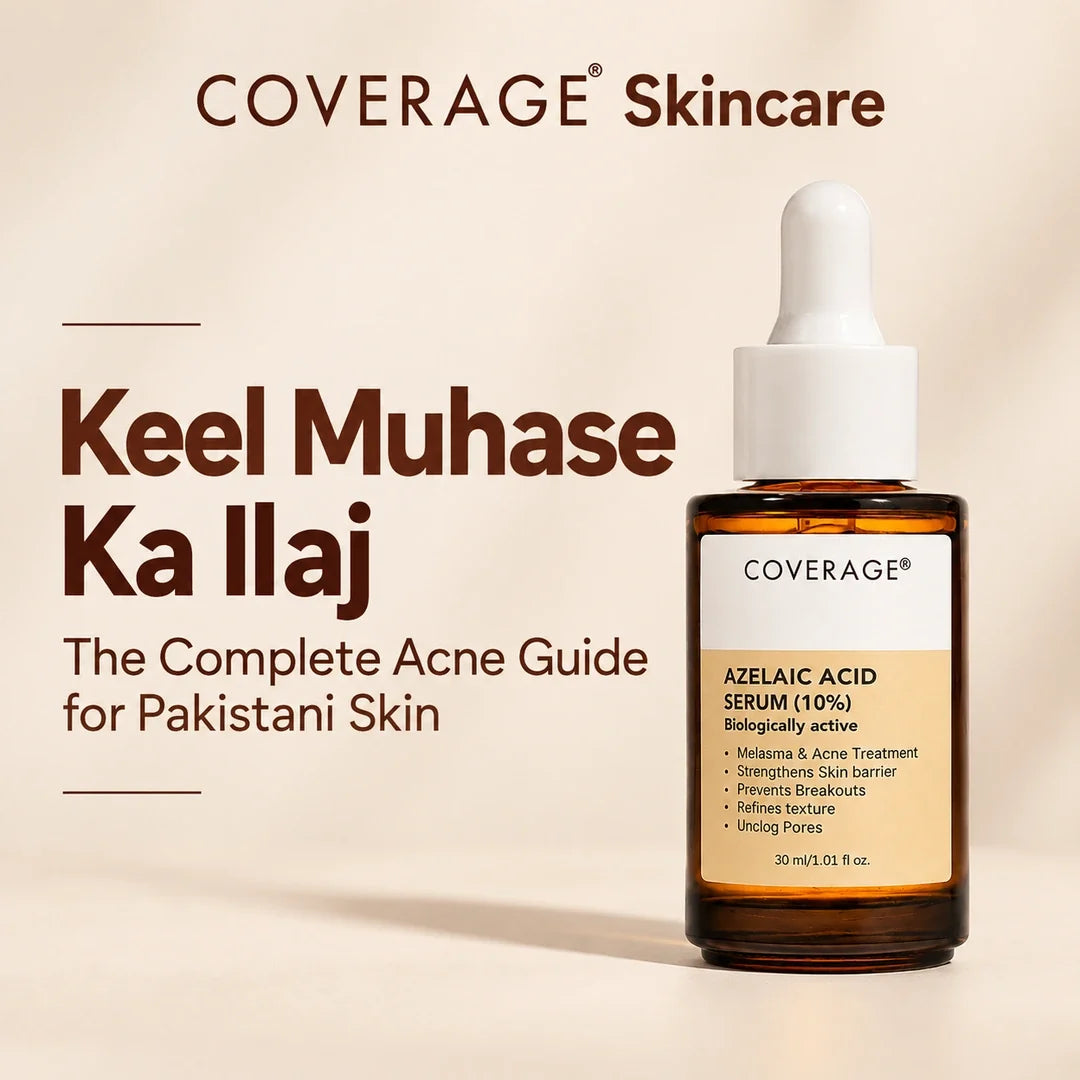
Keel Muhase Ka Ilaj: The Complete Acne Treatment Guide for Pakistani Skin (2026)
Keel muhase ka ilaj (کیل مہاسے کا علاج) is one of the most searched skin questions in Pakistan, and for good reason. Between Karachi's humidity, Lahore's smog, long sweaty summers and a market full of risky gharelu totke, chehre ke daane can feel impossible to control. This guide pulls together what dermatology research actually says about treating acne, explains it in plain language, and shows you how to build a routine that works on Pakistani skin, including how to fade the dark nishan (daag dhabbe) that pimples leave behind.
Keel muhase ka ilaj kya hai? Acne is treated by unclogging pores, controlling oil and acne bacteria, and calming inflammation with proven ingredients such as salicylic acid, benzoyl peroxide, retinoids, azelaic acid and niacinamide. Use them consistently for 3 to 8 weeks, never pop pimples, and wear sunscreen every day so the marks do not darken.
- Keel muhase kya hote hain?
- Keel muhase kyun hote hain? The real causes
- Keel muhase ke types
- Fungal acne vs keel muhase
- Ingredients that actually work
- Why azelaic acid suits Pakistani skin
- Keel muhason ke nishan ka ilaj
- AM/PM routine for Pakistani weather
- Gharelu totke: safe or harmful?
- Myths vs facts
- Diet and keel muhase
- Kamar ke daane (back acne)
- Acne in pregnancy
- When to see a dermatologist
- FAQs

Keel Muhase Kya Hote Hain? (What Is Acne?)
Keel muhase is the everyday name for acne vulgaris, the most common skin condition in the world. The American Academy of Dermatology (AAD) reports that about 85% of people between 12 and 24 get at least minor acne, and it does not always stop after the teenage years. Adult acne, especially in women in their 20s, 30s and 40s, is very common, and it is often the kind that sits along the jawline and chin.
Acne starts inside the pilosebaceous unit, the tiny structure that holds a hair follicle and its oil gland. When dead skin cells and excess oil (sebum) block the opening of that pore, a plug forms. Inside the plug, the skin bacterium Cutibacterium acnes multiplies, the immune system reacts, and the pore turns red, swollen and painful. That is the daana you see in the mirror.
Keel vs muhasa: are they the same thing?
In everyday Urdu the words overlap, but they usually describe two stages of the same problem:
- Keel usually means comedones: kaale keel (blackheads, open pores with a dark tip) and safed keel (whiteheads, closed bumps under the surface).
- Muhasa or daana usually means the inflamed stage: red bumps, peep wale daane (pus-filled pimples) and deeper, painful lumps.
This matters because the two stages respond best to different ingredients, which we cover in the treatment section.
Keel Muhase Kyun Hote Hain? The Real Causes
Dermatologists agree that four processes sit behind every breakout:
- Too much oil: androgen hormones make the oil glands work harder.
- Blocked pores: dead skin cells stick together inside the pore instead of shedding normally.
- Acne bacteria: C. acnes thrives in a blocked, oily pore.
- Inflammation: the immune response creates the redness, swelling and pain.
Acne is not caused by dirty skin. Scrubbing harder or washing your face five times a day usually makes it worse, because irritated skin becomes more inflamed.
Common triggers for keel muhase in Pakistan
- Heat, humidity and sweat: long humid summers keep skin oily, and sweat trapped under helmets, masks, caps and dupattas worsens breakouts.
- Friction and pressure: motorbike helmets, masks, tight collars, phone screens and resting your chin on your hand can all trigger acne in those exact spots.
- Heavy hair oils: oil left in the hair overnight can clog pores along the forehead and hairline.
- Pore-clogging makeup and creams: thick foundations, heavy creams and many unregulated fairness creams can clog pores. Creams containing hidden steroids can also cause steroid acne.
- Hormones: puberty, the menstrual cycle, pregnancy, stopping birth control pills, and conditions such as PCOS.
- Stress and poor sleep: stress hormones increase oil and inflammation, which is why exam season and shaadi season often bring flare-ups.
- Certain medicines: oral steroids and some other medicines can cause acne-like breakouts.
- High-sugar diet: sugary drinks, sweets and white flour may worsen acne in some people (see the diet section).
- Pollution: smog and dust add to skin irritation. Research directly linking pollution to acne is still emerging, but a thorough evening cleanse removes pollution, sweat and sunscreen before they sit on the skin overnight.

Hormonal acne and PCOS (hormonal daane)
Acne that sits on the jawline, chin and lower face, flares in the week before your period and keeps returning despite a good routine is often hormonal. In women it can be a sign of PCOS (polycystic ovary syndrome), especially if it comes with irregular periods, unwanted facial hair or difficulty managing weight. Hormonal acne often needs a doctor, who may prescribe treatments such as spironolactone or a combined oral contraceptive alongside topical products. If this sounds like you, see a gynaecologist or dermatologist rather than switching products every month.
Keel Muhase Ke Types (Acne Types Explained)
Identifying your type is the first step towards the right keel muhase ka ilaj.
| Acne type | Roman Urdu | What it looks like | Best first step |
|---|---|---|---|
| Whiteheads | Safed keel | Small skin-coloured bumps under the surface | Salicylic acid, retinoid |
| Blackheads | Kaale keel | Tiny dark dots in open pores, usually on the nose and chin | Salicylic acid, retinoid |
| Papules | Surkh daane | Small red, tender bumps with no visible pus | Benzoyl peroxide, azelaic acid |
| Pustules | Peep wale daane | Red bumps with a white or yellow centre | Benzoyl peroxide, azelaic acid |
| Nodules | Sakht gaanth | Large, hard, painful lumps deep under the skin | See a dermatologist |
| Cysts | Cystic muhase | Deep, soft, pus-filled and very painful | See a dermatologist |
Blackheads and whiteheads are non-inflammatory. Papules, pustules, nodules and cysts are inflammatory, and nodules and cysts carry the highest risk of permanent scarring, so they should be treated early by a doctor.

Is It Really Acne? Fungal Acne vs Keel Muhase
Not every breakout is true acne. Fungal acne (Malassezia folliculitis) is caused by an overgrowth of Malassezia yeast, not acne bacteria, and it is very common in hot, humid, sweaty weather like ours.
| Feature | Keel muhase (acne) | Fungal acne |
|---|---|---|
| Cause | Acne bacteria and clogged pores | Malassezia yeast |
| Appearance | Mixed sizes, with blackheads and whiteheads | Small bumps that all look the same, no blackheads |
| Location | Face, T-zone, jawline | Forehead, hairline, chest, back, upper arms |
| Itchy? | Usually not | Often very itchy |
| Treatment | Acne actives, sometimes antibiotics | Antifungals from a doctor |
The key clue: if uniform, itchy bumps do not improve with normal acne products, suspect fungal acne and see a dermatologist. Antibacterial acne treatments will not fix a yeast problem.

Keel Muhase Ka Ilaj: Ingredients That Actually Work
In 2024 the AAD published updated acne treatment guidelines. They give strong recommendations for benzoyl peroxide, topical retinoids, topical antibiotics (always combined with another treatment) and oral doxycycline, and conditional recommendations for azelaic acid and salicylic acid, among others. Oral isotretinoin is strongly recommended for severe acne, scarring acne, or acne that has not responded to other treatment. Here is how the main ingredients compare.
| Ingredient | Best for | How it works | Typical time to results |
|---|---|---|---|
| Salicylic acid (BHA) | Blackheads, whiteheads, oily skin | Oil-soluble exfoliant that clears inside the pore | 4 to 8 weeks |
| Benzoyl peroxide | Red and pus-filled pimples | Kills acne bacteria, no resistance develops | 4 to 12 weeks |
| Retinoids (adapalene, tretinoin) | Comedones, inflammation, texture | Normalises skin cell turnover so pores stop clogging | 8 to 12 weeks |
| Azelaic acid | Active acne, redness and dark marks | Antibacterial, anti-inflammatory and pigment-reducing | Most of our customers see a visible difference in 1 to 3 weeks. Every skin is different, so some people need more time. |
| Niacinamide | Oil, redness, marks | Calms inflammation and reduces pigment transfer | 4 to 8 weeks |
| Vitamin C | Post-acne dark spots, dullness | Antioxidant that slows melanin production | 8 to 12 weeks |
| Sunscreen | Preventing darker marks | Blocks the UV that deepens pigmentation | Daily prevention |

Salicylic acid: for kaale aur safed keel
Salicylic acid is a beta hydroxy acid that dissolves in oil, so it can work inside the pore and loosen the plug that forms blackheads and whiteheads. It is gentle enough for daily use in a cleanser, which is why it suits oily Pakistani skin in summer. Its weakness is that it does little on its own for deep, inflamed pimples.
Benzoyl peroxide: for inflamed daane
Benzoyl peroxide kills acne bacteria, and bacteria do not become resistant to it, which is why dermatologists pair it with antibiotics. It can dry and irritate the skin, so start with a lower strength or short-contact use. One practical warning for Pakistani households: it bleaches fabric, so it can leave pale patches on towels, pillowcases, dupattas and hijabs.
Retinoids: the long-term fix
Topical retinoids such as adapalene and tretinoin stop pores from clogging in the first place and improve texture and marks over time. They commonly cause dryness and a temporary flare in the first few weeks, increase sun sensitivity, and must be avoided in pregnancy. Start two or three nights a week and build up slowly.
Niacinamide: the calming all-rounder
Niacinamide (vitamin B3) calms inflammation, helps regulate oil and reduces the transfer of pigment to the skin surface. An older clinical trial found that a 4% niacinamide gel performed comparably to 1% clindamycin gel for inflammatory acne. It is well tolerated and works well alongside other actives.
Vitamin C: for the marks, not the pimples
Vitamin C is an antioxidant that slows melanin production, so it brightens skin and helps fade post-acne dark spots. It is best treated as the mark-fading and protection step of your routine rather than a treatment for active pimples. We explain the difference in detail in our guide to azelaic acid vs vitamin C.
Prescription options (doctor only)
For moderate to severe acne, a dermatologist may prescribe topical antibiotics (never alone), oral antibiotics such as doxycycline, hormonal treatment for women, or oral isotretinoin for severe or scarring acne. These work well but carry real side effects and need medical supervision. Please do not self-medicate with antibiotics or isotretinoin bought over the counter.
Why Azelaic Acid Is the Best All-Rounder for Pakistani Skin
On brown skin, a pimple is really two problems: the daana itself, and the dark nishan it leaves for months afterwards. Most acne ingredients handle only the first. Azelaic acid handles both, which is why it is so often the first recommendation for acne-prone Pakistani skin.
- Antibacterial: it reduces acne bacteria inside the pore.
- Unclogs pores: it helps normalise how skin cells shed, so fewer comedones form.
- Anti-inflammatory: it calms redness and swelling.
- Fades marks: it inhibits tyrosinase, the enzyme that makes excess pigment, so daag dhabbe and post-acne marks fade.
- Gentle and versatile: it is well tolerated by most skin types and widely considered one of the safer acne options in pregnancy.
The evidence is solid. In two large comparative trials pooled by Gollnick and colleagues, azelaic acid 15% gel reduced inflammatory papules and pustules by roughly 70%, compared with about 77% for benzoyl peroxide 5% gel and 63% for clindamycin 1% gel. In other words, it performs in the same range as standard acne treatments while being gentler on the skin.
An honest note: those trials used prescription strengths of 15% and 20%. A 20% cream has the deeper research base and remains the stronger choice for moderate acne under a dermatologist's care. A 10% serum is designed for tolerance and everyday consistency, which matters because the treatment that works is the one you can actually use every night. We compare the two in Skinoren vs COVERAGE Azelaic Acid 10%, and our complete azelaic acid serum guide covers the ingredient in depth.

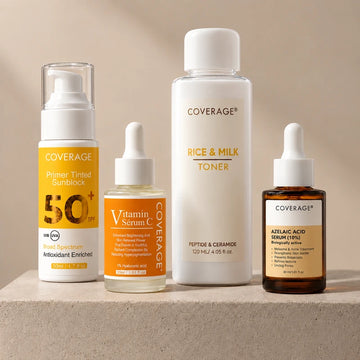
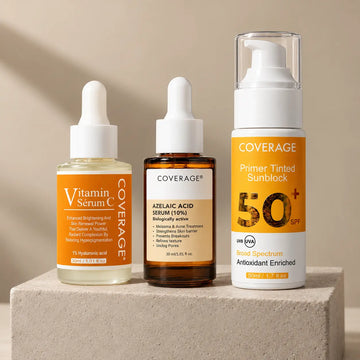
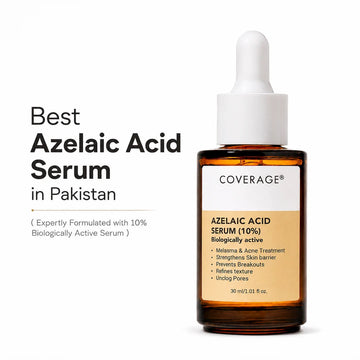
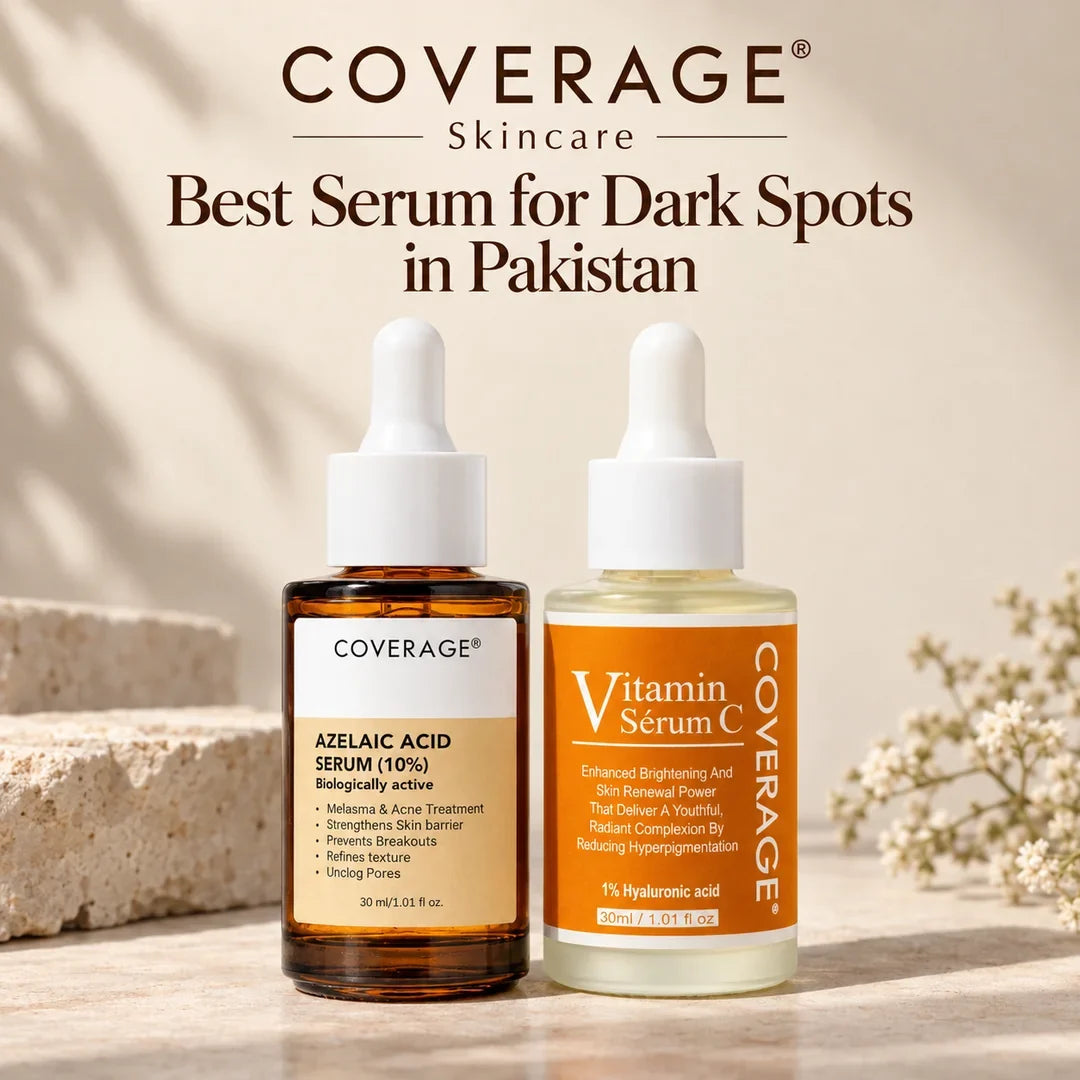
COVERAGE Azelaic Acid Serum 10%
A lightweight serum built on an aloe vera base with 10% azelaic acid, sodium hyaluronate for hydration and vitamin E (tocopheryl acetate), with no added fragrance and no propylene glycol. The fluid texture spreads easily and does not feel heavy on oily skin in heat and humidity.
- Targets active pimples and redness
- Fades post-acne marks and daag dhabbe
- Suits daily night use, including on sensitive skin
Most of our customers see a visible difference within 1 to 3 weeks of consistent daily use. Every skin type and every concern is different, so some people need more time. Our guide on how long azelaic acid takes to work sets out a realistic timeline.
See the Azelaic Acid 10% Serum
Keel Muhason Ke Nishan Ka Ilaj (Acne Marks and Scars)
For most people in Pakistan, the real frustration is not the pimple but the dark mark it leaves behind. Here is the good news: most of what people call acne scars are not scars at all.
| Type | What it looks like | Cause | Permanent? |
|---|---|---|---|
| PIH (daag dhabbe) | Flat brown or dark patches | Excess melanin after inflammation | No, fades over months |
| PIE (red marks) | Flat red or pink marks | Damaged small blood vessels | No, fades over months |
| True acne scars | Pits, dents or raised bumps | Collagen damage from deep acne | Yes, needs clinic procedures |
The simple test: run your finger over the mark. If the skin is flat and only the colour has changed, it is a mark, and it will fade. If you can feel a dip or a bump, it is a true scar.
Post-inflammatory hyperpigmentation (PIH) is especially common on brown skin. A well-known study of acne in skin of colour (Taylor and colleagues, 2002) found PIH in roughly half of Asian and Hispanic patients and nearly two thirds of Black patients. That is why fading marks has to be part of any keel muhase ka ilaj for Pakistani skin, not an afterthought.

How to fade keel muhason ke nishan
- Treat active acne first. Every new pimple creates a new mark, so control breakouts before anything else.
- Use a pigment-fading active. Azelaic acid at night works on both acne and marks. Vitamin C and niacinamide help in the morning.
- Wear SPF 50 every single day. UV light darkens marks and undoes your progress. This step is non-negotiable.
- Stop picking. Squeezing and scratching is the biggest cause of both dark marks and permanent scars.
- Be patient. Expect visible fading over about 12 to 16 weeks of consistent use, and longer for deep marks.
COVERAGE Vitamin C + 1% HA Serum
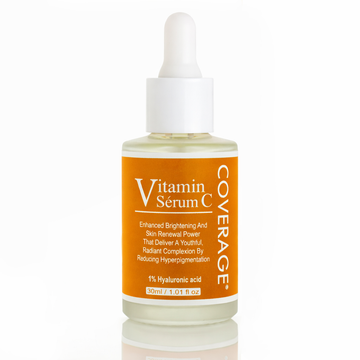
Built on ethyl ascorbic acid, a stable form of vitamin C chosen so the serum holds up better in Pakistani heat than pure L-ascorbic acid, plus niacinamide and hyaluronic acid. It brightens dullness, helps fade post-acne dark spots and adds antioxidant protection under your sunscreen.
See the Vitamin C + 1% HA SerumCOVERAGE Primer Tinted Sunblock SPF 50+
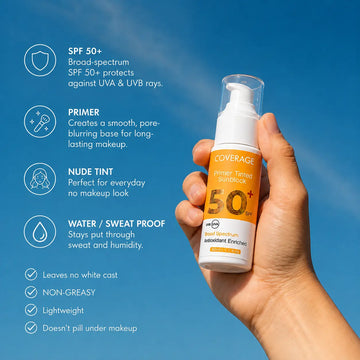
A mineral sunscreen with micronized zinc oxide and titanium dioxide, tinted with iron oxides so it blends into brown skin without a white cast. Iron oxides also help protect against visible light, which is known to worsen pigmentation in darker skin tones. Read more in our tinted sunscreen buyer's guide.
See the Primer Tinted Sunblock
What about pitted scars?
True pitted scars (ice pick, boxcar and rolling scars) involve lost collagen, so no serum or cream can fill them. Dermatologists treat them with procedures such as microneedling, subcision, chemical peels and lasers. Controlling acne early is the best way to prevent them. If pigmentation is your main concern, our guide to chaiyan ka ilaj covers stubborn patches in more depth.
The Keel Muhase Routine for Pakistani Weather (AM/PM)
You do not need ten steps. You need the right four or five, done every day. This routine is built for oily and combination skin in heat and humidity.
Morning (subah)
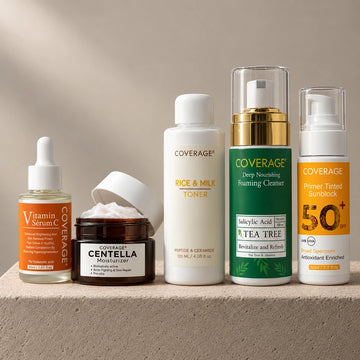
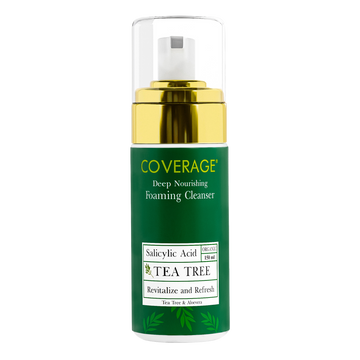
- Cleanse with the Deep Nourishing Foaming Cleanser, which combines salicylic acid, tea tree leaf extract, niacinamide and zinc PCA to clear oil without stripping the skin.
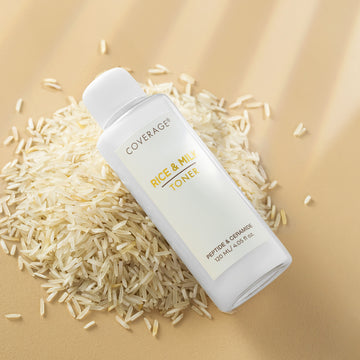
- Tone (optional) with the Rice and Milk Toner for lightweight hydration and ceramide NP barrier support.
- Brighten with 3 to 4 drops of the Vitamin C + 1% HA Serum.
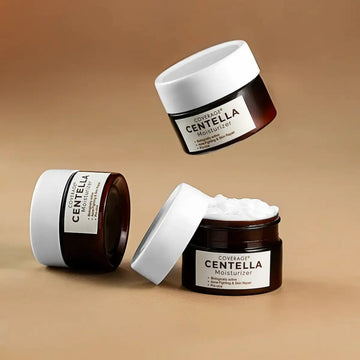
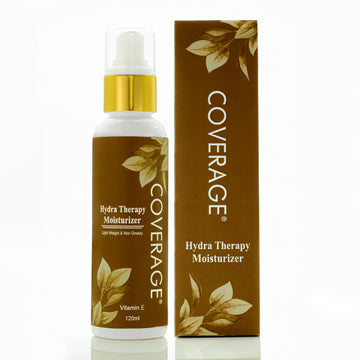
- Moisturise with a light layer of the Centella Moisturizer, made with centella asiatica, niacinamide, squalane and ceramide to calm red, irritated skin.
- Protect with the Primer Tinted Sunblock SPF 50+. Reapply if you are outdoors.
Night (raat)
- Cleanse to remove sunscreen, sweat and pollution.
- Tone (optional) with the Rice and Milk Toner.
- Treat with 3 to 4 drops of the Azelaic Acid 10% Serum over the whole face, not only on individual pimples.
- Moisturise with the Centella Moisturizer to seal in hydration and support the skin barrier.
How to start without irritating your skin
- Weeks 1 and 2: use the azelaic acid serum every other night. Mild tingling for a few minutes is normal.
- Week 3 onwards: move to every night if your skin feels comfortable.
- Patch test first: apply a little to the jawline for 24 hours before full use.
- One new active at a time: if a dermatologist has prescribed a retinoid, use it on alternate nights with azelaic acid rather than layering both at once.
- Give it time: judge results after 8 weeks, not 8 days.

Want the routine in one box? The Acne Repair Set brings together the foaming cleanser, Rice and Milk Toner and Centella Moisturizer, and the Pigmentation and Melasma + Acne Bundle is built around the Azelaic Acid 10% Serum for breakouts and marks together. You can also browse the full acne collection.

Gharelu Totke for Keel Muhase: Safe or Harmful?
Desi ilaj is often the first thing people try. Some are harmless, some have weak evidence, and some can leave your skin worse than before.
| Home remedy | Verdict | Why |
|---|---|---|
| Toothpaste | Harmful | Not made for skin; can burn, irritate and leave dark marks |
| Lemon (nimboo) | Harmful | Acidic and irritating; can worsen pigmentation, especially in sun |
| Baking soda | Harmful | Disrupts the skin's natural pH and barrier |
| Raw garlic | Harmful | Can cause chemical burns and allergic reactions |
| Tea tree oil | Limited evidence | Small trials show some benefit for mild acne; must be diluted and patch tested as it can cause allergy |
| Neem, besan, multani mitti | Weak evidence | Traditional and may absorb oil briefly, but not proven treatments; overuse dries the skin |
| Aloe vera, honey | Soothing only | Can calm skin but will not clear acne alone |
| Ice in a cloth | Safe, temporary | Reduces swelling of a painful pimple for a few hours |
The honest takeaway: skip the harmful totke and put your effort into ingredients with real clinical evidence.

Keel Muhase Myths vs Facts
| Myth | Fact |
|---|---|
| Acne means dirty skin | Acne is a medical condition. Over-washing makes it worse. |
| Popping clears pimples faster | Popping pushes infection deeper and causes marks and scars. |
| Oily or spicy food causes acne | Not proven. High-sugar foods and some dairy show a stronger link. |
| Oily skin does not need sunscreen | Without sunscreen, marks darken and last much longer. |
| Oily skin does not need moisturiser | Dehydrated skin can become more irritated. Use a light, non-greasy one. |
| Acne only happens to teenagers | Adult acne is common, especially hormonal acne in women. |
| More product means faster results | Too many actives damage the barrier and slow healing. |
| Results should show in a week | Most treatments need 3 to 8 weeks; marks need months. |
Does Diet Affect Keel Muhase?
Food is not the main cause of acne, but it can play a supporting role. A 2022 systematic review in JAAD International concluded that high-glycemic diets promote acne and worsen its severity, while the link with dairy was consistent mainly in Western populations. A large 2018 meta-analysis of more than 78,000 young people found milk, and skim milk in particular, associated with higher odds of acne.
- Cut back on: sugary drinks, sweets, bakery items and refined white flour.
- Eat more of: vegetables, fruit, whole grains, daal and lean protein.
- Watch: whey protein supplements, which some people find trigger breakouts.
- Remember: no diet replaces proper treatment. Oily or spicy food has not been proven to cause acne.
Kamar Ke Daane: Back and Body Acne
Back and chest acne gets worse in Pakistani summers because of sweat, heat and friction from tight clothes, backpacks and gym gear.
- Shower and change clothes soon after sweating or exercise.
- Use a body wash with salicylic acid or benzoyl peroxide and leave it on for a minute before rinsing.
- Wear loose, breathable cotton and change pillowcases and towels often.
- Do not scrub hard with a loofah, which inflames the skin.
- If the bumps are itchy and all the same size, they may be fungal and need a doctor.
Keel Muhase in Pregnancy
Pregnancy hormones commonly trigger acne. According to the AAD, azelaic acid is thought to be safe to use during pregnancy, and benzoyl peroxide and certain topical antibiotics are also used under a doctor's guidance. Avoid oral isotretinoin, topical retinoids (tretinoin, adapalene, tazarotene) and tetracycline antibiotics. Always confirm any treatment with your gynaecologist first.
When to See a Dermatologist
Home care handles most mild to moderate acne. See a dermatologist (jild ke doctor) if you have:
- Deep, painful nodules or cysts
- Acne that is leaving pitted scars
- No improvement after about three months of consistent treatment
- Signs of hormonal acne or PCOS, such as jawline breakouts with irregular periods
- Itchy, uniform bumps that do not respond to acne products
- Acne that is affecting your confidence, mood or daily life
Sudden, severe acne with fever or joint pain needs urgent medical care.
COVERAGE is a Korean-formulated skincare brand from Lahore, built for Pakistani skin and Pakistani weather. The family behind it has worked in skincare manufacturing for around 40 years, and our products are made in our own GMP and ISO certified facility with in-house lab testing, not through third-party white-label. More than 5,000 customers have reviewed COVERAGE across our website and social channels, and every order comes with cash on delivery across Pakistan.
- Keel muhase ka ilaj means unclogging pores, controlling oil and bacteria, calming inflammation and protecting from the sun.
- Match the ingredient to your acne type: salicylic acid for keel, benzoyl peroxide or azelaic acid for inflamed daane.
- Give any treatment 3 to 8 weeks. There is no safe overnight cure.
- On brown skin, most marks are PIH, not scars, and they fade with the right actives and daily SPF 50.
- Never use toothpaste or lemon, and never pop pimples.
- See a dermatologist for cysts, scarring, hormonal acne or acne that will not budge after three months.
Frequently Asked Questions About Keel Muhase Ka Ilaj
Keel muhase ka ilaj kya hai?
Keel muhase ka ilaj means unclogging pores, controlling oil and acne bacteria, and calming inflammation with proven ingredients such as salicylic acid, benzoyl peroxide, retinoids, azelaic acid and niacinamide. Used consistently for 3 to 8 weeks with daily sunscreen, these clear most mild to moderate acne. Severe or cystic acne needs a dermatologist.
Keel muhase khatam karne ka sab se tez tarika kya hai?
There is no safe overnight cure. Ice wrapped in a cloth can calm a swollen pimple for a few hours, but real clearing comes from a consistent routine: a salicylic acid cleanser, an active such as azelaic acid at night, a light moisturiser and sunscreen. Most people see clear improvement in 3 to 8 weeks.
Chehre par daane kyun nikalte hain?
Pimples form when excess oil and dead skin cells block a pore and acne bacteria multiply inside it, causing inflammation. Common triggers include hormones, stress, heat and sweat, friction from masks or helmets, heavy hair oils, pore-clogging makeup and, for some people, a high-sugar diet.
Keel muhason ke nishan kaise khatam karein?
Most flat dark marks are post-inflammatory hyperpigmentation, not scars, and they fade. Treat active acne first, then use a pigment-fading ingredient such as azelaic acid, niacinamide or vitamin C, and wear SPF 50 every day. Expect visible fading over roughly 12 to 16 weeks. Pitted scars need in-clinic procedures.
Kya toothpaste lagane se daane theek hote hain?
No. Toothpaste is not made for skin and can cause burning, irritation and new dark marks, especially on brown skin. Use a proper acne treatment such as benzoyl peroxide, salicylic acid or azelaic acid instead.
Pakistan mein keel muhase ke liye best serum kaun sa hai?
For most Pakistani skin, azelaic acid is the most versatile acne serum because it treats active pimples, calms redness and fades the dark marks acne leaves behind. The COVERAGE Azelaic Acid 10% Serum is formulated in a lightweight, fragrance-free base for daily use in hot, humid weather.
Azelaic acid aur vitamin C mein kya farq hai?
Azelaic acid treats active acne and also fades marks, so it suits acne-prone skin at night. Vitamin C is an antioxidant that brightens and fades dark spots but does not treat active pimples. Many people use vitamin C in the morning under sunscreen and azelaic acid at night.
Keel muhase ka ilaj kitne din mein asar dikhata hai?
Most topical acne treatments take 3 to 8 weeks to show clear improvement, and up to 12 weeks for full results. Retinoids can cause a temporary flare in the first few weeks. Dark marks take longer, usually 12 to 16 weeks with daily sunscreen.
Kya khane se keel muhase hote hain?
Food is not the main cause, but research links high-glycemic foods such as sugary drinks, white bread and sweets to worse acne, and milk, especially skim milk, shows a link in some studies. Oily or spicy food has not been proven to cause acne. Diet supports treatment but does not replace it.
Hormonal acne kya hai?
Hormonal acne usually appears on the jawline, chin and lower face and flares before periods. In women it can be linked to PCOS, especially with irregular periods or excess facial hair. It often needs a doctor, who may prescribe hormonal treatment alongside topical products.
Fungal acne kya hota hai?
Fungal acne, or Malassezia folliculitis, is caused by yeast, not acne bacteria. It shows up as small, itchy, same-sized bumps on the forehead, chest or back, and is common in humid weather. It needs antifungal treatment, so see a dermatologist if uniform itchy bumps do not respond to acne products.
Kya oily skin par sunscreen zaroori hai?
Yes. Sun exposure darkens acne marks and slows their fading, so daily SPF is essential for oily and acne-prone skin. Choose a lightweight formula, such as a mineral tinted SPF 50+, and reapply when you are outdoors.
Kya daane phorna theek hai?
No. Squeezing or popping pimples pushes bacteria and inflammation deeper, which increases the risk of dark marks and permanent scars. Leave them alone, use a spot treatment, and see a dermatologist for painful cysts.
Kya pregnancy mein azelaic acid use kar sakte hain?
Azelaic acid is widely considered one of the safer acne treatments during pregnancy according to the AAD, but always confirm with your gynaecologist first. Avoid retinoids, isotretinoin and tetracycline antibiotics while pregnant.
Kamar ke daane ka ilaj kya hai?
Shower and change clothes soon after sweating, use a body wash with salicylic acid or benzoyl peroxide, wear loose cotton, and avoid heavy backpacks rubbing the skin. If the bumps are itchy and uniform, they may be fungal and need a doctor.
Dermatologist ke paas kab jana chahiye?
See a dermatologist if you have deep painful nodules or cysts, acne that is scarring, acne that has not improved after about three months of consistent treatment, suspected hormonal acne or PCOS, or acne that is affecting your confidence and mood.
Kya multani mitti ya neem se keel muhase theek hote hain?
Multani mitti can absorb oil temporarily and neem has some antibacterial properties, but neither has strong clinical evidence as an acne treatment, and overuse can dry and irritate the skin. They cannot replace proven ingredients.
Kya azelaic acid aur salicylic acid cleanser saath use kar sakte hain?
Yes, for most people. A salicylic acid cleanser is rinsed off, so it pairs well with an azelaic acid serum applied afterwards. Start the serum every other night for the first two weeks and add a moisturiser if your skin feels dry or tight.
The Bottom Line
Keel muhase are common, treatable and not your fault. The formula that works is simple: identify your acne type, choose ingredients with real evidence, protect your skin from the sun, stop picking, and give it time. For most Pakistani skin, a gentle salicylic acid cleanser in the morning, azelaic acid at night and SPF 50 every day will handle both the daane and the daag dhabbe they leave behind. If you are unsure where to begin, start with the COVERAGE Azelaic Acid 10% Serum and build the rest of the routine around it.
References
- Reynolds RV, Yeung H, Cheng CE, et al. Guidelines of care for the management of acne vulgaris. J Am Acad Dermatol. 2024;90(5):1006.e1-1006.e30.
- American Academy of Dermatology. Acne: who gets it and causes; Is any acne treatment safe to use during pregnancy?
- Gollnick HP, Graupe K, Zaumseil RP. Azelaic acid 15% gel in the treatment of acne vulgaris: combined results of two double-blind clinical comparative studies. J Dtsch Dermatol Ges. 2004;2(10):841-847.
- Taylor SC, Cook-Bolden F, Rahman Z, Strachan D. Acne vulgaris in skin of color. J Am Acad Dermatol. 2002;46(2 Suppl):S98-106.
- Shalita AR, et al. Topical nicotinamide compared with clindamycin gel in the treatment of inflammatory acne vulgaris. Int J Dermatol. 1995;34(6):434-437.
- Meixiong J, Ricco C, Vasavda C, Ho BK. Diet and acne: a systematic review. JAAD International. 2022.
- Juhl CR, et al. Dairy intake and acne vulgaris: a systematic review and meta-analysis of 78,529 children, adolescents, and young adults. Nutrients. 2018;10(8):1049.
- NHS. Acne: overview, treatment and when to see a GP.
- Dermatology Times. Malassezia folliculitis vs acne vulgaris: key diagnostic and treatment differences.
This article is for general informational purposes only and is not a substitute for professional medical advice. All information and claims referenced above are drawn from publicly available dermatological studies and expert sources. Always consult a dermatologist for advice specific to your skin.
%20is%20one%20of%20the%20most%20searched%20skin%20questions%20in%20Pakistan,%20and%20for%20good%20reason.%20Between%20Karachi's%20humidity,%20Lahore's%20smog,%20long%20sweaty%20summers%20and%20a%20market%20ful...)
Leave a comment
This site is protected by hCaptcha and the hCaptcha Privacy Policy and Terms of Service apply.