
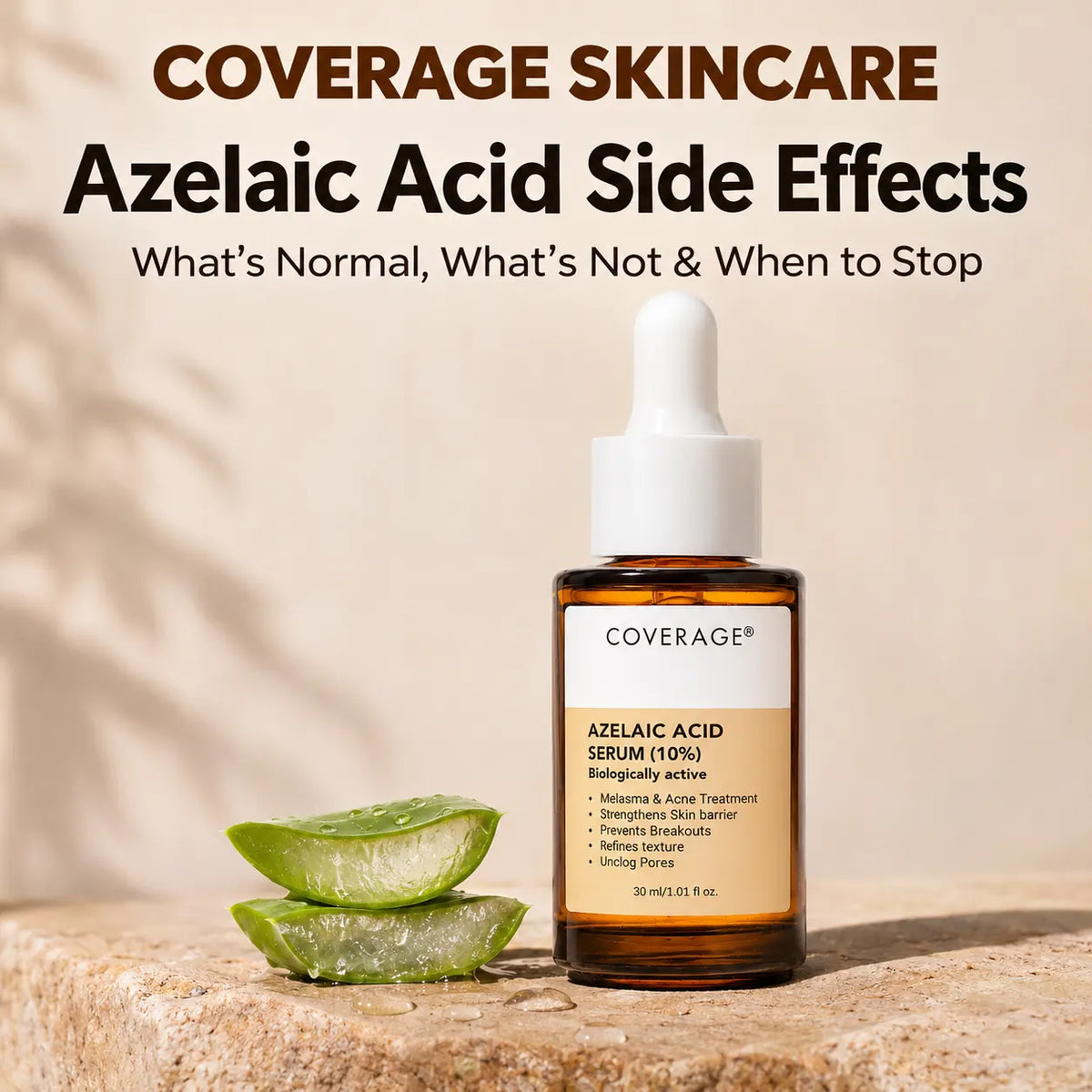
Azelaic Acid Side Effects: What's Normal, What's Not, and When to Stop
You started azelaic acid for your daag dhabbe, keel muhase or chhaiyan, and now your skin tingles, itches or feels a little tight. Is that normal, or is it a sign to stop? This guide answers exactly that, for Pakistani skin and Pakistani weather, using the prescribing data and dermatology research behind azelaic acid, plus what we have learned making and selling our own COVERAGE Azelaic Acid Serum 10% to customers across the country.
What are the side effects of azelaic acid?
Azelaic acid is a dicarboxylic acid found naturally in grains such as wheat, barley and rye. Dermatologists use it for acne, rosacea, post-acne marks and melasma because it calms inflammation, keeps pores clear and slows down overactive pigment cells. It is one of the best-tolerated active ingredients in skincare, and the side effects it does cause are almost always mild and local.
The clearest numbers come from the US FDA prescribing information for prescription 15% azelaic acid gel, tested in three US trials with 788 people. The most common treatment-related reactions were:
| Side effect | How often (15% gel trials) | What it feels like |
|---|---|---|
| Burning, stinging, tingling | 29% | A prickly or warm feeling after applying (jalan, chubhan) |
| Itching | 11% | A light urge to scratch (kharish) |
| Dryness, scaling | 8% | Tightness or fine flakes, often around the nose and chin |
| Redness, irritation | 4% | Faint pink or red where you applied it |
| Contact dermatitis, swelling, acne | About 1% or less each | A rash, puffiness or new spots |
Source: US FDA prescribing information, azelaic acid gel 15%.
Most of these reactions were mild. Of the people who felt burning or stinging, the majority rated it mild, and the label notes that irritation usually happens during the first few weeks of treatment. The DermNet overview of azelaic acid describes the same pattern: short-lived stinging and itching early on, settling with continued use.
Takeaway: a brief tingle in your first two weeks puts you in the most common, harmless group. What matters more than the symptom is its direction. Skin that feels calmer each week is adjusting. Skin that feels worse every day is telling you to slow down or stop.
Why does azelaic acid sting or burn?
The FDA label for prescription 20% azelaic acid cream explains that the stinging is partly due to the low pH of azelaic acid, and that it is more likely on broken or inflamed skin, usually at the start of treatment. That is why it stings more on skin that is raw from picking, over-scrubbing, threading, waxing, a recent peel or sunburn. Skin with an active breakout or a damaged barrier simply lets an acidic ingredient reach the nerve endings more easily.
The rest of the formula matters as much as the azelaic acid itself. In the 15% gel safety studies, the gel base on its own (without the active) also caused irritant reactions, and a 2024 network meta-analysis in JAAD International covering 19 rosacea trials and more than 8,000 people found that tolerability differed between azelaic acid formulations. In plain words: the base, the solvents and the fragrance a product is built on shape how it feels on your skin.

Why azelaic acid stings more on a damaged skin barrier. COVERAGE SKINCARE
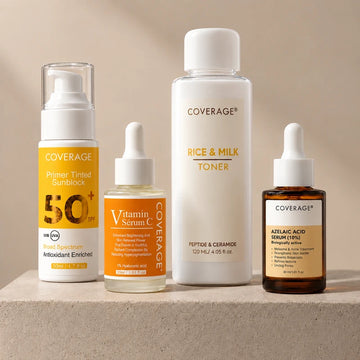
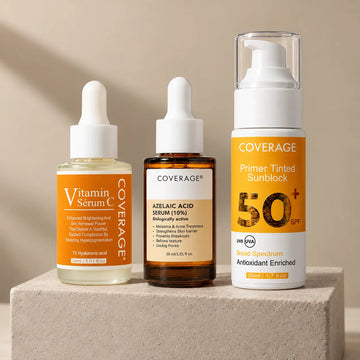
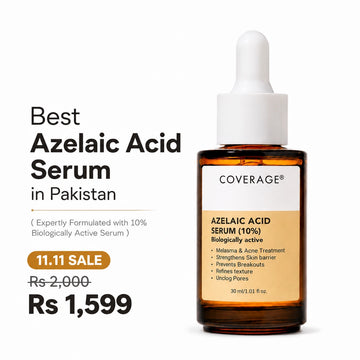
This is exactly why we built our serum the way we did. The COVERAGE Azelaic Acid Serum 10% is a lightweight aqueous serum with aloe barbadensis leaf extract as its first ingredient, followed by azelaic acid, sodium hyaluronate (a form of hyaluronic acid) and tocopheryl acetate (vitamin E). We make it with no fragrance, no alcohol and no propylene glycol, three ingredients that commonly make sensitive skin react. At 10%, it is the gentler, everyday strength of azelaic acid: a serum that sinks in fast, does not clog pores and suits daily long-term use on oily, combination, acne-prone and normal skin.

COVERAGE Azelaic Acid Serum 10%: aloe-first, fragrance-free and alcohol-free.
Is it purging, irritation or an allergic reaction?
"Purging" is the idea that an active ingredient pushes existing clogs to the surface, causing a short-lived flare before skin clears. It is a popular explanation online, but it has not been documented as a distinct effect in azelaic acid trials: the 15% gel label records new acne in only about 1% of users. So treat purging as something to watch, not something to assume. The three reactions look different once you know what to check:
| Possible purging | Irritation | Allergic reaction | |
|---|---|---|---|
| Where | Your usual breakout areas | Exactly where you applied it | Can spread beyond it, including eyelids |
| What you see | Small whiteheads or blackheads | Stinging, redness, dryness, flaking | Intense itch, swelling, hives, tiny blisters |
| When it starts | The first few weeks | Minutes to days after starting or using more | Hives fast; contact allergy often 1 to 3 days |
| How it changes | Eases week by week | Settles, or worsens if overused | Gets worse with every use |
| What to do | Keep going slowly, do not pick | Use less often, moisturise, stop if it persists | Stop and see a doctor; urgent if lips or throat swell |
True allergy to azelaic acid itself is rare, but it does happen. A 2021 report in Contact Dermatitis described a rash confirmed by patch testing to an azelaic acid gel. Any ingredient in a product can be the trigger, which is why we ask every new customer to patch test first.
Takeaway: breakouts in places you never normally get them, or a rash that spreads, are not purging. Stop and get it checked.

Purging, irritation or allergy: how to tell them apart.
Can azelaic acid lighten your skin or cause white patches?
Azelaic acid works on pigment cells that are overactive, the ones producing daag dhabbe, post-acne marks and chhaiyan, and has little effect on normally pigmented skin. That selectivity is a big part of why dermatologists reach for it on brown skin. The aim is to bring marks back to your natural tone, not to lighten healthy skin, and that is the only way we describe our serum.
Rarely, things go further than that. Both FDA labels report isolated cases of hypopigmentation (skin turning lighter than normal), and note that people with darker complexions should be monitored for early signs. DermNet adds that any lightening is more noticeable on darker skin. Studies of azelaic acid in darker skin, such as a 16-week study of 15% gel in adults with Fitzpatrick skin types IV to VI, found it well tolerated.
Is azelaic acid safe around the eyes, lips and nose?
Keep it away from your eyes and the inside of your nose and mouth. The 15% gel label reports eye irritation, and rare inflammation inside the eye after accidental contact. If it gets in your eyes, rinse with plenty of clean water and see a doctor if the irritation continues. Our serum's directions say to avoid the area directly around the eyes. The skin there is thin, and in Pakistani summers sweat can carry product down into the eye.
Who should be careful with azelaic acid?
Pregnancy
The American Academy of Dermatology lists azelaic acid among the acne treatments thought to be safe during pregnancy, and animal studies have not shown birth defects. Reviews describe topical azelaic acid as minimally absorbed through the skin, with no harmful effects on the baby reported, and include it among first-line acne options in pregnancy (review, review). Always check with your doctor before starting any active ingredient while pregnant.
Breastfeeding
The 15% gel label says azelaic acid may pass into breast milk but is not expected to change milk levels meaningfully, because so little is absorbed. Keep it away from the nipple area and check with your doctor.
Asthma
Worsening asthma, wheezing and breathlessness have been reported with azelaic acid products. If your asthma gets worse after you start, stop and speak to your doctor.
Cold sores
Flares of recurring cold sores (herpes labialis) have been reported. Do not apply azelaic acid on or near an active cold sore.
Eczema-prone and very sensitive skin
People with eczema-prone or very reactive skin may find any acid stings at first. For them, the patch test and an every-other-night start matter most. Our guide to sensitive skin barrier repair explains how to calm the barrier before introducing actives.

Patch test on the inner forearm and wait 24 hours before your first full use.
Can you mix azelaic acid with retinoids, acids, vitamin C, niacinamide or benzoyl peroxide?
Yes, with most of them. Azelaic acid is one of the easiest actives to build into a routine. The real risk is not a chemical clash but stacked irritation: too many strong actives on the same skin at the same time.
| Combination | Together? | How to do it safely |
|---|---|---|
| Vitamin C | Yes | Vitamin C in the morning, azelaic at night, or the lighter vitamin C serum first and azelaic after |
| Niacinamide | Yes | A well-matched pair; niacinamide supports the barrier while azelaic corrects |
| Benzoyl peroxide | Yes, with care | Expect some dryness; use one in the morning and one at night |
| Retinoids (retinol, tretinoin, adapalene) | Yes, with care | Alternate nights at first; avoid retinoids in pregnancy |
| AHA/BHA (glycolic, lactic, salicylic) | Caution | Not on the same night while you are starting out |
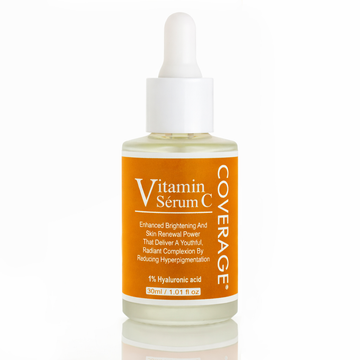
Add one new active at a time, about two weeks apart, so you always know what your skin is reacting to. For the full pairing guides, read azelaic acid vs vitamin C and niacinamide vs azelaic acid. If you want both in one routine, our Vitamin C + 1% HA Skin Serum carries niacinamide alongside stable ethyl ascorbic acid, and pairs with the azelaic serum as a morning and night routine.

Which actives pair with azelaic acid, and how to layer them safely.
Using azelaic acid in Pakistani heat, humidity and sun
Most azelaic acid guidance is written for cool climates. Here is how we tell our customers to adjust for a Lahore or Karachi summer:
- Apply at night in peak summer. Heat and sweat make any tingling feel stronger, and nights are cooler and calmer for your skin.
- Let it absorb fully before moisturiser or sunscreen. Our serum is lightweight and sinks in within a minute or two.
- Wear sunscreen every single morning. The 15% gel safety studies found no phototoxicity, so azelaic acid does not make skin burn more easily, but sun is what drives daag dhabbe and chhaiyan in the first place. Read is SPF 50 enough in Pakistan for how much to apply and how often.
- Go gentler around threading, waxing, facials and peels. Skip azelaic acid for a night or two before and after, and never apply it on freshly waxed skin.
- Do not layer it under heavy, occlusive products in humid weather. A light gel-cream moisturiser keeps skin comfortable without trapping sweat.

Five rules for using azelaic acid in Pakistani heat and sun.
What to do when azelaic acid irritates your skin
Our own guidance on the product page is simple: if any irritation continues, use it less often, and stop if irritation persists. The prescription labels give the same advice, reducing to once a day or pausing until skin settles. Step by step:
- Rinse with lukewarm water. Do not scrub.
- Skip azelaic acid, and any other acids or retinoids, for a night or two.
- Moisturise with a gentle, fragrance-free moisturiser.
- Restart every other night once your skin feels calm again.
- Wear sunscreen every morning while your skin recovers.
- See a dermatologist if stinging continues beyond a couple of weeks or keeps getting worse.
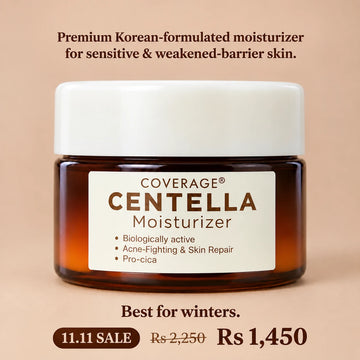
You do not need to buy anything new to calm irritation. If you are choosing a moisturiser anyway, our Centella Moisturizer is the one we designed to sit next to the azelaic serum. It is built around centella asiatica, ceramide, niacinamide, panthenol and sodium hyaluronate, and on very dry or irritated days we suggest pressing on a second thin layer over the areas that need it most. It contains almond and macadamia oils, so check the full ingredient list first if you have a nut allergy. More on how it works in our Centella moisturizer guide.

Six steps to calm azelaic acid irritation.
When should you stop using azelaic acid?
Stop and get urgent help for swelling of the lips, tongue, face or throat, hives with trouble breathing, or wheezing.
Stop and see a dermatologist for burning that persists or worsens, a spreading rash, blisters or oozing, patches lighter than your normal skin, eye irritation that continues after rinsing, or a cold-sore flare where you applied it.
Pause and reassess if your skin turns raw after adding another active, after sunburn, or right after waxing, threading or a peel.

When to stop, when to see a dermatologist and when to get urgent help.
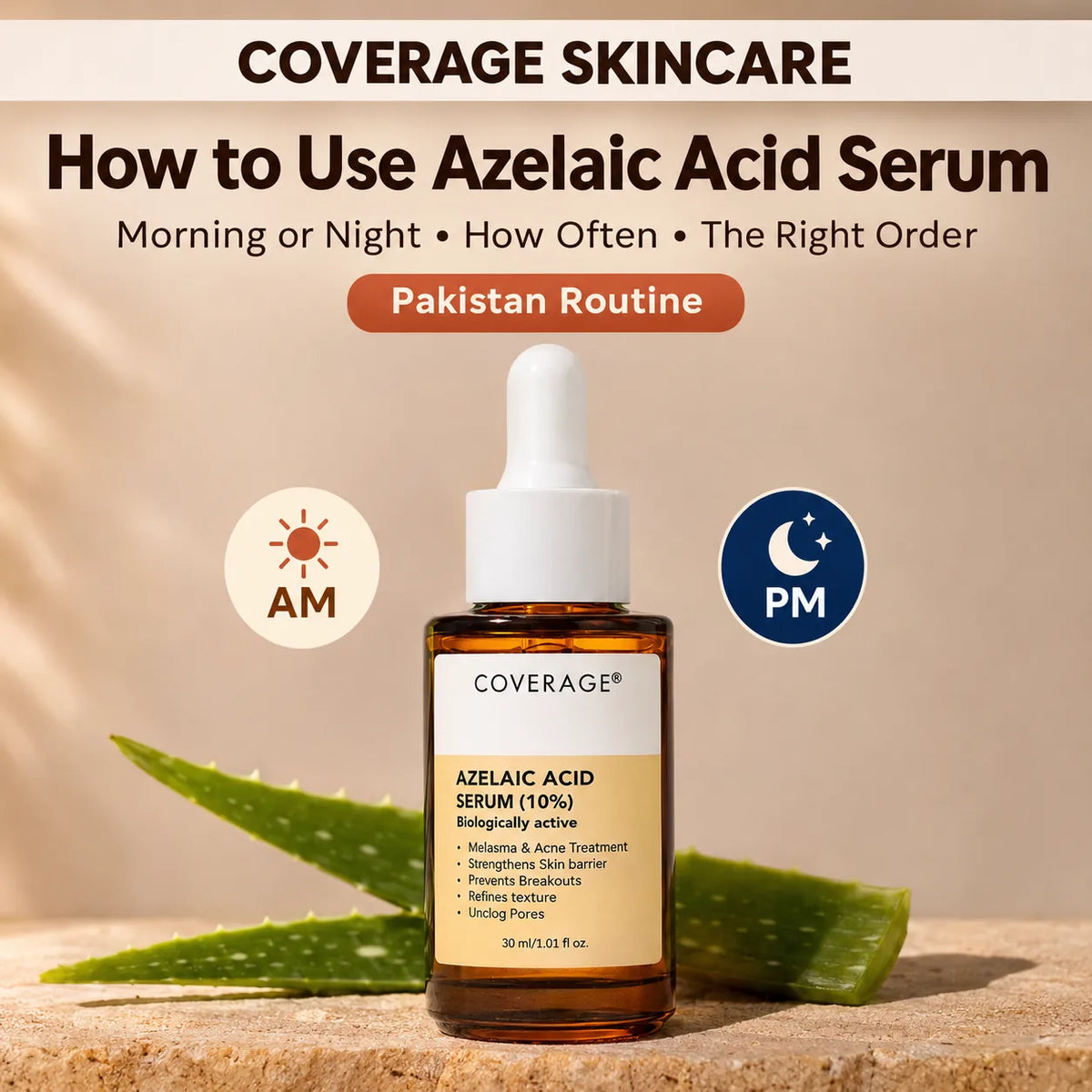
How to use COVERAGE Azelaic Acid Serum 10% the right way
Almost every side effect above is less likely when you start the right way. These are our product directions:
- Patch test on the inner forearm or jawline. Wait 24 hours and only continue if there is no reaction.
- Cleanse and pat your skin dry.
- Apply 3 to 4 drops, avoiding the area directly around the eyes.
- Let it absorb, then follow with your moisturiser.
- In the morning, always finish with sunscreen. With any pigmentation treatment, this step is non-negotiable.
How often: once or twice daily. New to actives? Start every other night and build up as your skin adjusts. Pairing with vitamin C? Apply the lighter vitamin C serum first and let it absorb, or use vitamin C in the morning and azelaic acid at night.
Most of our customers see a visible difference within 1 to 3 weeks of consistent daily use. Every skin type and every concern is different, so some people need more time, and older marks and melasma keep improving over the following months. Our guide to how long azelaic acid takes to work breaks the timeline down by concern.

The lightweight serum texture of COVERAGE Azelaic Acid Serum 10% on brown skin.
A simple routine built around the serum
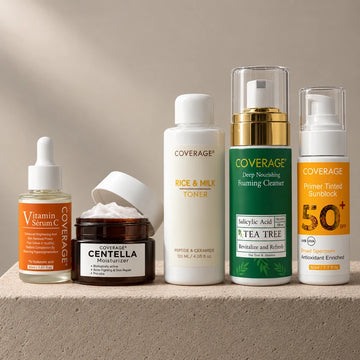
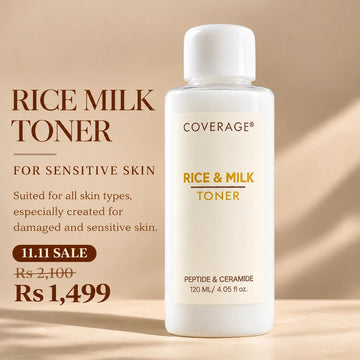
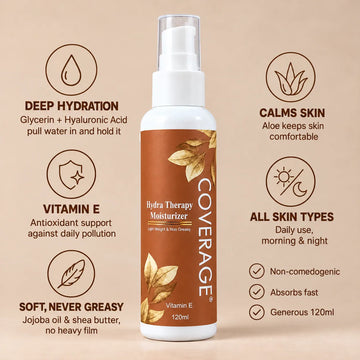
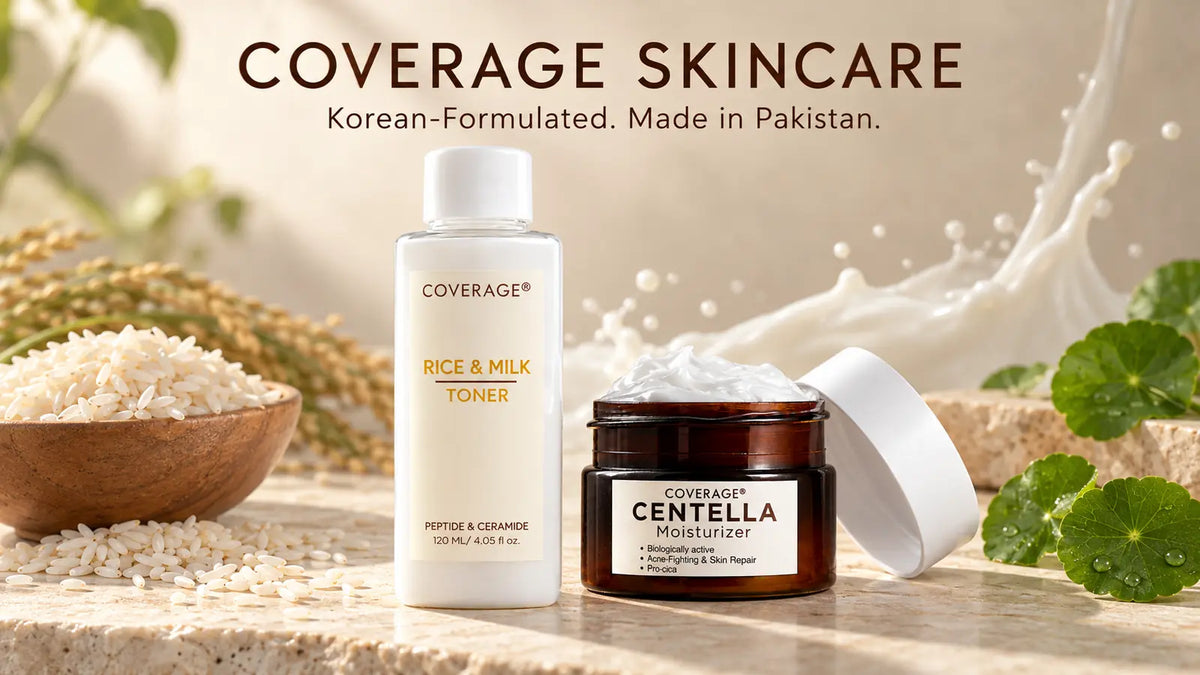
- Night: gentle face wash, Rice & Milk Toner (optional hydrating step with ceramide NP, panthenol and peptide), Azelaic Acid Serum 10%, then Centella Moisturizer or the lighter Hydra Therapy Moisturizer.
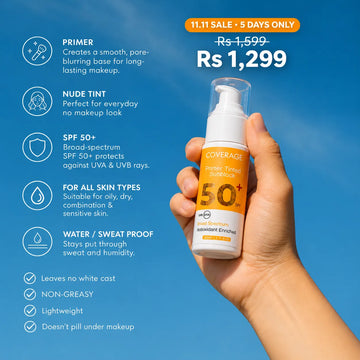
- Morning: gentle face wash, Vitamin C + 1% HA Serum if you use it, moisturiser, then Primer Tinted Sunblock SPF 50+, our 100% mineral sunscreen with zinc oxide, titanium dioxide and iron oxides. Reapply every 2 to 3 hours outdoors.
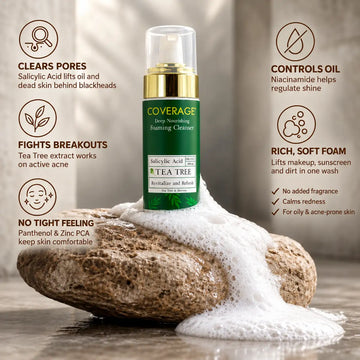
If you are acne-prone, our Deep Nourishing Foaming Cleanser with salicylic acid and tea tree is a good fit once your skin has settled into the serum. On days when your skin feels irritated, switch to a plain gentle wash so you are not stacking acids.
Want the night routine in one box? Our Pigmentation & Melasma + Acne Bundle brings the Azelaic Acid Serum, Rice & Milk Toner and Centella Moisturizer together. These products make the routine easier, but they are not required: any gentle moisturiser and broad-spectrum sunscreen your skin tolerates will do the job.
What the evidence tells us
Azelaic acid has decades of dermatology behind it. A 2023 systematic review in the Journal of Cosmetic Dermatology found it effective for acne, rosacea and pigmentation with no or low serious side effects. A 2023 meta-analysis on melasma supports it as a pigmentation treatment, and a Cochrane review on acne includes it among the topical options with trial evidence. The side effects that are well documented are the mild, early ones: stinging, itching, dryness and redness. Serious reactions are rare.
Most of the large safety datasets come from prescription 15% gels and 20% creams. A 10% serum is the gentler, consumer-friendly strength of the same ingredient, made for steady daily use, which is why we chose it for our formula. For a closer look at strengths, read our 10% vs 20% azelaic acid guide.
Who makes COVERAGE Azelaic Acid Serum
COVERAGE is a Korean-formulated skincare brand made in Pakistan, for Pakistani skin and Pakistani weather. Every product is made in our own family manufacturing facility in Lahore, built on decades of manufacturing experience and certified to GMP and ISO 9001 standards. Our in-house chemical engineers formulate and lab-test every batch, we are Halal certified and cruelty-free, and we publish the full ingredient list of every product. More than 72,000 orders have gone out to customers across Pakistan.
If you have a question about a reaction, message us on WhatsApp or through our contact page. For anything beyond mild, settling irritation, please see a dermatologist.

The COVERAGE Pigmentation & Melasma + Acne Bundle: serum, toner and moisturiser.
Frequently asked questions
Is it normal for azelaic acid to burn or sting?
Mild tingling or brief stinging in the first few weeks is the most common side effect of azelaic acid and usually fades as skin adjusts. Burning that lasts, keeps getting worse, or comes with swelling or a spreading rash is not normal: stop and see a dermatologist.
How long do azelaic acid side effects last?
Mild stinging, itching and dryness usually appear in the first few weeks and settle as your skin gets used to it. If they persist or worsen, use it less often, and stop if the irritation continues.
Does azelaic acid cause purging?
Purging has not been documented as a distinct effect in azelaic acid trials, where new acne appeared in only about 1% of users. A few small whiteheads in your usual breakout areas that ease week by week can be watched, but new breakouts in unusual places or a spreading rash are more likely irritation or allergy.
How do I know if I am allergic to azelaic acid?
Signs of allergy include intense itching, swelling, hives, tiny blisters or a rash that spreads beyond where you applied the product, often getting worse with each use. Stop immediately and see a doctor, and get urgent help if your lips, tongue or throat swell.
Can azelaic acid lighten my skin or cause white patches?
Azelaic acid mainly acts on overactive pigment cells, so it fades dark spots and marks back towards your natural tone rather than lightening healthy skin. Rarely, hypopigmentation has been reported, so if any patch turns lighter than the skin around it, stop and see a dermatologist.
Is azelaic acid safe during pregnancy?
The American Academy of Dermatology lists azelaic acid among the acne treatments thought to be safe during pregnancy, and very little is absorbed through the skin. Always confirm with your doctor before starting any active ingredient while pregnant.
Can I use azelaic acid while breastfeeding?
Very little topical azelaic acid is absorbed, and it is not expected to meaningfully change breast milk levels. Keep it away from the nipple area and check with your doctor.
Can I use azelaic acid with niacinamide or vitamin C?
Yes. Both pair well with azelaic acid. Use vitamin C in the morning and azelaic acid at night, or apply the lighter vitamin C serum first. COVERAGE Vitamin C + 1% HA Skin Serum contains niacinamide and pairs with the Azelaic Acid Serum 10%.
Can I use azelaic acid with retinol or tretinoin?
Yes, with care. Alternate nights while you start, so your skin is not handling two strong actives at once, and avoid retinoids if you are pregnant. Add one new active at a time, about two weeks apart.
Does azelaic acid make skin sensitive to the sun?
Safety studies of 15% azelaic acid gel found no phototoxicity, so it does not make skin burn more easily. You should still wear sunscreen every morning, because sun exposure drives dark spots and melasma.
What should I do if azelaic acid irritates my skin?
Rinse with lukewarm water, skip azelaic acid and other actives for a night or two, moisturise with a gentle fragrance-free moisturiser, wear sunscreen, and restart every other night once skin is calm. If stinging lasts beyond a couple of weeks or keeps getting worse, stop and see a dermatologist.
Can I apply azelaic acid around my eyes?
No. Avoid the area directly around the eyes and keep it away from the inside of the nose and mouth. If it gets in your eyes, rinse with plenty of clean water and see a doctor if irritation continues.
How should I start COVERAGE Azelaic Acid Serum 10% to avoid side effects?
Patch test on the inner forearm or jawline for 24 hours, then apply 3 to 4 drops to clean, dry skin, avoiding the eye area, and follow with moisturiser. If you are new to actives, start every other night and build up to once or twice daily, and always wear sunscreen in the morning.
Is COVERAGE Azelaic Acid Serum 10% fragrance-free and alcohol-free?
Yes. We make it with no fragrance, no alcohol and no propylene glycol, in a lightweight aqueous base led by aloe barbadensis leaf extract with sodium hyaluronate and vitamin E.
How long does COVERAGE Azelaic Acid Serum take to work?
Most of our customers see a visible difference within 1 to 3 weeks of consistent daily use. Every skin type and every concern is different, so some people need more time, and older marks and melasma keep improving over the following months.
Azelaic acid se jalan ho rahi hai, kya karun?
Pehle do hafton mein halki chubhan ya jalan normal hai aur aksar khud theek ho jaati hai. Serum ek do raat chhor dein, halka moisturiser lagayein, aur phir har doosri raat se dobara shuru karein. Agar jalan barhti jaye, sujan, kharish ya rash phail jaye, to istemal band karein aur skin specialist se mashwara karein.
Azelaic acid ke nuksan kya hain?
Azelaic acid ke aam side effects halki jalan, kharish, khushki aur thodi surkhi hain, jo shuru ke hafton mein hote hain aur aksar theek ho jaate hain. Kam hone wale masle allergy, sujan, jild par safed ya halke dhabbe, asthma ka barhna aur cold sore hain. In mein se koi bhi ho to istemal band karein aur doctor ko dikhayein.
Do I need a prescription for azelaic acid in Pakistan?
Prescription-strength azelaic acid creams and gels (15 to 20%) are prescribed by doctors. A 10% cosmetic serum such as COVERAGE Azelaic Acid Serum 10% is available to buy directly without a prescription.
Related reading
This article is for general informational purposes only and is not a substitute for professional medical advice. All information and claims referenced above are drawn from publicly available dermatological studies and expert sources. Always consult a dermatologist for advice specific to your skin.

Leave a comment
This site is protected by hCaptcha and the hCaptcha Privacy Policy and Terms of Service apply.