
Best Products for Acne in Pakistan (2026): A Dermatology-Backed Buyer's Guide
Ask ten people in Pakistan what to use for acne and you will get ten different answers. Toothpaste. A fairness cream from the corner store. A steroid ointment a cousin swears by. A Korean serum from Instagram. Multani mitti. An antibiotic someone had left over.
Most of it is wrong, and some of it is actively dangerous.
This guide is built the other way round. It starts with what the published dermatological evidence actually supports, applies it to the specific conditions of Pakistani skin and the Pakistani climate, and only then names products. Every clinical claim below is traceable to a named study, systematic review or clinical guideline, and the sources are listed in full at the end.
One thing to say clearly at the start: COVERAGE® is a Pakistani skincare brand, and our own products appear throughout this guide. We have been transparent about where they sit and equally transparent about where the strongest evidence points to something we do not sell. You can check every citation below yourself.

How common is acne, really?
Acne vulgaris is one of the most common medical conditions on earth. The Global Burden of Disease Study 2010 estimated an all-ages global prevalence of 9.38%, making it the eighth most prevalent disease of any kind worldwide, with slightly higher rates in females (9.81%) than males (8.96%) - figures compiled in the systematic review by Heng and Chew published in Scientific Reports in 2020.
Among young people the numbers are far higher. The American Academy of Dermatology estimates that approximately 85% of people aged 12 to 24 experience at least minor acne.
And it is growing. The Global Burden of Disease Study 2019, analysed by Chen and colleagues in the British Journal of Dermatology (2022), counted 231.2 million prevalent cases globally and 117.4 million new cases in a single year, roughly a 48% increase on 1990. A further analysis of GBD 2021 by Zhu and colleagues, also in the British Journal of Dermatology (2024), found that among 10 to 24-year-olds specifically, cases rose 39.2% between 1990 and 2021, from 132.4 million to 184.3 million, with prevalence peaking between ages 15 and 19.

What about Pakistan specifically?
Here the picture gets murkier, and it is worth being honest about why.
The GBD 2021 database puts acne point prevalence in Pakistan at 2.60% across all ages, lower than fungal skin disease (6.12%) and scabies (3.50%). That figure comes from modelled population-level estimates.
Primary research inside Pakistan reports dramatically higher numbers, but almost all of it is done on students and clinic patients rather than the general population:
- 14.47% prevalence among female undergraduate medical students in Rawalpindi and Islamabad (Babar and Mobeen, Cureus, 2019)
- 69.9% of 349 medical students at Rawalpindi Medical University, of whom 50.4% were self-medicating rather than seeing a doctor (Cureus, 2019)
- 49% of 271 female students in a separate Rawalpindi Medical University study (Pakistan Journal of Medicine and Dentistry)
On severity, Rafiq and Mehdi studied 100 acne patients in Sahiwal (Journal of Pakistan Association of Dermatologists, 2020) and found 47% mild, 43% moderate and 10% severe, with a family history of acne in 39% of cases.
The honest caveat: Pakistan has no nationally representative community study of acne prevalence. Studies of medical students over-represent young, urban, educated women. Anyone quoting a precise national acne figure for Pakistan is extrapolating. What the data does support is that acne is extremely common among young Pakistanis, that severity is usually mild to moderate, and that half of sufferers self-medicate instead of getting proper advice - which is exactly how steroid creams and mercury-laced products end up on people's faces.
It is not a cosmetic triviality either. A study at Chaudhry Muhammad Akram Teaching and Research Hospital in Lahore compared 250 acne patients against 200 controls using the Hospital Anxiety and Depression Scale and found measurable psychological burden associated with acne severity.
Why acne behaves differently in Pakistan
Four environmental factors make the Pakistani context genuinely different from the European or American contexts most skincare advice is written for.
Heat and sebum
Sebum production rises with skin surface temperature. In Lahore, Karachi, Multan and Hyderabad, where summer temperatures routinely exceed 40°C for months, oily skin behaves differently in July than it does in January. A routine that works in winter can become too heavy by May. This is why seasonal adjustment matters more here than it does in temperate climates.
Air pollution
Pakistan's major cities have some of the worst particulate pollution in the world. Reported mean annual PM10 has ranged from around 276 µg/m³ in Rawalpindi to 368 µg/m³ in Lahore. The World Health Organization's 2021 Global Air Quality Guidelines set the annual PM10 limit at 15 µg/m³, meaning Lahore's figure is roughly twenty-four times the guideline.
The link between pollution and acne is real but should be described carefully. A systematic review published in Skin Health and Disease (2026) found that a Beijing time-series analysis of 71,625 outpatient visits showed each 10 µg/m³ rise in sulphur dioxide and nitrogen dioxide correlated with 1.02% and 2.13% increases in acne-related visits respectively. Mechanistically, pollutants are associated with increased sebum excretion and depletion of skin antioxidants through squalene oxidation.
Caveat worth stating plainly: this evidence is associational rather than proven causal, and no study has directly measured the pollution-acne relationship in Lahore or Karachi. The inference is reasonable; it is not established fact.
Sun exposure
Pakistan sits at latitudes with a high year-round UV index. As explained in the next section, this is the single biggest reason acne marks in Pakistani skin last as long as they do. We cover this in depth in Is SPF 50 Enough in Pakistan?
Skin type
Most Pakistanis fall into Fitzpatrick skin types IV and V. This changes everything about how acne heals.
The real problem in South Asian skin: it's the marks, not the pimples
If you ask a Pakistani patient what bothers them most about their acne, the answer is usually not the active spot. It is the brown patch the spot left behind, three months after it healed.
This is post-inflammatory hyperpigmentation, or PIH, and it is the defining feature of acne in skin of colour.

Why it happens more in our skin
People with deeper skin tones have larger melanosomes, more melanin, and a higher proportion of eumelanin. When inflammation occurs, melanocytes respond by producing excess pigment, which is then deposited both in the epidermis and, critically, deeper, in the dermis. Dermal pigment is far slower to clear. This mechanism is documented in the StatPearls clinical review of post-inflammatory hyperpigmentation.
The largest recent systematic review, by Mar and colleagues in the Journal of Cutaneous Medicine and Surgery (2024), analysed 48 studies covering 1,356 individuals with skin of colour. It found that 89% of PIH cases were inflammatory in origin and 83% were facial, with Fitzpatrick type IV accounting for 40% of cases and type V for 34% - precisely the range most Pakistanis sit in.
Research published in Clinical, Cosmetic and Investigational Dermatology describes PIH in dark skin as chronic and long-lasting, frequently persisting for many months.
The practical consequence
Two things follow, and they should reshape how you buy products:
- Treating the acne is only half the job. If you clear the spots but do nothing about pigmentation, you are left with a face full of brown marks and the feeling that nothing worked.
- Sun protection stops being optional. UV and visible light drive melanin production in already-inflamed skin. The Mar 2024 systematic review found consistent sunscreen use to be the single most effective method of preventing trauma-induced PIH in skin of colour. A 2026 investigator-blinded randomised trial in Fitzpatrick IV-V skin found that a broad-spectrum sunscreen containing sclareolide and niacinamide measurably mitigated UV and visible-light-induced PIH.
In Pakistan, sunscreen is an acne product. Anyone selling you an acne routine without one is selling you half a routine. For the fuller treatment of marks specifically, see our guide to the best serum for dark spots and pigmentation in Pakistan.
Know your acne type before you buy anything
Buying acne products without knowing which type you have is the most common and most expensive mistake people make. All acne begins the same way - a pore blocked by sebum and dead skin cells - but what happens next determines what you should buy.

Blackhead (open comedone)
A clogged pore that remains open at the surface. The trapped material oxidises on contact with air and turns dark. It is not dirt, and it cannot be washed away. Responds to: salicylic acid, retinoids.
Whitehead (closed comedone)
The same blockage, but sealed under the skin surface, appearing as a small flesh-coloured bump. Responds to: salicylic acid, retinoids, azelaic acid.
Papule
A clogged pore that has become inflamed - a small, red, tender bump with no visible pus. Responds to: benzoyl peroxide, azelaic acid, niacinamide.
Pustule
An inflamed pore filled with pus, appearing as a red bump with a white or yellow centre. Responds to: benzoyl peroxide, azelaic acid, topical antibiotics.
Nodule and cyst
Deep, painful, inflamed lesions beneath the skin surface. These last longer and are the type most likely to scar permanently.
Important: nodulocystic acne is a medical condition, not a skincare problem. No over-the-counter product on this page, ours included, will adequately treat it. If your acne is predominantly deep and painful, skip to the section on when to see a dermatologist.
What the evidence actually supports - graded
This is the section most acne guides skip, because grading evidence honestly means admitting that some popular ingredients are weaker than their marketing suggests.
The grading below follows the 2024 American Academy of Dermatology Guidelines of Care for the Management of Acne Vulgaris (Reynolds, Zaenglein and colleagues, published in the Journal of the American Academy of Dermatology), supplemented with primary trials.

Tier 1 - Strong evidence
The AAD 2024 guidelines issue strong recommendations for benzoyl peroxide, topical retinoids (tretinoin, adapalene, tazarotene, trifarotene), topical antibiotics, their fixed-dose combinations, and oral doxycycline.
Benzoyl peroxide kills Cutibacterium acnes and reduces inflammation. It bleaches fabric, so use white towels and pillowcases. Topical retinoids are described in the guidelines as the cornerstone of topical acne therapy - they normalise the shedding of cells inside the pore, are anti-inflammatory, and improve dyspigmentation as well. Combined benzoyl peroxide plus a topical retinoid achieved Investigator Global Assessment success versus vehicle across three randomised controlled trials with a relative risk of 2.19 (95% CI 1.77-2.72).
We do not sell benzoyl peroxide or adapalene, and we are telling you they are the strongest-evidence topicals available. In Pakistan you can buy adapalene 0.1% as Differin and benzoyl peroxide washes as PanOxyl. If your acne is moderate and inflammatory and you want the single most evidence-backed option, that is it. Retinoids cause dryness, redness and peeling for the first several weeks, and tazarotene is contraindicated in pregnancy.
Tier 2 - Moderate evidence
Azelaic acid
The AAD 2024 guidelines give azelaic acid a conditional recommendation for acne based on moderate-certainty evidence. But its profile makes it unusually well-suited to Pakistani skin, and here is why.
A comprehensive 2025 review of azelaic acid's pharmacology found 15-20% formulations produce clinically meaningful improvement comparable to topical retinoids and adapalene for acne, with a milder side-effect profile. It is antibacterial, anti-comedogenic, and anti-inflammatory.
Crucially, it also works on pigment. Azelaic acid is a competitive tyrosinase inhibitor, meaning it interferes with melanin production. The landmark comparison - Verallo-Rowell and colleagues, Acta Dermato-Venereologica Supplementum (1989) - found 20% azelaic acid comparable to hydroquinone in treating melasma. More directly relevant, Sobhan and colleagues published a randomised comparison of 20% azelaic acid cream against 5% tranexamic acid solution specifically for post-inflammatory hyperpigmentation in acne patients in the Journal of Research in Medical Sciences (2023). Kircik separately studied 15% azelaic acid gel in acne with PIH.
Three properties make it the right hero ingredient for this market:
- It treats the acne and the mark simultaneously - the exact combination Pakistani skin needs
- Unlike hydroquinone, it selectively targets hyperactive melanocytes, so it does not bleach surrounding normal skin or carry a risk of exogenous ochronosis
- The AAD notes azelaic acid is not likely to cause fetal harm, making it one of the few options usable during pregnancy - relevant given how many women develop both acne and melasma during and after pregnancy
Being straight about the number: COVERAGE® formulates at 10%. Most of the strongest clinical data sits at 15% and 20%. Ten percent is a tolerability-driven choice - higher concentrations sting, flake and get abandoned, and an abandoned product has an efficacy of zero - but we are not going to claim 10% is equivalent to 20% in a trial setting. If you have used azelaic acid before and tolerate it well, a 15-20% prescription formulation from a dermatologist is a legitimately stronger option. We go deeper on this in our full azelaic acid guide and in Skinoren vs COVERAGE Azelaic Acid 10%.
Salicylic acid
The AAD conditionally recommends salicylic acid. The supporting trial found 0.5% salicylic acid produced a 25% greater reduction in inflammatory lesions and 11% greater reduction in open comedones versus vehicle at 12 weeks. A 2024 multicentre randomised trial by Ye and colleagues in the Journal of Cosmetic Dermatology found 2% supramolecular salicylic acid comparable to adapalene with better tolerability.
As a beta hydroxy acid, salicylic acid is oil-soluble, so it penetrates into the pore itself rather than just working on the surface. That is why it suits blackheads and whiteheads specifically. Over-the-counter concentrations run 0.5-2%.
Niacinamide
Draelos and colleagues (Journal of Cosmetic and Laser Therapy, 2006) studied 2% niacinamide across 100 Japanese and 30 Caucasian subjects and found significant reductions in sebum excretion rate. For acne itself, Shalita and colleagues (International Journal of Dermatology, 1995) compared 4% nicotinamide gel against 1% clindamycin in 76 patients and found comparable results (82% versus 68% improved), replicated by Khodaeiani and colleagues in 2013. Navarrete-Solís and colleagues (2011) found 4% niacinamide approached 4% hydroquinone for melasma.
Proportion matters: niacinamide's sebum reduction is modest compared with oral agents. Oral spironolactone reduces sebum by roughly 30-50% and isotretinoin by more than 80%. Niacinamide is a useful supporting ingredient. It is not a treatment for severe oiliness, and no trial demonstrates efficacy specifically against androgen-driven hormonal acne.
Sunscreen
For acne-prone skin in Pakistan, broad-spectrum protection - ideally including visible-light protection via iron oxides, which is what tinted formulations provide - is the highest-yield step for preventing marks. See also Tinted Sunscreen for Oily & Acne-Prone Skin.
Tier 3 - Limited evidence
Tea tree oil
The evidence base rests largely on a single study: Bassett, Pannowitz and Barnetson, Medical Journal of Australia (1990), a single-blind randomised comparison in 124 patients that found 5% tea tree oil gel reduced inflamed and non-inflamed lesions comparably to 5% benzoyl peroxide, but acted more slowly, with fewer side effects. Enshaieh and colleagues (2007) found 5% tea tree gel superior to placebo.
Honest grading: two small, older trials, one of them single-blind. Tea tree oil is a genuine antimicrobial and a reasonable adjunct, particularly in a wash-off cleanser where contact time is short and irritation risk is low. It is not a substitute for benzoyl peroxide. Being an essential oil, it can cause contact dermatitis and must be properly diluted.
Centella asiatica
The active triterpenes - asiaticoside, madecassoside, asiatic acid and madecassic acid - have documented effects on wound healing, barrier repair and inflammatory pathways, reviewed in Pharmacia (2025) and in the 2024 review of topical Centella in wound healing.
Honest grading: the evidence is predominantly in-vitro and preclinical, and adjacent to acne rather than acne-specific. Centella is a legitimate barrier-support and anti-irritation ingredient. It is not an acne treatment, and we will not describe it as one.
Ceramides
Acne-prone skin shows reduced ceramide levels and elevated transepidermal water loss, and acne actives make this worse. A double-blind study paired adapalene and benzoyl peroxide therapy with a ceramide cleanser and lotion and measured barrier recovery and treatment tolerance. Ceramide-dominant moisturisers have robust randomised-trial evidence in eczema.
Honest grading: ceramides help you tolerate your acne treatment and keep using it. That is genuinely valuable - the main reason acne treatment fails is abandonment - but it is a supporting role, not a treatment role.
The dangerous shortcut: fairness creams, steroids and mercury
This section is the most important one on this page, and it has nothing to do with selling anything.
A large number of Pakistanis with acne end up using skin-lightening or fairness creams, either to fade marks or because a shopkeeper recommended one. Many of these products are adulterated with undeclared topical corticosteroids and mercury. They produce a dramatic short-term improvement followed by dependency, rebound and long-term damage.

The clinical evidence from Pakistani hospitals
Ghouse and colleagues studied 226 users of topical steroids and fairness creams in Karachi (Pakistan Journal of Medical Sciences, 2024). Among them:
- 83.6% had corticosteroid-induced acne
- 50.9% had facial erythema
- 47.8% had telangiectasia - permanent visible broken capillaries
- Median duration of use was six months
A separate clinical study of 200 patients published in the Journal of Pakistan Association of Dermatologists documented facial abuse of topical steroids and fairness creams, naming specific implicated products. A further JPAD paper (2021) documented the dermoscopic features of topical steroid damaged face in Pakistani patients.
What laboratory analysis has found in Pakistani products
Shams, Khan and Iqbal analysed skin-whitening creams available in Pakistan (International Journal of Cosmetic Science, 2016) and detected cortisone in 60.60%, hydrocortisone in 48.48%, betamethasone valerate in 15.15% and betamethasone dipropionate in 12.12% of samples.
A 2026 analysis by Shujait, Nawaz and Hussain published in Biological Trace Element Research tested ten brands from the Lahore market and found hydroquinone up to 5.56% and mercury up to 4.9 ppm, both above permitted limits, plus undeclared hydrocortisone in 50% of samples, betamethasone and prednisolone in 30%, and dexamethasone in 20%.
International testing of Pakistani-manufactured creams has found far higher mercury levels still. Bangladesh's standards authority banned several brands after testing, and the United Kingdom withdrew one Pakistani-made beauty cream found to contain 19,170 mg/kg of mercury.
The regulatory position
Pakistan ratified the Minamata Convention on Mercury in March 2021. Under Article 4, the Convention banned the manufacture, import and export of cosmetics containing more than 1 ppm mercury from 2020; following the fifth Conference of the Parties in 2023, which removed the threshold entirely, no added mercury is permitted in cosmetics as of 2025.
In June 2026, Punjab's Directorate of Drugs Control issued Class-I recall alerts for Golden Pearl, Faiza and Jhalak beauty creams after the Drug Testing Laboratory Punjab detected ammoniated mercury.
What this means for you
If a cream produces dramatic lightening within two weeks, that is not skincare working. That is almost always a steroid. Stop using it and see a dermatologist, because steroid withdrawal on facial skin is itself difficult and needs supervision.
Legitimate pigmentation treatment - azelaic acid, niacinamide, vitamin C, sunscreen - works over 8 to 16 weeks, not two. Our guide to melasma and chaiyan ka ilaj covers the pigmentation side in more depth.
Why "non-comedogenic" on a label means nothing
You will see "non-comedogenic" on the majority of acne products sold in Pakistan, including imported ones. It is worth understanding what that claim is worth.
A 2025 review in JAAD Reviews examining comedogenicity in cosmeceuticals established that:
- There is no legal definition of "non-comedogenic" in US regulation
- There is no standardised or validated test for it
- The historical rabbit-ear assay produces results that correlate inconsistently with human outcomes
- Manufacturers may apply the label freely
The claim is unregulated in Pakistan too. Judge a product by its full formulation, its texture, and how your own skin responds over two to three weeks - not by a word on the box. We use the term sparingly for this reason.
The best acne products in Pakistan, by routine step
Now to specifics. For each step: what the evidence supports, what we make, and what international alternatives exist.
A note on why we name international brands and not local ones. Products from large multinational and pharmacy brands are formulated to published standards and are broadly verifiable. We compare ourselves against those. We do not comment on other Pakistani brands.
Step 1 - Cleanser
What the evidence supports: a gentle cleanser that removes sebum and pollution particulates without stripping the barrier. For comedonal acne, salicylic acid in a cleanser provides pore-level action with low irritation risk because contact time is short.

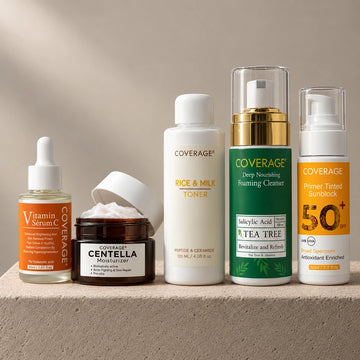
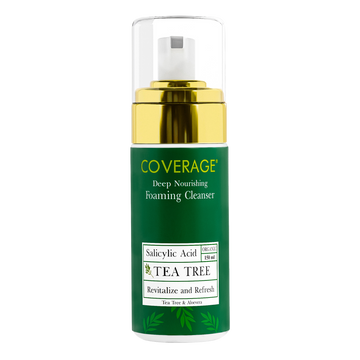
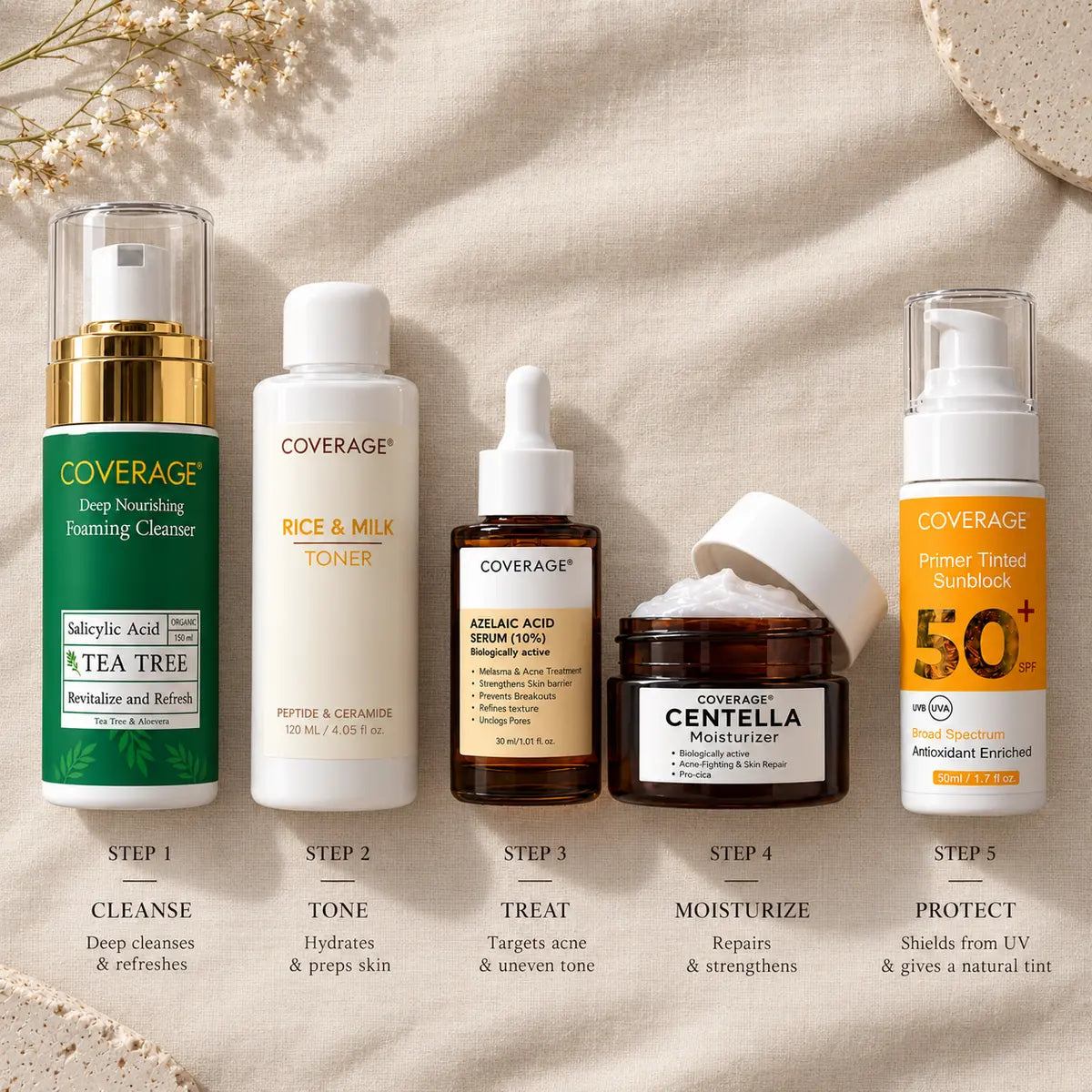
Our pick: COVERAGE® Deep Nourishing Foaming Cleanser (Salicylic Acid + Tea Tree, 150 ml) - Rs 1,450
Salicylic acid is the primary active here, supported by the AAD-recognised evidence above; tea tree provides adjunct antimicrobial action per the Bassett 1990 trial, with aloe vera to offset irritation. The foaming format suits the oil load that Pakistani summers produce. Use morning and evening; if your skin feels tight afterwards, drop to once daily.

International alternatives sold in Pakistan: CeraVe Acne Control Cleanser (2% salicylic acid with ceramides and niacinamide), La Roche-Posay Effaclar cleansers, PanOxyl benzoyl peroxide wash for inflammatory acne, Cetaphil Gentle Skin Cleanser if your skin is irritated from actives.
Step 2 - Toner
What the evidence supports: this step is optional. A well-formulated hydrating toner improves the tolerability of the actives that follow. An alcohol-heavy astringent toner - still widely sold in Pakistan - makes acne worse by damaging the barrier and triggering compensatory oil production.
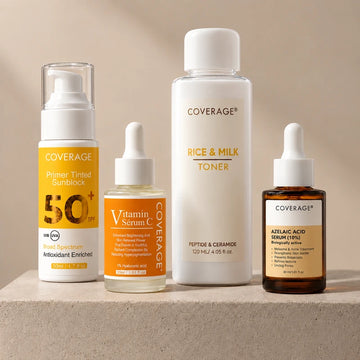
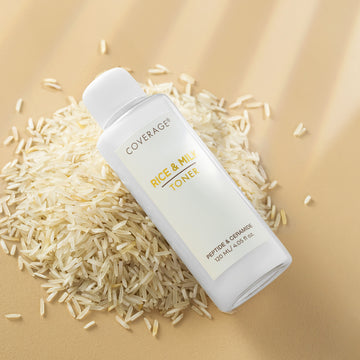
Our pick: COVERAGE® Rice & Milk Toner (Ceramide + Peptide, 120 ml) - from Rs 1,499
Ceramide content is the reason this earns a place in an acne routine rather than rice extract marketing. As established above, acne-prone skin is ceramide-depleted, and actives deplete it further. Alcohol-free. More on the format in What Is a Korean Toner, and Why Rice and Milk?
International alternatives: Anua Heartleaf 77 Toner, Isntree Hyaluronic Acid Toner, COSRX Centella Water Alcohol-Free Toner.
Step 3 - Treatment serum
This is the step that does the actual work, and for Pakistani skin it is the one to get right.

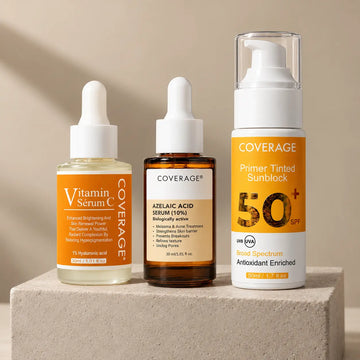
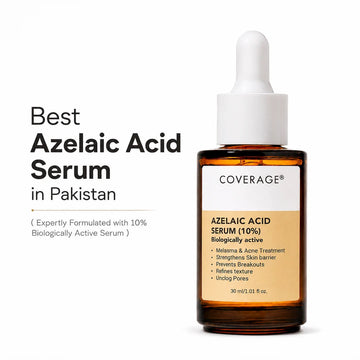
Our pick: COVERAGE® Azelaic Acid Serum 10% (30 ml) - Rs 1,600
For the reasons set out above: azelaic acid treats active acne and post-inflammatory hyperpigmentation at the same time, does not carry hydroquinone's bleaching or ochronosis risk, and is considered safe in pregnancy. Given that PIH is the dominant complaint in Fitzpatrick IV-V skin, an ingredient that addresses both problems in one step is the most efficient purchase most Pakistani acne sufferers can make.
Apply a pea-sized amount to clean dry skin, once daily at night to begin, increasing to twice daily if tolerated. Mild tingling in the first week is normal; persistent burning is not. For realistic timelines see How Long Does Azelaic Acid Take to Work on Acne Marks?
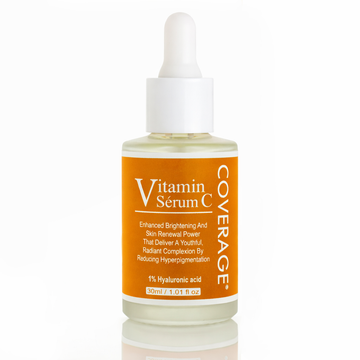
For marks specifically, add COVERAGE® Vitamin C + 1% Hyaluronic Acid Serum - Rs 1,399 in the morning. Vitamin C is an antioxidant and tyrosinase inhibitor; paired with sunscreen it addresses existing pigment while azelaic acid works at night. If you are choosing between the two, read Azelaic Acid vs Vitamin C.
International alternatives: The Ordinary Azelaic Acid Suspension 10%, The Ordinary Niacinamide 10% + Zinc 1%, Differin (adapalene 0.1%) if you want the Tier 1 retinoid, Beauty of Joseon Glow Serum with propolis and niacinamide.
Step 4 - Moisturiser
What the evidence supports: barrier repair is not optional when using actives. Ceramide and centella-based moisturisers reduce the irritation that causes people to abandon treatment.
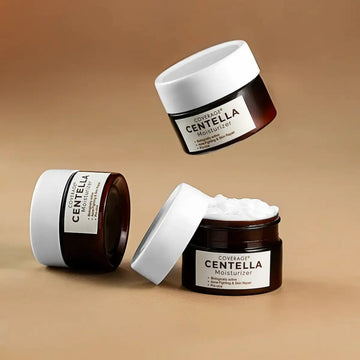
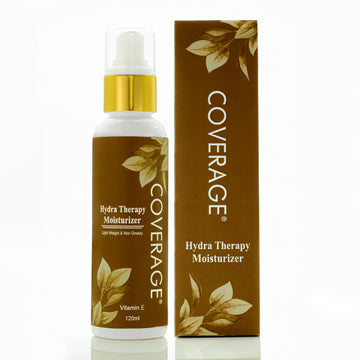
Our pick: COVERAGE® Centella Moisturizer 60 ml - Rs 1,630
Framed accurately: this is a barrier-support and anti-irritation product that makes the azelaic acid step sustainable. Centella's evidence base is in barrier repair and inflammation, not in acne clearance, and we are not going to overstate it.
International alternatives: CeraVe Moisturising Lotion, COSRX Advanced Snail 92 Cream, Skin1004 Madagascar Centella range.
Step 5 - Sunscreen (the one people skip, and shouldn't)
What the evidence supports: the strongest single intervention for preventing acne marks from darkening and persisting, per the Mar 2024 systematic review and the 2026 randomised trial in Fitzpatrick IV-V skin. Tinted formulations provide iron oxide-based visible-light protection, which matters specifically in deeper skin tones.

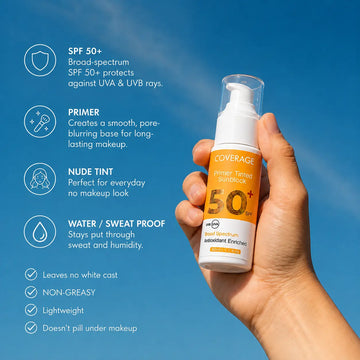
Our pick: COVERAGE® Primer Tinted Sunblock SPF 50+ (Broad Spectrum UVA/UVB, antioxidant enriched, 50 ml) - Rs 1,399
Tinted, so it provides visible-light protection alongside UVA and UVB. It doubles as a primer, which matters practically - the sunscreen people actually reapply is the one that improves how their skin looks. Apply every morning as the final step, and reapply every two to three hours with meaningful sun exposure.
International alternatives: Beauty of Joseon Relief Sun, La Roche-Posay Anthelios range.
The pimple patch question
Hydrocolloid patches - COSRX Acne Pimple Master Patch being the most searched in Pakistan - do not treat acne. They absorb exudate from an already-open lesion and, more usefully, physically stop you picking it. Since picking is a direct cause of post-inflammatory hyperpigmentation and scarring, that is a genuine benefit. Cheap, harmless, worth having.
Complete routines by acne type

Routine A - Teenage and oily acne
Predominantly blackheads, whiteheads and occasional pustules, visible oiliness, T-zone concentrated.
Morning: Foaming Cleanser → Rice & Milk Toner → Primer Tinted Sunblock SPF 50+
Evening: Foaming Cleanser → Rice & Milk Toner → Azelaic Acid Serum 10% → Centella Moisturizer
Start the azelaic acid every other night for the first two weeks. If oiliness is the main complaint and breakouts are mild, this routine alone is usually sufficient for 8-12 weeks before reassessing.
Relevant bundle: Acne Care & Sun Protection (Azelaic Acid Serum + Primer Tinted Sunblock) - Rs 2,699, down from Rs 3,599.
Routine B - Adult and hormonal acne
Deeper, tender lesions along the jawline, chin and neck. Often cyclical. More common in women in their twenties and thirties.
Morning: Foaming Cleanser → Rice & Milk Toner → Vitamin C + 1% HA Serum → Centella Moisturizer → Primer Tinted Sunblock SPF 50+
Evening: Foaming Cleanser → Rice & Milk Toner → Azelaic Acid Serum 10% → Centella Moisturizer
Being straight with you: hormonal acne is driven by androgen activity, and topicals address the consequence rather than the cause. No topical product on this page changes hormonal signalling. If jawline acne is persistent and cyclical, the genuinely effective treatments are oral - spironolactone or combined oral contraceptives - and those require a doctor. Use this routine while you arrange that appointment, not instead of it.
Relevant bundle: Full Skin Clarity Regimen (Rice & Milk Toner + Vitamin C + 1% HA + Azelaic Acid Serum + Primer Tinted Sunblock) - Rs 4,699, down from Rs 7,349.
Routine C - Acne marks and post-inflammatory hyperpigmentation
Acne largely under control; brown or dark patches remain where spots used to be.
Morning: Foaming Cleanser → Vitamin C + 1% HA Serum → Centella Moisturizer → Primer Tinted Sunblock SPF 50+ (reapplied, not just applied once)
Evening: Foaming Cleanser → Azelaic Acid Serum 10% → Centella Moisturizer
Sunscreen is the load-bearing step here, not the serums. Without daily reapplication, the pigment you are treating at night is being re-stimulated during the day.
Relevant bundle: Melasma, Dark Spots & Acne Marks Treatment (Azelaic Acid Serum + Vitamin C + 1% HA + Primer Tinted Sunblock) - Rs 3,699, down from Rs 5,249.
Timeline expectation: PIH takes months, not weeks. The Mar 2024 review and the clinical literature on dermal pigment are consistent on this. Anyone promising mark removal in two weeks is selling you a steroid.
What results actually look like, week by week
Unrealistic expectations are the main reason people abandon treatments that were working.

- Weeks 1-2. Skin is adjusting. Some people experience purging - a temporary increase in breakouts as existing microcomedones surface. Mild dryness and tingling are normal. Nothing visible has improved yet. This is the stage most people quit at.
- Weeks 3-4. Fewer new lesions forming. Existing spots resolving faster. Skin texture beginning to smooth. Oiliness may be reduced.
- Weeks 6-8. Visible clearing. This is the point at which the AAD guidelines suggest reassessing whether a topical regimen is working.
- Weeks 10-12. Marks beginning to fade. Skin tone more even. Active acne substantially reduced.
- Months 4-6. Continued fading of post-inflammatory hyperpigmentation. Deeper dermal pigment is still resolving.
Consistency matters more than strength. A 10% azelaic acid used every night for three months outperforms a 20% used sporadically for two weeks and abandoned.
When to stop buying products and see a dermatologist
We would rather you got better than bought more from us. See a dermatologist if:
- Your acne is nodulocystic - deep, painful lumps beneath the skin
- You are scarring, as opposed to marking. Scars are textural changes (pitted, raised) and are permanent without procedural treatment. Marks are flat pigment and will fade.
- You have used a consistent topical routine for 8 to 12 weeks with no improvement
- Your acne is jawline-concentrated and cyclical and topicals are not holding it
- You have used a fairness cream or steroid cream on your face and stopping causes rebound redness or burning
- Acne is significantly affecting your mood, sleep, or willingness to leave the house - this is a recognised clinical indication for escalation, not vanity
Effective prescription options include adapalene and other retinoids, oral doxycycline, spironolactone, combined oral contraceptives, and isotretinoin for severe or scarring acne. None of these are things a skincare brand should be managing. For the broader picture, see our full guide to keel muhase ka ilaj.
Myths that need to die

"Toothpaste dries out a pimple." Toothpaste contains sodium lauryl sulphate, flavouring agents and abrasives. It irritates the skin, worsens inflammation, and in Fitzpatrick IV-V skin converts a spot that would have faded into a mark that lasts months.
"Lemon juice fades acne scars." Limu se daagh chale jaate hain - no. Lemon juice is strongly acidic, damages the skin barrier, and is phototoxic. Applied before sun exposure it can cause phytophotodermatitis and darker pigmentation.
"Fairness cream will clear my acne." See the section above. This is the most harmful belief on this list.
"Keel muhase ka gharelu ilaj is safer than products." Totkay are not automatically safe. Baking soda, undiluted essential oils, raw garlic and lemon all disrupt skin pH and barrier function.
"Wash your face more often." Over-washing strips sebum, triggers compensatory oil production, and damages the barrier. Twice daily is correct.
"Acne means you're dirty." Acne is caused by sebum production, abnormal shedding of cells within the follicle, C. acnes proliferation and inflammation. It is not a hygiene failure.
"Coconut oil is natural, so it's safe for acne." Natural is not a formulation property. Heavy occlusive oils clog pores in acne-prone skin.
"You'll grow out of it." GBD data shows a substantial adult acne burden, particularly in women. Waiting is not a treatment plan.
Frequently asked questions
What is the best product for acne in Pakistan?
There is no single best product, because the best product depends on your acne type. For the most common Pakistani case - mild to moderate acne with post-inflammatory hyperpigmentation in Fitzpatrick IV-V skin - azelaic acid paired with daily broad-spectrum sunscreen addresses both the acne and the marks. For purely comedonal acne, salicylic acid is the appropriate active. For moderate inflammatory acne, benzoyl peroxide and adapalene carry the strongest clinical evidence per the 2024 AAD guidelines.
Is azelaic acid good for acne in Pakistani skin?
Yes, and it is particularly well-suited. It treats acne and post-inflammatory hyperpigmentation simultaneously, which matters because PIH is the dominant complaint in Fitzpatrick IV-V skin. Unlike hydroquinone, it selectively targets hyperactive melanocytes without bleaching surrounding skin or risking ochronosis, and it is considered safe in pregnancy.
How long does azelaic acid take to work?
Most of our customers see a visible difference within 1 to 3 weeks of consistent daily use. Every skin type and every concern is different, so some people need more time. Post-inflammatory hyperpigmentation typically takes several months to fade substantially.
Can I use azelaic acid and vitamin C together?
Yes. The common approach is vitamin C in the morning and azelaic acid at night. Both are tyrosinase inhibitors working through different mechanisms, so they complement each other for pigmentation.
Is sunscreen necessary for acne-prone skin?
Yes, and in Pakistan it is arguably the most important step. UV and visible light drive post-inflammatory hyperpigmentation, and a 2024 systematic review found consistent sunscreen use the most effective method of preventing trauma-induced PIH in skin of colour. Tinted sunscreens additionally provide iron oxide-based visible-light protection.
Will sunscreen cause breakouts?
A poorly chosen one can. Lightweight, tinted, broad-spectrum formulations are generally well tolerated by acne-prone skin. Note that "non-comedogenic" on the label is an unregulated claim with no standardised test behind it.
Are fairness creams safe for acne marks?
No. Laboratory analysis of creams sold in Pakistan has repeatedly found undeclared corticosteroids and mercury above permitted limits, and Punjab drug authorities issued Class-I recalls for several named brands in June 2026. A Karachi study of 226 users found corticosteroid-induced acne in 83.6% of them.
Does tea tree oil work for acne?
It has genuine antimicrobial activity and a 1990 randomised trial found 5% tea tree gel comparable to 5% benzoyl peroxide, though slower-acting. The evidence base is limited - a small number of older trials - so it is best regarded as a useful adjunct rather than a primary treatment.
What is the difference between acne scars and acne marks?
Marks are flat areas of pigmentation left after inflammation resolves; they fade over months and respond to topical treatment and sun protection. Scars are permanent textural changes - pitted or raised - that require procedural treatment such as microneedling, lasers or subcision.
Can I use a toner if I have oily skin?
Yes, provided it is alcohol-free and hydrating. Traditional astringent toners containing high alcohol strip the barrier and drive compensatory oil production, making oiliness worse over time.
What should a beginner acne routine look like?
Cleanser, treatment serum and sunscreen is a complete minimum routine. Add a moisturiser if actives cause dryness, and a toner if you want additional hydration. Start one active at a time and introduce new products two weeks apart.
When should I see a dermatologist for acne?
If your acne is deep, painful and nodular; if you are developing textural scarring; if 8-12 weeks of consistent topical treatment produces no improvement; if your acne is cyclical and jawline-concentrated; or if acne is significantly affecting your mental health.
References
- Heng AHS, Chew FT. Systematic review of the epidemiology of acne vulgaris. Scientific Reports. 2020.
- American Academy of Dermatology. Skin conditions by the numbers.
- Chen H, et al. Magnitude and temporal trend of acne vulgaris burden in 204 countries and territories from 1990 to 2019. British Journal of Dermatology. 2022.
- Zhu Z, et al. Global, regional, and national burdens of acne vulgaris in adolescents and young adults aged 10-24 years from 1990 to 2021. British Journal of Dermatology. 2024.
- Burden of dermatologic diseases in Pakistan: insights for global dermatology. PubMed 40119953.
- Babar O, Mobeen A. Prevalence and Psychological Impact of Acne Vulgaris in Female Undergraduate Medical Students of Rawalpindi and Islamabad, Pakistan. Cureus. 2019. DOI 10.7759/cureus.5722.
- Self-medication practices for acne among medical students, Rawalpindi Medical University. Cureus. 2019. PMC6818732.
- Rafiq Z, Mehdi SM. Pattern and severity of acne vulgaris. Journal of Pakistan Association of Dermatologists. 2020;30(4):598-603.
- Prevalence of Anxiety and Depression in Pakistani Patients With Acne Vulgaris. PMC11893195.
- Postinflammatory Hyperpigmentation. StatPearls, NCBI NBK559150.
- Mar K, Khalid B, Maazi M, Ahmed R, Wang OJ, Khosravi-Hafshejani T. Treatment of Post-Inflammatory Hyperpigmentation in Skin of Colour: A Systematic Review. Journal of Cutaneous Medicine and Surgery. 2024.
- Post-inflammatory hyperpigmentation in dark skin: molecular mechanism. Clinical, Cosmetic and Investigational Dermatology. PMC9709857.
- World Health Organization. Global Air Quality Guidelines. 2021.
- Impact of environmental pollution on acne: a systematic review. Skin Health and Disease. 2026.
- Air Pollution and Skin Diseases: A Systematic Review of Epidemiological Evidence. American Journal of Clinical Dermatology. 2026. PMC13032956.
- Reynolds RV, Zaenglein AL, et al. Guidelines of care for the management of acne vulgaris. Journal of the American Academy of Dermatology. 2024.
- A Comprehensive Review of Azelaic Acid: Pharmacological Properties, Clinical Applications, and Innovative Topical Formulations. PMC12472904.
- Verallo-Rowell VM, et al. Double-blind comparison of azelaic acid and hydroquinone in the treatment of melasma. Acta Dermato-Venereologica Supplementum. 1989;143:58-61.
- Sobhan M, et al. A comparative study of 20% azelaic acid cream versus 5% tranexamic acid solution for postinflammatory hyperpigmentation in patients with acne vulgaris. Journal of Research in Medical Sciences. 2023;28:18.
- Ye CX, et al. 2% supramolecular salicylic acid hydrogel vs. adapalene gel in mild to moderate acne vulgaris. Journal of Cosmetic Dermatology. 2024;23(6):2125-2134.
- Bassett IB, Pannowitz DL, Barnetson RS. A comparative study of tea-tree oil versus benzoylperoxide in the treatment of acne. Medical Journal of Australia. 1990;153(8):455-458.
- Enshaieh S, et al. The efficacy of 5% topical tea tree oil gel in mild to moderate acne vulgaris. 2007.
- Draelos ZD, et al. The effect of 2% niacinamide on facial sebum production. Journal of Cosmetic and Laser Therapy. 2006;8(2):96-101.
- Shalita AR, et al. Topical nicotinamide compared with clindamycin gel in the treatment of inflammatory acne vulgaris. International Journal of Dermatology. 1995;34(6):434-437.
- Khodaeiani E, et al. Topical 4% nicotinamide vs. 1% clindamycin in moderate inflammatory acne vulgaris. International Journal of Dermatology. 2013.
- Navarrete-Solís J, et al. A double-blind, randomized clinical trial of niacinamide 4% versus hydroquinone 4% in the treatment of melasma. Dermatology Research and Practice. 2011.
- Centella asiatica (L.) Urb. in skin health and cosmeceuticals. Pharmacia. 2025.
- Topical Application of Centella asiatica in Wound Healing. PMC11510310.
- Ceramide-Containing Adjunctive Skin Care for Skin Barrier Restoration During Acne Vulgaris Treatment. PubMed 37276158.
- An Investigator-Blinded, Randomized Trial of a Broad-Spectrum Sunscreen Containing Sclareolide and Niacinamide for the Prevention of Post-inflammatory Hyperpigmentation in Skin of Color. PubMed 41240206.
- Comedogenicity in cosmeceuticals: A review of clinical relevance, regulatory gaps, and future directions. JAAD Reviews. 2025.
- Ghouse AN, et al. Obsession to fairness and topical steroid induced acne: A situation analysis in Karachi. Pakistan Journal of Medical Sciences. 2024;40(1):128-133. PMID 38196483.
- Facial abuse of topical steroids and fairness creams: a clinical study of 200 patients. Journal of Pakistan Association of Dermatologists.
- Topical steroid damaged skin. Journal of Pakistan Association of Dermatologists. 2021;31(3):407-414.
- Shams A, Khan IU, Iqbal H. Analysis of salicylic acid, arbutin and corticosteroids in skin whitening creams available in Pakistan. International Journal of Cosmetic Science. 2016;38(4):421-428. PMID 26855207.
- Shujait M, Nawaz Ch M, Hussain N. Health and Regulatory Assessment of Hydroquinone, Mercury and Steroids in Skin-Lightening Creams Marketed in Pakistan. Biological Trace Element Research. 2026.
- Majeed T, Shah SH, Anjum I. Estimation of mercury and hydroquinone content in skin whitening creams, Lahore. Journal of Pakistan Association of Dermatologists. 2021;31(1):33-41.
- Minamata Convention on Mercury. Pakistan National Report. 2025.
- Directorate of Drugs Control, Punjab. Class-I recall alerts. June 2026.
Medical disclaimer: This article is for informational purposes and does not constitute medical advice. Acne severity, skin type and individual medical history vary. Consult a qualified dermatologist before beginning any treatment, particularly if you are pregnant, breastfeeding, taking prescription medication, or have used topical steroids on your face.
Last reviewed: September 2026.
This article is for general informational purposes only and is not a substitute for professional medical advice. All information and claims referenced above are drawn from publicly available dermatological studies and expert sources. Always consult a dermatologist for advice specific to your skin.

Leave a comment
This site is protected by hCaptcha and the hCaptcha Privacy Policy and Terms of Service apply.