
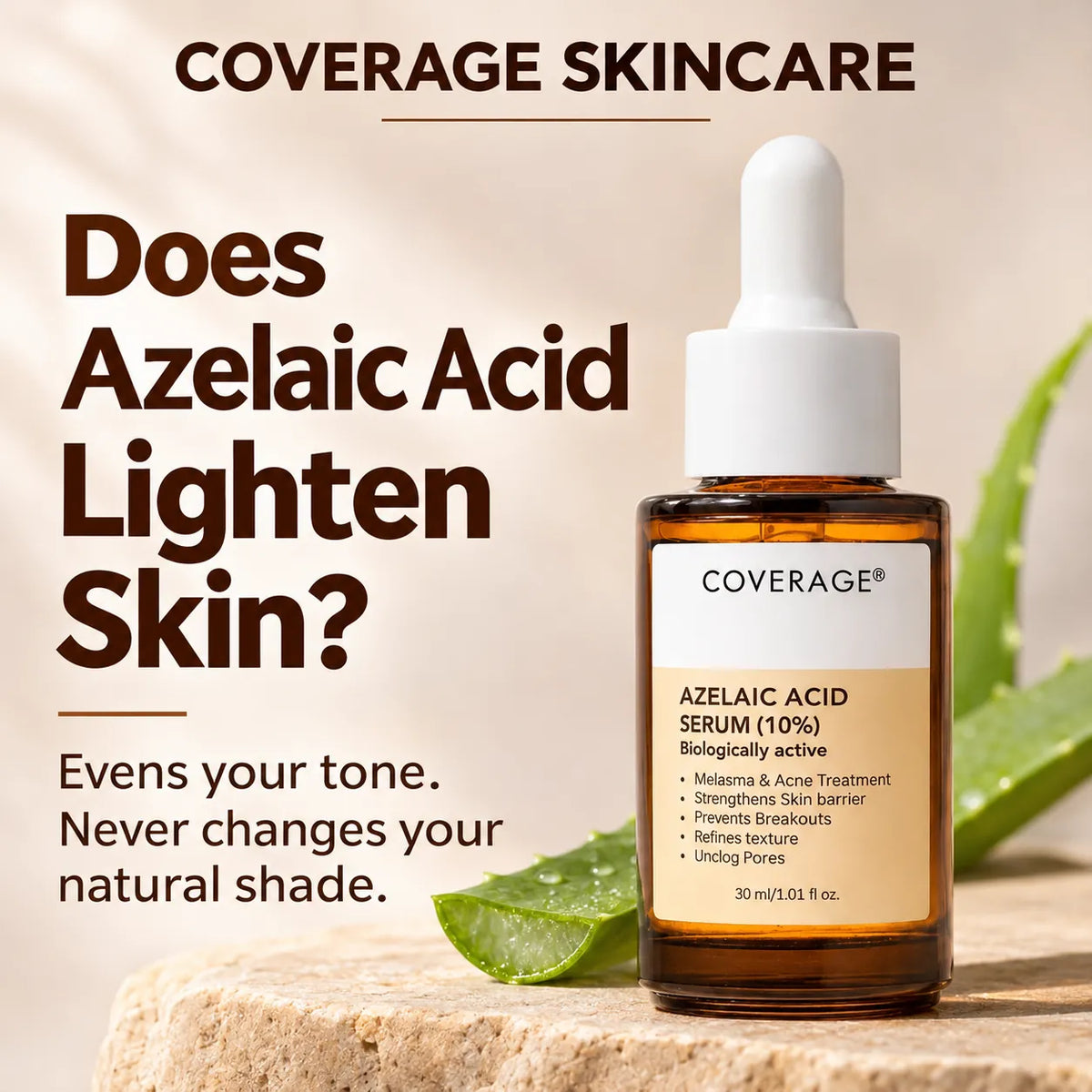
Does Azelaic Acid Lighten Skin? The Honest Truth About Whitening vs Brightening
Azelaic acid lightens excess pigment, not your natural skin colour. It can fade acne marks (daag dhabbe) and help some melasma (chhaiyan) by slowing overactive pigment production. It does not bleach healthy skin below its natural tone, and at COVERAGE we will never sell it as a whitening or "rang gora" product.
The short answer: does azelaic acid lighten skin?
Azelaic acid can gradually fade dark marks left by acne or inflammation, and it can help some melasma. It works by slowing excess melanin production in overactive pigment cells. It is not a bleach and does not predictably make normal skin lighter than your natural tone. Results depend on the cause of the pigment, the strength of the product, sun protection and consistent use.
Quick takeaways
- Azelaic acid is a pigment corrector, not a skin whitener.
- Daily broad-spectrum sunscreen is part of the treatment. Without it, marks tend to come back.
- Irritation can create new dark marks on brown skin, so start slowly.
- Rarely, azelaic acid has been linked to lighter patches, mostly in darker skin. Stop and get checked if treated skin turns lighter than the skin around it.
- Melasma needs a proper diagnosis. Deep (dermal) melasma often responds poorly to any cream.
Whitening, lightening, brightening, fading: what do the words actually mean?
These words are used loosely on packaging, and the confusion matters for your skin and your safety.
- Whitening or bleaching: trying to make your overall skin colour lighter than its natural baseline. This is not a medical treatment goal. Products sold for it have a long record of harm, and the World Health Organization warns that mercury-containing skin lightening products are hazardous and banned in many countries. Hidden steroids and unsupervised hydroquinone are other recurring problems.
- Lightening (medical sense): reducing excess pigment in a specific condition, such as acne marks or melasma, so the affected area moves back towards your own baseline.
- Brightening: a cosmetic word, not a medical endpoint. It means skin that looks less dull and more even. It does not, and should not, mean changing your natural colour.
- Fading: the gradual lightening of a mark until it blends with the skin around it.
A note on colour. A deeper skin tone is not a problem to be fixed. Everything in this guide is about even, healthy skin in your shade, not a lighter one.

Which kinds of dark patches are we talking about?
- Post-inflammatory hyperpigmentation (PIH): flat brown to grey-brown marks left after acne, eczema, insect bites, shaving rash or irritation. It is more frequent and lasts longer in medium to deep skin tones.
- Post-inflammatory erythema (PIE): pink or red marks after acne. This is a blood-vessel issue, not a pigment issue, so pigment-fading ingredients are not its main treatment.
- Melasma (chhaiyan): symmetrical brown patches on the cheeks, forehead, upper lip or jaw, driven by sunlight, visible light, hormones and genetics. Some melasma sits in the upper skin (epidermal), some deeper (dermal), and some is mixed. Deeper pigment responds less to creams.
- Freckles, sun spots and birthmarks: different conditions with different treatments. A new, changing, irregular or bleeding dark spot needs a doctor, not a serum.
How does azelaic acid work on pigment?
Azelaic acid is a naturally occurring acid first studied after doctors noticed the pale patches caused by a skin yeast. Here is what is established and what is still proposed.
Better established:
- It slows tyrosinase, the enzyme pigment cells (melanocytes) use to make melanin.
- It calms inflammation, fights acne bacteria and helps keep pores clear. Calmer acne means fewer new marks.
Proposed (mostly laboratory evidence):
- Early research found azelaic acid affected overactive and abnormal melanocytes far more than normal ones. A 1985 cell study (Robins et al., British Journal of Dermatology) supports this, but lab work is not proof of what happens on your face.
What this means for you: this selectivity is why azelaic acid is not expected to bleach normal skin. It is not an absolute guarantee. US prescribing information for azelaic acid (DailyMed) notes isolated reports of hypopigmentation and advises people with dark complexions to watch for early signs.

What the research shows, and what it does not
What it shows:
- Darker skin, facial hyperpigmentation: in a randomised, vehicle-controlled trial of 52 people with Fitzpatrick skin types IV to VI, 20% azelaic acid cream used twice daily for 24 weeks reduced pigment significantly more than a plain cream (Lowe et al., Clinical Therapeutics, 1998).
- Acne and acne marks: in a 16-week study of 20 adults with darker skin, 15% azelaic acid gel improved both acne and post-acne pigmentation (Kircik, Journal of Drugs in Dermatology, 2011).
- Melasma: in a 24-week double-blind study of 329 women using sunscreen, 20% azelaic acid cream gave good or excellent results in 65%, with no significant difference from 4% hydroquinone (Baliña and Graupe, International Journal of Dermatology, 1991). A 2023 meta-analysis of six randomised trials and 673 patients found azelaic acid reduced melasma scores slightly more than hydroquinone, with similar side effects (Albzea et al., Cureus).
- Pakistani patients: a study of 30 melasma patients in the Journal of Pakistan Association of Dermatologists reported an average 38.66% reduction in melasma scores with 20% azelaic acid plus tretinoin.
What it does not show:
- That azelaic acid makes normal skin lighter. None of these studies set out to lighten healthy skin.
- That results are permanent. Melasma in particular tends to return with sun, heat and hormones.
- That one fixed timeline applies to everyone.

Condition by condition: where does azelaic acid work best?
- Acne marks (daag dhabbe after pimples): a strong fit. It treats the acne causing new marks and slows pigment in existing ones.
- Epidermal or mild melasma: good evidence, comparable to 4% hydroquinone in trials, with strict sun protection. Melasma is chronic, so think control, not cure. Our full guide on chaiyan ka ilaj covers this in depth.
- Deep or stubborn melasma: limited benefit from any topical. A dermatologist may combine treatments.
- Uneven tone and dullness: a reasonable cosmetic benefit, though few trials study it directly.
- Red acne marks (PIE): not its main job, though calming inflammation may help.
- Freckles and sun spots: not well supported. Diagnosis and other treatments matter more.

How long does azelaic acid take to fade marks?
Many of our customers see a more even, calmer look within 1 to 3 weeks. Older and deeper marks take longer: in clinical studies, results were measured over 16 to 24 weeks, so give darker marks and melasma 3 to 4 months of consistent use alongside daily sunscreen.
Speed depends on the type and depth of the pigment, how often you apply it, how well your skin tolerates it, your sun exposure, and whether new acne keeps creating new marks. Take photos in the same light every four weeks instead of judging in the mirror every day. Read more in how long azelaic acid takes to work on acne marks.
Who should use azelaic acid, and who should see a dermatologist first?
Good candidates:
- Acne-prone skin left with brown marks.
- Mild, diagnosed epidermal melasma, as part of a sun-protection routine.
- Anyone who wants a pigment-correcting option that is not hydroquinone.
See a dermatologist first if:
- You are not sure the patches are melasma, or they are spreading quickly.
- A spot is new, changing, raised, irregular, itchy or bleeding.
- You have white or lighter patches, which may be vitiligo, fungal infection or another condition.
- You have used a "formula" or whitening cream and now have thin, red, sensitive skin. Stopping steroid creams may need medical supervision.
- Your acne is moderate to severe or leaving scars.
How to start azelaic acid safely
- Patch test on the inner forearm or along the jawline for 24 hours.
- Start slowly: every other night for the first one to two weeks, then nightly if your skin is comfortable.
- Apply to clean, dry skin and follow with a light moisturiser. Avoid the eye area and the corners of the nose and mouth.
- Expect mild tingling at first. Persistent burning, swelling, rash or peeling means cut back or stop.
- Use broad-spectrum SPF 30 or higher every morning and reapply when outdoors.
- Keep the routine simple for the first month: cleanser, azelaic acid, moisturiser, sunscreen.
Our step-by-step guide on how to use azelaic acid serum covers morning vs night and layering order.

Why sunscreen is non-negotiable
UV and visible light both trigger pigment. The American Academy of Dermatology recommends broad-spectrum SPF 30 or higher for melasma, and a tinted sunscreen with iron oxides, because visible light worsens melasma especially in darker skin tones. A 2025 randomised study found melasma patients using an iron-oxide tinted SPF 50+ had significantly less summer worsening than those using untinted sunscreen (Journal of Cosmetic Dermatology).
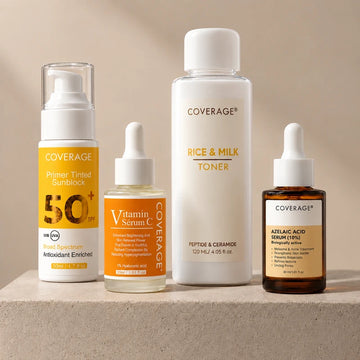
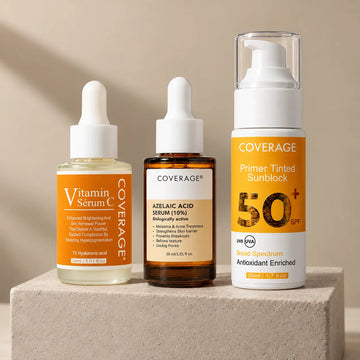
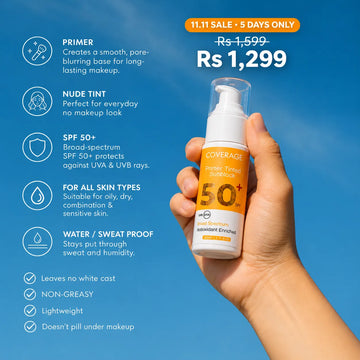
Sunscreen protects your progress. It does not treat established marks on its own. Our Primer Tinted Sunblock SPF 50+ is made to pair with your azelaic acid routine, and our guide on tinted sunscreen for oily, acne-prone skin explains how to choose one.
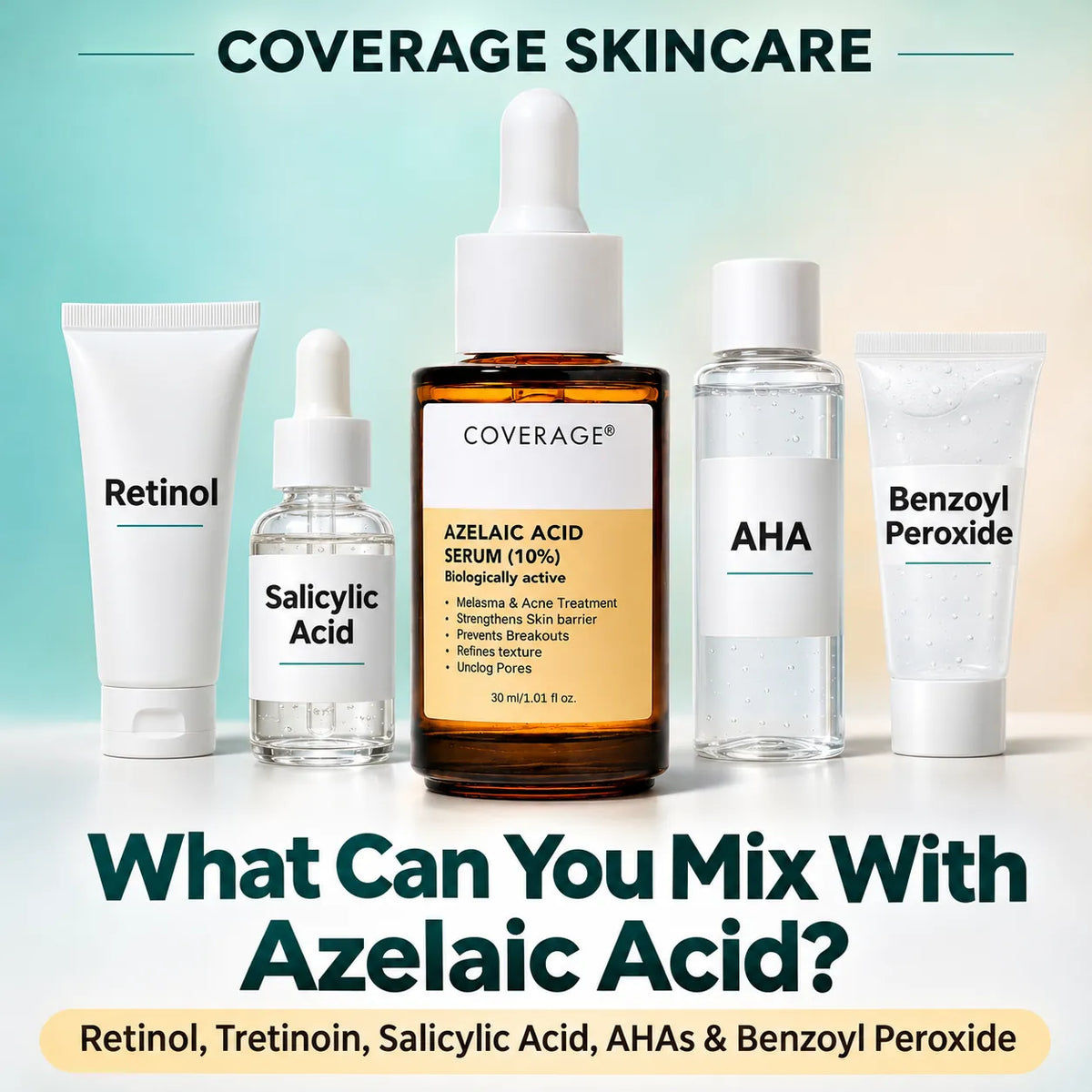
Can you mix azelaic acid with other actives?
- Niacinamide: generally well tolerated together, and both help uneven tone. See niacinamide vs azelaic acid.
- Vitamin C: compatible. Use vitamin C in the morning under sunscreen and azelaic acid at night. See azelaic acid vs vitamin C.
- Retinoids (adapalene, tretinoin, retinol): studied together for melasma, but irritation risk is higher, and on brown skin irritation can cause new marks. Alternate nights at first.
- Salicylic acid: useful for acne. A salicylic cleanser is gentler than layering leave-on acids.
- Glycolic acid: higher irritation risk when layered. Do not combine in your first month.
- Benzoyl peroxide: commonly used together for acne. Both can dry skin, so use at different times of day.
Rule of thumb: introduce one active at a time, at least two weeks apart. Our full guide on what you can mix with azelaic acid goes deeper.
Side effects: what is normal, and what is not
Common and usually temporary: tingling, mild burning, itching, dryness or light peeling in the first weeks.
Stop and seek advice if you notice:
- Swelling of the face or eyes, hives or breathing problems.
- Blistering, or severe or lasting redness.
- Treated skin turning lighter than your normal skin.
More detail in our guide to azelaic acid side effects.
What if my pigmentation gets worse?
- Stop all actives for a week and keep only cleanser, moisturiser and sunscreen.
- Ask whether irritation came first. Burning followed by darkening usually means irritation-related marks, not the product "pulling out" pigment.
- Check your sun protection, including car and window light, and reapplication.
- If darkening continues or spreads, see a dermatologist.
Is azelaic acid safe in pregnancy and breastfeeding?
Topical azelaic acid is widely regarded as one of the lower-risk options for acne and pigmentation in pregnancy. Only about 4% of a topical dose is absorbed, and the NIH's LactMed database considers it low risk while breastfeeding, as long as it is not applied to the breast. Human pregnancy studies are limited, so review your full routine with your doctor. Read our full guide on azelaic acid in pregnancy and breastfeeding.
How to choose a trustworthy azelaic acid product
- The azelaic acid percentage is stated clearly.
- A full ingredient (INCI) list is published.
- No "whitening", "gora", "permanent" or "overnight" promises.
- It never tells you to skip sunscreen.
- A clear manufacturer identity and batch information.
- Be wary of unlabelled "formula creams" from salons or market stalls. Very fast lightening is a warning sign for steroids or mercury. Our guide on how to check if skincare is genuine walks you through it.
COVERAGE Azelaic Acid 10% Serum: where it fits
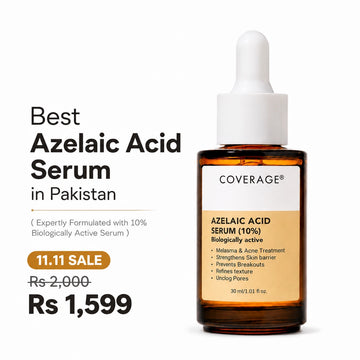
If your goal is fading acne marks or supporting a melasma routine, not changing your skin colour, our COVERAGE Azelaic Acid 10% Serum is made for exactly that.
Our serum is Korean-formulated and made with the same high-grade raw materials top Korean brands use. It is formulated with azelaic acid, an ingredient clinically studied for pigmentation, and developed by our in-house chemical engineers. We make it in our own manufacturing facility in Lahore, which is GMP certified (ISO 9001), lab-tested and Halal-certified. It is cruelty-free and trusted by 72,000+ customers across Pakistan.
What is in our formula:
- 10% biologically active azelaic acid in a lightweight, non-greasy serum that sits well in Pakistani heat.
- Aloe Barbadensis Leaf Extract, Sodium Hyaluronate (hyaluronic acid) and Tocopheryl Acetate (vitamin E) to keep skin comfortable.
- Made without fragrance, alcohol or propylene glycol.
How to use it: patch test first, apply 3 to 4 drops after cleansing, follow with moisturiser, and always finish with sunscreen in the morning. If you are new to azelaic acid, start every other night.
Many of our customers start noticing a more even look within 1 to 3 weeks. Older marks take longer, so keep going and use sunscreen daily. Our serum evens your tone; it does not whiten or change your natural colour.

Wondering how 10% compares with 20% prescription creams? Read our honest comparison: Skinoren vs COVERAGE Azelaic Acid 10%. For the full benefits guide, see azelaic acid serum in Pakistan.
Shop COVERAGE Azelaic Acid 10% Serum, available across Pakistan with cash on delivery. Pair it with daily sunscreen for the best results.

Living in Pakistan: practical tips
- Sun: Lahore's UV index regularly reaches around 11 to 12 in summer. Sunscreen and reapplication matter all year, but especially from spring to late summer. Caps, shade and dupattas help too.
- Heat and sweat: use light layers. Apply serum, wait a minute, then a gel moisturiser and sunscreen. Reapply sunscreen after heavy sweating.
- Brown skin and acne marks: irritation is the fastest route to new dark marks. Go slow and avoid stacking actives you see on social media.
- Chhaiyan: get it diagnosed. Some "chhaiyan" turns out to be acne marks, medicine-related pigmentation or another condition.
- Avoid whitening "formulas": loose or unlabelled creams promising gora skin in days may hide steroids or mercury.
- Budget: you do not need a 10-step routine. Cleanser, one targeted active, moisturiser and sunscreen used every day will beat several actives used on and off.

Myths and mistakes
- Myth: "Azelaic acid makes you gora." It fades excess pigment. It does not change your natural colour.
- Myth: "Stronger and more often means faster." More irritation can mean more dark marks.
- Myth: "Natural means no side effects." It can sting or itch at first and, rarely, cause allergy or lighter patches.
- Mistake: skipping sunscreen on cloudy or indoor days. Visible light and window light still count.
- Mistake: quitting too early. Deeper marks need months, not days.
When to see a dermatologist
See a dermatologist if your patches are widespread, deep or changing fast, you are pregnant, you have used steroid or whitening creams, your acne is scarring, a mark looks unusual, or you have seen no change after three to four months of consistent use with sunscreen.
Frequently asked questions
Does azelaic acid make skin lighter?
Azelaic acid makes dark patches lighter, not your natural skin. By slowing excess melanin production, it helps acne marks and some melasma blend back towards your own tone.
Does azelaic acid whiten your natural skin tone?
No, azelaic acid does not whiten your natural skin tone. There is no good evidence that it lightens normal skin, and it should not be used for that. Rare lighter patches have been reported, mostly in darker skin, and should be checked by a doctor.
Is azelaic acid good for acne marks?
Yes, azelaic acid is one of the best-studied options for brown acne marks, especially in darker skin. It also treats the acne that causes new marks.
Can azelaic acid help melasma?
Azelaic acid can help melasma, especially the upper-skin type, when used with strict daily sun protection. In trials it performed comparably to 4% hydroquinone. Melasma often returns, so think control, not cure.
How long does azelaic acid take to work?
Many people see a more even look within 1 to 3 weeks, while older dark marks and melasma usually need 3 to 4 months of consistent use with sunscreen.
Can I use azelaic acid every day?
Yes, most people can use azelaic acid every day once their skin has adjusted. Start every other night, then move to nightly if your skin stays comfortable.
Can azelaic acid make my skin darker?
Azelaic acid does not darken skin directly, but irritation from any product can trigger new dark marks on brown skin. If it burns or reddens your skin for days, use it less often or stop.
Do I need sunscreen with azelaic acid?
Yes, daily broad-spectrum SPF 30 or higher protects the progress you make with azelaic acid. For melasma, a tinted sunscreen with iron oxides adds visible-light protection.
Can I use azelaic acid with niacinamide or vitamin C?
Yes, azelaic acid pairs well with niacinamide and vitamin C. Introduce one product at a time, and use vitamin C in the morning and azelaic acid at night.
The bottom line
Azelaic acid is a pigment corrector, not a skin whitener. It has real clinical evidence for acne marks and melasma, and it is expected to leave normal skin alone. Use it slowly, protect it with sunscreen, give it time, and get a diagnosis when the picture is unclear. Your natural skin tone was never the problem.
Ready to start? Get COVERAGE Azelaic Acid 10% Serum here.
References
- Lowe NJ et al. Clinical Therapeutics, 1998. PubMed 9829446
- Kircik LH. Journal of Drugs in Dermatology, 2011. NCT01038869
- Baliña LM, Graupe K. International Journal of Dermatology, 1991. PubMed 1816137
- Albzea W et al. Cureus, 2023. PMC10339666
- Robins EJ et al. British Journal of Dermatology, 1985. PubMed 4096883
- US prescribing information, azelaic acid. DailyMed
- LactMed: Azelaic Acid. NCBI Bookshelf NBK501422
- American Academy of Dermatology. Melasma: self-care
- Tinted vs untinted sunscreen in melasma, 2025. PMC12475913
- Journal of Pakistan Association of Dermatologists, 2011. JPAD 487
- World Health Organization. Mercury and health
This article is for general informational purposes only and is not a substitute for professional medical advice. All information and claims referenced above are drawn from publicly available dermatological studies and expert sources. Always consult a dermatologist for advice specific to your skin.

Leave a comment
This site is protected by hCaptcha and the hCaptcha Privacy Policy and Terms of Service apply.