
Sensitive-Skin-Safe Skincare in Pakistan: The Complete Guide (2026)
Written by the COVERAGE Skincare editorial team, drawing on peer-reviewed dermatology literature and publicly available expert sources including the International Forum for the Study of Itch, the American Academy of Dermatology, DermNet and Cleveland Clinic. This article is educational and does not replace individual medical advice.
The short version
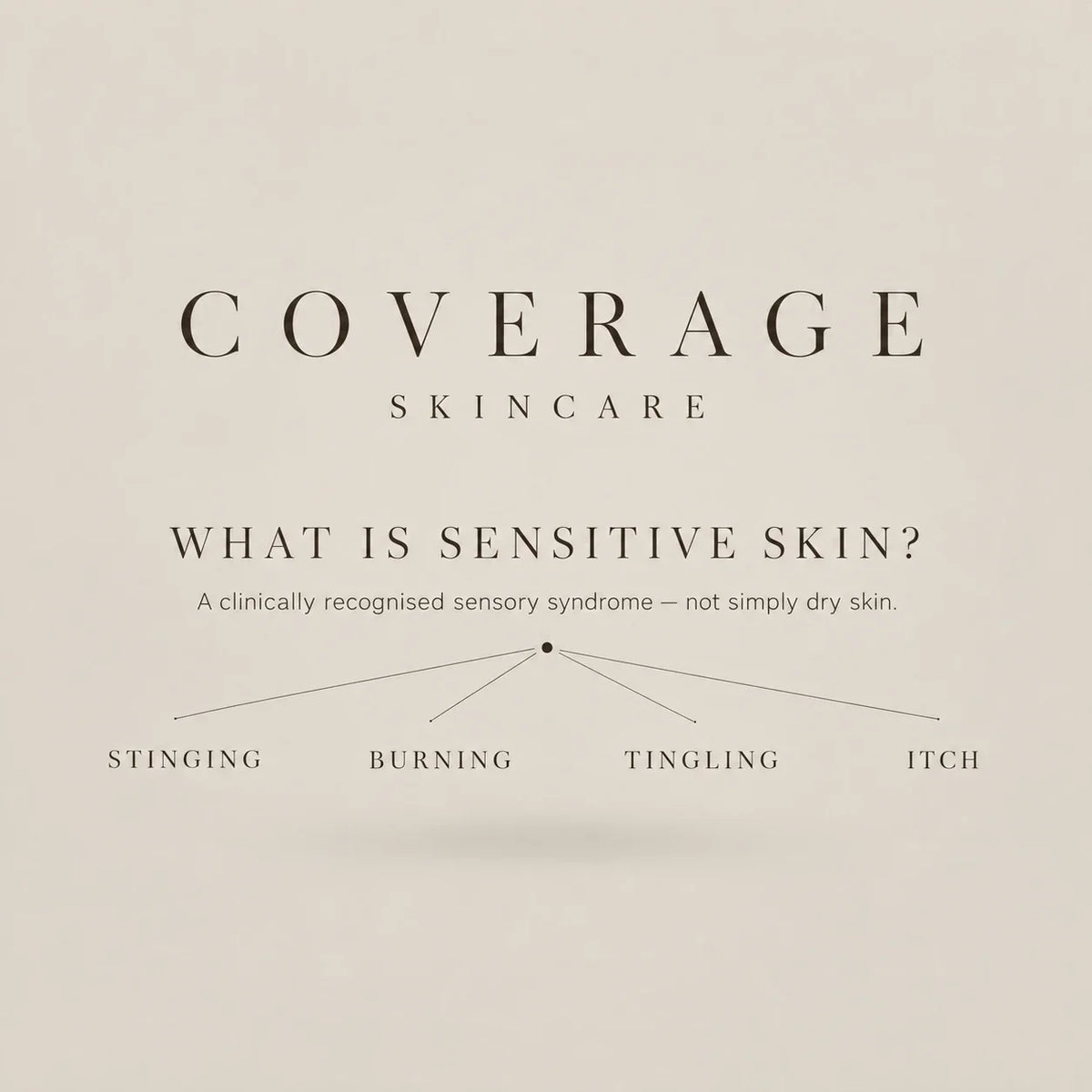
- Sensitive skin is a clinically recognised sensory syndrome - stinging, burning, tingling, tightness and itch in response to things that should not normally cause discomfort. It is not the same as dry skin, and it can occur in oily, dry, combination, acne-prone or normal skin.
- The safest routine in Pakistan is short: a gentle fragrance-free cleanser, a barrier-supporting moisturiser, and daily broad-spectrum sun protection. Add one active at a time, only once skin is calm.
- The best-tolerated ingredients are glycerin, ceramides, hyaluronic acid, panthenol, niacinamide, centella asiatica and mineral sunscreen filters. Patch test everything new for 7 to 10 days.
What exactly is sensitive skin?
Quick answer: sensitive skin is a condition in which skin produces uncomfortable sensations - stinging, burning, tingling, tightness or itching - in response to things that should not normally cause them, such as skincare products, heat, sweat, pollution or weather changes. It is officially defined as a sensory syndrome, meaning the discomfort is real even when little or nothing is visible on the skin.
The most authoritative definition comes from the International Forum for the Study of Itch expert group, which defined sensitive skin as a syndrome of unpleasant sensations that cannot be explained by any visible skin disease, and which may appear normal or be accompanied by redness.
- Sensitivity is often subjective. Objectively measurable signs of irritation are not always present. The sensory symptoms are the constant feature.
- Redness is common but not required. Visible erythema is not a compulsory part of the definition.
- It can be primary or secondary. It occurs in people with otherwise normal skin, in people with a disturbed barrier, and as part of rosacea, atopic dermatitis or psoriasis.
- It is extremely common. A meta-analysis of 26 studies across 18 countries and 51,783 individuals found a pooled prevalence of around 71 percent, with women reporting it more often than men.
How do I know if I have sensitive skin?
Quick answer: you likely have sensitive skin if your skin frequently stings, burns, itches, feels tight or turns red after ordinary products, or after heat, sweat, sun or pollution, and if these reactions happen more easily than they seem to for other people.
Commonly cited signs include reactivity to products and environmental factors, redness that is easily triggered, dryness or flaking, stinging on application, a tendency to breakouts, and increased sunburn susceptibility. Clinicians distinguish objective sensitivity, where visible signs are present and often tied to an underlying condition, from subjective sensitivity, where symptoms are felt but not seen.
A practical self-check: keep a two to four week diary of products, weather, stress and diet, noting any day you experience redness, itching or stinging. Clear patterns usually emerge.
Sensitive skin, irritation, allergy, eczema and rosacea are not the same thing
These overlap, but they are distinct, and treating one as another is how people end up on the wrong routine for months.

| Term | What it is | Key distinguishing feature |
|---|---|---|
| Sensitive skin | Uncomfortable sensations to normally harmless stimuli | Often no visible lesion, subjective symptoms dominate |
| Irritant contact dermatitis | Direct, non-immune damage from a substance | Anyone can get it with enough exposure, dose dependent |
| Allergic contact dermatitis | Delayed immune reaction to a specific allergen | Only in sensitised individuals, confirmed by patch testing |
| Atopic dermatitis (eczema) | Chronic inflammatory disease with an impaired barrier | Intensely itchy inflamed patches, family history common |
| Rosacea | Chronic facial condition | Central-face redness, flushing, visible vessels |
| Acne | Inflammatory disorder of the pilosebaceous unit | Comedones, papules, pustules |
Fragrances and preservatives are the two most clinically relevant causes of cosmetic allergic contact dermatitis, and patch testing remains the gold standard for identifying the culprit. Sensitivity is not the same as allergy: an allergy is a reproducible immune response, while sensitive-skin discomfort is frequently a non-immune, sensory phenomenon.
If your skin has persistent redness, itch, swelling, sudden hives, or patches that do not settle with gentle care, see a qualified PMDC-registered dermatologist rather than working through this on your own.
What causes sensitive skin, and can it be reversed?
Quick answer: sensitive skin is usually driven by a weakened skin barrier combined with heightened nerve reactivity. Triggers include over-cleansing, harsh products, over-exfoliation, fragrance, environmental stress and underlying conditions. Because much of the sensitivity is linked to a compromised barrier, it often improves substantially when the barrier is allowed to recover.
The skin barrier, principally the stratum corneum held together by a lipid matrix of ceramides, cholesterol and free fatty acids, is what keeps water in and irritants out. When it is disrupted, water loss rises, irritants penetrate more easily, and skin becomes more reactive.
The good news is that the stratum corneum is metabolically active and continuously repairs itself. Moisturisers support that process through occlusive, humectant and emollient mechanisms. Recovery typically takes anywhere from a couple of weeks to several months, depending on how damaged the barrier is and how consistently it is protected.
Is sensitive skin the same as dry skin? Can oily skin be sensitive?
Quick answer: no, and yes. Sensitive skin is defined by reactivity, not dryness, and it can occur alongside any skin type.
Oily and acne-prone skin can absolutely be sensitive. Many acne treatments - retinoids, benzoyl peroxide, high-strength acids - trigger irritation while the barrier is already compromised. Treating sensitive as a synonym for dry leads people to over-moisturise oily skin, or to under-protect the barrier of oily skin. Both are mistakes. For building an acne routine without triggering reactivity, our complete acne treatment guide for Pakistani skin covers this in depth.
The Pakistan context: why your environment changes the rules
Generic Western advice tends to ignore Pakistani weather and daily life. What genuinely matters here:

- Intense UV. Lahore's average daily maximum UV index reaches 12 in June, in the extreme band, and Karachi peaks near 12 at noon. UV damages the barrier and worsens pigmentation, and sensitive skin burns more easily. Our guide on whether SPF 50 is enough in Pakistan breaks down what those numbers actually mean.
- Extreme heat and humidity. Lahore's June average high is 40.4C, and monsoon humidity follows. Heat and sweat sting compromised skin and make heavy creams unwearable, which pushes most people toward lightweight textures.
- Pollution and dust. Lahore's seasonal air quality problems are severe, and particulate pollution is an oxidative stressor on skin.
- Winter dryness. Punjab and northern winters bring cold dry air that flares tightness and flaking.
- Behavioural triggers. Over-cleansing, aggressive scrubbing, stacking too many actives at once, and unverified fairness or whitening creams are common local pitfalls.
- Product authenticity. Because most major international brands reach Pakistan through importers and resellers rather than official local channels, counterfeit and grey-market stock circulates.
The practical implication: in Pakistan's climate the winning sensitive-skin formula is lightweight hydration, barrier support and disciplined daily sun protection, tuned by season.
Which ingredients are generally well tolerated?
No ingredient is universally safe or universally bad. Tolerance depends on the individual, the concentration and the whole formulation. With that caveat, the ingredients with the strongest tolerability evidence for sensitive skin are glycerin, ceramides, hyaluronic acid, panthenol, niacinamide, centella asiatica and mineral sunscreen filters.
Niacinamide in particular has substantial barrier-support evidence at around 4 to 5 percent, with irritation uncommon at those levels. Centella asiatica and its component madecassoside carry reasonable soothing evidence. Ceramides replenish the exact lipids a damaged barrier is short of.
Fragrance, alcohol and the other usual suspects
Fragrance, whether natural or synthetic, and denatured alcohol are the two most commonly flagged irritants in sensitive-skin skincare. Fragrance is a leading cause of allergic contact dermatitis. Alcohol denat. in high concentrations can strip lipids and worsen water loss, though small amounts in a well-formulated product are not automatically harmful. A fragrance-free, low-alcohol baseline is the safer default while your barrier is compromised.
One thing worth understanding: natural, chemical-free, hypoallergenic and dermatologist-tested are largely unregulated marketing terms in most markets, Pakistan included. They describe intent, not guaranteed tolerability. Treat them as a starting filter and check the actual ingredient list.
A practical product-selection checklist
- Full ingredient list published and available to check
- Fragrance-free, not merely unscented, which can still contain masking fragrance
- A short to moderate ingredient list with recognisable barrier-support actives
- Mineral filters preferred for sunscreen if chemical filters have stung you before
- No denatured alcohol high on the ingredient list
- A brand willing to state where and how the product is made
How to patch test properly
Apply a small amount of the new product to your inner forearm or behind the ear once daily for 7 to 10 days before using it on your face. Stop immediately if you see sustained redness, burning, swelling or itching beyond the first application. This is the single most reliable way to catch a personal reaction before it happens across your whole face.
Avoiding counterfeit and grey-market products
Counterfeit and grey-market cosmetics are a documented problem in Pakistan. Pakistan enacted the General Cosmetics Act 2023, which regulates cosmetics and specifically covers counterfeit goods, with penal sanctions attached, and cosmetics fall under the oversight of the Drug Regulatory Authority of Pakistan.

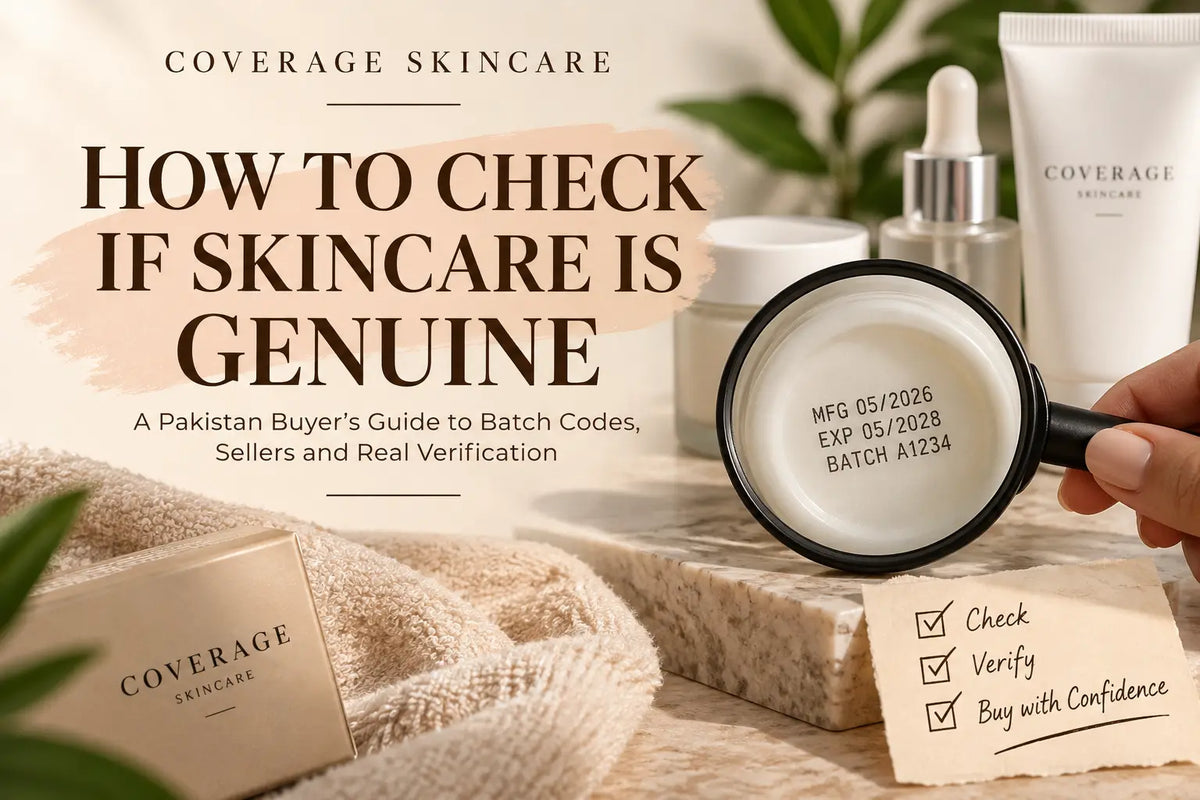
To reduce your risk: buy from the brand's official website or a clearly authorised seller, inspect packaging for spelling and printing errors or inconsistent fonts, check for a clearly printed batch or lot number and a valid expiry date, look for manufacturer or importer details, and be wary of prices dramatically below normal. When in doubt, contact the brand and ask.
Our full walkthrough, how to check if a skincare product is genuine in Pakistan, goes through each of these with real packaging examples and explains the DRAP and PSQCA regulatory split that most guides get wrong.
Building a sensitive-skin routine
Core principle: when skin is irritated, less is more. A minimal routine of gentle cleanser, moisturiser and sunscreen is usually the fastest route back to calm.
| Step | Morning | Evening | Why it matters |
|---|---|---|---|
| Cleanse | Gentle fragrance-free cleanser, or water alone if very dry | Gentle cleanser to remove sunscreen and pollution | Removes buildup without stripping the barrier |
| Treat | - | One well-tolerated active, only if skin is stable | Targets concerns, skipped during flares |
| Hydrate | Lightweight toner or essence | Barrier-supporting moisturiser | Restores water and lipids, reduces water loss |
| Protect | Broad-spectrum SPF 30 to 50+ | - | Prevents UV and barrier damage and pigmentation |
Sensitive and oily: gel or lightweight lotion cleanser, a hydrating fluid, lightweight moisturiser, mineral SPF. Do not skip moisturiser.
Sensitive and dry: creamy non-foaming cleanser, hydrating toner, richer ceramide moisturiser, SPF. Add an occlusive at night in winter.
Sensitive and acne-prone: gentle cleanser, one tolerated active such as azelaic acid, lightweight non-comedogenic moisturiser, mineral SPF.
Sensitive and combination: balance textures, lighter on the T-zone, richer on dry cheeks.
Sensitive and dehydrated: prioritise humectants applied to damp skin, then seal with a moisturiser.
Repairing a damaged barrier and managing flare-ups
Strip your routine back to a gentle cleanser, a barrier-supporting moisturiser and daily sunscreen. Pause all exfoliants, retinoids and strong actives. Avoid hot water and scrubbing. Give it consistent weeks rather than days. If it does not settle, or you see spreading redness, oozing or intense itch, see a dermatologist.

Where COVERAGE fits
COVERAGE Skincare is a Lahore-based, Korean-formulated brand selling in Pakistan. It is useful here not as the best brand, but as a concrete example of what the checklist above looks like in practice: published ingredient lists, several products positioned as fragrance-free and non-comedogenic, and a fully mineral sunscreen. Everything below comes from COVERAGE's own live product pages. Efficacy claims are the brand's own and are not independently verified here, and every product should still be patch-tested.
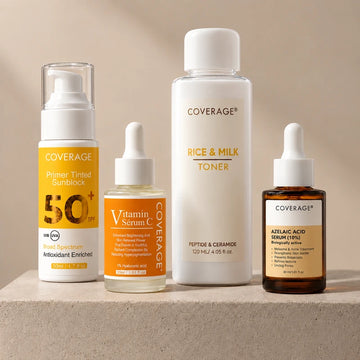
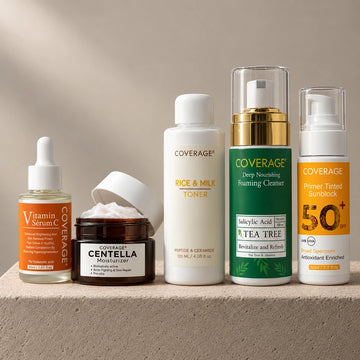
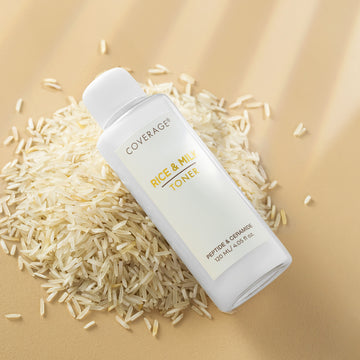
Gentle hydration. The Rice & Milk Toner is a milky, lightweight toner built on rice extract, almond milk, Ceramide NP, Sodium Hyaluronate, Panthenol and Fructooligosaccharides. It is positioned as fragrance-free and non-comedogenic, which matches the humectant-plus-ceramide profile this guide recommends. The full breakdown is in our honest guide to the Rice & Milk Toner, and if you are new to the category, what a Korean toner actually is explains why this texture differs from the astringent toners most people grew up with.
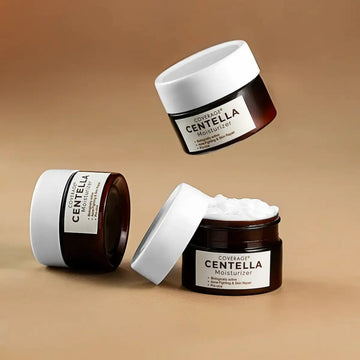
Barrier support. The Centella Moisturizer combines Centella Asiatica extract with Glycerin, Panthenol, Sodium Hyaluronate, Adenosine, Almond Oil and Ceramide - the soothing and barrier-replenishing group with the best tolerability evidence covered above.

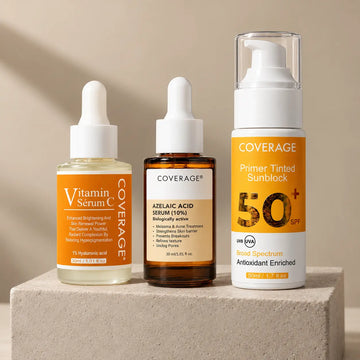
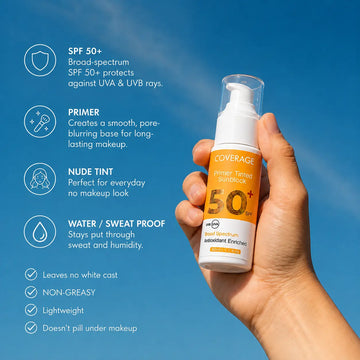
Sun protection. The Primer Tinted Sunblock SPF 50+ is a mineral sunscreen using zinc oxide and titanium dioxide as its UV filters, with glycerin, aloe vera and panthenol for comfort. That makes it a sensible option if chemical filters have stung you before, and given the UV numbers above it is the single most important step in this entire routine. For the wider category, see our buyer's guide to tinted sunscreen in Pakistan and, if your skin is oily or breakout-prone, tinted sunscreen for oily and acne-prone skin.
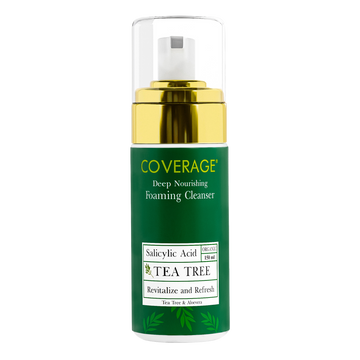
Gentle cleansing. The Deep Nourishing Foaming Cleanser pairs salicylic acid and tea tree with Panthenol, Zinc PCA and Niacinamide underneath, specifically so the actives do not leave skin tight. No fragrance is added on top. Very reactive or very dry sensitive skin may still prefer a non-foaming cleanser, and that is a reasonable swap.

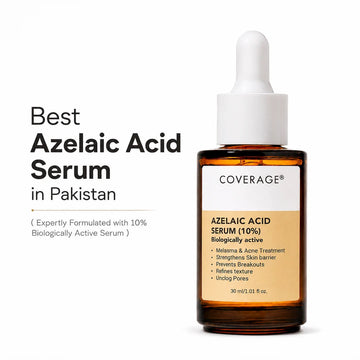
Targeted active. The Azelaic Acid 10% Serum is an anti-inflammatory active that is well tolerated even in rosacea and sensitive skin, formulated without fragrance, alcohol or propylene glycol. At 10 percent it is a gentler entry point than prescription 20 percent strength. Our full azelaic acid guide covers the mechanism, and if pigmentation is your main concern, melasma and chhaiyan ka ilaj and our guide to serums for dark spots and pigmentation go deeper.
Every COVERAGE formula is made in the family's own GMP and ISO certified manufacturing facility rather than through a third-party white-label line, on a manufacturing base the family has run for roughly forty years. For sensitive skin specifically that matters, because raw-material grade and batch consistency are controlled in-house rather than trusted to a contract manufacturer's sourcing.


Mapped onto a routine: cleanse, hydrate with the toner, treat with azelaic acid if your skin is stable, moisturise with the Centella, protect with the tinted sunblock. The takeaway is the criteria, not the brand - COVERAGE happens to meet many of them.
Common myths to unlearn
- Sensitive skin just means dry skin. False. It is a reactivity syndrome that occurs across all skin types.
- Natural or herbal means gentle. Not necessarily. Many plant extracts and essential oils are common allergens and irritants.
- If it tingles, it is working. Tingling usually signals irritation, not efficacy.
- Expensive or imported is safer. Price and origin do not determine tolerance. Formulation and your own patch test do.
- Oily skin does not need moisturiser. It does. Stripping oily skin tends to worsen both oil and sensitivity.
The plan, in three stages
Stage 1, weeks 1 to 4 - calm and simplify. Strip back to a fragrance-free gentle cleanser, a barrier-supporting moisturiser and daily broad-spectrum sunscreen. Pause all exfoliants, retinoids and strong actives. Patch test anything new for 7 to 10 days.
Stage 2, weeks 4 to 8 - reintroduce carefully. Once calm, add one well-tolerated active at a time, a few times a week. Wait one to two weeks before adding anything else.
Stage 3, ongoing - maintain and tune to season. Keep the core three steps year-round. Lighter textures and more frequent sunscreen reapplication through humid summer, richer and more occlusive through dry winter.
Escalate to a dermatologist for severe, persistent or spreading reactions, suspected eczema, rosacea or psoriasis, sudden hives or swelling, or if you simply cannot identify your triggers.
Frequently asked questions
What exactly is sensitive skin?
A clinically recognised sensory syndrome - stinging, burning, tingling, tightness or itch - that occurs in response to things that should not normally cause discomfort. It is not a disease and not the same as dry skin.
How do I know if I have sensitive skin?
Frequent stinging, burning, tightness or redness after ordinary products, heat, sweat, sun or pollution, more easily than seems typical for others. A dermatologist can confirm the cause if reactions are persistent.
Is sensitive skin the same as dry skin?
No. Sensitive skin is defined by reactivity, not dryness, and can occur with any skin type - dry, oily, combination, acne-prone or normal.
Can oily or acne-prone skin be sensitive too?
Yes. Many acne treatments can irritate skin while the barrier is already compromised, which makes oily and acne-prone skin sensitive at the same time.
What causes sensitive skin, and can it be reversed?
Usually a weakened skin barrier combined with heightened nerve reactivity, triggered by over-cleansing, harsh products, fragrance and environmental stress. It often improves substantially once the barrier is allowed to recover.
Is fragrance bad for sensitive skin?
Fragrance is one of the two most common causes of cosmetic allergic contact dermatitis. A fragrance-free baseline is the safer default while your barrier is compromised.
Is niacinamide good for sensitive skin?
Yes. Niacinamide is among the best tolerated actives, with substantial barrier-support evidence at around 4 to 5 percent and irritation uncommon at those levels.
What sunscreen is best for sensitive skin in Pakistan?
A mineral sunscreen using zinc oxide and titanium dioxide is generally the safer starting point for reactive skin, and daily use is essential given Pakistan's extreme summer UV index.
Are mineral sunscreens better than chemical ones for sensitive skin?
Not universally better, but mineral filters are less likely to sting compromised or reactive skin than some chemical filters, which makes them a sensible first choice.
How do I patch test a new skincare product?
Apply a small amount to your inner forearm or behind the ear once daily for 7 to 10 days before using it on your face. Stop immediately if you see sustained redness, burning or itching.
How long does it take to repair a damaged skin barrier?
Anywhere from a couple of weeks to several months, depending on how damaged it is and how consistently it is protected during recovery.
What ingredients should sensitive skin avoid?
High-strength acids, added fragrance, denatured alcohol and over-exfoliation are the most common triggers when the barrier is already compromised.
Can I use azelaic acid if I have sensitive skin?
Often yes. Azelaic acid is well tolerated even in rosacea and sensitive skin, especially at lower concentrations like 10 percent, but always patch test first.
How does Pakistan's climate affect sensitive skin?
Extreme summer UV and heat stress the barrier and worsen pigmentation, while dry winters flare tightness and flaking, which means the routine should shift with the season.
How do I know if a skincare product I bought is genuine?
Check for a clear batch or lot number, a valid expiry date, consistent packaging and print quality, and buy only from the brand's official website or a clearly authorised seller.
When should I see a dermatologist about sensitive skin?
If symptoms are severe, persistent or worsening despite gentle care, if you suspect eczema, rosacea or psoriasis, or if you cannot identify your triggers.
Is natural or herbal automatically gentler for sensitive skin?
No. Many plant extracts and essential oils are common allergens and irritants. Natural origin does not guarantee tolerability.
What is a simple daily routine for sensitive skin in Pakistan?
A gentle fragrance-free cleanser, a barrier-supporting moisturiser, and a daily broad-spectrum mineral sunscreen, adding actives one at a time only once skin is calm.
Related reading
- How to check if a skincare product is genuine in Pakistan
- Best products for acne in Pakistan
- Keel muhase ka ilaj, the complete acne guide
- Is SPF 50 enough in Pakistan?
- Rice & Milk Toner in Pakistan, an honest guide
- Azelaic acid serum in Pakistan
- Melasma in Pakistan, chhaiyan ka ilaj that actually works
This article is for general informational purposes only and is not a substitute for professional medical advice. All information and claims referenced above are drawn from publicly available dermatological studies and expert sources. Always consult a dermatologist for advice specific to your skin.

Leave a comment
This site is protected by hCaptcha and the hCaptcha Privacy Policy and Terms of Service apply.