
Article: Postpartum Hair Fall in Pakistan: Why Hair Falls After Delivery, How Long It Lasts and What Helps (2026)
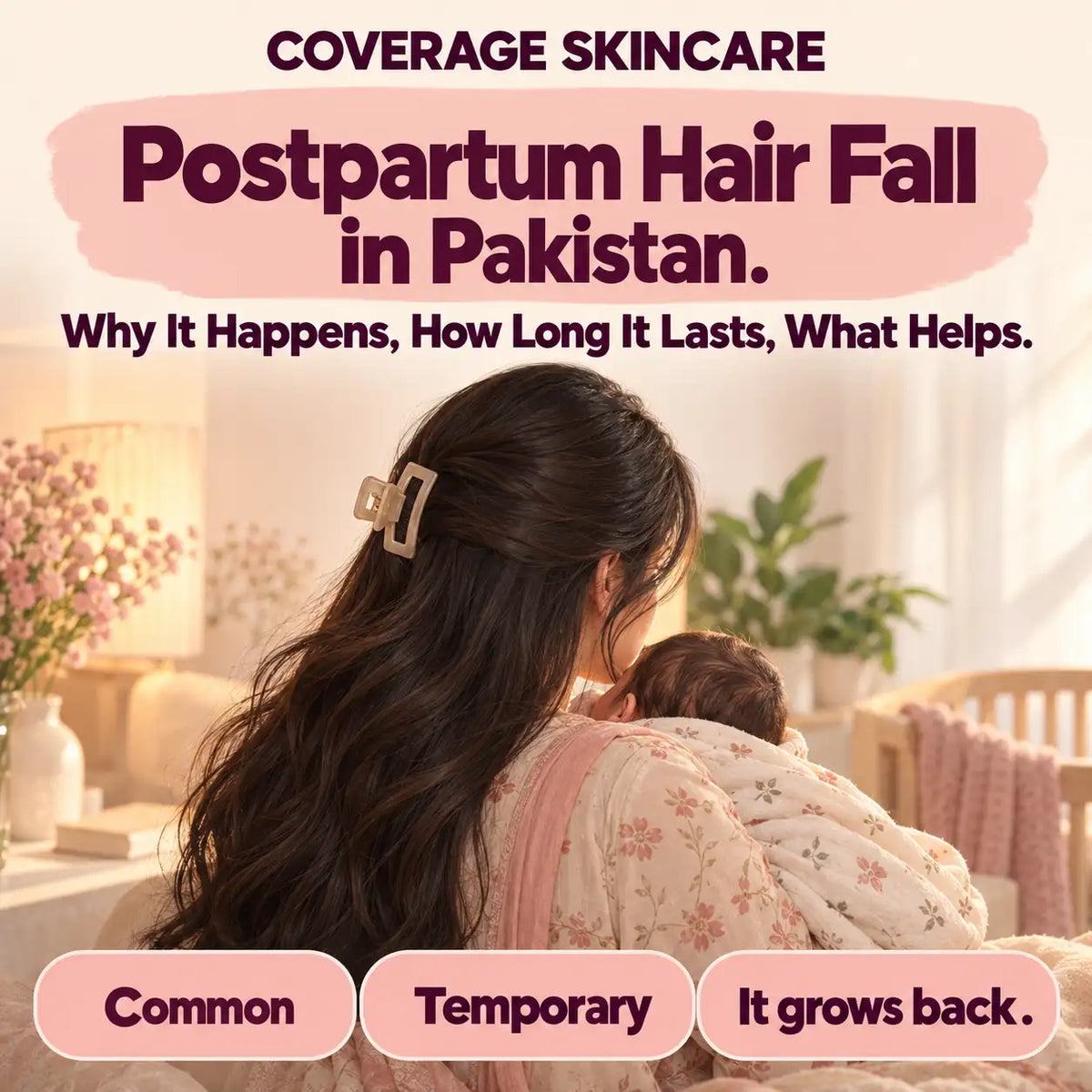
Postpartum Hair Fall in Pakistan: Why Hair Falls After Delivery, How Long It Lasts and What Helps (2026)
Short answer: hair fall after delivery, also called postpartum hair loss, is very common in Pakistan and around the world, and in most women it is temporary. During pregnancy, high oestrogen keeps more of your hair in its growing phase. After the birth, oestrogen falls and all that extra hair moves into the resting phase and sheds together. The American Academy of Dermatology says this shedding usually peaks about four months after giving birth, and that most women see their hair return to its normal fullness by their child’s first birthday. You are not going bald. Your hair is returning to its normal cycle.
This guide explains why postpartum hair fall happens, when it starts and stops, what is normal, when to see a doctor, and how to look after your hair while it recovers. Last updated: October 2026.
Postpartum hair fall: quick facts
- What it is: a temporary shedding that doctors call telogen effluvium.
- Cause: the fall in oestrogen after delivery.
- When it starts: usually two to four months after the birth.
- When it peaks: around four months after the birth.
- When it settles: for most women, by the baby’s first birthday, and often earlier.
- Treatment: it resolves on its own. Gentle hair care and good nutrition support you while it does.
- See a doctor if: your hair has not recovered after a year, you have bald patches, or you feel very tired, cold, breathless or low.
This article is general information, not medical advice. If you are worried about your hair or your health after delivery, please speak to your doctor.
What is postpartum hair fall?
Postpartum hair fall is the heavy shedding many women notice a few months after having a baby. It is also called postpartum hair loss or hair fall after pregnancy. In Pakistan you will hear it described as delivery ke baad baal girna. Doctors call it telogen effluvium, which simply means a larger number of hairs than usual have entered the resting phase and are shedding.
It is a change in the timing of your hair cycle. The hair follicles are still there and still alive. That is why the hair grows back.
Why does hair fall after delivery?
Hair falls after delivery because of a sudden change in hormones. Here is what happens, step by step.
- Before pregnancy. Each hair grows for a few years, rests, then sheds. At any time about 85% of scalp hair is growing and about 15% is resting, and you lose some hair every day.
- During pregnancy. High oestrogen keeps more hair in the growing phase. Fewer hairs shed, which is why many women find their hair feels thicker in pregnancy.
- After delivery. Oestrogen falls sharply. The hairs that were held in the growing phase all move into the resting phase together.
- A few months later. Those resting hairs shed over a short period. This is the hair fall you see.
- Then recovery. New hairs grow in their place, and the cycle returns to normal.
The American Academy of Dermatology puts it in one line: the excessive shedding is caused by falling oestrogen levels. In a sense, you are losing in a few months the hair you would have lost little by little over the last nine.

When does it start, and how long does postpartum hair loss last?
Postpartum hair fall usually starts two to four months after delivery, peaks at around four months, and settles within the first year. The main medical sources give a similar picture. Cleveland Clinic adds that it can persist for up to 18 months in some women, though hair usually recovers much sooner.
| Source | What it says about timing |
|---|---|
| American Academy of Dermatology | Shedding usually peaks about four months after giving birth. Most women see their hair return to normal fullness by their child’s first birthday, and many earlier. |
| Cleveland Clinic | It starts one to six months after childbirth, peaks at month four and then tapers off. |
| British Association of Dermatologists | In telogen effluvium generally, shedding begins around three months after a trigger and lasts three to six months. |
| Study of 331 mothers in Tokyo (2023) | On average, hair loss started at 2.9 months, peaked at 5.1 months and ended at 8.1 months after delivery. |
A month-by-month guide
| Time after delivery | What most women notice |
|---|---|
| 0 to 2 months | Hair usually still feels full. The hormone change has begun, but the hairs have not shed yet. |
| 2 to 4 months | Shedding begins. More hair on the comb, in the shower drain and on the pillow. |
| 4 to 6 months | The peak. This is the hardest stage, and the stage where most women start to worry. |
| 6 to 9 months | Shedding slows. Short new hairs begin to show along the hairline and parting. |
| 9 to 12 months | Hair moves back towards its usual fullness. |
Every woman is different, so treat this as a guide and not a deadline.

How common is it?
Postpartum hair fall is very common. In a 2023 survey of 331 mothers in Tokyo, 91.8% reported at least some hair loss after delivery. The survey was answered by mothers who chose to take part. Researchers note that exact figures are hard to pin down, because studies are small and rely on what mothers report. What is clear is that if this is happening to you, you are in very large company.
What is normal, and what is not?
It is normal to shed between 50 and 100 hairs a day, according to the American Academy of Dermatology. During telogen effluvium that number can rise a lot. Cleveland Clinic notes it can reach up to 300 hairs a day.
So these are all normal in the months after delivery:
- more hair on the comb and brush
- hair collecting in the shower drain
- hair on your pillow, your clothes and the baby’s blanket
- a thinner ponytail
- thinner hair at the temples and the front hairline
- short new hairs that stick up along the hairline as regrowth begins
The shedding looks worst on the days you wash or brush. That does not mean washing is causing it. The British Association of Dermatologists notes that the loss is simply most noticeable after washing or brushing. Those hairs had already let go.
When to see a doctor
Please see a doctor or a dermatologist if any of these apply to you:
- Your hair has not returned to its normal fullness a year after delivery. This is the point at which the American Academy of Dermatology suggests seeing a dermatologist.
- You have round or smooth bald patches.
- Your scalp is red, scaly, painful or very itchy.
- You feel very tired, weak, breathless or dizzy, or you look pale.
- You feel unusually cold or unusually hot, your heart races, or your weight or mood has changed without a clear reason.
- The shedding is still getting heavier after six months.
None of these mean something is certainly wrong. They mean it is worth a check, because some causes of hair fall after delivery are medical and treatable.

Other things that can add to hair fall after delivery
The hormone change is the main cause. But the months after delivery put other pressures on the body too, and some of them can add to hair fall. Only a doctor can tell you whether any of these apply to you.
Low iron and anaemia
Anaemia and low iron are common in Pakistan. The National Nutrition Survey 2018 found that about 41.7% of women of reproductive age in Pakistan are anaemic, and that 18.2% have iron deficiency anaemia. Pregnancy and delivery draw on the body’s iron stores even more. A 2022 analysis of 36 studies found that women with non-scarring hair loss tended to have lower ferritin, which is the body’s iron store. A simple blood test can check this. Do not start iron tablets on your own. Ask your doctor.
Thyroid changes
The American Thyroid Association says postpartum thyroiditis, an inflammation of the thyroid gland after delivery, occurs in approximately 5 to 10% of women in the United States. It can make the thyroid overactive one to four months after delivery and underactive four to eight months after. Cleveland Clinic notes that thyroid problems can cause hair loss. If you have the symptoms in the list above, ask your doctor about a thyroid test.
Vitamin D and zinc
The same national survey found that 79.7% of Pakistani women of reproductive age are deficient in vitamin D and 22.1% are deficient in zinc. Your doctor can check these if needed.
Not eating enough
The American Academy of Dermatology notes that too little iron, too little protein or too few calories can cause hair loss. New mothers often eat last and eat least. Regular meals with enough protein matter for your hair as much as for your strength.
Stress and exhaustion
High stress is a recognised trigger for hair shedding. Broken sleep and a newborn are a lot for anyone. This is one more reason to accept help when it is offered.
Does breastfeeding cause hair fall? Hair fall while breastfeeding
Breastfeeding should not be stopped because of hair fall. The cause named by dermatology bodies is the fall in oestrogen after delivery, and that happens whether you breastfeed or not. Studies on breastfeeding itself do not agree with each other. One found that breastfeeding mothers had more hair in the growing phase at four months. Another found that mothers who breastfed for longer reported more hair loss. Both studies were small. If you are worried, talk to your doctor, and please do not change how you feed your baby for the sake of your hair.
Should you take biotin tablets after delivery?
Do not start biotin tablets, or any supplement, without asking your doctor first, especially while breastfeeding.
- The US Food and Drug Administration has warned that high-dose biotin supplements can interfere with laboratory blood tests and give wrong results. That matters after delivery, when your doctor may be checking your blood.
- If you do take a supplement containing biotin, tell your doctor before any blood test.
A biotin shampoo is different from a biotin tablet. It works from the outside, on your hair and scalp, and it is rinsed off. It is a simple, gentle way to care for your hair and scalp.
Can postpartum hair fall be prevented?
The hormonal shedding itself cannot be prevented, because it follows the fall in oestrogen after delivery. Cleveland Clinic says so plainly. What you can do is eat well, handle your hair gently and reduce breakage, so that you keep as much of your hair as possible while the shedding settles.
Is there a treatment for hair fall after delivery?
For ordinary postpartum shedding, no treatment is needed, because it resolves on its own. Cleveland Clinic says the only treatment for post-pregnancy hair loss is patience. The British Association of Dermatologists adds that taking medication does not speed up regrowth in telogen effluvium.
If your doctor finds a cause such as low iron or a thyroid problem, treating that cause is what helps. Any medicine for hair loss while you are breastfeeding, including minoxidil, is a decision for your doctor. The US National Institutes of Health lactation database says topical minoxidil is acceptable once breastfeeding is established, but ordinary postpartum shedding does not need it.
What you can do in the meantime is look after the hair you have. That is where hair care comes in.
How to care for your hair after delivery
Good hair care makes a real difference in these months. It protects the hair you have from breaking, keeps it looking fuller and keeps your scalp healthy while your body settles. Several of these tips come from the advice dermatologists give new mothers.
1. Wash gently, and do not be afraid to wash
Washing does not make you lose more hair. Hairs that come out in the wash had already been released. Use lukewarm water, a mild shampoo and your fingertips. Do not scrub or pile your hair on top of your head.
2. Choose a mild shampoo
A gentle, sulphate-free shampoo cleans the scalp without stripping hair that is already fragile.
3. Condition the ends, lightly
The American Academy of Dermatology advises new mothers to use conditioner mainly on the ends of the hair, and to choose a conditioner made for fine hair, because heavy ones weigh hair down and make it look flatter.
4. Be gentle with wet hair
Hair is at its weakest when it is wet. Press it dry with a towel, do not rub. Use a wide-tooth comb and start from the ends.
5. Loosen your hairstyle
A tight choti, bun or ponytail pulls on the roots. Under a dupatta or hijab, a tight style worn every day pulls in the same place for hours. Tie your hair loosely, change the position, and use soft fabric ties.
6. Go easy on heat and chemicals
Use the lowest heat on the dryer and keep straighteners for special days. If you can, leave colouring and rebonding until your hair has recovered.
7. Try a shorter cut
A shorter style is one of the tips dermatologists give. It makes hair look fuller, tangles less and is easier to manage with a baby.
8. Check your baby for stray hairs
This is a safety tip many people do not know. A shed hair can wrap tightly around a baby’s finger, toe or other small body part. Doctors call it a hair tourniquet. It is rare, but worth knowing about. If your baby is crying and you cannot find the reason, check the fingers and toes for a wrapped hair, and see a doctor at once if you find one you cannot remove easily.

Shedding or breakage? Why the difference matters
Two different things can make hair look thinner after delivery, and only one of them is hormonal.
- Shedding is a full-length hair that comes out from the root, with a tiny pale bulb at one end. This is the hormonal part, and it settles with time.
- Breakage is a shorter hair with no bulb that has snapped along its length. This comes from fragile hair, rough handling, tight styles and heat. This is the part that hair care can change.
A new mother usually has both. Tired, rushed hair care adds breakage on top of the shedding, and that makes the thinning look worse than it needs to. Reducing breakage is how you keep the most hair on your head while the shedding runs its course. Our guide to biotin vs rice hair mask shows how to tell the two apart in 30 seconds.

Best shampoo for hair fall after delivery in Pakistan: where COVERAGE fits
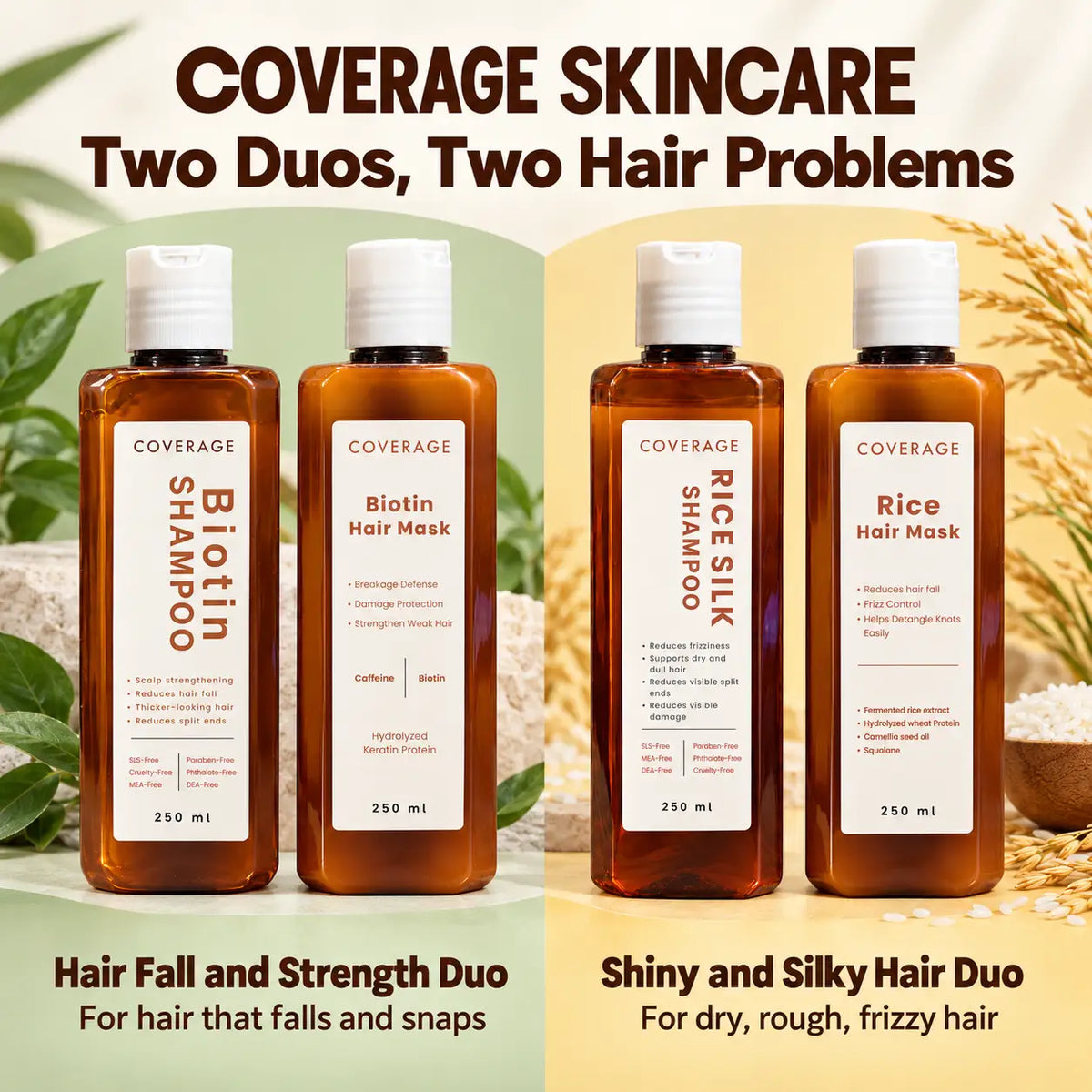
The best shampoo for hair fall after delivery is a mild, sulphate-free one that strengthens fragile hair. Our Biotin range suits this stage well. It helps control hair fall by strengthening weak strands and reducing breakage, it keeps the scalp clean and nourished, and its cleansing system is mild enough to use as often as you wash.
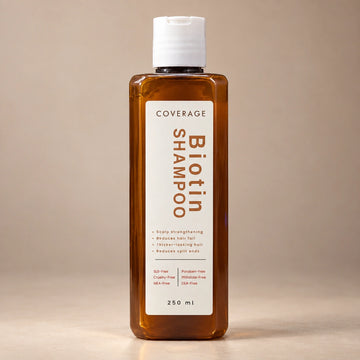
COVERAGE Biotin Shampoo
The COVERAGE Biotin Shampoo is a sulphate-free shampoo for hair fall and thin, weak hair.
- What is in it: Biotin and Hydrolyzed Keratin. Biotin is the vitamin best known for healthy hair. Hydrolyzed Keratin is keratin in small pieces that can enter the hair fibre and help strengthen damaged hair.
- How it cleans: a mild cleansing system of Cocamidopropyl Betaine, Decyl Glucoside and Sodium Lauroyl Sarcosinate. It removes oil and buildup without the stripping that leaves hair brittle.
- Free from: sulphates, parabens, phthalates, DEA and MEA.
- Fragrance: lightly fragranced.
- Size and price in Pakistan: 250ml, Rs.1,900.
How to use it: wet your hair with lukewarm water. Massage a coin-sized amount into the scalp with your fingertips for 30 to 60 seconds. Be gentle and do not scrub. Rinse fully. Use it two to three times a week, or as often as you wash.
What to expect: the Biotin Shampoo strengthens fragile strands and reduces the breakage behind a lot of everyday hair fall, so your hair stays healthier and fuller while your body recovers. Hair grows on slow cycles, so give it two to three months of regular use.

See the COVERAGE Biotin Shampoo
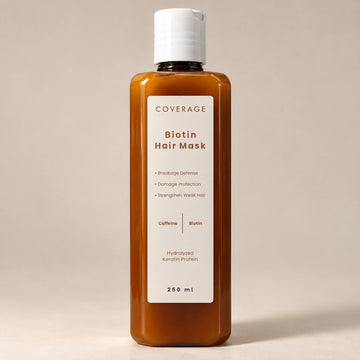
COVERAGE Biotin Hair Mask
The COVERAGE Biotin Hair Mask is the conditioning step that goes with the shampoo. It contains Biotin, Hydrolyzed Keratin, Caffeine and Panthenol, and it conditions without heaviness, so fine hair keeps its volume. That matters when your hair is thinner than usual. Apply it through the mid-lengths and ends after shampooing, leave it for 5 to 10 minutes and rinse with cool water.
The two are available together as the Hair Fall and Strength Duo, which costs less than buying them separately.
If your hair is dry and rough, not thin
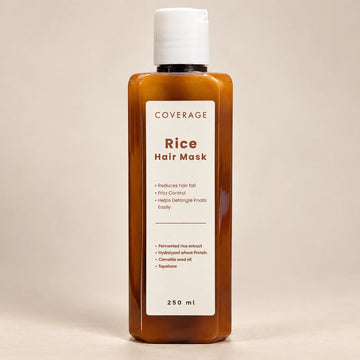
Some new mothers find their hair turns dry and frizzy more than it thins. For that, our Rice Hair Mask is the better fit. Use it on the ends only.
If you would like to show your doctor what is in any of our products, the full ingredient list is on every product page.
A simple hair routine for new mothers
You do not have time for a long routine, so this one is short.
| When | What to do | Time |
|---|---|---|
| Wash days, two to three a week | Biotin Shampoo on the scalp, massaged in gently, then rinsed | 3 minutes |
| Wash days | Biotin Hair Mask on the mid-lengths and ends, 5 to 10 minutes, cool rinse | 5 to 10 minutes |
| After washing | Press dry with a towel, comb from the ends with a wide-tooth comb | 2 minutes |
| Every day | Loose hairstyle, soft hair tie, no tight choti or bun | No extra time |
| Every day | Regular meals with protein, plenty of water, rest when you can | No extra time |

Postpartum hair fall and Pakistani customs
The chilla, the first 40 days
The tradition of resting for 40 days after delivery gives a new mother time to recover, eat well and be looked after. Rest and good food are good for your whole body, your hair included. The hair fall usually begins after the chilla ends, at two to four months, so do not be alarmed when it starts later. Washing your hair during the chilla does not cause hair fall. Wash gently, with lukewarm water and a mild shampoo, whenever your scalp needs it.
Panjeeri, desi ghee and diet
Panjeeri and other traditional foods give energy at a time when a mother needs it. For your hair, the things to make sure of are enough protein, such as eggs, daal, chicken, fish, milk and yoghurt, and iron-rich foods. If your doctor has given you supplements after delivery, take them as advised.
Oiling and tel malish
Oiling is a comfort and a part of our culture, and a gentle scalp massage is relaxing. Oil conditions the hair. It does not change the hormonal shedding. If you oil, massage softly, do not rub or pull, do not tie the oiled hair tightly, and wash it out with a mild shampoo.
Water and weather
Heat, humidity and hard water can leave hair rough and dry, which adds to breakage. A mild shampoo and a conditioning step help with that. Our hard water and hair fall guide has more.

Looking after yourself
Seeing your hair fall while you are tired and adjusting to a new baby can be upsetting. That feeling is real and it is shared by a great many mothers. The facts are on your side: the cause is known, it is temporary, and the hair grows back. If the worry is weighing on you, or you feel low for more than a couple of weeks, tell your doctor. That is as important as anything in this guide.
Who makes COVERAGE hair care?
We do. COVERAGE is our own Pakistani brand, built on our family’s 40 years in skincare manufacturing. We make our hair care in our own facility in Lahore, which is GMP certified and ISO 9001 certified, and COVERAGE is Halal certified. Our formulas are developed by our in-house chemical engineers, and we publish the full ingredient list on every product page. More than 72,000 COVERAGE orders have been delivered across Pakistan, with cash on delivery nationwide.
Postpartum hair fall FAQs
Why does hair fall after delivery? (Delivery ke baad baal kyun girte hain?)
Because oestrogen falls after the birth. During pregnancy, high oestrogen keeps more hair in its growing phase. After delivery those hairs move into the resting phase together and shed a few months later.
When does postpartum hair fall start?
It usually starts two to four months after delivery. Cleveland Clinic notes it can begin anywhere from one to six months after childbirth.
When does hair fall after delivery stop? (Delivery ke baad baal girna kab band hota hai?)
The American Academy of Dermatology says shedding usually peaks about four months after giving birth, and that most women see their hair return to normal fullness by their child’s first birthday. Many recover earlier.
How long does postpartum hair loss last?
Postpartum hair loss usually starts two to four months after delivery, peaks at four to five months and settles by the baby’s first birthday. In one study the shedding ended at about eight months on average. Cleveland Clinic says it can last up to 18 months in some women.
Will my hair grow back after delivery? Is postpartum hair loss permanent?
Postpartum hair loss is not permanent. The follicles stay alive and new hair grows back. The American Academy of Dermatology says most women regain their normal fullness by their child’s first birthday. If yours has not after a year, see a dermatologist.
How can I stop hair fall after delivery? (Delivery ke baad baal girna kaise rokein?)
The hormonal shedding cannot be stopped or prevented, and it settles on its own. What you can do is reduce breakage: eat well, wash gently, keep hairstyles loose, avoid heat, and use a mild, strengthening shampoo and a light conditioner on the ends.
Is it normal to lose clumps of hair in the shower after having a baby?
Yes. Shedding is most noticeable when you wash or brush, because hairs that have already been released come out together. It is normal to shed 50 to 100 hairs a day, and far more during postpartum shedding.
Will I go bald from postpartum hair fall?
No. Postpartum shedding is a temporary change in the hair cycle. The follicles stay alive and new hair grows back. If you see bald patches, see a doctor, because that is a different condition.
Does breastfeeding cause hair fall?
The cause named by dermatology bodies is the fall in oestrogen after delivery, which happens whether you breastfeed or not. Studies on breastfeeding and hair do not agree with each other. Do not stop breastfeeding because of hair fall.
Does hair fall more if I breastfeed for longer?
One survey of 331 mothers found that women who breastfed for six months or longer reported more hair loss, and another small study found the opposite at four months. The shedding settles with time whether you breastfeed or not, so please do not stop breastfeeding for the sake of your hair.
Will it happen again with my next baby?
It can happen after any pregnancy, because the hormone change is the same each time. In a 2023 study of 331 mothers, the number of previous births made no difference to who had hair loss.
Does a C-section cause more hair fall than a normal delivery?
The hormone change that causes postpartum shedding happens after both kinds of delivery. In a 2023 study of 331 mothers, the type of delivery, normal or caesarean, made no significant difference to postpartum hair loss. If you lost a lot of blood or were unwell after your operation, ask your doctor to check your iron.
Can anaemia cause hair fall after delivery? (Kya khoon ki kami se baal girte hain?)
Low iron can add to hair fall. About 41.7% of Pakistani women of reproductive age are anaemic and 18.2% have iron deficiency anaemia, according to the National Nutrition Survey 2018. A blood test can check your iron and your ferritin, and your doctor can advise on treatment.
Should I get my thyroid tested after delivery?
Ask your doctor if you have symptoms such as extreme tiredness, feeling very cold or very hot, a racing heart or unexplained weight change. The American Thyroid Association says postpartum thyroiditis occurs in approximately 5 to 10% of women in the United States.
Is biotin safe while breastfeeding? Can I take biotin tablets?
Ask your doctor before taking any supplement while breastfeeding. The US National Institutes of Health sets the adequate intake of biotin for breastfeeding women at 35 micrograms a day. High-dose biotin tablets can interfere with laboratory blood tests, so tell your doctor if you take them.
Does oiling stop hair fall after delivery?
Oil conditions the hair, but it does not change the hormonal shedding. If you oil, massage gently, do not tie oiled hair tightly, and wash it out with a mild shampoo.
Do home remedies work for hair fall after delivery?
No home remedy has been shown to change the hormonal shedding, which settles with time. Oils and masks condition the hair and make it less likely to break, which helps you keep more of it. Ask your doctor before using essential oils on your scalp while breastfeeding.
Which vitamins help with postpartum hair fall? Should I keep taking my pregnancy vitamins?
Cleveland Clinic advises not to stop your vitamins straight after the birth, and to check with your doctor before taking anything new while breastfeeding. Supplements help most when a blood test shows you are low in something, such as iron.
What should I eat for hair fall after delivery?
Eat regular meals with enough protein, such as eggs, daal, chicken, fish, milk and yoghurt, and iron-rich foods. The American Academy of Dermatology notes that too little iron, too little protein or too few calories can cause hair loss, so do not diet hard in the first months.
Does washing my hair every day make more hair fall? (Kya roz baal dhone se zyada girte hain?)
No. Washing does not cause extra hair loss. The hairs that come out in the wash had already been released. Wash as often as you need to, gently, with a mild shampoo.
Which shampoo is best for hair fall after delivery in Pakistan?
Choose a mild, sulphate-free shampoo that will not strip fragile hair. The COVERAGE Biotin Shampoo is sulphate-free, with Biotin and Hydrolyzed Keratin to strengthen weak strands and reduce breakage, which helps control hair fall and keeps hair healthy while your body recovers.
Can a shampoo help with postpartum hair fall?
A gentle, strengthening shampoo helps you look after your hair while the shedding settles. The COVERAGE Biotin Shampoo helps control hair fall from breakage, strengthens weak strands and keeps hair healthy, so you keep more of the hair you have and it looks fuller.
Can I use COVERAGE Biotin Shampoo while breastfeeding?
The COVERAGE Biotin Shampoo is used on the hair and scalp and rinsed off, like any shampoo. The full ingredient list is on the product page, and you can show it to your doctor if you would like their advice.
Can I use the COVERAGE Biotin Hair Mask while breastfeeding?
The COVERAGE Biotin Hair Mask is used on the hair and rinsed off after 5 to 10 minutes. The full ingredient list is on the product page, and you can show it to your doctor if you would like their advice.
What is the price of the COVERAGE Biotin Shampoo in Pakistan?
The COVERAGE Biotin Shampoo price in Pakistan is Rs.1,900 for 250ml, as of October 2026. It is also available with the Biotin Hair Mask as the Hair Fall and Strength Duo, with cash on delivery across Pakistan.
Can I colour or rebond my hair while breastfeeding?
The MotherToBaby service says that when hair treatments are used as directed, it is unlikely that large amounts of the chemicals get into breast milk. Chemical treatments can still weaken hair that is already fragile, so many women wait until the shedding has settled. Ask your doctor if you are unsure.
What are the short baby hairs on my hairline?
They are usually new hairs growing in after the shedding. They can stick up for a while because they are short. They are a sign that your hair is recovering.
Will my hairline and temples fill in again?
Thinner hair at the temples and the front hairline is a common pattern in postpartum shedding. The short hairs that appear there are new growth. If the area has not filled in a year after delivery, see a dermatologist.
Does cutting my hair short reduce hair fall after delivery?
A haircut does not change how many hairs shed, because shedding happens at the root. But the American Academy of Dermatology notes that a short style can make hair look fuller, and shorter hair tangles and breaks less.
Can I use minoxidil while breastfeeding?
That is a decision for your doctor. The US National Institutes of Health lactation database says topical minoxidil is acceptable once breastfeeding is established, and that the baby should not touch the treated skin. Ordinary postpartum shedding does not need it, so do not start any hair loss medicine without medical advice.
My baby is one year old and my hair is still falling. What should I do?
See a dermatologist. The American Academy of Dermatology suggests this if your hair has not regained its normal fullness after one year, because another cause may need to be checked. Cleveland Clinic notes that shedding can persist for up to 18 months in some women.
Is my hair falling or breaking?
Look at the hairs on your comb. A full-length hair with a tiny pale bulb at one end has shed from the root. A shorter hair with no bulb has broken. Shedding is hormonal and settles with time. Breakage can be reduced with gentle care.
The bottom line
Postpartum hair fall is common, it has a clear cause, and for most women it ends on its own within the first year. Be patient with your body, eat well, keep your hairstyles loose, and see a doctor if anything on the warning list applies to you. While your hair recovers, treat it gently. A mild, strengthening routine with the COVERAGE Biotin Shampoo and Biotin Hair Mask helps protect the hair you have, so that when the shedding settles, you have kept as much of it as possible.
See the Hair Fall and Strength Duo
Sources: American Academy of Dermatology, hair loss in new moms. American Academy of Dermatology, hair shedding and hair loss. Cleveland Clinic, postpartum hair loss. Cleveland Clinic, telogen effluvium. British Association of Dermatologists, telogen effluvium patient leaflet. Hirose et al., International Journal of Women’s Dermatology, 2023, study of postpartum hair loss in 331 mothers. Gizlenti and Ekmekci, Journal of the European Academy of Dermatology and Venereology, 2014, hair changes during pregnancy and after delivery. StatPearls, telogen effluvium. American Thyroid Association, postpartum thyroiditis. Treister-Goltzman et al., Skin Appendage Disorders, 2022, iron deficiency and non-scarring alopecia in women. National Nutrition Survey 2018, Key Findings, Government of Pakistan and UNICEF. US Food and Drug Administration, biotin interference with lab tests. American Academy of Dermatology, hair loss tips. American Academy of Dermatology, healthy hair tips. US National Institutes of Health, Drugs and Lactation Database, minoxidil. US National Institutes of Health, Office of Dietary Supplements, biotin fact sheet. MotherToBaby, hair treatments fact sheet. NHS, postnatal depression overview. Product details and prices taken from COVERAGE product pages, October 2026.
This article is for general informational purposes only and is not a substitute for professional medical advice. All information and claims referenced above are drawn from publicly available dermatological studies and expert sources. Always consult a dermatologist for advice specific to your skin.

Leave a comment
This site is protected by hCaptcha and the hCaptcha Privacy Policy and Terms of Service apply.