
Mineral Tinted Sunscreen in Pakistan: What It Is, Why the Tint Matters and How to Choose (2026)
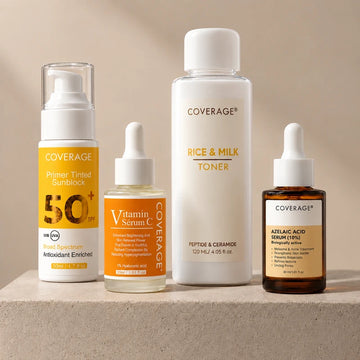
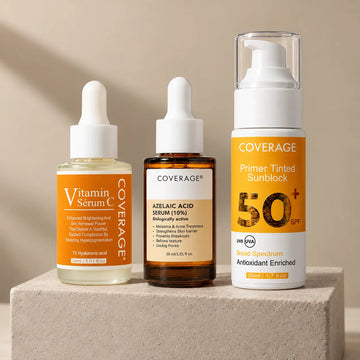
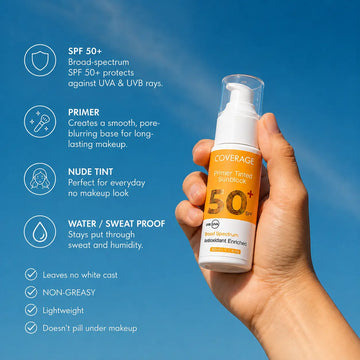
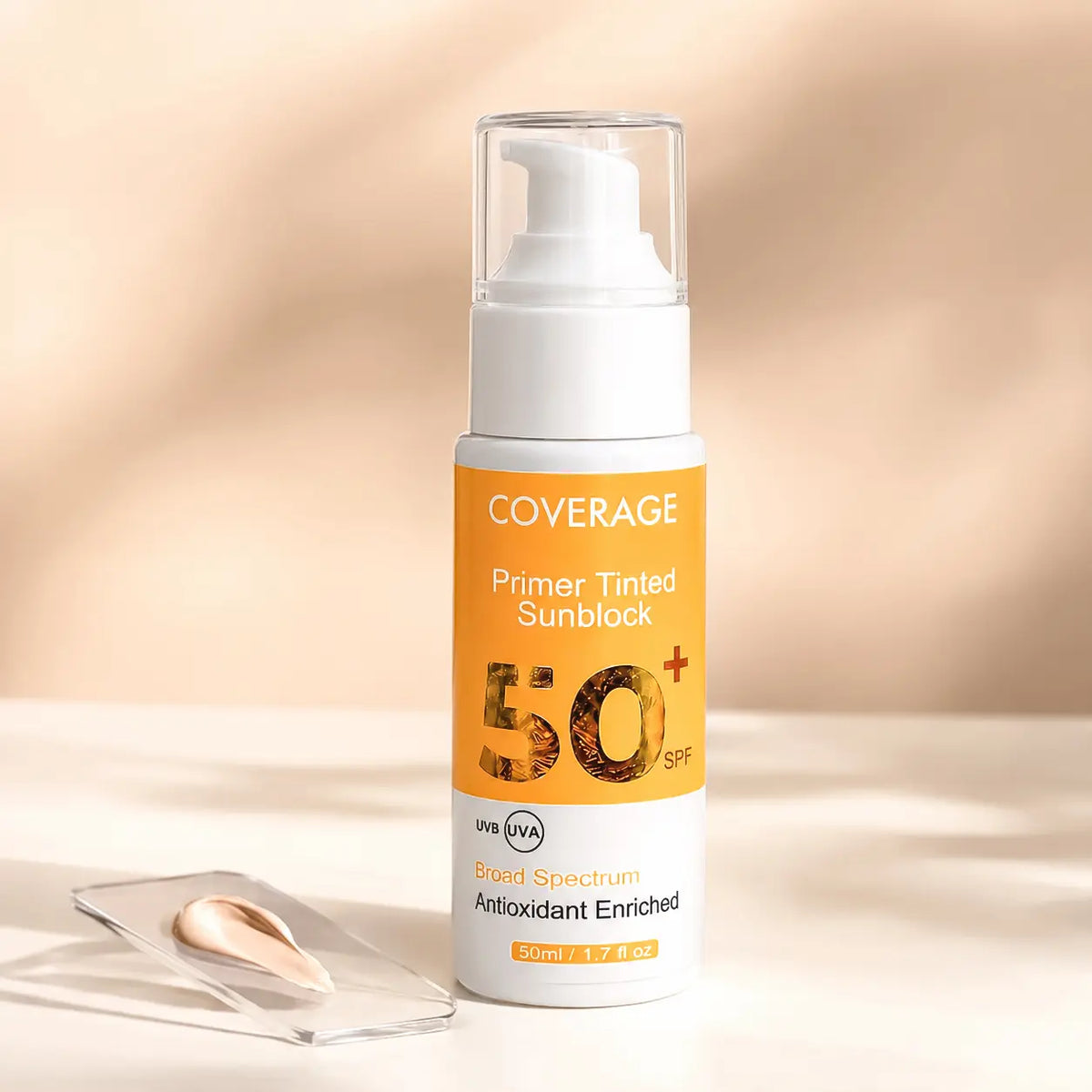
Short answer: a mineral tinted sunscreen is a sunscreen that uses mineral UV filters, zinc oxide and titanium dioxide, and adds a skin-toned tint made with iron oxides. It is also called a physical sunscreen or a mineral sunblock. In Pakistan, sunblock and sunscreen mean the same product. The mineral filters protect against UVB and UVA. The tint does a second job: it helps protect against visible light, the part of sunlight that deepens dark spots and melasma on brown skin. That combination is why a mineral tinted sunscreen suits Pakistani skin and Pakistani sun so well. COVERAGE Primer Tinted Sunblock SPF 50+ is a 100% mineral tinted sunscreen: its only UV filters are micronized zinc oxide and micronized titanium dioxide, and its tint comes from iron oxides.
This guide explains how mineral tinted sunscreen works, why the tint matters more than most people realise, what to look for on a label, and how to use it properly in our weather. Last updated: October 2026.
Mineral tinted sunscreen: quick facts
- Mineral filters: zinc oxide and titanium dioxide. Together they cover UVB and UVA.
- The tint: iron oxides. They add protection against visible light and remove the white cast.
- Who it suits most: anyone with melasma, chhaiyan or dark spots, sensitive skin, or skin that reacts to chemical sunscreens.
- What to look for: broad spectrum, SPF 30 or higher, iron oxides in the ingredient list.
- Our mineral tinted sunscreen: COVERAGE Primer Tinted Sunblock SPF 50+, 100% mineral, broad spectrum, with an iron oxide tint.
- How much: two finger lengths for the face, which is about one teaspoon, plus a little more for the neck. Reapply through the day.
- Price in Pakistan: COVERAGE Primer Tinted Sunblock SPF 50+ has a regular price of Rs.1,599 for 50ml.
What is a mineral tinted sunscreen?
A mineral tinted sunscreen has two parts, and each part does a different job.
- The mineral part is the UV filter. The American Academy of Dermatology puts it simply: if the active ingredient in your sunscreen is titanium dioxide, zinc oxide, or both, you have a physical sunscreen, also called a mineral sunscreen.
- The tinted part is colour. It comes from iron oxides, the same mineral pigments used in foundation. They give the sunscreen a skin tone, and they absorb visible light.
Put together, you get one product that protects against three things: UVB, UVA and visible light.
Mineral (physical) vs chemical vs hybrid sunscreen
The difference between sunscreen types is the kind of UV filter inside. For sensitive skin, and for skin that gets melasma or dark spots, we recommend a mineral sunscreen with an iron oxide tint.
| Type | UV filters | What to know |
|---|---|---|
| Mineral | Zinc oxide, titanium dioxide, or both | Recommended by dermatologists for sensitive skin. Older formulas left a white cast, which tint solves. |
| Chemical | Carbon-based filters such as avobenzone or octocrylene | Usually clear on the skin. Some people find they sting or irritate. |
| Hybrid | A mix of mineral and chemical filters | The American Academy of Dermatology calls these hybrids because they contain filters of both kinds. |
| Mineral tinted | Mineral filters plus iron oxide pigments | UV protection from the minerals, visible light protection and no white cast from the tint. |

How mineral filters work
Many people believe mineral sunscreen works like a mirror. The science is more interesting. A 2016 study in Photodermatology, Photoimmunology and Photomedicine found that zinc oxide and titanium dioxide protect mainly by absorbing UV, and reflect only about 4 to 5% of it.
The two minerals also cover different parts of the UV range. A 2011 review in Nanotechnology, Science and Applications sums it up: titanium dioxide is more effective in UVB, and zinc oxide in the UVA range. A sunscreen that uses both, as ours does, covers the two together.
Mineral filters and sensitive skin
- The American Academy of Dermatology says dermatologists recommend mineral sunscreens for people with sensitive skin, and says they may cause less irritation on children’s sensitive skin.
- A 2023 review in the journal Dermatitis found no reports of allergic contact reactions to the mineral UV filters.
- A review by Australia’s Therapeutic Goods Administration found that zinc oxide and titanium dioxide particles in sunscreen do not reach the living cells of the skin. The European Union’s scientific committee found that zinc oxide nanoparticles do not appear to penetrate the skin.
- In the United States, the Food and Drug Administration has proposed zinc oxide and titanium dioxide as the two sunscreen filters it considers generally recognised as safe and effective.
Why the tint matters more than the word mineral
This is the part most sunscreen guides in Pakistan leave out, and it is the most important part for our skin.
Sunlight is not only UV. A large part of it is visible light, the light we see. For a long time visible light was thought to be harmless to skin. Research on brown skin showed otherwise.
- Visible light darkens brown skin. In a 2010 study in the Journal of Investigative Dermatology, visible light caused pigmentation in people with skin types IV to VI that was darker and longer lasting than the pigmentation from UVA. It caused none in fair skin. In melasma treatment studies from Lahore, the patients were skin types IV and V.
- Ordinary sunscreen does not cover it. A 2021 review in the Journal of the American Academy of Dermatology states that broad spectrum sunscreens protect against UV and do not adequately protect against visible light.
- Tint does. The American Academy of Dermatology says tinted sunscreens contain iron oxide, which research shows helps protect skin against the negative effects of visible light from the sun.
One study shows the point clearly. In 2020, researchers writing in the Journal of Drugs in Dermatology tested products on brown skin under visible light. Formulas containing iron oxides significantly protected against pigmentation. A mineral SPF 50+ with no tint did not.
So the decision rule is simple. The mineral filters handle UV. The tint handles visible light. For skin that marks and darkens easily, you want both in the same tube.

Tinted sunscreen and melasma
Melasma, known here as chhaiyan, is one of the most common reasons people in Pakistan look for a better sunscreen. Two small clinical trials are worth knowing.
- In a 2014 trial of 68 melasma patients, everyone used the same treatment cream. In those who also used a sunscreen with iron oxide, the melasma severity score improved by 78% over eight weeks. In those who used a UV-only sunscreen of the same SPF, it improved by 62%.
- In a 2015 trial of 40 melasma patients, those using the iron oxide tinted sunscreen had less relapse over six months than those using the same sunscreen without tint.
A sunscreen does not treat melasma by itself. It protects the results of your treatment and helps stop the pigment coming back. If you are using azelaic acid or vitamin C for pigmentation, this is the step that protects that work. Our melasma guide covers the full routine.
Tint also solves the white cast
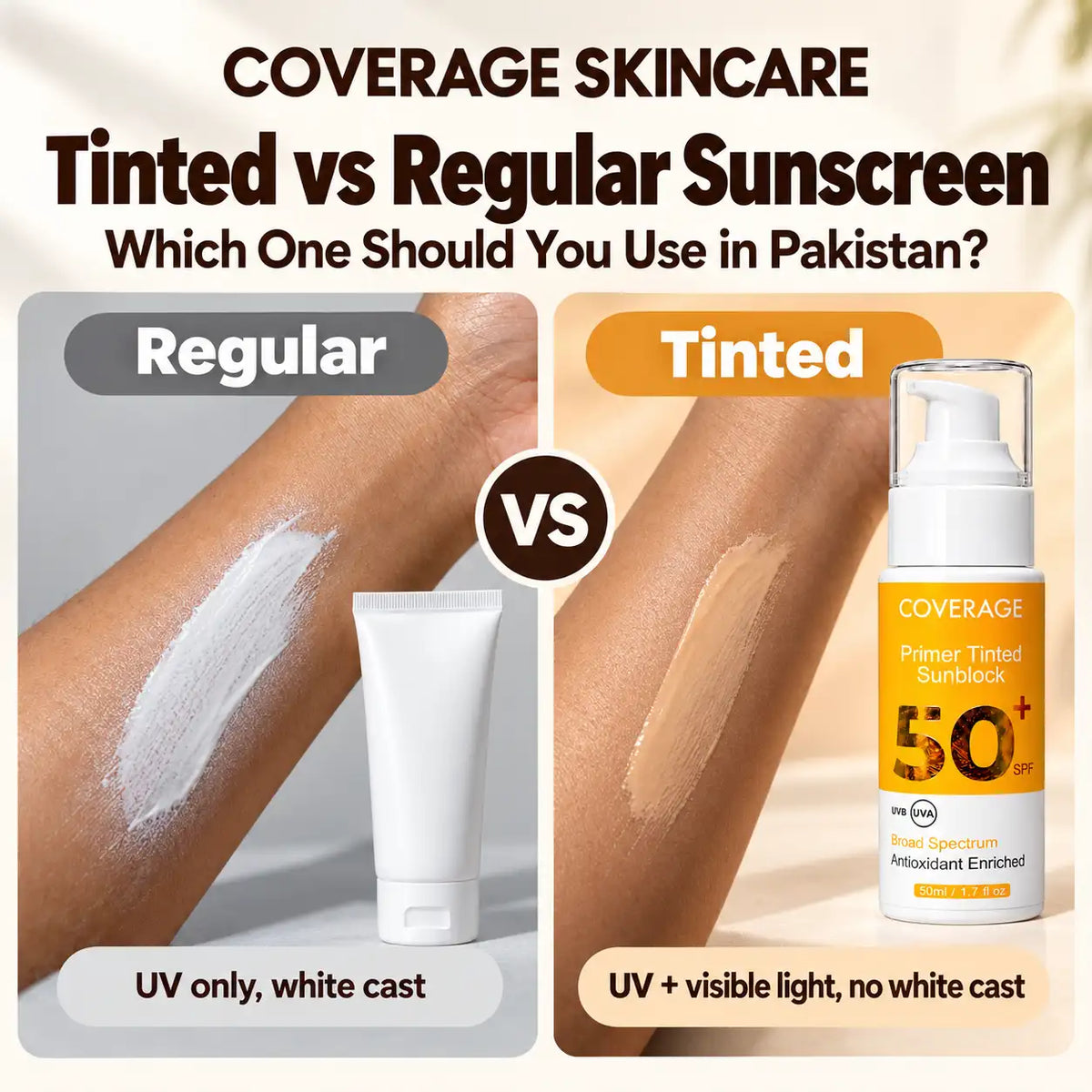
Mineral filters are white powders, which is why older mineral sunscreens left a whitish, ashy look on brown skin. The Skin Cancer Foundation notes that adding tint, usually with iron oxides, helps with exactly this. The American Academy of Dermatology says a tinted sunscreen can help you avoid the white residue or cast.
Why this matters in Pakistan
Our sun is strong for most of the year
The UV index is the international scale for the strength of the sun. The World Health Organization advises seeking shade at midday from a UV index of 3, and avoiding being outside at midday at 8 and above. Climate data for Lahore, Islamabad and Karachi shows the monthly maximum UV index reaching 11 or higher in summer. In Karachi it stays at that level from April to September. In Lahore the average daily high in June is about 40°C, according to Pakistan Meteorological Department normals.
Most of us are not using enough sunscreen
Pakistani studies show how wide the gap is.
- In a 2023 Aga Khan University study of 200 dermatology outpatients, 49% used sunblock.
- In a 2023 study of 437 medical and paramedical students in Punjab, 48% used sunscreen and only 17% used it daily.
- In a 2019 study of medical students in Karachi, the most common reason for not using sunscreen was that it makes skin look greasy or oily, given by 50.1%. Another 14.4% said it makes them feel hotter.
That last finding matters. In our climate, the best sunscreen is the one that feels light enough that you will actually wear it every day and reapply it. Texture is not a luxury here. It decides whether the protection happens at all.

What to look for in a mineral tinted sunscreen
Use this checklist on any mineral tinted sunscreen before you buy it.
- Mineral filters only. The active ingredients should be zinc oxide, titanium dioxide, or both.
- Both minerals, if possible. Zinc oxide for UVA and titanium dioxide for UVB.
- Broad spectrum. This is the label term for protection against both UVA and UVB.
- SPF 30 or higher. SPF 30 blocks about 97% of UVB and SPF 50 about 98%, according to the Skin Cancer Foundation. In our sun, SPF 50 is the sensible choice.
- Iron oxides in the ingredient list. Look for CI 77491, CI 77492 and CI 77499. These are what make a sunscreen truly tinted.
- Water and sweat resistance. Essential in heat and humidity.
- A light, non-greasy texture. So you will reapply it.
- Non-comedogenic. The American Academy of Dermatology advises acne-prone skin to choose products labelled non-comedogenic.
- A full ingredient list. If a brand does not publish it, you cannot check points 1 to 5.

COVERAGE Primer Tinted Sunblock SPF 50+: our mineral tinted sunscreen
We built the COVERAGE Primer Tinted Sunblock SPF 50+ around that checklist. It was our first product, and it is still the one more of our customers start with than any other.
| Checklist point | COVERAGE Primer Tinted Sunblock SPF 50+ |
|---|---|
| Mineral filters only | Yes. 100% mineral. The only UV filters are micronized zinc oxide and micronized titanium dioxide. No chemical filters at all. |
| Both minerals | Yes. Zinc oxide and titanium dioxide together. |
| Broad spectrum | Yes. Broad spectrum protection against UVA and UVB. |
| SPF | SPF 50+. |
| Iron oxides | Yes. CI 77491, CI 77492 and CI 77499, which give the natural nude tint and add visible light protection. |
| Water and sweat resistance | Yes. It holds through heat and humidity. |
| Texture | Lightweight and non-greasy. |
| Non-comedogenic | Yes. It is non-comedogenic. |
| Size and price in Pakistan | 50ml. Regular price Rs.1,599. |
| Ingredient list | Published in full on the product page. |

What is inside
Active ingredients: Micronized Zinc Oxide, Micronized Titanium Dioxide.
Inactive ingredients: Distilled Water, Glycerin, Glyceryl Stearate, Caprylic/Capric Triglyceride, Styrene/Acrylates Copolymer, PEG-100 Stearate, Aloe Vera Extract, Crosspolymer, Disodium EDTA, Panthenol, Tocopheryl Acetate, Phenoxyethanol, Iron Oxides (CI 77491, CI 77492, CI 77499).
- Micronized Zinc Oxide and Titanium Dioxide. The mineral filters, in a micronized form. Micronized means the minerals are milled into very fine particles, so the sunscreen spreads evenly.
- Iron Oxides. Three pigments that make the tint and add visible light protection.
- Glycerin, Aloe Vera Extract and Panthenol. They keep skin hydrated and comfortable, so the sunscreen does not leave skin dry or tight.
- Vitamin E (Tocopheryl Acetate). An antioxidant.
A natural tint, with no white cast
The tint is a natural nude. On fair and medium skin tones it blends in on contact. On deeper tones it settles into the skin within seconds. It evens out skin tone enough that many of our customers wear it alone for university, work and everyday errands.

Sunscreen and primer in one step
It doubles as a makeup primer. It smooths and blurs the skin into an even base, so you can wear it alone for light coverage or apply foundation on top for a fuller look. One step fewer in the morning makes daily sunscreen far easier to keep up.
Who it is for
- Anyone treating melasma, chhaiyan or pigmentation who needs visible light protection as well
- Skin that reacts to chemical sunscreens
- Oily, combination, sensitive, acne-prone and normal skin
- Anyone who wants light everyday coverage without foundation
- Long days at university, at work or outdoors, where reapplying matters
See the COVERAGE Primer Tinted Sunblock SPF 50+
How to use a mineral tinted sunscreen
- Make it the last step of your morning routine. Apply it after moisturizer and before makeup.
- Use two finger lengths. Squeeze a line along your index finger and your middle finger. That is about one teaspoon, the amount the American Academy of Dermatology gives for the face. Use a little more for the neck and ears. The Academy notes that most people apply only 20 to 50% of what they need.
- Blend evenly. Take it down onto the neck and out to the ears.
- Give it a few minutes before makeup. Apply it 15 minutes before you go outside.
- Reapply. The American Academy of Dermatology advises reapplying every two hours outdoors, and straight after swimming or sweating.
- Wear it every day. Indoors as well as out. Visible light and UVA both come through windows.
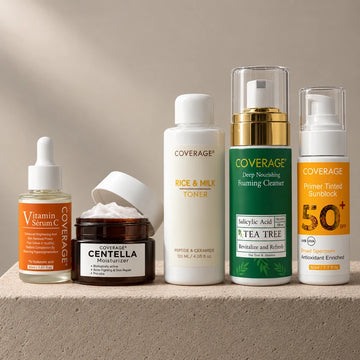
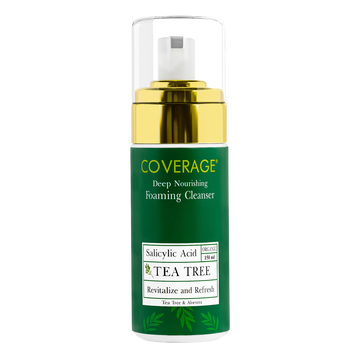
- Wash it off at night. A water and sweat resistant sunscreen does not come off with water alone. Use a cleanser, such as our Deep Nourishing Foaming Cleanser, and cleanse twice if you wore makeup on top.

Where it sits in your routine
| Step | Morning |
|---|---|
| 1. Cleanse | Deep Nourishing Foaming Cleanser |
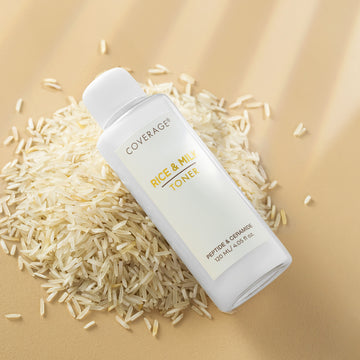
| 2. Hydrate | Rice and Milk Toner |
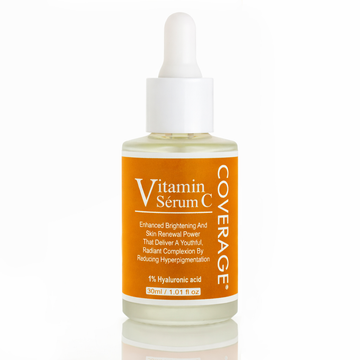
| 3. Treat | Vitamin C + 1% HA Skin Serum |
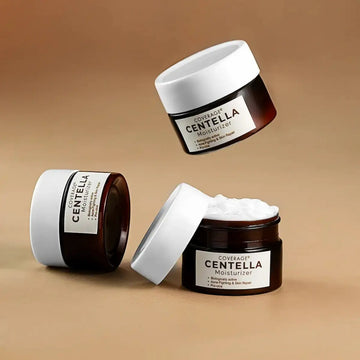
| 4. Moisturize | Centella Moisturizer |
| 5. Protect | Primer Tinted Sunblock SPF 50+ |
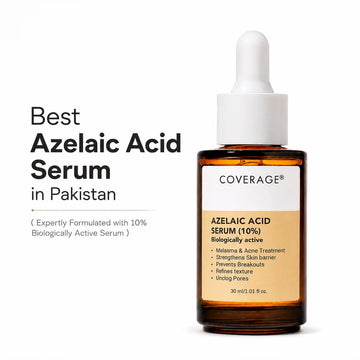
If you want the pigmentation routine in one box, the Melasma, Dark Spots and Acne Marks Treatment set pairs the sunblock with our Azelaic Acid and Vitamin C serums.
Common mistakes with mineral tinted sunscreen
- Using too little. A pea-sized dot does not give you the SPF on the label. Use two finger lengths.
- Applying once in the morning and never again. Sweat, oil and touching your face all wear sunscreen away.
- Assuming any mineral sunscreen covers visible light. It is the iron oxide tint that adds it. Check the ingredient list.
- Skipping it indoors or on cloudy days.
- Relying on makeup with SPF. You would need far more foundation than anyone wears to reach the SPF on the label.
- Treating pigmentation without sunscreen. Without daily protection, pigmentation treatment undoes itself.
- Leaving the tube in a hot car or in direct sun. Store it somewhere cool.
Mineral tinted sunscreen in Pakistan: FAQs
What is a mineral tinted sunscreen?
A mineral tinted sunscreen uses mineral UV filters, zinc oxide and titanium dioxide, with a skin-toned tint made from iron oxides. The minerals protect against UVA and UVB, and the tint adds protection against visible light.
Which is the best mineral tinted sunscreen in Pakistan?
Look for mineral filters only, broad spectrum SPF 50, iron oxides, water resistance and a light texture. COVERAGE Primer Tinted Sunblock SPF 50+ meets all of these: it is 100% mineral, with micronized zinc oxide, micronized titanium dioxide and an iron oxide tint.
Is COVERAGE Primer Tinted Sunblock a mineral sunscreen?
Yes. It is 100% mineral. The only UV filters are micronized zinc oxide and micronized titanium dioxide, with no chemical filters at all.
Which is the best mineral sunscreen in Pakistan for oily skin?
For oily skin, the best mineral sunscreen is lightweight, non-greasy and non-comedogenic, with broad spectrum SPF 50. COVERAGE Primer Tinted Sunblock SPF 50+ is all of these, and its tint also works as a primer, so oily skin needs one layer fewer.
What is the price of a mineral tinted sunscreen in Pakistan?
COVERAGE Primer Tinted Sunblock SPF 50+ has a regular price of Rs.1,599 for 50ml, as of October 2026, with cash on delivery across Pakistan. Our tinted sunblock price guide compares prices in full.
What is the difference between sunscreen and sunblock?
In Pakistan the two words are used for the same product. Our Primer Tinted Sunblock is a mineral tinted sunscreen.
Is there a zinc oxide sunscreen in Pakistan?
Yes. COVERAGE Primer Tinted Sunblock SPF 50+ is a zinc oxide sunscreen made in Pakistan. Its only UV filters are micronized zinc oxide and micronized titanium dioxide.
What is the difference between mineral (physical) and chemical sunscreen?
Mineral sunscreens use zinc oxide and titanium dioxide as UV filters. Chemical sunscreens use carbon-based filters. Dermatologists recommend mineral sunscreens for people with sensitive skin.
Is mineral sunscreen better than chemical sunscreen?
Both types protect when they are used properly. Dermatologists recommend mineral sunscreens for sensitive skin, and the US Food and Drug Administration has proposed zinc oxide and titanium dioxide as the two filters it considers generally recognised as safe and effective. For skin that gets dark spots, add an iron oxide tint.
Does mineral sunscreen protect against visible light?
The mineral filters protect against UV. Protection against visible light comes from the iron oxide tint. That is why a mineral tinted sunscreen gives you both.
Is tinted sunscreen better for melasma and chhaiyan?
Yes. Visible light can deepen melasma on brown skin, and iron oxide tint helps protect against it. In two small clinical trials, melasma patients using an iron oxide sunscreen alongside treatment improved more and relapsed less than those using an untinted one.
Does mineral sunscreen leave a white cast?
Older untinted mineral sunscreens could. A tint solves this. COVERAGE Primer Tinted Sunblock blends into fair and medium tones on contact and settles into deeper tones within seconds.
Is there a sunscreen without white cast for brown skin in Pakistan?
Yes. A tinted mineral sunscreen has no white cast, because the iron oxide tint replaces the white look of the minerals. COVERAGE Primer Tinted Sunblock has a natural nude tint made for Pakistani skin tones. On deeper tones, apply it in two thin layers and blend each one.
Does sunblock make skin fairer? (Kya sunblock se rang gora hota hai?)
No. A sunscreen does not bleach or lighten skin. It protects against the UV and visible light that darken skin and deepen dark spots, and the tint evens out how your skin looks while you wear it.
Does sunscreen stop tanning?
Sunscreen cuts the UV that causes tanning, but no sunscreen blocks all of it. Used in the right amount and reapplied every two hours, it greatly reduces tanning. Shade, a dupatta, a cap or an umbrella do the rest.
Is zinc oxide or titanium dioxide better?
They do different jobs. Titanium dioxide is more effective against UVB and zinc oxide against UVA. A sunscreen that contains both covers the two together.
Is mineral sunscreen good for oily and acne-prone skin?
Yes, when it is lightweight and non-comedogenic. COVERAGE Primer Tinted Sunblock is non-greasy and non-comedogenic, and it suits oily skin, combination skin and acne-prone skin.
Is mineral sunscreen good for sensitive skin?
Yes. The American Academy of Dermatology says dermatologists recommend mineral sunscreens for people with sensitive skin.
Does mineral sunscreen clog pores or cause acne?
A lightweight, non-comedogenic mineral sunscreen suits oily and acne-prone skin. The American Academy of Dermatology advises acne-prone skin to look for the words non-comedogenic on the label. Washing it off properly at night matters as much as the formula.
Is mineral sunscreen good for dry skin?
Yes. COVERAGE Primer Tinted Sunblock contains Glycerin, Aloe Vera Extract and Panthenol, which keep skin hydrated and comfortable. On dry skin, apply it over your moisturizer.
Is mineral sunscreen safe during pregnancy?
Mineral filters stay on the surface of the skin. Australia’s medicines regulator found that zinc oxide and titanium dioxide particles do not reach living skin cells. Pregnancy is also a common trigger for melasma, and the American Academy of Dermatology advises a tinted sunscreen with iron oxide for melasma. Ask your doctor about any product you use in pregnancy.
Can men use tinted sunscreen?
Yes. Skin needs the same protection whatever your gender. Blend it well into the hairline and the beard line.
How much tinted sunscreen should I apply to my face?
Two finger lengths, squeezed along your index and middle fingers. That is about one teaspoon for the face. Use a little more for the neck and ears.
How often should I reapply sunscreen in Pakistan?
Reapply every two hours when you are outdoors, and straight after heavy sweating, swimming or washing your face.
When should I apply sunscreen before going out?
The American Academy of Dermatology advises applying sunscreen to dry skin 15 minutes before you go outdoors.
How do I reapply sunscreen over makeup?
Press a thin layer on with clean fingers or a sponge, without rubbing. Because our sunblock is tinted, a fresh layer also tops up your coverage.
How do I remove mineral tinted sunscreen at night?
Wash your face with a cleanser and massage for a full minute. A water and sweat resistant sunscreen does not come off with water alone. If you wore makeup on top, cleanse twice.
Can a tinted sunscreen replace foundation?
For everyday wear, yes. The natural tint of COVERAGE Primer Tinted Sunblock evens skin tone and gives light coverage. For a fuller look, apply foundation on top. It works as a primer underneath.
Do I need sunscreen indoors?
Yes. UVA and visible light pass through window glass, so daily use indoors protects against pigmentation as well.
Do I need sunscreen in winter and on cloudy days?
Yes. The American Academy of Dermatology notes that up to 80% of the sun’s UV rays can pass through clouds. UVA and visible light are present all year, so pigmentation-prone skin needs daily protection in winter too.
Does sunscreen cause vitamin D deficiency?
The Skin Cancer Foundation says studies have never found that everyday sunscreen use leads to vitamin D insufficiency. Food and supplements can also provide vitamin D.
Is SPF 50 enough in Pakistan?
SPF 50 blocks about 98% of UVB. What matters just as much is using enough and reapplying it. Our SPF 50 guide explains this in full.
Is sunscreen necessary for wheatish or darker skin?
Yes. Brown skin is the skin type most prone to pigmentation from UVA and visible light, which is why a tinted, broad spectrum sunscreen matters.
Is the sunblock water and sweat resistant?
Yes. COVERAGE Primer Tinted Sunblock SPF 50+ is water and sweat resistant, so it holds through heat and humidity.
Where can I buy a mineral tinted sunscreen in Pakistan?
You can order COVERAGE Primer Tinted Sunblock SPF 50+ from coverageskincare.com with cash on delivery anywhere in Pakistan.
The bottom line
For Pakistani skin, the best sunscreen does three things: it blocks UVB, it blocks UVA, and it guards against visible light. A mineral tinted sunscreen is the type that does all three, with mineral filters for the UV and an iron oxide tint for the visible light. We made COVERAGE Primer Tinted Sunblock SPF 50+ to be exactly that, in a texture light enough for our heat: 100% mineral, broad spectrum, tinted, water and sweat resistant, and made in our own GMP and ISO 9001 certified facility in Lahore. More than 72,000 COVERAGE orders have been delivered across Pakistan, and this is the product most of them began with.
Shop the Primer Tinted Sunblock SPF 50+
Sources: American Academy of Dermatology, Sunscreen FAQs. American Academy of Dermatology, how to apply sunscreen. Cole, Shyr and Ou-Yang, Photodermatology, Photoimmunology and Photomedicine, 2016. Smijs and Pavel, Nanotechnology, Science and Applications, 2011. Mahmoud et al., Journal of Investigative Dermatology, 2010. Lyons et al., Journal of the American Academy of Dermatology, 2021. Dumbuya et al., Journal of Drugs in Dermatology, 2020. Castanedo-Cazares et al., Photodermatology, Photoimmunology and Photomedicine, 2014. Boukari et al., Journal of the American Academy of Dermatology, 2015. Ekstein and Hylwa, Dermatitis, 2023. Therapeutic Goods Administration (Australia), 2016. European Commission Scientific Committee on Consumer Safety, opinion on zinc oxide, 2012. US Food and Drug Administration, sunscreen proposed order, 2021. Skin Cancer Foundation, choosing and using sunscreen, tinted sunscreens and sun protection and vitamin D. American Academy of Dermatology, choosing the right sunscreen and melasma self-care. World Health Organization, UV index. Pakistan Meteorological Department climate normals, published by the Pakistan Bureau of Statistics. Monthly UV index data for Lahore, Islamabad and Karachi, Weather2Travel. Journal of Pakistan Association of Dermatologists, 2014, 2016 and 2023. Journal of the Pakistan Medical Association, 2023. Cureus, 2019. Product details taken from the COVERAGE Primer Tinted Sunblock SPF 50+ product page, October 2026.
This article is for general informational purposes only and is not a substitute for professional medical advice. All information and claims referenced above are drawn from publicly available dermatological studies and expert sources. Always consult a dermatologist for advice specific to your skin.


Leave a comment
This site is protected by hCaptcha and the hCaptcha Privacy Policy and Terms of Service apply.