
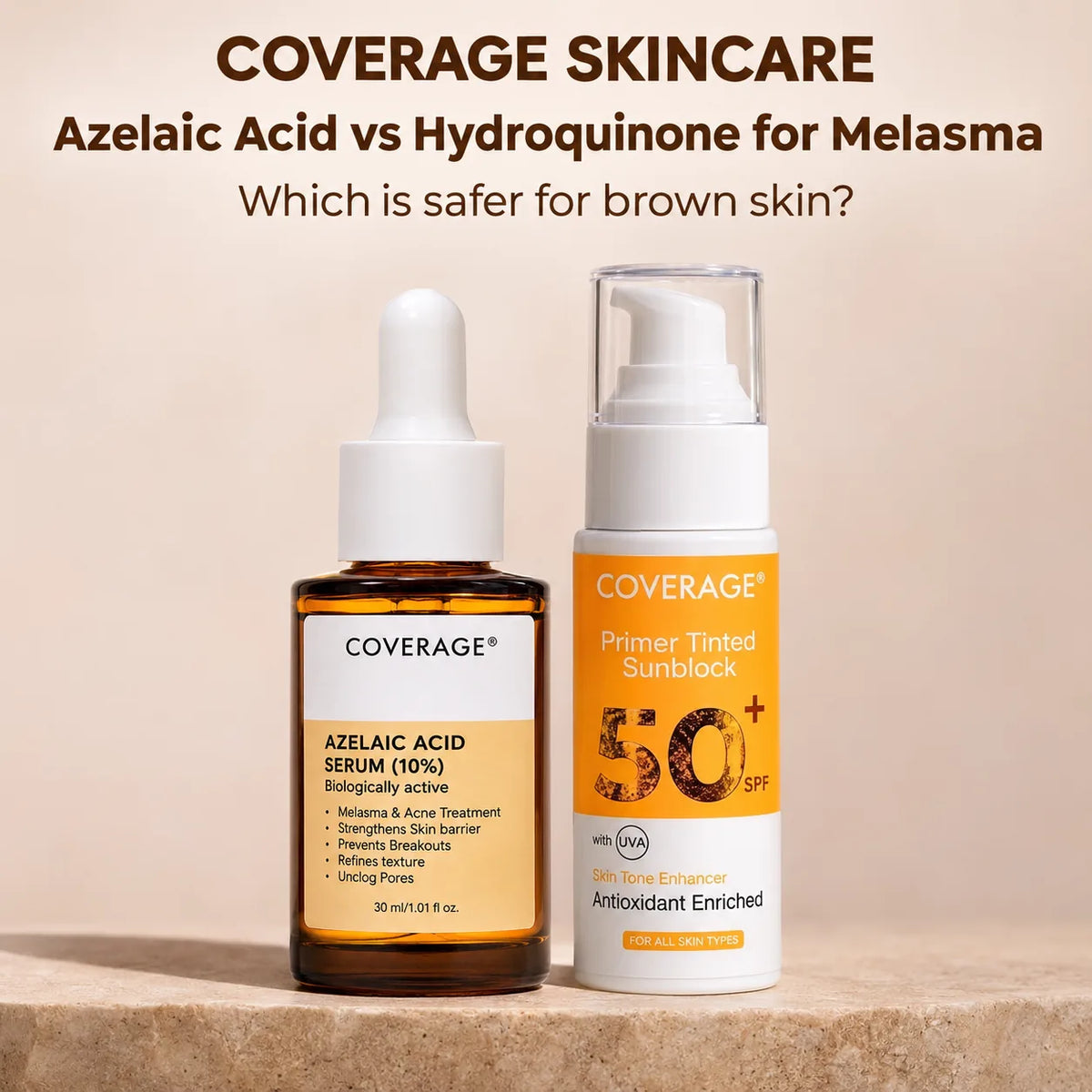
Azelaic Acid vs Hydroquinone for Melasma: Which Is Safer for Brown Skin?
The quick answer
Azelaic acid vs hydroquinone for melasma on brown skin: in head-to-head trials, 20% azelaic acid worked as well as 4% hydroquinone, and in a 2023 meta-analysis of six trials (673 patients) it improved melasma severity scores slightly more. Short-term irritation was similar for both. The real safety difference is long-term: prolonged or high-strength hydroquinone can cause exogenous ochronosis, a blue-grey darkening that is hard to reverse and most often reported in darker skin. Azelaic acid has no such risk. So for long-term, at-home melasma care on brown skin, azelaic acid is the lower-risk choice. Hydroquinone remains highly effective, but belongs in short, doctor-supervised courses.
If you have melasma (chaiyan) and brown skin, you have probably been told two things that seem to contradict each other. Hydroquinone is the “gold standard”. And hydroquinone is dangerous for darker skin.
Both are partly true. This guide sets out what the research actually shows, where the evidence is thin, and how to choose safely. We wrote it for readers in Pakistan, where hydroquinone creams are easy to buy without a prescription and the sun is relentless, but the science applies to brown skin anywhere.
At COVERAGE®, we make an Azelaic Acid 10% Serum in our own facility in Lahore, so we have a stake in this topic. That is exactly why we have kept the evidence honest: every medical claim below links to its source, and we tell you where hydroquinone still wins.
Melasma on brown skin: why the choice matters more
Melasma is a chronic, relapsing pigment condition: brown or grey-brown, usually symmetrical patches on sun-exposed skin, most often the cheeks, forehead, upper lip and chin. It is more common in women and in people with darker complexions, and is linked to pregnancy and hormonal contraception (Albzea et al., 2023). For the full picture of causes and treatment, see our melasma and chaiyan ka ilaj guide.
“Brown skin” is not one skin type. Dermatologists describe skin by Fitzpatrick phototype (I to VI), not by ethnicity. Most South Asian skin sits around types III to V, but two sisters can differ. What matters for treatment is how much melanin your skin makes and how strongly it reacts to injury.
That reaction is the key point. Richly pigmented skin is prone to post-inflammatory hyperpigmentation (PIH): new dark marks after irritation, burns, peels or harsh products (Moolla & Miller-Monthrope, 2022). So on brown skin, a melasma treatment that irritates can create fresh pigment while it fades the old. Tolerability is not a comfort issue here. It is part of whether the treatment works.
And because melasma comes back, the question is never just “what fades it fastest?” It is “what can I safely keep using for months and years?” That is where azelaic acid and hydroquinone separate.
How azelaic acid and hydroquinone work
Both ingredients slow melanin production by acting on tyrosinase, the enzyme that drives melanogenesis. How they get there is different, and that difference explains most of their safety gap.

Hydroquinone: powerful, broad, and anti-pigment only
Hydroquinone is a phenolic compound and has been considered the topical gold standard for melasma for decades, because it strongly suppresses melanin production (González-Molina et al., 2022). It has little effect on inflammation (Albzea et al., 2023). In practice it is used at 2% to 4%, often inside a triple-combination cream (hydroquinone with tretinoin and a mild steroid) prescribed for moderate to severe melasma.
Azelaic acid: selective, and it also calms inflammation
Azelaic acid is a dicarboxylic acid found in grains such as wheat, rye and barley, and also made naturally by yeast that lives on healthy skin. It works on several pathways at once (Clinical, Cosmetic and Investigational Dermatology review, 2024):
- Tyrosinase inhibition: it slows the enzyme behind excess pigment.
- Selective action: it targets hyperactive and abnormal melanocytes while largely sparing normal ones. This is why azelaic acid is not associated with lightening the surrounding healthy skin.
- Anti-inflammatory and antioxidant effects: it reduces the inflammatory signals that tell melanocytes to make more pigment. Inflammation is now understood to play a role in melasma itself.
- Antibacterial and anti-keratinising effects: the reason it also treats acne, a common trigger of PIH.

The short version: hydroquinone hits pigment production hard across the board. Azelaic acid works more like a targeted calmer, aimed at the overactive cells and the inflammation feeding them. That is also why azelaic acid evens tone rather than bleaching skin, as we explain in does azelaic acid lighten skin?
What the studies actually show
The headline result is real, but it is narrower than most articles make it sound.
The 2023 meta-analysis
The only systematic review and meta-analysis to directly compare the two pooled six randomised controlled trials and 673 melasma patients (Albzea et al., 2023). Its findings:
- Melasma severity (MASI score): azelaic acid improved it significantly more than hydroquinone, a mean difference of 1.23 points (95% CI −2.05 to −0.40; p = 0.004). These pooled results were consistent across studies.
- Overall response (excellent, good, fair, poor): no statistically significant difference, though there was a trend towards more good responses with azelaic acid and more poor responses with hydroquinone.
- Pigment reduction: no significant difference.
- Side effects (irritation, itching, scaling): no significant difference.
The authors’ own conclusion was that azelaic acid may be better at reducing severity, and that larger, longer studies are needed.
The trials behind it
| Trial | Country | Patients | Azelaic acid | Hydroquinone | Duration |
|---|---|---|---|---|---|
| Baliña & Graupe, 1991 | Multicentre | 329 | 20% | 4% | 24 weeks |
| Verallo-Rowell et al., 1989 | Philippines | 155 | 20% | 2% | 24 weeks |
| Emad et al., 2013 | Iran | 66 | 20% | 4% | 20 weeks |
| Akl, 2022 | Egypt | 50 | 20% (liposomal) | 4% | 3 months, plus oral tranexamic acid in both groups |
| Bahadori et al., 2017 | Iran | 44 | 20% | 4% | 4 months |
| Farshi, 2011 | Iran | 29 | 20% | 4% | 8 weeks |
Source: study tables in Albzea et al., 2023. All trials used sunscreen alongside treatment.

What to keep in mind
- Every trial used 20% azelaic acid. None tested 10%.
- One trial compared against 2% hydroquinone, not 4%. In that study, 73% of azelaic acid patients had good to excellent results versus 19% on hydroquinone (Verallo-Rowell et al., 1989). It is the most striking result, but the comparator was half-strength.
- The largest trial found them roughly equal. The 1991 double-blind study of 329 women compared 20% azelaic acid against 4% hydroquinone over 24 weeks: 65% on azelaic acid had good or excellent results, with no significant difference between the two on overall rating, lesion size or pigment intensity (Baliña & Graupe, 1991).
- Quality varied. Two trials were rated low risk of bias, two had some concerns and two were high risk. None reported results by skin phototype, so we cannot say how well the findings apply specifically to darker skin.
Other large reviews agree with the overall picture. A 2023 systematic review of 43 trials found 20% azelaic acid significantly better than placebo for melasma and better than 2% hydroquinone for global improvement (J Cosmet Dermatol, 2023). A 2022 meta-analysis of topical melasma treatments found azelaic acid and hydroquinone produced similar improvements, and concluded non-hydroquinone agents may be considered as alternatives, guided by tolerance and availability (Chang et al., 2022).
Our reading: azelaic acid and hydroquinone are in the same efficacy league for melasma. Azelaic acid may have a slight edge on severity scores. Neither is a clear knockout winner on results alone, which is why safety decides the question for brown skin.
Which is safer for brown skin? The safety head-to-head
Safety has two layers: what happens in the first weeks, and what happens after months or years. The two ingredients look similar on the first layer and very different on the second.
Short-term: both can sting, about equally
In the trials, burning, itching, redness and scaling occurred with both, and the meta-analysis found no significant difference in irritation, itching or scaling (Albzea et al., 2023). Reactions were usually mild, worst in the first weeks, and settled with continued use. Do not assume azelaic acid is sting-free, especially at 20%. Our azelaic acid side effects guide explains what tingling is normal and when to stop.
On brown skin, this short-term irritation matters because of PIH risk. Whichever ingredient you use, a formula and routine that keep irritation low protect your results.

Long-term: this is where hydroquinone carries real risk
Exogenous ochronosis (EO) is an uncommon but disfiguring complication of hydroquinone: paradoxical blue-grey or blue-black darkening caused by pigment depositing deep in the skin (Cureus case report and review, 2026). Key facts:
- It is most often reported in darker skin. In a systematic review of 126 cases, 52.4% occurred in Fitzpatrick skin types V to VI, and the median duration of hydroquinone use was 5 years (Ishack & Lipner, 2022).
- Strength and duration drive the risk. That review concluded that concentrations above 4% and courses longer than 3 months may be associated with new ochronosis.
- Low strength is not a guarantee. Cases have been reported with over-the-counter and prescription products, including at 2% (Cureus, 2026). One 2026 case developed after six months of a 2% cream bought online (Cutis, 2026).
- It can look like stubborn melasma. EO is often misdiagnosed as treatment-resistant melasma in skin of colour, which can lead people to apply even more hydroquinone. Treatment of established EO is often unsatisfactory.

Other reported problems with hydroquinone include confetti-like white spots and, with high concentrations, patches of lost pigment. The European Union has banned hydroquinone from cosmetic skin-lightening products since 2001 (Albzea et al., 2023). In the United States, over-the-counter hydroquinone products had to be removed from the market from September 2020, and the only FDA-approved hydroquinone product is a prescription cream for short-term treatment of moderate to severe facial melasma (FDA).
To be fair to hydroquinone: ochronosis is rare when hydroquinone is used at 2% to 4%, for limited courses, under a dermatologist. Prescription status is a sign it needs supervision, not proof that it is poison.
Azelaic acid’s long-term profile
Azelaic acid has no association with ochronosis. Applied for up to three months at 15% or 20%, it caused no appreciable depigmentation of normally pigmented skin, freckles or moles in early studies, and topical use showed no systemic side effects (Drugs review, 1991). Its selective action on overactive melanocytes is the reason. That is why dermatologists commonly use it for longer-term and maintenance treatment.
Side by side
| Azelaic acid | Hydroquinone | |
|---|---|---|
| How it works | Tyrosinase inhibitor, selective for overactive melanocytes, anti-inflammatory | Strong tyrosinase inhibitor, little anti-inflammatory effect |
| Melasma results in trials | 20% matched or slightly beat 4%, clearly beat 2% | Highly effective, especially in triple-combination cream |
| Early irritation | Mild to moderate, settles with use | Mild to moderate, similar rate |
| Ochronosis risk | Not associated | Uncommon, rises with strength above 4% and long use; most reported in darker skin |
| Lightens normal skin? | No appreciable effect | Can cause unwanted light patches |
| Long-term use | Suited to maintenance | Limited courses, supervised |
| Also helps | Acne, acne marks, redness | Pigment only |

Our verdict on safety: for brown skin, azelaic acid is the safer ingredient for long-term use. Hydroquinone is not unsafe by default, but its risk profile demands supervision and time limits that many people, in Pakistan especially, never get.
The Pakistan problem: hydroquinone without supervision
In the US, hydroquinone now needs a prescription. In Pakistan, it is a different story. One national drug directory lists 62 hydroquinone brands, all available over the counter (drugsinfo.pk), and triple-combination creams containing hydroquinone, tretinoin and a steroid are sold the same way.
That means many people here start a powerful pigment drug with no diagnosis, no time limit and no follow-up. The pattern dermatologists warn about looks like this:
- A cream works well for a few weeks.
- It is stopped, the melasma returns, and the cream is restarted.
- Months become years. Sometimes a steroid-containing cream is used on the whole face.
- New darkening appears and is mistaken for “stubborn melasma”, so more cream is applied.
That cycle of long, unsupervised use is exactly the setting in which ochronosis is reported. Before buying any pigment cream, read the label for its actives and strengths; our guide on how to check if a skincare product is genuine shows what to look for.
Pakistani research on this exact question:
- A 2025 randomised trial from the Pakistan Armed Forces Medical Journal found 4% hydroquinone plus oral tranexamic acid reduced melasma scores more than topical 20% azelaic acid alone over six months (PAFMJ, 2025). This compares a two-drug prescription regimen against a single topical, so it shows what supervised combination treatment can do, not that hydroquinone cream alone beats azelaic acid.
- A 146-patient randomised trial at Gujranwala Medical College compared 20% azelaic acid with 4% hydroquinone for epidermal melasma over 12 weeks in 2025. It is registered as completed, but results have not yet been published (ClinicalTrials.gov NCT07327983).
What this means for you: if you have moderate to severe melasma, a dermatologist-supervised plan, which may include hydroquinone for a limited period, can work very well. What you should avoid is the unsupervised, open-ended use of any hydroquinone or steroid cream from a pharmacy shelf.
Azelaic acid or hydroquinone: which should you choose?
Use this as a starting point for a conversation with your dermatologist, not a prescription.
Azelaic acid is usually the better fit if you:
- have mild to moderate melasma and want a routine you can keep up long term
- have brown or deeper skin that marks easily after irritation
- also get acne or acne marks, since azelaic acid treats both
- have sensitive or redness-prone skin
- want a maintenance step after a hydroquinone course
- are pregnant, breastfeeding or planning a pregnancy: azelaic acid is commonly considered one of the more suitable options, but confirm with your doctor first. See our azelaic acid in pregnancy and breastfeeding guide.
A supervised hydroquinone course may make sense if you:
- have moderate to severe melasma that has not responded to non-hydroquinone treatment
- can see a dermatologist who will set the strength, duration and follow-up
- are prepared to stop on schedule and switch to a maintenance plan
See a dermatologist first if:
- you are not sure it is melasma (sun spots, PIH and other conditions can look similar)
- your pigmentation is grey, blue-black or getting darker despite treatment
- you have used a hydroquinone or steroid cream for months
- your skin is burning, peeling or inflamed
- you are pregnant or breastfeeding and considering any pigment treatment

Can you use both together? Some dermatologists do combine them, and one trial found 20% azelaic acid plus 5% hydroquinone worked faster than hydroquinone alone, but with more side effects (50% vs 35% of patients) (Iranian Journal of Dermatology, 2012). Combining actives raises irritation risk, which matters on brown skin, so only do this under medical guidance. Our guide on what you can mix with azelaic acid covers safe pairings.
Sunscreen: the step that decides whether either one works
Neither azelaic acid nor hydroquinone works without daily sun protection. Every trial above paired treatment with sunscreen, and the 2025 international expert consensus called broad-spectrum sunscreen essential for everyone with melasma (Delphi consensus, JEADV).
For brown skin there is a second layer: visible light. Visible light can trigger pigment changes similar to UV in darker skin, and ordinary sunscreens do not block it. Iron oxides, the pigments that give tinted sunscreen its colour, do.
The evidence is direct. In a double-blind trial, 68 melasma patients all used 4% hydroquinone, with either a UV-only SPF 50+ sunscreen or the same protection plus iron oxide. After 8 weeks, the iron-oxide group improved 15% more on MASI and 28% more on skin colour measurements (Castanedo-Cazares et al., 2014). A second 6-month trial of 40 patients found the same pattern with a tinted UV-visible light sunscreen (Boukari et al., 2015, via a 2019 review).
Practical rules for Pakistani sun:
- Choose broad-spectrum SPF 50 or higher, tinted with iron oxides.
- Apply about two finger lengths for face and neck, every morning, including cloudy days and days indoors near windows.
- Reapply every 2 to 3 hours outdoors, and after sweating. In Lahore or Karachi summers, that matters.
- Add a hat and shade at midday.

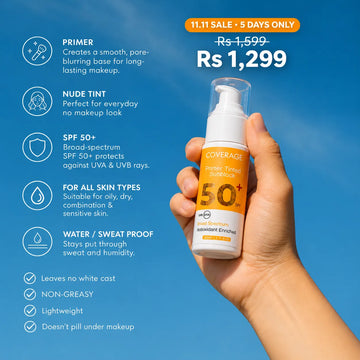
This is why we built our Primer Tinted Sunblock SPF 50+ around iron oxides. It is 100% mineral (micronized zinc oxide and titanium dioxide), broad-spectrum SPF 50+, water and sweat resistant, and the iron oxide tint protects against visible light that plain sunscreen lets through. It also blends into medium and fair tones without the white cast that makes so many people skip sunscreen here. Read more in our tinted sunscreen guide.
Sunscreen does not replace treatment. But without it, any melasma treatment is working against the sun every day.
Why melasma comes back, and how to keep it away
Melasma is managed, not cured. The overactive melanocytes stay sensitive after the visible pigment fades, so sun, heat, hormones and irritation can switch it back on.
Relapse after stopping treatment is common and fast:
- In a 6-month maintenance trial after triple-combination cream, 53% of patients stayed relapse-free, meaning nearly half relapsed even with maintenance (JEADV maintenance trial).
- In an Indian clinic cohort of nearly 1,000 patients followed up to 18 months, those on hydroquinone triple-combination cream typically relapsed about 2 months after stopping, while those on non-hydroquinone treatments relapsed after about 4 months (Kumaran et al., Dermatologic Therapy, 2021). The groups differed in severity, so this is not a head-to-head comparison, but it shows how quickly melasma returns once treatment stops.
This is where azelaic acid earns its place. A maintenance treatment has to be something you can use for months or years without adding risk. Hydroquinone’s long-term ceiling makes it a poor fit for that job. Azelaic acid’s does not. A sensible long-term plan looks like:
- Treat: a well-tolerated active used consistently, with a hydroquinone course only if a dermatologist prescribes it.
- Step down: if hydroquinone was used, taper and stop as directed, switching to a non-hydroquinone active.
- Maintain: azelaic acid, daily tinted SPF 50+, and gentle, barrier-supporting skincare.
- Protect from triggers: midday sun, heat, harsh scrubs, and products that sting.
No treatment can promise permanent removal. Be wary of any product that promises it.
Where COVERAGE® Azelaic Acid Serum 10% fits
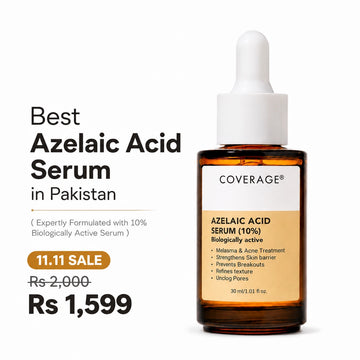
We built our Azelaic Acid Serum 10% for exactly the person this article is about: brown skin, melasma or chaiyan, a hot climate, and the need for something you can use every day for months without your skin fighting back.
Why we chose 10% in a serum. Many people in Pakistan first meet azelaic acid as a 20% prescription cream, then stop within weeks because it stings or feels heavy. With melasma, the treatment you stop early is the treatment that fails. So we formulate 10% biologically active azelaic acid in a lightweight aqueous serum: the gentler strength, built for daily consistency. To be clear about the science, the head-to-head melasma trials above used 20% creams; 20% is the stronger, prescription-level option. Our 10% is designed for people who want azelaic acid’s selective, non-bleaching action in a form gentle enough to stay with long term.
What is in it, and why:
- Azelaic acid 10% slows the overactive pigment pathway behind melasma, chaiyan and acne marks, without lightening your healthy skin.
- Aloe vera leads the formula, ahead of water, to calm skin while the azelaic acid works.
- Sodium hyaluronate keeps skin hydrated through Lahore and Karachi summers.
- Vitamin E (tocopheryl acetate) for antioxidant support.
- No fragrance, no alcohol, no propylene glycol: three common irritants in prescription-strength creams, left out because irritation on brown skin can mean new marks.
- Lightweight and fast-absorbing, so it layers under sunscreen without pilling.
Made by us, in Lahore. Our serum is made in our own manufacturing facility, which has been producing skincare for decades, and formulated by our in-house chemical engineers. The facility holds GMP and ISO 9001 certification, our products are Halal certified, and we never test on animals. We use high-grade raw materials and verify what goes into every product, rather than relying on a label. We have now delivered over 72,000 orders across Pakistan.

What to expect. Many of our customers tell us they notice the first changes within 1 to 3 weeks. Every skin type and every case of melasma is different, and some people need more time; in clinical studies, melasma improvement was measured over three to six months. Consistency, and daily sunscreen, decide the outcome.
How to use it for melasma:
- Patch test on the inner forearm or jawline and wait 24 hours.
- Cleanse and pat dry, then apply 3 to 4 drops to the face, avoiding the eye area.
- Follow with moisturiser. New to actives? Start every other night and build up.
- Every morning, finish with tinted SPF 50+. This step is not optional.
Our full routine guide is here: how to use azelaic acid serum.
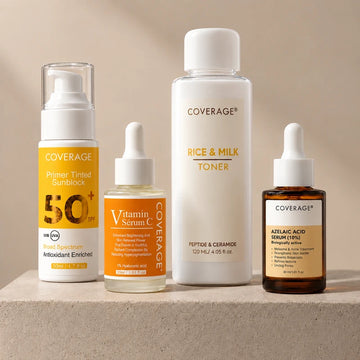
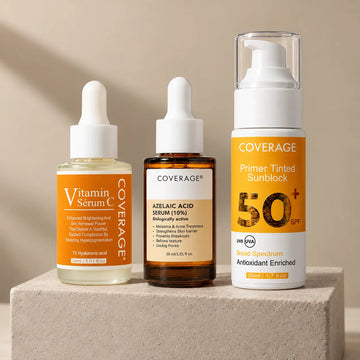
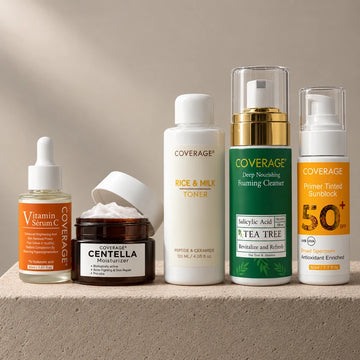
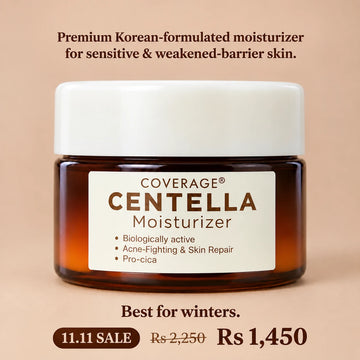
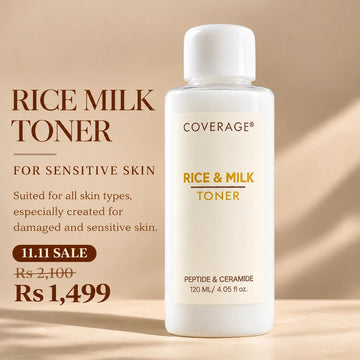
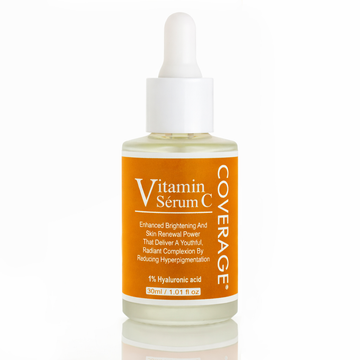
The complete melasma routine. Our Melasma, Dark Spots & Acne Marks Treatment set brings together the three steps we would build for melasma-prone brown skin: the Azelaic Acid Serum 10% at night, the Vitamin C + 1% HA Serum with niacinamide in the morning, and the iron-oxide Primer Tinted Sunblock SPF 50+ to protect against UV and visible light. If your skin is more sensitive, our Pigmentation & Melasma + Acne Bundle pairs the azelaic serum with our Rice & Milk Toner and Centella Moisturizer for barrier comfort; add a tinted sunscreen in the morning.

Using hydroquinone under a dermatologist? Ask them when and how to bring azelaic acid in. Many people use it as the maintenance step after a hydroquinone course ends. Our serum is a cosmetic product; it supports your skin and is not a replacement for diagnosis or prescription treatment.
Shop COVERAGE Azelaic Acid 10% Serum, available across Pakistan with cash on delivery. Pair it with daily tinted sunscreen for the best results.
Frequently asked questions
Is azelaic acid safer than hydroquinone for brown skin?
For long-term use, yes. Short-term irritation is similar for both, but prolonged or high-strength hydroquinone can cause exogenous ochronosis, which is most often reported in darker skin types. Azelaic acid is not associated with ochronosis and does not lighten normal skin, so it suits long-term use on brown skin.
Is azelaic acid as effective as hydroquinone for melasma?
In trials, 20% azelaic acid performed about as well as 4% hydroquinone and better than 2% hydroquinone. A 2023 meta-analysis of six trials found azelaic acid improved melasma severity scores slightly more, with no difference in overall response or side effects.
What is exogenous ochronosis?
A blue-grey or blue-black darkening of the skin caused by pigment depositing in the deeper layer of the skin. It is an uncommon complication of hydroquinone, linked mainly to concentrations above 4%, use longer than 3 months and darker skin types. It is hard to treat and can be mistaken for stubborn melasma.
How long can you safely use hydroquinone?
Only as long as your dermatologist directs. It is typically prescribed in limited courses of a few months, then tapered and replaced with maintenance treatment. Research links ochronosis mainly to long courses and strengths above 4%.
Is hydroquinone banned?
The European Union has banned it in cosmetic skin-lightening products since 2001, and the US removed over-the-counter hydroquinone products from the market in 2020. It remains a prescription treatment in many countries. In Pakistan, many hydroquinone creams are sold over the counter.
Can I use azelaic acid and hydroquinone together?
Some dermatologists combine them, and one trial found the combination worked faster, but with more irritation. On brown skin, extra irritation can cause new pigmentation, so combine them only under medical supervision.
Can I switch from hydroquinone to azelaic acid?
Yes, and many people do so for maintenance. Ask your dermatologist to plan the switch. Keep using tinted SPF 50+ every day, because melasma relapses quickly once treatment stops.
Does azelaic acid lighten your skin colour?
No. Azelaic acid acts selectively on overactive pigment cells, so it fades excess pigment and evens tone without lightening your natural skin colour.
Does 10% azelaic acid work for melasma?
The published head-to-head melasma trials used 20% azelaic acid. 10% uses the same selective mechanism in a gentler strength that is easier to use daily for months, which matters because melasma needs long-term consistency. For moderate to severe melasma, see a dermatologist.
How long does azelaic acid take to work on melasma?
Many of our customers notice first changes within 1 to 3 weeks, though every skin is different and some need more time. In clinical studies, melasma improvement was measured over three to six months.
Is azelaic acid safe in pregnancy?
Azelaic acid is commonly considered one of the more suitable pigment treatments during pregnancy and breastfeeding, but always check with your doctor before starting any treatment. Our pregnancy and breastfeeding guide covers the evidence.
Why does my melasma keep coming back?
Melasma is chronic. The pigment cells stay sensitive to sun, visible light, heat, hormones and irritation. Daily tinted sunscreen and a long-term, well-tolerated active such as azelaic acid are the core of keeping it under control.
Which sunscreen is best for melasma on brown skin?
A broad-spectrum SPF 50+ tinted with iron oxides, because iron oxides also block visible light, which can worsen pigmentation in darker skin. In a trial, adding iron oxide to sunscreen improved melasma results with hydroquinone treatment.
Do I need a dermatologist for melasma?
See one if you are unsure of the diagnosis, your melasma is moderate to severe, your pigmentation is grey-blue or worsening, you have used hydroquinone or steroid creams for months, or you are pregnant.
Related reading
- Melasma in Pakistan: Chaiyan Ka Ilaj That Actually Works
- Does Azelaic Acid Lighten Skin? Whitening vs Brightening
- Azelaic Acid Side Effects: What's Normal, What's Not
- Skinoren vs COVERAGE Azelaic Acid 10%
- Best Serum for Dark Spots and Pigmentation in Pakistan
- Tinted Sunscreen in Pakistan: The Complete Guide
References
- Albzea W, et al. Azelaic acid versus hydroquinone for managing patients with melasma: systematic review and meta-analysis of RCTs. Cureus, 2023. Full text · PubMed
- Baliña LM, Graupe K. The treatment of melasma: 20% azelaic acid versus 4% hydroquinone cream. Int J Dermatol, 1991. PubMed
- Verallo-Rowell VM, et al. Double-blind comparison of azelaic acid and hydroquinone in the treatment of melasma. Acta Derm Venereol Suppl, 1989. PubMed
- A systematic review to evaluate the efficacy of azelaic acid in acne, rosacea, melasma and skin aging. J Cosmet Dermatol, 2023. PubMed
- Chang YF, et al. Efficacy and safety of topical agents in the treatment of melasma: a systematic review and meta-analysis. J Cosmet Dermatol, 2022. Abstract
- Sarkar R, et al. Delphi consensus on melasma management by international experts and Pigmentary Disorders Society. JEADV, 2025/2026. PubMed
- Ishack S, Lipner SR. Exogenous ochronosis associated with hydroquinone: a systematic review. Int J Dermatol, 2022. PubMed
- Exogenous ochronosis masquerading as melasma in skin of color. Cureus, 2026. PMC
- Exogenous ochronosis and hydroquinone, case letter. Cutis, 2026. PDF
- Azelaic acid: mechanisms of action and clinical applications. Clin Cosmet Investig Dermatol, 2024. Full text
- Azelaic acid: a review of its pharmacology and therapeutic use. Drugs, 1991. Springer
- González-Molina V, et al. Topical treatments for melasma and their mechanism of action. J Clin Aesthet Dermatol, 2022. Full text
- Moolla S, Miller-Monthrope Y. Dermatology: how to manage facial hyperpigmentation in skin of colour. Drugs in Context, 2022. Full text
- Castanedo-Cazares JP, et al. Near-visible light and UV photoprotection in the treatment of melasma: a double-blind randomized trial. Photodermatol Photoimmunol Photomed, 2014. Abstract
- Review of oral and topical approaches for melasma, including iron-oxide sunscreen trials. Int J Womens Dermatol, 2019. PMC
- Triple-combination maintenance trial. JEADV. Abstract
- Kumaran MS, et al. Clinico-epidemiological profile and long term follow up in melasma. Dermatologic Therapy, 2021. Abstract
- Azelaic acid 20% plus hydroquinone 5% vs hydroquinone 5% in melasma. Iranian Journal of Dermatology, 2012. Record
- Hydroquinone 4% plus oral tranexamic acid vs topical 20% azelaic acid in melasma. Pak Armed Forces Med J, 2025. PDF
- Azelaic acid 20% vs hydroquinone 4% in epidermal melasma, Gujranwala Medical College. ClinicalTrials.gov NCT07327983
- US FDA. FDA works to protect consumers from potentially harmful OTC skin lightening products. FDA
- Hydroquinone brands in Pakistan. drugsinfo.pk
Medical note: This article is for education and is not a diagnosis or treatment plan. Pigmentation can have several causes. See a dermatologist for suspected melasma, for pigmentation that is grey-blue or worsening, before using hydroquinone, and before starting any treatment during pregnancy or breastfeeding. Stop any product that causes persistent burning, swelling or rash.
This article is for general informational purposes only and is not a substitute for professional medical advice. All information and claims referenced above are drawn from publicly available dermatological studies and expert sources. Always consult a dermatologist for advice specific to your skin.

Leave a comment
This site is protected by hCaptcha and the hCaptcha Privacy Policy and Terms of Service apply.