
Ceramide vs Hyaluronic Acid: Benefits, Differences and Which Your Skin Needs
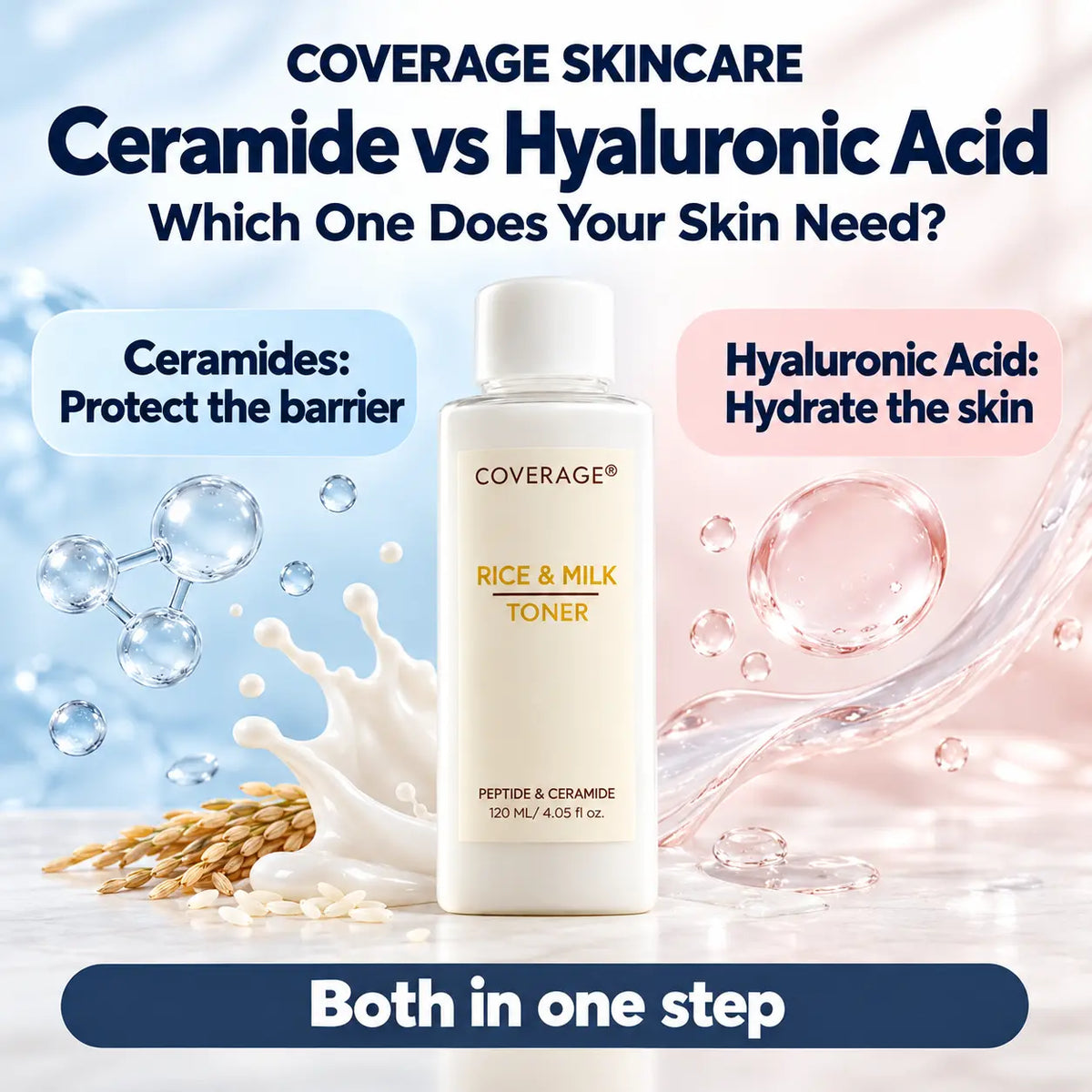
Quick answer: Ceramides and hyaluronic acid do different jobs, so the real answer to "which is better" is that most skin wants both. Ceramides are lipids (fats) that make up a large part of your skin barrier and help stop water escaping. Hyaluronic acid is a humectant: it attracts water and holds it in the surface layers of the skin. Ceramides protect, hyaluronic acid hydrates, and a moisturiser on top keeps both working.
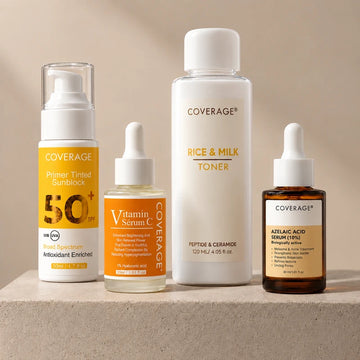
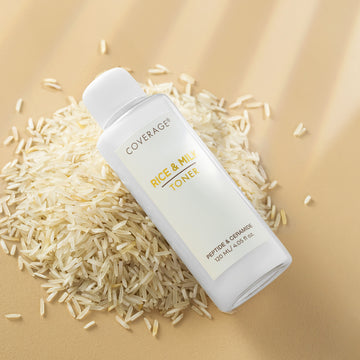
We built that pairing into one step. Our Rice & Milk Toner (Ceramide + Peptide) contains both Ceramide NP and Sodium Hyaluronate, the salt form of hyaluronic acid, together with glycerin, panthenol, a peptide and fermented rice extract. It is formulated by our in-house chemical engineers and made at our own facility in Lahore.
Ceramide vs hyaluronic acid at a glance
| Ceramides | Hyaluronic acid | |
|---|---|---|
| What it is | Lipids naturally found in the skin's outer layer | A water-binding sugar molecule (a humectant) |
| Main role | Supports the barrier and slows water loss | Draws in and holds water |
| Feels best on | Tight, flaky, easily irritated or over-exfoliated skin | Dehydrated skin that feels tight but can still look oily |
| Common formats | Creams, moisturisers, milky toners | Serums, toners, gel and lotion moisturisers |
| Texture | Comforting, often creamier | Light, watery, quick to absorb |
| Works best with | Cholesterol, fatty acids, squalane | Glycerin, and a moisturiser on top |
| On the label | Ceramide NP, AP, EOP, NS | Hyaluronic Acid, Sodium Hyaluronate |
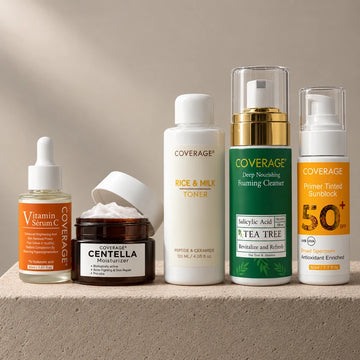
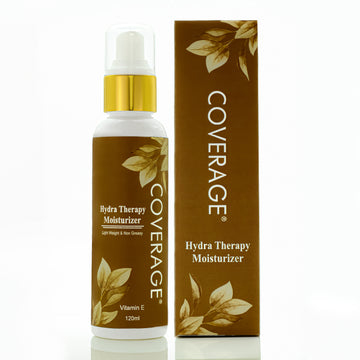
| COVERAGE match | Rice & Milk Toner, Centella Moisturizer | Rice & Milk Toner, Vitamin C + 1% HA Serum, Hydra Therapy Moisturizer |
How ceramides work
Think of the outer layer of your skin as a brick wall. The skin cells are the bricks and a mix of lipids is the mortar. By weight, that mortar is about 45 to 50% ceramides, about 25% cholesterol and 10 to 15% free fatty acids. When it is worn down by over-cleansing, harsh scrubs, too many strong actives or long hours in dry air-conditioned rooms, water escapes faster. Scientists call this transepidermal water loss, or TEWL. Skin then feels tight, looks dull and stings more easily.
The strongest research on ceramide moisturisers comes from people with eczema-prone skin. A 2023 meta-analysis of clinical trials found that ceramide-containing moisturisers improved both eczema severity and water loss through the skin. That is the science behind using ceramides whenever skin feels tight, rough or easily upset.

How hyaluronic acid works
Hyaluronic acid is found naturally in skin and holds a great deal of water for its size. In skincare you will usually see it as sodium hyaluronate, its salt form, which is used in cosmetics as a skin-conditioning ingredient. Applied to the skin, it binds water in the surface layers, so skin feels smoother and looks plumper.
In one six-week clinical study of 40 women using a hyaluronic acid serum, skin hydration measured by instrument rose 134% straight after application and was still 55% higher at week six. Results differ between formulas and people, but the direction is clear: a well-made hyaluronic acid product hydrates quickly and keeps working with daily use.
Humectants perform best with something over them. They draw water toward the surface, and in very dry air that water can evaporate if nothing seals it in. This is the whole reason we follow a hyaluronic acid step with a moisturiser.
Where glycerin fits in
Glycerin deserves a mention in any ceramide vs hyaluronic acid comparison. It is one of the most studied humectants in skincare, and research reviews credit it with improving hydration in the outer skin layer and supporting barrier function. Glycerin is the second ingredient in our Rice & Milk Toner and leads the formula of our Hydra Therapy Moisturizer, so in both products it works side by side with hyaluronic acid.
Which one does your skin need?
| How your skin behaves | Lead with | COVERAGE routine |
|---|---|---|
| Dry: flakes and feels tight all day | Ceramides plus a cream | Rice & Milk Toner, then Centella Moisturizer |
| Dehydrated: tight but still shiny | Hyaluronic acid, then a light moisturiser | Rice & Milk Toner, then Hydra Therapy Moisturizer |
| Oily but dehydrated (very common in a Pakistani summer) | Hyaluronic acid in a toner or serum | Rice & Milk Toner, Vitamin C + 1% HA Serum, a thin layer of Hydra Therapy |
| Red, stinging or over-exfoliated | Ceramides first, fewer actives | Rice & Milk Toner, then Centella Moisturizer |
| Not sure | Both | Rice & Milk Toner (it contains both), then your moisturiser |
If your skin is broken, very inflamed or keeps reacting to everything you apply, see a dermatologist before adding more products.

Get both in a single step. Our Rice & Milk Toner delivers Ceramide NP and Sodium Hyaluronate together in a milky, fragrance-free, non-comedogenic toner, so even a three-step routine covers barrier and hydration.
Can you use ceramides and hyaluronic acid together?
Yes. They do not compete, and you can use both every day, morning and night. Apply thinnest to thickest:
- Cleanse gently and leave the skin slightly damp. Dermatologists recommend moisturising while skin is still damp.
- Press in a hydrating toner. Ours is the Rice & Milk Toner. On dry days you can layer it two or three times.
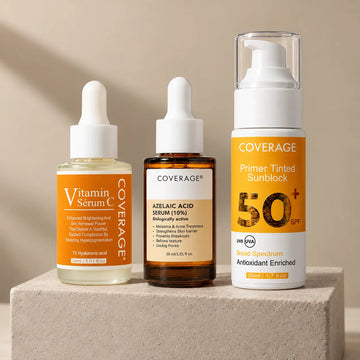
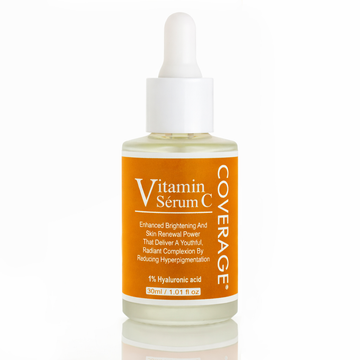
- Serum. In the morning, our Vitamin C + 1% HA Skin Serum adds hyaluronic acid along with stable vitamin C and niacinamide.
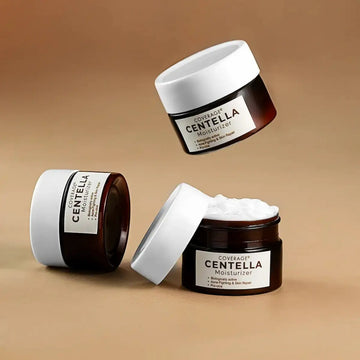
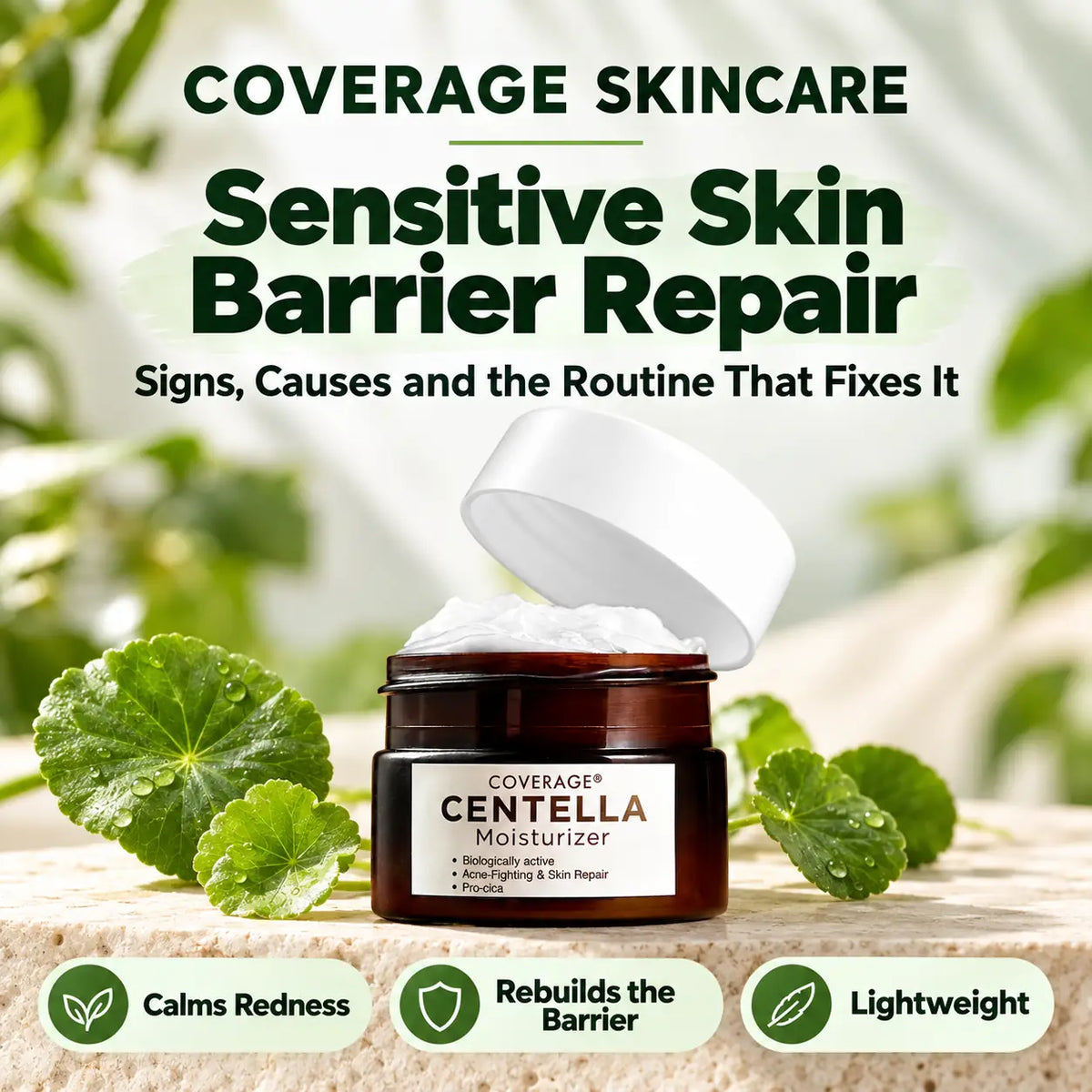
- Moisturiser. Choose our Centella Moisturizer (ceramide, sodium hyaluronate, squalane, panthenol) for reactive skin, or our Hydra Therapy Moisturizer (glycerin and hyaluronic acid) for lightweight daily hydration.
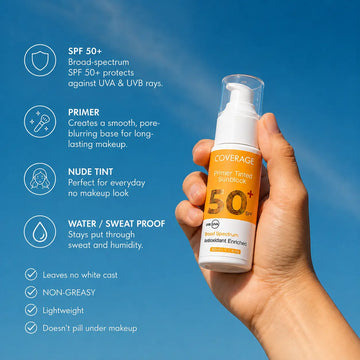
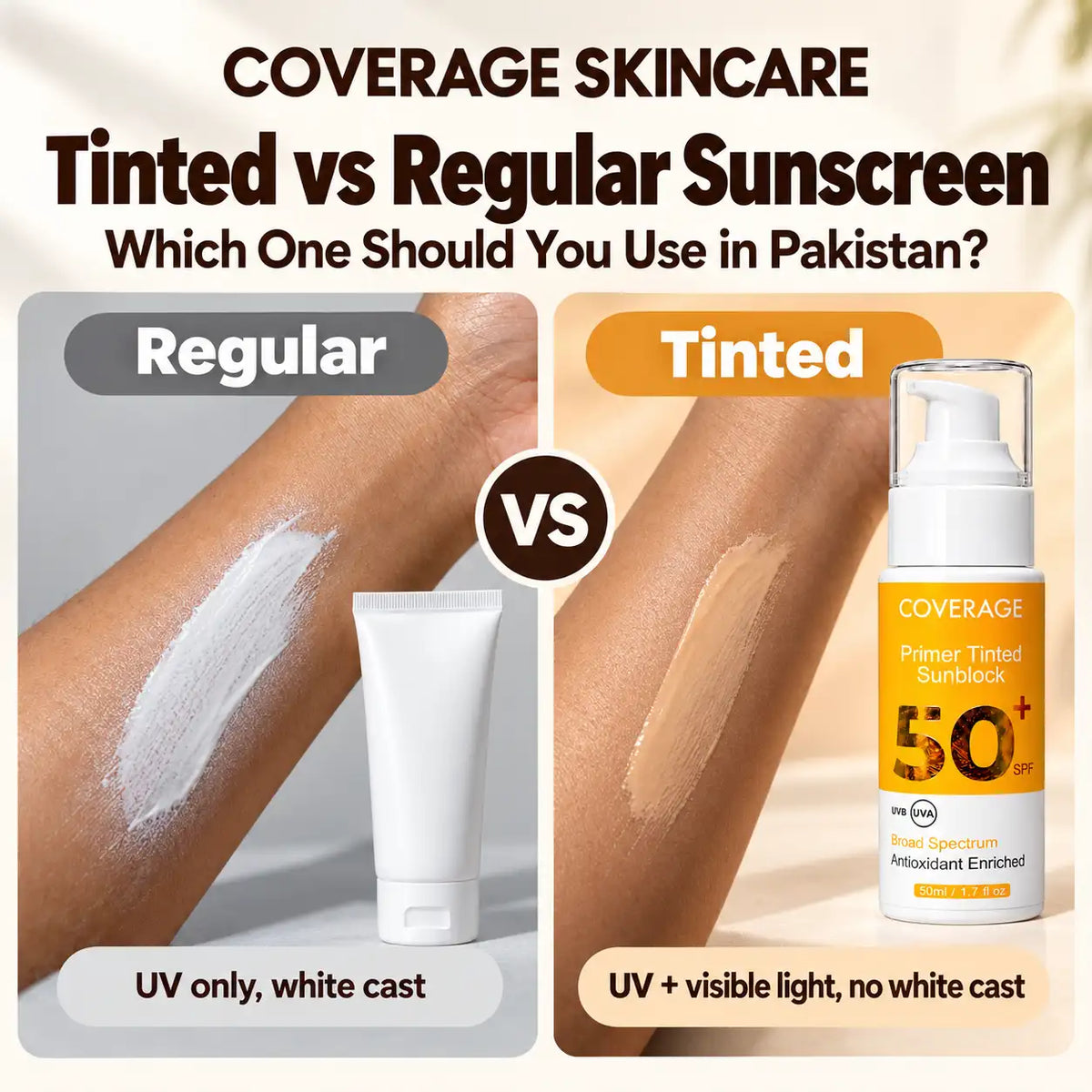
- Morning only: finish with our Primer Tinted Sunblock SPF 50+.

Do you need a separate serum and moisturiser?
Not always. A toner or serum gives you a concentrated layer of humectants, and a moisturiser adds emollients and lipids on top. If you want the shortest routine, a toner that contains both ceramide and hyaluronic acid followed by one moisturiser covers everything.
Using them with actives
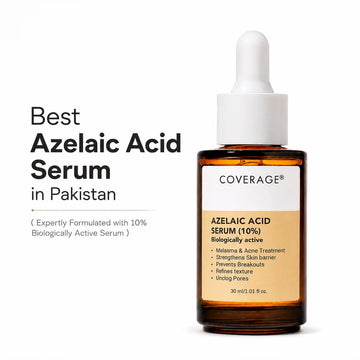
Ceramides and hyaluronic acid sit comfortably next to vitamin C, niacinamide, azelaic acid, exfoliating acids and retinoids. Apply your active first on clean skin, then your hydrating and barrier steps. People using strong actives often find their skin feels far more comfortable with a ceramide moisturiser at the end of the routine.
Reading the ingredient list
- Ceramides appear as Ceramide NP, AP, EOP or NS. Our toner lists Ceramide NP.
- Hyaluronic acid often appears as Sodium Hyaluronate. They do the same job in a formula.
- Glycerin near the top of a list is a good sign for hydration.
- Supporting lipids such as squalane, cholesterol and fatty acids work alongside ceramides.
- Ingredients are listed in descending order of amount down to 1%, so position gives you a clue about how much is inside.

Myths worth clearing up
- "Hyaluronic acid dries your skin out." Hyaluronic acid left on its own in very dry air can feel tight. Apply it to damp skin and put a moisturiser over it, and it does exactly what it should.
- "Oily skin does not need ceramides." Every skin type has a barrier, and oily skin can still be dehydrated.
- "More layers means more hydration." A few well-chosen steps do more than ten random ones.
- "One of them has to win." They are two halves of the same job.
Routines for Pakistan's seasons
Humid summer (Karachi, or Lahore in the monsoon): Rice & Milk Toner, Vitamin C + 1% HA Serum, a thin layer of Hydra Therapy Moisturizer, then sunblock. Light layers that still hydrate.
Dry winter (Lahore, Islamabad, Peshawar, Quetta): Rice & Milk Toner in two layers, then Centella Moisturizer. Add a second layer of moisturiser on flaky patches at night.
Long hours in air-conditioning: AC air is dry, so even oily skin can feel tight by evening. Keep your morning routine light and use a fuller layer of moisturiser at night.
After too much exfoliation or a harsh face wash: pause your actives for a few days and keep to toner, Centella Moisturizer and sunblock until your skin feels comfortable again.
For more detail, read our guides to what a Korean toner is, the Rice & Milk Toner in Pakistan, the Centella Moisturizer, vitamin C with hyaluronic acid and sensitive-skin-safe skincare.
Why our barrier and hydration range works together
We designed these products to layer. The toner brings ceramide and hyaluronic acid in a milky, fast-absorbing base. The serum adds 1% hyaluronic acid with vitamin C. The two moisturisers finish the job, one light and one built for the barrier. Every COVERAGE product is Korean-formulated and made from the highest-grade raw materials at our own GMP, ISO 9001 and Halal certified facility in Lahore. Our team brings around 40 years of family experience in the skincare industry, and we have delivered over 72,000 orders across Pakistan.
Start with the step that covers both. Choose the Rice & Milk Toner (Ceramide + Peptide), then pick your moisturiser from our Hydration & Barrier Repair collection. Cash on delivery is available across Pakistan.
Ceramide vs hyaluronic acid: FAQ
Which is better, ceramide or hyaluronic acid?
Neither is better. Ceramides support the skin barrier and hyaluronic acid adds water. Most skin benefits from both.
What are the main benefits of ceramides?
They are a major part of the skin's lipid barrier. Ceramide moisturisers help reduce water loss, so skin feels less tight, rough and reactive.
What are the main benefits of hyaluronic acid?
It attracts and holds water in the skin's surface layers, so skin feels smoother, looks plumper and stays hydrated.
Is hyaluronic acid good for oily skin?
Yes. It is light and water-based, so it hydrates oily but dehydrated skin without adding heaviness.
Do I need ceramides if my skin is oily?
A healthy barrier matters for every skin type, oily skin included. Choose a light formula such as a milky toner.
Can I use ceramides and hyaluronic acid together?
Yes, every day. Apply hyaluronic acid first, then a moisturiser containing ceramides or other lipids on top.
Which goes first, ceramide or hyaluronic acid?
Go thinnest to thickest: a toner or serum with hyaluronic acid first, then a ceramide cream.
Does any COVERAGE product contain both?
Yes. Our Rice & Milk Toner contains both Ceramide NP and Sodium Hyaluronate.
What is sodium hyaluronate?
It is the salt form of hyaluronic acid and is widely used in skincare for hydration.
Can hyaluronic acid dry out skin?
On its own in very dry air it can feel tight. Apply it to damp skin and follow it with a moisturiser.
What is the skin barrier?
It is the outer layer of the skin: cells held together by lipids such as ceramides, cholesterol and fatty acids. It keeps water in and irritants out.
Do I need a separate serum and moisturiser?
Not always. A toner with both ceramide and hyaluronic acid followed by one moisturiser is a complete routine.
Which moisturiser should I use with my toner in summer?
For a lightweight finish, our Hydra Therapy Moisturizer. For redness-prone skin, our Centella Moisturizer.
Can I use ceramides and hyaluronic acid with vitamin C, azelaic acid or retinol?
Yes. Apply the active first, then your hydrating and barrier steps. They make active routines feel more comfortable.
Is glycerin as good as hyaluronic acid?
Both are effective humectants and they work well together. Glycerin is one of the most researched hydrating ingredients in skincare.
Are ceramides suitable for sensitive skin?
Ceramides are lipids your skin already makes, which is why they are a staple of gentle routines. Patch test any new product first.
Related reading
References
- Madison KC. Barrier function of the skin: "la raison d'être" of the epidermis. Journal of Investigative Dermatology, 2003 (stratum corneum lipid composition)
- Nugroho WT et al. The efficacy of moisturisers containing ceramide compared with other moisturisers in the management of atopic dermatitis. Indian Journal of Dermatology, 2023
- Efficacy evaluation of a topical hyaluronic acid serum in facial photoaging. Dermatology and Therapy, 2021
- Fluhr JW, Darlenski R, Surber C. Glycerol and the skin: holistic approach to its origin and functions. British Journal of Dermatology, 2008
- American Academy of Dermatology, Dry skin remedies (moisturising damp skin)
- StatPearls, Moisturizers (how humectants and occlusives work)
Written and reviewed by the COVERAGE Skincare editorial team using the sources listed. Last reviewed October 2026.
This article is for general informational purposes only and is not a substitute for professional medical advice. All information and claims referenced above are drawn from publicly available dermatological studies and expert sources. Always consult a dermatologist for advice specific to your skin.

Leave a comment
This site is protected by hCaptcha and the hCaptcha Privacy Policy and Terms of Service apply.