
Sulphate-Free Shampoo in Pakistan: What You Actually Need to Know
You've probably seen "sulphate-free" printed across shampoo bottles in every Chase or Imtiaz aisle in Lahore or Karachi, and you're wondering whether it's a real reason to switch or just another beauty-aisle label. The honest answer is: it depends on your scalp, your hair, and what you're currently using — not on sulphates being universally bad.
What Is Sulphate-Free Shampoo?
Sulphates are a family of cleansing agents — surfactants — used in shampoo to lift oil, dirt and product residue off your scalp and hair, and to build the foam most people associate with a "proper wash." The two most common in shampoo are Sodium Lauryl Sulfate (SLS) and Sodium Laureth Sulfate (SLES). A sulphate-free shampoo simply replaces these with gentler cleansing agents — things like cocamidopropyl betaine, sodium cocoyl isethionate, or sarcosinates — that clean the hair without relying on SLS or SLES to do it.
It's worth being precise here: "sulphate" is not automatically "toxic," and "sulphate-free" is not automatically "better for everyone." Sulphates are some of the most studied surfactants in cosmetic chemistry, and they're not banned or restricted anywhere for safety reasons. The real conversation isn't about danger — it's about how a strong cleanser interacts with your specific scalp and hair.
Why Are Sulphates Used in Shampoo in the First Place?
Sulphates are effective and cheap, and that combination is why they've dominated shampoo formulation for decades. They cut through sebum (your scalp's natural oil), sweat, dust, and the residue left behind by gels, serums, and heat styling. They also produce the thick lather that most people read as a signal the shampoo is "working," even though foam itself has nothing to do with how clean your hair actually gets.
Is Sulphate-Free Shampoo Better for Your Hair?
Quick answer: Not automatically. Sulphate-free shampoo tends to be gentler and less likely to strip natural oils, which helps people with dry, damaged, colour-treated or sensitive scalps. But for a genuinely oily scalp with heavy product buildup, a sulphate-free formula can sometimes feel like it isn't cleansing enough unless it's well-formulated with other strong surfactants.
Dermatology research consistently identifies SLS as a well-documented skin and scalp irritant at higher concentrations — it's used deliberately as the standard reference irritant in patch-test research because it reliably strips the skin barrier. That doesn't mean every SLS shampoo will irritate every scalp; it means SLS-based cleansing carries a real, measurable irritation risk that sulphate-free formulas are designed to reduce. Whether that risk matters for you depends on how sensitive, dry or compromised your scalp already is.

Sulphate-Free Shampoo for Pakistani Hair
Pakistan's climate makes this decision a little different from a shampoo guide written for a cooler, drier market. Long, hot summers across Lahore, Karachi, Islamabad and most of Punjab and Sindh mean more sweat and more frequent washing, which means more total sulphate exposure over a week even if each wash is "normal." Dust and pollution, especially in larger cities, add another layer of buildup that has to be cleansed off regularly.
At the same time, oiling — coconut, almond, or mustard oil applied before a wash — is a genuinely widespread habit here, and oiled hair generally needs a cleanser strong enough to actually remove the oil, not just rinse over it. This is one of the clearest places where "sulphate-free is always gentler and therefore always better" breaks down: if you oil your hair heavily and then use a very mild sulphate-free shampoo, you may need two washes to get the oil out, which can undo the gentleness you switched for in the first place.
Water hardness also varies significantly by city and even by neighbourhood in Pakistan, and hard water changes how any shampoo — sulphate or sulphate-free — rinses out and how hair feels afterward. We've covered this in more detail in Hard Water & Hair Fall in Pakistan, including what the evidence actually says about hard water and shedding. The short version relevant here: if your water is hard, a shampoo that lathers weakly can feel like it isn't cleaning at all, even when it is — worth knowing before you assume a sulphate-free formula has "failed."
Who May Benefit From Sulphate-Free Shampoo?
- Dry or frizzy hair — less stripping means more of your hair's own moisture stays put between washes.
- Damaged or chemically treated hair — a compromised hair shaft has less to lose from an already-gentle cleanser.
- Colour-treated hair — SLS and SLES are more likely to fade colour faster by stripping the outer cuticle.
- Curly or wavy hair — curl patterns are naturally drier along the length, and gentler cleansing helps preserve definition.
- Sensitive or reactive scalps — if you notice itching, tightness or redness after washing, sulphate-free is a reasonable first change to try, though persistent scalp symptoms are worth a dermatologist's opinion rather than a guess.
Individual tolerance genuinely varies — two people with what looks like the same hair type can respond differently to the same shampoo, so this list is a starting point, not a guarantee.
Is Sulphate-Free Shampoo Good for Oily Scalp?
Quick answer: It can be, but "sulphate-free" alone doesn't tell you how well a shampoo cleanses. Cleansing strength comes from the full surfactant blend, not from the mere absence of sulphates. A well-formulated sulphate-free shampoo built around strong alternative surfactants can clean an oily scalp perfectly well; a poorly formulated one built mainly around very mild cleansers may leave oily hair feeling weighed down by the second day.
If your scalp gets oily quickly, the better filter isn't "sulphate-free vs regular" — it's checking where the cleansing agents sit in the ingredient list and whether the brand is honest about who the product is and isn't for.
Does Sulphate-Free Shampoo Reduce Hair Fall?
Quick answer: There is no strong clinical evidence that switching to a sulphate-free shampoo, on its own, reduces hair fall. It's worth separating three different things people lump together under "hair fall": normal daily shedding (typically up to around 100 hairs, part of the natural growth cycle), hair breakage from a dry or damaged shaft snapping mid-length, and actual hair loss from the follicle, which has causes like genetics, iron deficiency, thyroid issues, postpartum hormonal shifts, or certain scalp conditions.
A harsh, stripping shampoo can worsen dryness and breakage, and breakage is often mistaken for "hair fall" because broken pieces on the floor look the same as shed strands with a root. Switching to a gentler, sulphate-free shampoo can reduce that breakage-driven shedding for some people. What it will not do is treat genetic thinning, a thyroid-related shed, or postpartum hair loss — those need a dermatologist's evaluation, not a shampoo change. If shedding is sudden, heavy, or persists for more than a few months, that's the signal to see a professional rather than keep experimenting with products.
How to Identify Sulphates on a Shampoo Label
Ingredient lists in Pakistan are usually printed in small type on the back or side of the bottle, ranked roughly by concentration — highest first. Look specifically for:
- Sodium Lauryl Sulfate (SLS) — the stronger, more stripping of the two common sulphates.
- Sodium Laureth Sulfate (SLES) — a milder, ethoxylated version, still a sulphate.
- Ammonium Lauryl/Laureth Sulfate — less common, same family.
Front-of-bottle marketing claims aren't always reliable on their own — the only way to actually confirm a shampoo is sulphate-free is to read the full ingredient list rather than trusting the label art.

| Factor | Sulphate Shampoo | Sulphate-Free Shampoo |
|---|---|---|
| Cleansing strength | Generally strong, cuts through oil and buildup fast | Varies by formula — can be strong or mild depending on the surfactant blend |
| Lather | Thick, rich foam | Usually lighter foam, sometimes needs more product to feel "full" |
| Dryness potential | Higher, especially with frequent washing | Generally lower — may be more suitable for dry or sensitised scalps |
| Oily scalp suitability | Often preferred for fast, thorough cleansing | Can work well if the formula is built with effective alternative surfactants |
| Coloured hair | May fade colour faster | Generally gentler on colour treatments |
| Curly hair | Can increase dryness and frizz | Often better suited to curl definition and moisture retention |
| Product buildup | Clears buildup effectively | May need a monthly clarifying wash if buildup is heavy |
How to Choose a Shampoo in Pakistan
Rather than starting from "sulphate or sulphate-free," it helps to work through your own hair and habits first:
- Is your scalp oily, dry, or a mix (oily roots, dry lengths — common with Pakistani heat and regular oiling)?
- Do you oil your hair regularly, and how heavily?
- Is your hair coloured, chemically treated, or heat-styled often?
- Do you notice itching, redness, or tightness after washing?
- How often do you wash — daily, every other day, twice a week?
- Is fragrance or a specific ingredient something you need to avoid?
A dry, frizzy, non-oily scalp that washes every other day is the clearest case for sulphate-free. A heavily oiled, fast-oily scalp that washes daily may do better with a well-formulated sulphate shampoo, or an occasional clarifying wash alongside a gentler daily one.

Where Does COVERAGE Fit Into Your Haircare Routine?
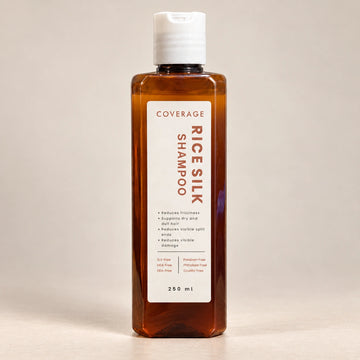
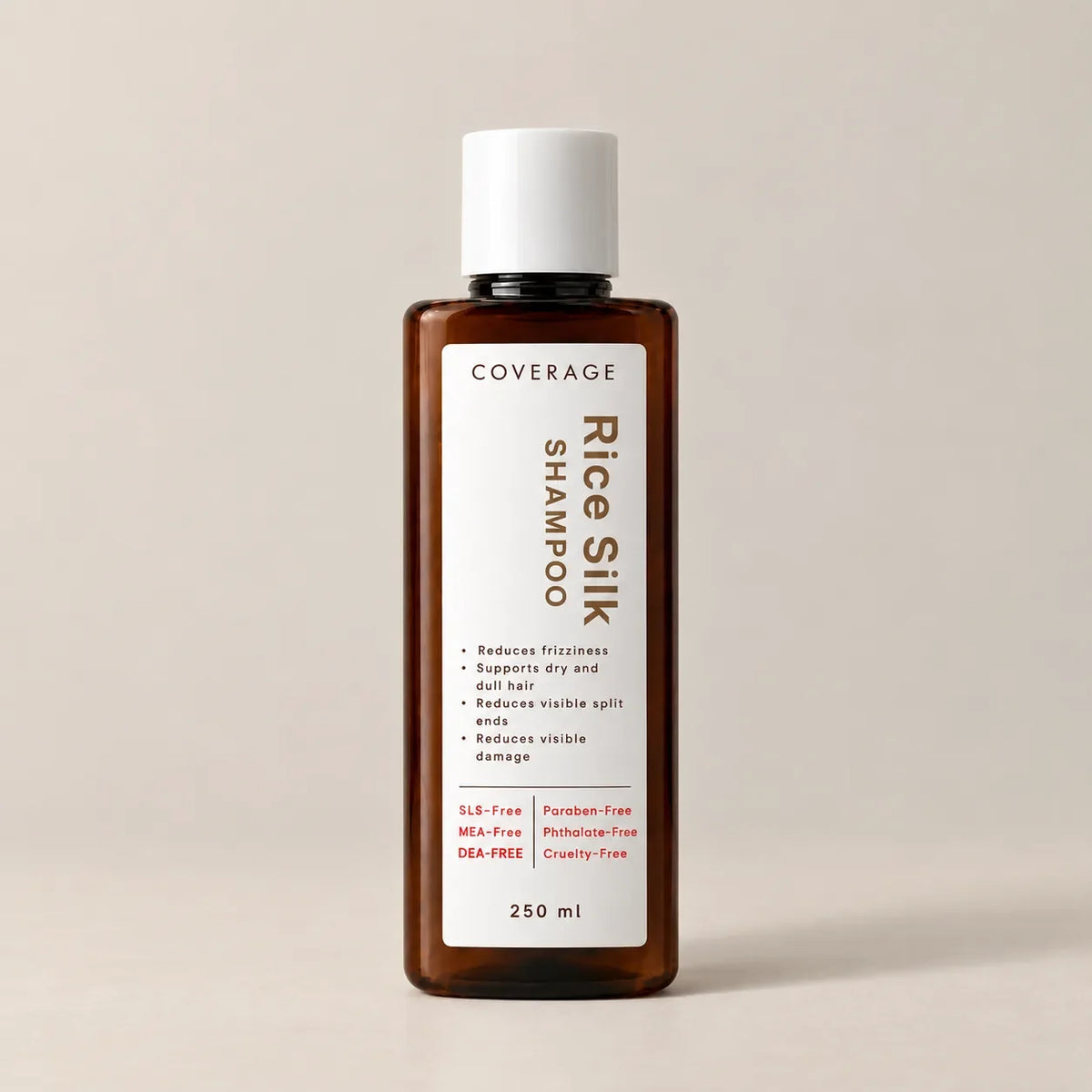
COVERAGE's Rice Silk Shampoo is formulated sulphate-free, built around Fermented Rice Extract and Hydrolyzed Wheat Protein, and it's also free from parabens, phthalates, DEA and MEA. It's designed specifically for dry, frizzy or dull hair rather than as a one-size-fits-all cleanser — the kind of hair that feels rough, frizzes the moment you step outside, or won't stay smooth no matter how much conditioner you use.
The Fermented Rice Extract is standardised rather than a DIY kitchen-counter rice water rinse, which tends to be inconsistent from batch to batch. The Hydrolyzed Wheat Protein reinforces the hair fibre and helps it hold on to moisture, which is particularly relevant if you're washing in hard water, since hard water already makes hair feel coarser and harder to rinse clean.
It's built for the dry/frizzy end of the spectrum rather than for a heavily oily, product-laden scalp — worth knowing before you buy, since no shampoo formula is right for every hair type at once.

Frequently Asked Questions
What is sulphate-free shampoo?
A shampoo formulated without SLS or SLES, using gentler cleansing agents instead. It cleans hair and scalp while being less likely to strip natural oils compared to sulphate-based formulas.
Is sulphate-free shampoo better for dry hair?
Generally, yes — sulphate-free formulas tend to be gentler and better at preserving the moisture dry hair already struggles to hold on to, compared to stronger sulphate-based cleansers.
Is sulphate-free shampoo good for oily scalp?
It can be, depending on the formula. Sulphate-free doesn't automatically mean weaker cleansing — some sulphate-free shampoos use other strong surfactants that clean oily scalps effectively.
Does sulphate-free shampoo stop hair fall?
Not directly. It may reduce breakage-related shedding by being gentler on the hair shaft, but it does not address genetic, hormonal, or medical causes of hair loss, which need a dermatologist's evaluation.
Is SLS bad for hair?
SLS is a well-documented irritant at higher concentrations and can dry out hair and scalp with regular use, especially for sensitive or already-dry scalps. It isn't considered dangerous, but it can be uncomfortable for some people.
Is SLES the same as SLS?
No. SLES (Sodium Laureth Sulfate) is a milder, ethoxylated version of SLS (Sodium Lauryl Sulfate). Both are sulphates, but SLES is generally considered gentler.
Does sulphate-free shampoo clean properly?
Yes, when well-formulated. Cleansing power comes from the full surfactant blend, not from sulphates specifically — plenty of sulphate-free shampoos clean effectively, though heavily oiled hair may occasionally need a second wash.
How often should I wash my hair in Pakistan?
This depends on scalp type, climate, and habits like oiling, but hot weather and daily sweat mean many people in Pakistan wash more frequently than in cooler climates — every other day is common for non-oily scalps, daily for very oily ones.
Is sulphate-free shampoo suitable for coloured hair?
Yes — it's one of the clearest cases where sulphate-free is the more sensible choice, since SLS and SLES tend to fade hair colour faster than gentler alternatives.
Where can I buy authentic sulphate-free shampoo in Pakistan?
Look for brands that publish their full ingredient list rather than only front-label marketing claims, and buy directly from the brand's own website or verified retailers to avoid counterfeit stock.
This article is for general informational purposes only and is not a substitute for professional medical advice. All information and claims referenced above are drawn from publicly available dermatological studies and expert sources. Always consult a dermatologist for advice specific to your skin.

Leave a comment
This site is protected by hCaptcha and the hCaptcha Privacy Policy and Terms of Service apply.