

What Is a Korean Toner, and Why Rice and Milk?
If you have ever picked up a bottle labelled Korean toner and wondered whether it does the same job as the sharp, alcohol-smelling astringent that used to sit on every bathroom shelf in Pakistan, the short answer is no. It is close to the opposite. A Korean toner is a hydrating, skin-balancing step, not a stripping one, and once you understand that difference the rest of a Korean routine starts making sense.
This guide covers what a toner actually is, how Korean toners differ from the older astringent style still sold across Pakistani pharmacies and cosmetic shops, where toning sits in a routine, how a toner differs from an essence and a serum, what the viral 7 skin method really involves, and why two ingredients in particular, rice and milk, keep appearing on Korean toner labels.
The short answer
A Korean toner is a water-based hydrating step applied straight after cleansing. It uses humectants such as glycerin and sodium hyaluronate, soothing agents such as panthenol and centella, and plant extracts such as rice, instead of leading with alcohol. Its job is to rebalance the skin surface and add the first layer of water, so everything you apply afterwards sits on comfortable, hydrated skin rather than tight, stripped skin. Rice appears for its antioxidants and soft, even-looking finish. Milk usually means a plant milk such as almond milk, or simply the creamy texture of the fluid itself.

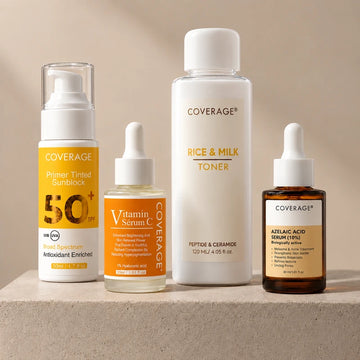
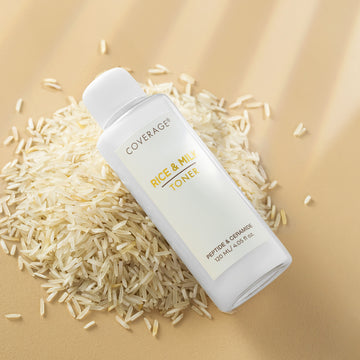
Looking for one you can actually buy in Pakistan? The COVERAGE Rice & Milk Toner (Ceramide + Peptide) is a Korean-formulated milky toner made in Pakistan, built around rice extract, almond milk and Ceramide NP. Fragrance-free, non-comedogenic, and available in 120ml and 60ml. The full breakdown is further down this page, or you can read the dedicated honest guide to the Rice & Milk Toner for price and step-by-step usage.
View the tonerWhat is a toner?
A toner is a water-based liquid applied after cleansing and before serum and moisturiser. Its modern job is to rebalance the skin surface after washing, lift any last traces of cleanser or grime, and lay down a first light layer of hydration so the products that follow absorb comfortably instead of sitting on tight skin.
The word toner covers a very wide family of products, which is exactly why it confuses people. Toners first appeared in the early twentieth century as a response to harsh, alkaline soap cleansers that left skin feeling tight and squeaky, and the earliest formulas leaned heavily on astringents such as denatured alcohol and witch hazel. That heritage is why so many people in Pakistan still associate the word toner with a sharp sting and a drying after-feel. Modern hydrating toners are a genuinely different category, built around water-binding humectants and soothing agents rather than solvents.
In Roman Urdu people search toner kya hota hai and toner kaise use karein constantly. The plain answer: cleanser skin ko saaf karta hai, toner usay balance karke pehli halki hydration deta hai, phir serum aur moisturiser aate hain, aur subah sunblock. Toner koi extra luxury step nahi hai. It is the step that decides whether the rest of your routine lands on comfortable skin or on skin that is already fighting you.
What is a Korean toner?
A Korean toner is a hydrating, barrier-friendly toner designed to prep and nourish skin rather than strip it. Instead of leading with alcohol, it leans on humectants, soothing botanicals, plant extracts and skin-identical lipids, so the same step that balances the skin also floods it with water. Many are slightly milky rather than fully watery.

In Korean skincare the toning step is treated as the bridge between cleansing and hydration, not an afterthought you can skip. There is a reasonable physiological logic behind it. Healthy skin sits at a slightly acidic surface pH. In a large multicentre study, Lambers and colleagues estimated the natural skin surface pH to average around 4.7, below the 5.5 figure that gets quoted everywhere. Washing, especially with alkaline soap, pushes that number up temporarily. A gentle, low-pH-friendly hydrating step straight after cleansing is one simple way to help the surface settle back while adding water on top.
What you typically find inside a Korean toner:
- Humectants such as glycerin, sodium hyaluronate and fructooligosaccharides, which pull and hold water in the upper layers of skin.
- Soothing agents such as panthenol, centella asiatica and chlorella extract, which calm redness and reduce that tight, reactive feeling.
- Barrier lipids such as ceramides, which are skin-identical fats that help hold the surface together and slow water loss.
- Plant or fermented extracts such as rice, galactomyces, heartleaf or green tea, for antioxidant support and a softer finish.
What you generally do not find: high percentages of denatured alcohol, added fragrance, or strong acids at aggressive levels. That is the defining choice. A Korean toner is formulated on the assumption that a good barrier is the goal, and everything else in the routine works better when the barrier is intact.
Korean toner vs astringent toner
The core difference is purpose. Older astringent toners were designed to degrease and tighten, usually with alcohol. Korean-style hydrating toners are designed to hydrate and balance. One aims to remove, the other aims to replenish. That single difference explains almost everything else about how they feel, who they suit and what happens with long-term use.

This is not a nationality contest. Plenty of non-Korean brands now make excellent hydrating toners, and plenty of poorly formulated alcohol toners are still made in Asia. The distinction that actually matters is astringent style versus hydrating style. An alcohol-heavy astringent can leave oily skin feeling matte and satisfying for about an hour. The problem is what happens after that hour, and after three months of it. Frequent stripping dries the surface, disturbs the barrier, and in many people produces rebound oiliness as the skin overcompensates for being degreased. You end up oilier than you started and convinced you need something even stronger.
| Feature | Older astringent toner | Korean hydrating toner |
|---|---|---|
| Primary goal | Remove oil, tighten, degrease | Hydrate, balance, prep the skin |
| Hero ingredient | Denatured alcohol, witch hazel | Humectants, ceramides, plant extracts |
| Texture | Thin, watery, evaporates fast | Watery to lightly milky, leaves substance behind |
| Feel after use | Squeaky, often tight | Soft, dewy, comfortable |
| Effect on barrier | Can weaken it with frequent use | Supports it |
| Best suited to | Very oily skin, occasional use only | All skin types, daily use |
| Risk if overused | Dryness, irritation, rebound oil | Low, generally well tolerated |
| Layerable? | No | Yes, that is the point |
Where a toner sits in a routine
Toner is the second step. The standard order runs lightest to heaviest: cleanse, tone, serum, moisturiser, and sunscreen in the morning. Toner goes on right after cleansing while skin is still slightly damp, and always before any serum.
The logic is simple physics rather than tradition. Water-based products are thin and absorb quickly, so they go first. Heavier creams and oils form a film on top, so they go last. If you apply a rich cream first, the watery products that follow have nothing left to soak into and mostly sit on the surface. So whenever anyone asks toner or serum first, the answer is toner first, every time.
| Step | Morning | Night |
|---|---|---|
| 1 | Gentle cleanser (or water rinse) | Cleanser |
| 2 | Hydrating toner | Hydrating toner |
| 3 | Antioxidant serum, e.g. vitamin C | Treatment serum, e.g. azelaic acid |
| 4 | Moisturiser | Moisturiser |
| 5 | Sunscreen, non-negotiable | Nothing further needed |
You can and should tone both morning and night. In the morning it refreshes and preps skin before sunscreen, which makes the sunscreen spread more evenly. At night it preps clean skin so your treatment step works on a comfortable surface rather than a stripped one.
Toner vs essence vs serum
A toner balances and lightly hydrates. An essence delivers a more concentrated dose of hydration and antioxidants. A serum targets a specific concern such as pigmentation, acne or fine lines with a higher concentration of actives. Texture thickens and actives get stronger as you move from toner to essence to serum.

The lines blur in practice, and honestly they blur by design. A rich, milky toner behaves a lot like a light essence, which is exactly why many Korean toners feel more nourishing than a plain watery one and why some brands sell a single product that covers both jobs. You do not need all three to have a good routine. Most people in Pakistan do very well with a good hydrating toner, one serum chosen for their actual concern, a moisturiser and a sunscreen. Adding steps for the sake of step count is how routines get abandoned.
| Toner | Essence | Serum | |
|---|---|---|---|
| Main job | Balance, prep, light hydration | Deeper hydration, antioxidant support | Targeted treatment of one concern |
| Texture | Watery to lightly milky | Slightly viscous, still fluid | Concentrated gel or fluid |
| Active strength | Low | Low to moderate | High |
| How to apply | Press in with palms or a cotton pad | Pat in with hands | A few drops, let it settle |
| Position | After cleanser | After toner | After essence, before moisturiser |
| Can you skip it? | Not ideally | Yes, easily | Only if you have no active concern |
What is the 7 skin method?
The 7 skin method is a Korean layering technique where you press several thin layers of a hydrating toner into the skin one after another, instead of one heavy application. Skin is Korean shorthand for toner, so 7 skin simply means seven layers of toner. In practice most people use three or four.

The idea is that several light layers absorb more comfortably than one heavy splash, leaving skin plumper and dewy without a sticky film sitting on top. It is a technique rather than a clinically tested protocol, so treat the number seven as flexible rather than a prescription. The practical rule: keep layering only while the skin still drinks in the next layer, and stop the moment it stays wet on the surface instead of absorbing.
It works best with a gentle, alcohol-free, fragrance-free toner, since anything drying or irritating only gets worse when you repeat it seven times. This is also why a light milky toner is the natural tool for it. A thin watery toner evaporates before it does much, and a thick essence gets tacky by layer three. A milky, layerable texture sits in the middle, which is why so many K-beauty toners are formulated that way.
When it genuinely helps: dry skin in winter, dehydrated skin that looks dull and creased, skin recovering from over-exfoliation, and the day after a long flight or a night out. When to go lighter: peak Karachi humidity, very oily skin, or any day you already feel greasy by noon. Two layers is still layering.
Why rice?
Rice appears in Korean toners because rice-derived ingredients bring antioxidants, amino acids and starches that support hydration and a soft, even-looking finish. The evidence is real but modest, so rice is best understood as a supportive brightening and comfort ingredient, not a skin-lightening treatment.

Rice has a long traditional history across Asian skincare and modern research has been slowly catching up. In a 2022 review in the Journal of Cosmetic Dermatology, Zamil and colleagues concluded that ingredients isolated from rice and its components have wide potential in skincare and cosmetic products, and that rice-derived ingredients are safe, non-irritating and hypoallergenic, while being honest that much of the underlying work is still early. Rice bran in particular contains antioxidants including gamma-oryzanol and ferulic acid, which have plausible mechanisms in the pigment pathway.
On brightening specifically, the strongest human data uses concentrated rice bran extracts in other formats, not toner-level rice extract. In a 2021 split-forearm clinical trial, Jufri and colleagues had 34 women apply a lotion containing 10 percent black rice bran extract to one forearm and a placebo to the other. The treated side showed a significant decrease in melanin index compared with placebo. That is a concentrated bran extract, in a lotion, on forearm skin, so it does not transfer directly to a daily facial toner.
The fair takeaway, and the one we will keep repeating: expect a daily rice toner to reduce dullness and gradually even out tone over weeks. Do not expect it to lighten your skin. Anything promising rang gora or fairness deserves suspicion rather than your money, and in Pakistan that promise has historically come attached to ingredients you would not want anywhere near your face.
A vocabulary note, because these three get confused constantly and shops actively exploit the confusion:
- Rice water is the starchy liquid left over from rinsing rice at home. It is dilute, unpreserved and unstable, which is why it belongs in a bowl and not in a bottle on your shelf for six months.
- Rice extract is a standardised, preserved cosmetic ingredient produced under controlled conditions for use in formulated products.
- Rice ferment is rice processed through fermentation, which changes it into a materially different ingredient with a different profile.
They are not interchangeable, and a product using one should not be marketed as another. For the full breakdown of how these differ and which one you are actually buying, see our honest guide to the Rice & Milk Toner.
Why milk?
Milk on a Korean toner label usually means one of two things: a plant milk such as almond milk used as a softening, conditioning ingredient, or simply the creamy, milky appearance of the toner itself. Very often it means both. It is almost never dairy.
This matters because milk toner sounds like it contains cow milk, which raises reasonable questions about dairy sensitivity and about whether it will clog pores. In modern Korean-style toners the milk is typically a plant ingredient, and the word doubles as a description of how the fluid looks and feels.
The milky texture is not just marketing either. A fluid with a small amount of emulsified lipid in it behaves differently from plain water on the skin. It spreads more evenly, it stays on the surface a moment longer instead of evaporating instantly, and it leaves a soft finish that plain water-and-humectant toners do not. That is precisely what makes a milky toner the right tool for layering.
One genuine caution worth stating plainly: almond is a tree nut. If you have a nut allergy, patch test on the inner forearm and wait 24 hours before applying anything containing almond milk or almond oil to your face.
The COVERAGE Rice & Milk Toner

The COVERAGE Rice & Milk Toner (Ceramide + Peptide) is a Korean-formulated milky hydrating toner made in Pakistan. It is built around rice extract, almond milk and Ceramide NP, with sodium hyaluronate and fructooligosaccharides to draw water in, plus panthenol and chlorella extract for comfort. Fragrance-free, non-comedogenic, and formulated with a light milky texture specifically so it can be layered.
Everything described above is the category. This is what it looks like in a bottle you can actually order in Pakistan, in a size you will finish before it expires.
| Detail | What it is |
|---|---|
| Type | Milky hydrating Korean-formulated toner |
| Sizes | 120ml and 60ml |
| Key actives | Rice extract, almond milk, Ceramide NP, sodium hyaluronate, fructooligosaccharides, panthenol, chlorella extract |
| Fragrance | Fragrance-free |
| Pore rating | Non-comedogenic |
| Texture | Light milky fluid, absorbs without tackiness |
| Built for | Daily use and the 7 skin method |
| Suits | Oily, dry, combination, sensitive and acne-prone skin |
What each ingredient is doing
- Rice extract brings the antioxidant and soft-finish benefits discussed above. Standardised extract, not home rice water.
- Almond milk gives the milky texture and a conditioning, softening feel on application.
- Ceramide NP is a skin-identical lipid. Ceramides are one of the better-evidenced barrier ingredients in dermatology, which is why they turn up in clinical moisturisers as well as K-beauty.
- Sodium hyaluronate and fructooligosaccharides are humectants that pull water into the upper layers and hold it there.
- Panthenol has human trial data showing improved stratum corneum hydration and reduced water loss through the skin.
- Chlorella extract contributes soothing, antioxidant support.

Two honesty notes
First, the rice in this toner is rice extract, not a ferment. We do not describe it as fermented, because it is not. Plenty of products in this category blur that line, and we would rather tell you exactly what is in the bottle than borrow a word that sounds more impressive.
Second, COVERAGE products are made through our own family manufacturing operation rather than outsourced white-label production. That is the reason we can speak to the grade of raw material going into a formula instead of trusting whatever a third party decided to put in a batch. The ingredient on the label and the ingredient in the bottle should be the same thing, and that is only true when someone is accountable for it.
Where to start. If your skin is dry, tight after washing or dull, the 120ml is the size to get because you will want to layer it. If you are trying a milky toner for the first time, the 60ml is the lower-commitment way in. Both are the same formula.
Shop the Rice & Milk TonerFor the current price, the exact step-by-step usage routine and a fuller product-specific breakdown, read the dedicated Rice & Milk Toner guide. You can also browse the wider Hydration & Barrier Repair range if hydration is your main concern.
Which toner suits which skin type
Almost everyone benefits from a hydrating toner, but the right texture and supporting ingredients differ by skin type. Oily skin wants lightweight and fragrance-free. Dry skin wants humectants plus a barrier lipid. Sensitive skin wants fragrance-free and minimal. Combination skin can simply layer more on the dry zones and less on the T-zone.
| Skin type | What to look for | What to avoid |
|---|---|---|
| Oily | Light milky or watery, fragrance-free, humectant-led, non-comedogenic | Alcohol-heavy astringents, heavy oils |
| Combination | Layerable texture so you can vary the amount by zone | One-size-fits-all heavy formulas |
| Dry and khushki-prone | Humectants plus a barrier lipid such as a ceramide, layerable | Stripping formulas, high alcohol |
| Sensitive | Fragrance-free, short ingredient lists, soothing agents like panthenol | Added fragrance, essential oils, daily strong acids |
| Acne-prone | Non-comedogenic, lightweight hydration alongside your actual actives | Rich occlusive toners, fragrance |
| Mature | Humectants plus ceramides and antioxidants | Anything that leaves skin feeling tight |
One clarification that matters for acne-prone readers: a hydrating toner does not treat acne and should never be sold as if it does. Its role for acne-prone skin is to keep the barrier comfortable while the treatments that genuinely work on acne do their job. If breakouts are your main concern, the toner is the supporting act and something like a proper acne routine is the main event. We will cover rice toners for acne-prone skin specifically in a separate guide.
Korean toners in Pakistani conditions

Pakistan changes the toner conversation in ways that globally written skincare content simply ignores: hard water in most major cities, long and brutally hot summers in Lahore and Karachi, heavy dust and pollution, and a retail market still full of old alcohol astringents. A lightweight hydrating toner answers all four of those better than a stripping one does.
Hard water
Hard water is common across much of Pakistan. In a 2021 systematic review and meta-analysis, Jabbar-Lopez and colleagues pooled observational data covering 385,901 participants and found increased odds of eczema in children exposed to harder versus softer water. The proposed mechanism is that calcium and magnesium ions interact with cleanser surfactants, leave residue on the skin, and can raise skin surface pH, which reduces barrier function.
The practical read for you: if your face feels tight and itchy after washing even with a gentle cleanser, your water may be part of the problem, not your cleanser. Applying a hydrating, ceramide-containing product immediately after washing, while the skin is still damp, is a sensible and cheap response. If hard water is also affecting your scalp, we covered that separately in our guide to hard water and hair fall in Pakistan.
Garmi, humidity and chipchipahat
In a Karachi or Lahore summer, heavy creams feel suffocating. What happens next is predictable: people skip hydration entirely, and end up both oily and dehydrated at the same time, which is the single most common skin state we see in Pakistani customers. Dehydrated skin often produces more oil, not less.
A light milky toner lets you add water without the chipchipahat that makes people abandon their routine in June. Some people use a milky toner as their main daytime hydration during peak humidity and save the moisturiser for night. That is a completely legitimate summer routine, not a shortcut.
Dust and pollution
Urban dust and pollution settle on skin through the day, and Lahore's winter smog season is its own category of problem. The real defence is proper cleansing at night and daily sunscreen, not a toner. What a toner does is make the cleansing step survivable: it puts the first hydration layer back immediately, so thorough cleansing does not leave you stripped.
Affordability against imported K-beauty
Imported Korean toners from large global brands are generally well made. The practical problems in Pakistan are different ones: they are expensive relative to local income, stock disappears for weeks at a time, and counterfeits are a documented problem in grey-market resale channels. Because almost all skincare benefit comes from consistent daily use over months, a locally made Korean-formulated toner you can actually repurchase every month often produces more real-world result over a year than an expensive imported bottle you ration two drops at a time. Consistency beats prestige, every time.
The old astringent confusion
A large share of toners still sold locally are alcohol-based astringents. That is the entire reason so many Pakistanis believe toner dries the skin, or that toner is only for oily skin, or that toner is a pointless step invented to sell an extra bottle. Those beliefs are accurate descriptions of the old category and inaccurate descriptions of the new one. If this article gives you one thing, let it be that distinction.
How to use a Korean toner properly
Cleanse, then apply toner to slightly damp skin within about a minute, press it in with your palms rather than wiping with a cotton pad, layer a second or third time if your skin still absorbs it, then follow with serum and moisturiser, and sunscreen in the morning.

- Cleanse and do not fully dry your face. Pat it, leave it slightly damp. Applying a humectant to bone-dry skin in a dry room is how humectants end up pulling water out of your skin instead of into it.
- Dispense into your palm, not onto a cotton pad. Three to four drops for a single layer. A cotton pad absorbs most of the product and adds friction you do not need. Pads are for removing residue, not for hydrating.
- Press, do not rub. Warm it between your palms and press over the face and neck. Pressing helps it absorb and avoids dragging.
- Layer if your skin takes it. Wait about twenty seconds. If the surface has absorbed and feels dry-ish rather than wet, apply another layer. Stop when it stays damp.
- Follow immediately with serum and moisturiser. Toner puts water in. Moisturiser is what keeps it there. Skipping the seal is how people conclude that hydrating toners do not work.
- Sunscreen every morning. Non-negotiable, especially if any part of your concern involves pigmentation, chaiyan or daag dhabbe.
Mistakes and myths worth unlearning
Most toner disappointment traces back to five specific mistakes, and most toner scepticism in Pakistan traces back to three myths that were true of astringents and are false of hydrating toners.
Five common mistakes
- Using a cotton pad for everything. Fine for a wipe-off astringent, wasteful for a milky hydrating toner. Hands work better.
- Applying to fully dry skin. Damp skin, always.
- Skipping moisturiser afterwards. Water without a seal evaporates and can leave skin drier than before.
- Layering seven times in Karachi humidity because a video said seven. Read your own skin. Two or three is often right.
- Expecting a toner to fix acne or melasma. Wrong tool. Hydration supports treatment, it does not replace it.
Three myths
- Myth: toner is only for oily skin. Dry and sensitive skin often benefit the most from a hydrating toner, because they are the types most damaged by cleansing.
- Myth: a toner should make skin feel squeaky and tight. That feeling is usually a stripped barrier, not clean skin. Clean skin should feel comfortable.
- Myth: a toner can replace moisturiser. A toner adds water, a moisturiser helps hold it in. They are two different jobs and you need both.
Building a routine around your toner
A toner is step two, which means its value depends on what comes after it. The simplest effective Pakistani routine is four products: cleanser, hydrating toner, one targeted serum, and sunscreen, with a moisturiser at night.

If you are assembling this from scratch, a few sensible pairings:
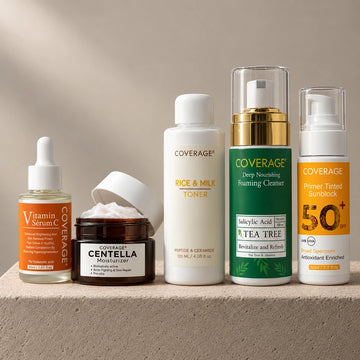
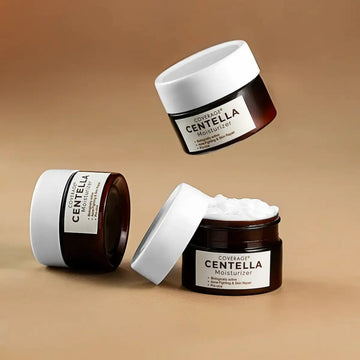
- Dry, tight, barrier-damaged skin. Toner plus a ceramide-led moisturiser. The Barrier Repair Set pairs the toner with the Centella moisturiser for exactly this.
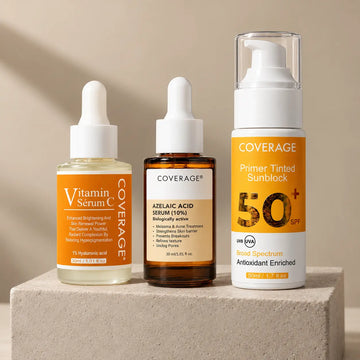
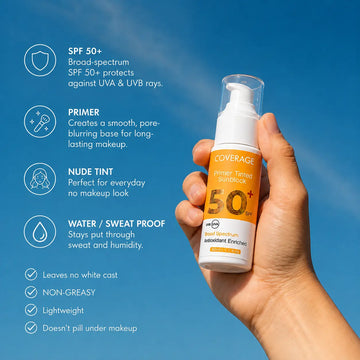
- Dull skin that needs both moisture and protection. Toner plus sunblock in the morning, which is what the Milky Sun Protection duo covers.
- Sensitive skin that needs the full repair job. The Repair & Protect Trio adds the sunblock to the hydration and barrier steps.
- Breakout-prone skin treated too harshly. The Acne Repair Set puts the toner between a cleanser and a barrier moisturiser, which is the structure acne-prone skin usually needs.
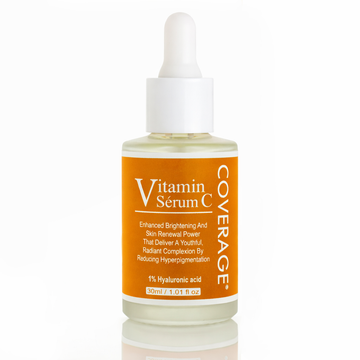
- Everything, in one box. The Ultimate Skin Reset Kit covers cleanse, hydrate, brighten, repair and protect.
Whichever route you take, the ordering principle stays the same: lightest to heaviest, water before oil, and sunscreen last in the morning.
Frequently asked questions
What is a Korean toner?
A Korean toner is a hydrating, barrier-friendly toner that preps and nourishes skin rather than stripping it. It leans on humectants, soothing botanicals and skin-identical lipids instead of alcohol, so it balances the skin and adds a light layer of hydration at the same time.
What is the difference between a Korean toner and an astringent toner?
Older astringent toners were built to degrease and tighten, usually with alcohol. Korean toners are built to hydrate and balance. One removes, the other replenishes. Many modern non-Korean toners now follow the hydrating style too, so the useful distinction is astringent versus hydrating rather than Korean versus not.
Do you use toner before or after serum?
Before. The order is cleanse, tone, serum, moisturiser, and sunscreen in the morning. Apply toner right after cleansing while skin is still slightly damp, then serum, then moisturiser.
Is a Korean toner good for oily skin?
Yes, as long as it is lightweight and free of fragrance and drying alcohol. Oily skin still needs water, it just does not need heavy oils. A hydrating toner also lets you stop using stripping astringents, which can make oily skin worse over time through rebound oil production.
Is a toner good for dry skin and khushki?
Yes. Humectants plus a barrier ingredient such as a ceramide is a sensible combination for dry, tight skin. On very dry days you can layer a hydrating toner two or three times before your moisturiser.
What is the 7 skin method?
A Korean layering technique where you press several thin layers of hydrating toner into the skin instead of one heavy application. Skin is Korean shorthand for toner, so 7 skin means seven layers. Most people use three to four, and that is fine.
What is the difference between toner, essence and serum?
A toner balances and lightly hydrates, an essence gives more concentrated hydration and antioxidants, and a serum targets a specific concern with stronger actives. Texture thickens and actives get stronger as you move from toner to essence to serum.
Why is rice used in toners?
Rice-derived ingredients bring antioxidants, amino acids and starches that support hydration and a soft, even-looking finish. The evidence is real but modest, so rice is best treated as a supportive brightening and comfort ingredient rather than a skin-lightening treatment.
Does a rice toner lighten skin?
No. Rice-derived ingredients may help tone look more even over several weeks, but they do not lighten skin. The strongest brightening data uses concentrated rice bran extracts in other formats, not toner-level rice extract. Any product promising fairness deserves suspicion.
Is milk toner made from dairy?
Usually not. Milk on a Korean toner label typically means a plant milk such as almond milk, or simply the creamy texture of the fluid. The COVERAGE Rice and Milk Toner uses almond milk and contains no dairy. Because almond is a tree nut, patch test first if you have a nut allergy.
Is the rice in a rice toner fermented?
It depends on the product. Some use rice ferment, others use rice extract, and the two are not the same ingredient. The COVERAGE toner uses rice extract, a standardised cosmetic extract, so it is not described as fermented.
Can a toner replace my moisturiser?
No. A toner delivers water into the skin and a moisturiser helps seal it in. Using one without the other means much of the hydration simply evaporates, which is why people who skip moisturiser often conclude that toners do nothing.
Can a toner replace sunscreen?
No. A toner provides no meaningful sun protection. For pigmentation, chaiyan and daag dhabbe, daily sunscreen is the single step with the strongest evidence behind it.
How do I use toner? Toner kaise use karein?
After cleansing, apply to slightly damp skin, press it in with your palms rather than wiping with a cotton pad, then follow with serum and moisturiser, and sunscreen in the morning. Layer a second or third time if your skin still absorbs it.
Should I use a cotton pad or my hands?
Hands, for a hydrating toner. A cotton pad absorbs a large share of the product and adds unnecessary friction. Pads make more sense with wipe-off astringents, which is a different category.
Is a hydrating toner safe for sensitive skin?
For most people yes, especially fragrance-free formulas, since added fragrance is one of the most common triggers in skincare. Patch test on the inner forearm for 24 hours first if your skin is very reactive.
Can I use a toner twice a day?
Yes, and most people should. In the morning it preps skin and helps sunscreen spread evenly. At night it restores hydration after cleansing and before your treatment step.
Are imported Korean toners better than Pakistani ones?
Not necessarily. Imported toners from large global brands can lead on headline ingredient percentages, but a locally made Korean-formulated toner you can repurchase consistently often delivers more over a year than an expensive bottle you ration, and it avoids stock gaps and counterfeit risk in resale channels.
References
- Lambers H, Piessens S, Bloem A, Pronk H, Finkel P. Natural skin surface pH is on average below 5, which is beneficial for its resident flora. Int J Cosmet Sci. 2006;28(5):359-370.
- Proksch E. pH in nature, humans and skin. J Dermatol. 2018.
- Coderch L, Lopez O, de la Maza A, Parra JL. The structure, function and importance of ceramides in skin. J Am Acad Dermatol. 2014.
- Nguyen HTT, et al. The efficacy of moisturisers containing ceramide compared with other moisturisers: a systematic review and meta-analysis. PubMed 37151263.
- Gehring W, Gloor M. Effect of topically applied dexpanthenol on epidermal barrier function and stratum corneum hydration. Arzneimittelforschung. 2000. PubMed 10965426.
- Zamil DH, Khan R, Braun TL, Nawas ZY. Dermatological uses of rice products: trend or true? J Cosmet Dermatol. 2022;21(11):6056-6060. PubMed 35587098.
- Jufri M, Vardhani A, Purwaningsih E. Evaluating the efficacy of lotion containing 10% black rice bran extract as a skin brightening agent: a clinical trial. Jundishapur J Nat Pharm Prod. 2021;16(4):e114152.
- Jabbar-Lopez ZK, et al. The effect of water hardness on atopic eczema and skin barrier function: a systematic review and meta-analysis. Clin Exp Allergy. 2021;51(3):430-451. PubMed 33259122.
This article is for general informational purposes only and is not a substitute for professional medical advice. All information and claims referenced above are drawn from publicly available dermatological studies and expert sources. Always consult a dermatologist for advice specific to your skin.

Leave a comment
This site is protected by hCaptcha and the hCaptcha Privacy Policy and Terms of Service apply.