


Dandruff Ka Ilaj in Pakistan: Causes, Treatment and When to See a Dermatologist
Quick answer: Dandruff ka ilaj starts with an anti-dandruff shampoo that contains ketoconazole, selenium sulfide, zinc pyrithione, salicylic acid or coal tar. Massage it into the scalp, leave it on for the time written on the bottle (often up to 5 to 10 minutes), then rinse well. Many people do well using it two to three times a week at first and about once a week after the flakes settle. Give it up to four weeks. On your other wash days, use a gentle sulphate-free shampoo. If your scalp is red, swollen, painful or oozing, if hair is coming out in patches, or if the flakes have spread to your face or body, see a dermatologist.
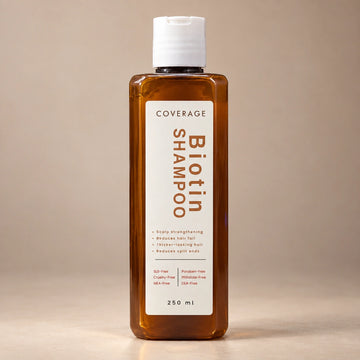
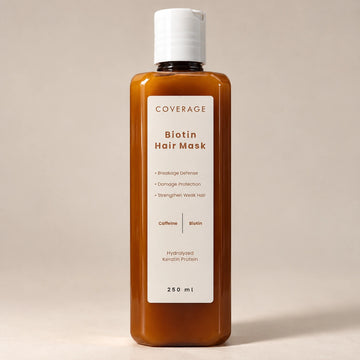
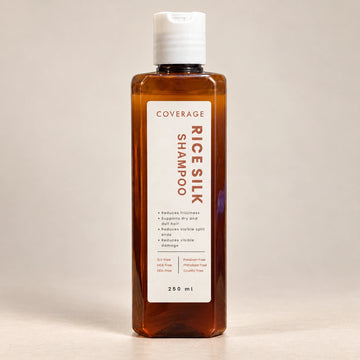
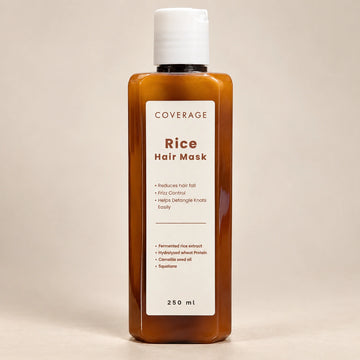
At COVERAGE, our in-house chemical engineers formulate sulphate-free haircare at our own GMP and ISO 9001 certified facility in Lahore. In a dandruff routine, our Rice Silk Shampoo 250ml and Biotin Shampoo 250ml are the gentle shampoos for the days between your anti-dandruff washes, and our Rice Hair Mask 250ml keeps the lengths soft while the scalp is being treated.
Dandruff ka ilaj: the quick treatment summary
- Pick one anti-dandruff active and give it a fair trial of up to four weeks.
- Apply it to the scalp, not the lengths. Lather, wait for the time on the label, then rinse thoroughly.
- Start at two to three washes a week if your scalp tolerates it, or follow the label.
- Use a gentle sulphate-free shampoo on the other wash days.
- Keep one anti-dandruff wash a week once the flakes settle, so sikri does not come back.
- Alternate two different actives if one shampoo stops working as well as it did.
- See a doctor if four weeks of correct use has not helped.
What your flakes may mean, and what to do next
This table helps you choose a next step. It is a guide, and a dermatologist who examines your scalp is the one who can tell you exactly what you have.
| What you notice | One possibility | Sensible next step |
|---|---|---|
| White or yellowish flakes, itch, oily scalp | Common dandruff | Anti-dandruff shampoo used as the label directs |
| Small, dry, fine flakes; scalp feels tight (khushki), often worse in winter | Dry scalp | Wash gently, use lukewarm water, switch to a mild sulphate-free shampoo |
| Greasy scales with redness on the scalp, eyebrows, beside the nose or behind the ears | Seborrhoeic dermatitis | Anti-dandruff shampoo; see a dermatologist if it spreads or persists |
| Thick, silvery, well-defined plaques, sometimes past the hairline | Possibly psoriasis | Dermatologist assessment |
| Itch and flaking after a new hair dye or product | Possibly irritation or allergy | Stop the new product; get medical help for a rash, hives or swelling |
| Scaly patches with broken hairs or bald spots, especially in a child | Possibly scalp ringworm (tinea capitis) | See a doctor promptly; it needs prescription treatment |
| Pain, oozing, crusting or pus | Needs a medical check | See a dermatologist promptly |
Dandruff vs dry scalp (khushki) and other look-alikes
In Pakistan we use "sikri" and "khushki" for almost any flaking, but dandruff and a dry scalp are two different problems. Dandruff is linked to scalp oil and to a yeast called Malassezia that lives on everyone's scalp. That is why the best-known anti-dandruff shampoos contain antifungal actives such as ketoconazole and selenium sulfide. A dry scalp is short of moisture. It gives smaller, drier flakes, feels tight, and usually gets worse with very hot water, harsh shampoos and cold, dry winter air.
Seborrhoeic dermatitis is a stronger, more inflamed form of dandruff. It can also show on the eyebrows, the sides of the nose, behind the ears and on the chest. Psoriasis and eczema can look similar and need a different plan. Scalp ringworm (tinea capitis) is most common in children, is contagious, can look like dandruff and needs medicine from a doctor. If over-the-counter shampoos have not helped, a dermatologist can tell these apart.

Anti-dandruff actives and how to use them properly
| Active | How it helps | Practical notes |
|---|---|---|
| Ketoconazole | Antifungal | One of the most widely recommended actives. Follow the label for how often to use it. |
| Selenium sulfide | Antifungal | Rinse thoroughly after use, because it can discolour hair. |
| Zinc pyrithione | Antifungal | Found in many everyday anti-dandruff shampoos where it is available. |
| Salicylic acid | Loosens scale | Helps lift stuck-on flakes. Follow with conditioner on the lengths, as it can be drying. |
| Coal tar | Slows scaling | May darken or stain light-coloured hair and makes the scalp more sensitive to sunlight, so cover your head outdoors. |
Whichever active you choose, the rules are the same:
- Read the bottle. The American Academy of Dermatology notes that some anti-dandruff shampoos need to stay on the scalp for up to 5 to 10 minutes before rinsing, while others should be rinsed sooner.
- Match the frequency to your hair type. Fine, straight or oily hair usually does well with frequent washing and an anti-dandruff shampoo about twice a week. Coarse, curly or coily hair usually does better with the anti-dandruff shampoo about once a week, applied to the scalp only.
- Give it time. The NHS advises using an anti-dandruff shampoo for up to four weeks, and trying another one if the first does not work.
- Stop if it stings. If a shampoo causes itching, burning or stinging, stop using it.
- Leave prescriptions to your doctor. Stronger shampoos and steroid scalp lotions are for a doctor to prescribe.

Dandruff myths and risky home remedies (gharelu nuskhe)
- "Tel lagao, sikri khatam." The yeast linked to dandruff feeds on oils, and researchers have pointed out that plant oils such as olive oil may be counterproductive on a flaky, oily scalp. If you love your weekly oiling, keep it on the lengths, keep it short and wash it out thoroughly.
- Lemon, baking soda or neat vinegar on the scalp. There is no good evidence that these clear dandruff, and undiluted vinegar can irritate or burn the skin. We do not recommend them on a scalp that is already itchy.
- "Dandruff means you are dirty." It does not. Dandruff is a common scalp condition, although regular washing does help control it.
- "It is contagious." Ordinary dandruff is not something you can catch. Scaly patches with hair loss are different and need a doctor, especially in children.
- "There is a permanent cure." Dandruff is controlled and kept away with a simple weekly routine. That is why the maintenance wash matters.
- Scratching and hard brushing. These break the skin and make the itch worse.

A practical dandruff routine for Pakistani weather
Summer heat, sweat under helmets, caps, dupattas and hijabs, and long days outdoors all leave more oil and sweat on the scalp. Winter brings dry air, heaters and very hot showers, which dry the scalp out. A steady wash schedule handles both.
- Anti-dandruff days (two to three times a week to start): Lather the anti-dandruff shampoo into the scalp, leave it for the time on the label, and rinse well with lukewarm water.
- In-between wash days: Use our sulphate-free Rice Silk Shampoo. Fermented rice extract and hydrolyzed wheat protein smooth the hair while the formula lifts dirt and buildup without stripping your hair's natural moisture. If hair fall is also bothering you, use our Biotin Shampoo. Its cleansing system is completely sulphate-free, with biotin and hydrolyzed keratin to strengthen fragile strands and help reduce the hair fall that comes from breakage.
- After every wash: Smooth our Rice Hair Mask through the lengths and ends, leave it on for a few minutes and rinse well. Camellia seed oil, shea butter and squalane seal moisture into the hair, and niacinamide supports a healthier scalp.
- Dry your scalp before you cover it, and wash caps, scarves, pillowcases and combs often.
- Maintenance: Once the flakes settle, keep one anti-dandruff wash a week and use your COVERAGE shampoo for the rest.

Build your in-between wash routine. Our Shiny & Silky Hair Duo pairs the Rice Silk Shampoo with the Rice Hair Mask for smooth, soft lengths. If hair fall is your bigger worry, the Hair Fall & Strength Duo is the pair for you. Both are sulphate-free and delivered across Pakistan with cash on delivery.
A sample week
| Day | Oily scalp, straight or fine hair | Dry, curly or chemically treated hair |
|---|---|---|
| Saturday | Anti-dandruff shampoo, then Rice Hair Mask on the lengths | Anti-dandruff shampoo on the scalp only, then Rice Hair Mask on the lengths |
| Monday | Rice Silk or Biotin Shampoo | Rest day |
| Tuesday | Anti-dandruff shampoo | Rice Silk Shampoo, then Rice Hair Mask |
| Thursday | Rice Silk or Biotin Shampoo, then Rice Hair Mask | Rest day |
Dandruff and hair fall
Dandruff itself is a scalp problem, but constant scratching and an inflamed scalp are hard on hair, and many people notice more hair on the comb during a bad flare. Getting the flakes under control comes first. Alongside that, a gentle shampoo that strengthens the hair fibre helps the hair you have stay on your head. Our Biotin Shampoo is made for hair fall that comes from breakage, thinning and weak hair. For the full picture, read our guides to baal girna ka ilaj, biotin shampoo for hair fall, hard water and hair fall and sulphate-free shampoo in Pakistan.
When to see a dermatologist
- Four weeks of correct anti-dandruff shampoo use has not helped
- The scalp is very red, swollen, painful, crusted or oozing
- Hair is falling out in patches, or a child has scaly patches with hair loss
- Flaky, itchy patches have appeared on the face, ears, chest or body
- You have thick, silvery plaques
- You get a rash, hives or trouble breathing after using a product (get medical help right away)
- You are pregnant or breastfeeding and want to use a medicated shampoo (ask your doctor or pharmacist first)

Our COVERAGE haircare in your dandruff routine
The anti-dandruff shampoo deals with the flakes. We take care of everything around it: a gentle sulphate-free cleanse on the other days and soft, healthy, strong lengths. Our Rice Silk Shampoo, Biotin Shampoo and Rice Hair Mask are all free from sulphates, parabens, phthalates, DEA and MEA. Every COVERAGE formula is Korean-formulated and made from the highest-grade raw materials at our own Halal certified facility in Lahore, backed by around 40 years of family experience in the skincare industry. We have delivered over 72,000 orders across Pakistan.

Pair your anti-dandruff shampoo with a gentle partner. Start with our Rice Silk Shampoo 250ml and Rice Hair Mask 250ml. If you are also seeing hair fall, choose the Biotin Shampoo 250ml. You can see the full range in our Hair Care collection.
Dandruff ka ilaj: frequently asked questions
What is the fastest dandruff ka ilaj?
An anti-dandruff shampoo containing ketoconazole, selenium sulfide or zinc pyrithione, massaged into the scalp and left on for the time given on the label. Use it regularly for up to four weeks.
Is sikri the same as dandruff?
People use sikri for most scalp flaking. It can mean dandruff, a dry scalp or another scalp condition. Oily, itchy flakes usually point to dandruff.
How do I tell dry scalp (khushki) from dandruff?
A dry scalp gives small, dry flakes and feels tight, often in winter. Dandruff flakes are usually larger, oilier and itchy.
How long should I leave dandruff shampoo on?
Follow the bottle. Some anti-dandruff shampoos need up to 5 to 10 minutes on the scalp before you rinse, and others should be rinsed sooner.
How often should I use anti-dandruff shampoo?
Follow the label. Many people use it two to three times a week at first and about once a week once the flakes settle. Coarse or curly hair usually does better with once a week.
How long does dandruff treatment take to work?
Give an anti-dandruff shampoo up to four weeks of regular use. If it has not helped by then, try a different active or see a doctor.
Can I use a normal shampoo on the other days?
Yes. A gentle sulphate-free shampoo such as our Rice Silk Shampoo is a good choice for the days between anti-dandruff washes.
Can I use conditioner or a hair mask if I have dandruff?
Yes. Apply it to the lengths and ends and rinse well. Our Rice Hair Mask keeps the lengths soft while your scalp is being treated.
Why does my dandruff keep coming back?
Dandruff is a condition you keep under control. Keep one anti-dandruff wash a week, and alternate between two different actives if one stops working as well.
Does oiling cure dandruff?
No. The yeast linked to dandruff feeds on oils, so heavy oiling may make an oily, flaky scalp worse. If you oil, keep it on the lengths and wash it out thoroughly.
Is lemon or baking soda good for dandruff?
There is no good evidence that they clear dandruff, and they can irritate an itchy scalp. We do not recommend them.
Is dandruff contagious?
Ordinary dandruff is not contagious. Scaly patches with hair loss, especially in children, can be scalp ringworm and need a doctor.
Can dandruff cause hair fall?
Scratching and an inflamed scalp are hard on hair. Control the flakes first. For hair fall from breakage, our Biotin Shampoo strengthens fragile strands.
Why is my dandruff worse in winter?
Cold, dry air, heaters and very hot showers dry out the scalp, and people often wash less. Use lukewarm water and keep your wash routine steady.
Do head coverings cause dandruff?
They do not cause it, but trapped sweat and oil can make flaking worse. Dry your scalp before covering it and wash scarves and caps often.
Which COVERAGE shampoo should I use with my anti-dandruff shampoo?
Rice Silk Shampoo for dry, frizzy or dull hair, and Biotin Shampoo if hair fall and breakage are your concern. Both are sulphate-free.
When should I see a dermatologist for dandruff?
If four weeks of correct use has not helped, or if you have redness, swelling, pain, oozing, patchy hair loss, or flaky patches on your face or body.
Related reading
References
- American Academy of Dermatology, How to treat dandruff
- NHS, Dandruff
- Mayo Clinic, Dandruff: diagnosis and treatment
- Siegfried E, Glenn E. Use of olive oil for the treatment of seborrheic dermatitis in children. Archives of Pediatrics & Adolescent Medicine, 2012
- British Association of Dermatologists, Tinea capitis
Written and reviewed by the COVERAGE Skincare editorial team using the sources listed. Last reviewed October 2026. This guide is general information and does not replace a consultation with a doctor.
This article is for general informational purposes only and is not a substitute for professional medical advice. All information and claims referenced above are drawn from publicly available dermatological studies and expert sources. Always consult a dermatologist for advice specific to your skin.



Leave a comment
This site is protected by hCaptcha and the hCaptcha Privacy Policy and Terms of Service apply.