
Korean-Formulated vs Korean-Imported Skincare in Pakistan: What's the Difference?
Korean skincare has become one of the most influential forces in the Pakistani beauty market — from glass-skin routines and rice toners to centella serums, snail mucin, barrier creams and Korean sunscreens. But as the category has grown, a basic labeling question has gone largely unanswered for Pakistani shoppers: is "Korean skincare" always imported from Korea?
It isn't. And the difference between a product that's genuinely made in South Korea and one that's formulated on Korean principles but manufactured somewhere else — including Pakistan — has real consequences for price, availability, authenticity risk and suitability for local climate. This guide sets out that difference precisely, checks it against Pakistan's actual (and currently shifting) cosmetics regulation, and gives readers a practical framework for evaluating any product marketed as "Korean," regardless of which model it follows.
A note on how this article is sourced: claims here are marked by type. Where a fact comes from an official regulator, government record or primary company source, that's stated. Where a brand's own marketing is being described, it's identified as a company claim, not independently verified fact.

What Is the Difference Between Korean-Formulated and Korean-Imported Skincare?
Korean-Formulated vs Korean-Imported at a Glance
| Factor | Korean-Formulated (e.g. manufactured in Pakistan) | Korean-Imported (finished product from Korea) |
|---|---|---|
| Formulation origin | Developed using Korean formulation science/principles | Developed by the Korean manufacturer or brand |
| Manufacturing location | Wherever the brand's facility is (e.g. Pakistan) | South Korea |
| Finished-product origin | Local to the market it's sold in | South Korea |
| Import requirement | None for the finished product | Required — customs, documentation, duties |
| Supply chain length | Manufacturer → consumer (can be direct) | Manufacturer → exporter → importer → distributor → retailer → consumer |
| Local availability / restock | Not dependent on international shipping | Dependent on import cycles, customs clearance, freight |
| Pricing drivers | Local production cost, raw material sourcing, local margins | Landed cost: product price + freight + duties + currency conversion + import margins |
| Authenticity / counterfeit exposure | Shorter chain, fewer hand-offs to verify | Longer chain; higher exposure to grey-market and counterfeit risk |
| Local climate adaptation | Can be formulated for Pakistani heat/humidity from the start | Originally formulated for Korean climate; adaptation isn't automatic |
| Repurchase consistency | Generally more consistent (no import bottlenecks) | Can be disrupted by shipping delays, distributor stock, exchange rates |
This table describes structural tendencies, not a quality verdict. Neither model is inherently better — see "Is Korean Skincare Better Than Pakistani Skincare?" below.
What Does "Korean-Formulated" Actually Mean?
The phrase is a formulation-origin claim, not a country-of-manufacture claim, and it is not automatically synonymous with:
- Made in South Korea
- Imported from South Korea
- Manufactured by a Korean company
- Containing only Korean-sourced ingredients
- Tested in Korea or approved by a Korean regulator
- Equivalent in formulation to a specific Korean brand
A brand using the term should be able to say specifically what it means by it — formulated with Korean formulators or licensed technology, benchmarked against Korean formulation approaches, or built locally using Korean formulation principles. These are meaningfully different claims, and consumers are entitled to know which one applies.
Does Korean-Formulated Mean Made in Korea?
What Does Korean-Imported Skincare Mean?
A typical chain looks like: Korean brand → Korean manufacturer → Korean warehouse/distributor → exporter → Pakistani importer → Pakistani distributor/retailer → consumer. Depending on the brand and distribution model, there can be additional intermediaries. Buying an imported Korean product means paying, directly or indirectly, for international freight, export handling, import documentation, customs-related costs, currency conversion, warehousing, and distributor and retailer margins layered on top of the product's original Korean price — one structural reason imported Korean skincare tends to cost more in Pakistan than a comparable locally manufactured product.
Is Korean Skincare Always Imported?
Are Korean Ingredients Better? Why Ingredient Origin ≠ Formulation Quality
Adding centella asiatica extract to a serum doesn't make it a Korean formula. Using rice extract doesn't automatically make a toner Korean (see what actually makes a toner Korean). Any given ingredient — centella, niacinamide, ceramides, rice extract, snail mucin — can be sourced from South Korea, Japan, Europe, China, India, the US or elsewhere, and the country a raw material was manufactured in does not by itself determine the quality of the finished product. What actually matters is:
- Ingredient identity and purity — is it the specification the label implies, verified rather than assumed?
- Concentration — naming an ingredient on the front of a box doesn't disclose how much is actually inside.
- Solubility and delivery system — how the active is carried into and through the skin.
- pH and formulation compatibility — whether ingredients interact correctly rather than destabilizing each other.
- Preservation and stability — whether the formula holds up over shelf life, especially for oxidation-sensitive actives.
- Packaging — whether light-, air- or moisture-sensitive actives are protected.
- Manufacturing process and testing — whether the above was actually controlled and verified, not just assumed.
This article does not report specific clinical results, percentage efficacy figures, or study findings for any ingredient, brand or product.
What Does "Korean Technology" Mean?
Korean-Inspired / K-Beauty-Inspired: How Is This Different?
"Korean" Terminology Explained
| Term | What it typically claims | What it does NOT automatically mean |
|---|---|---|
| Korean-formulated | Formula developed using Korean formulation science/principles | Made in Korea; contains only Korean ingredients |
| Made in Korea | Physical product manufactured in South Korea | Superior quality; suited to Pakistani climate |
| Korean-imported | Finished Korean-made product brought into Pakistan | Automatically authentic (depends on supply chain) |
| Korean ingredients | One or more raw materials sourced from Korea | The whole formula is Korean-developed or Korean-made |
| Korean technology | A technology, delivery system or process associated with Korea | Anything specific unless the brand names it |
| Korean-inspired / K-beauty-inspired | Conceptual or aesthetic influence from K-beauty trends | Any formulation or manufacturing claim at all |

Is Korean Skincare Better Than Pakistani Skincare?
"Imported equals better quality" is not a scientific rule; neither is "local equals safer" or "local equals better value." Consider two hypothetical serums. Serum A is manufactured in Korea, imported into Pakistan, well-formulated, transparently labeled, properly tested, authentic, and stored correctly within its shelf life. Serum B is manufactured in Pakistan using Korean formulation principles, with a transparent full ingredient list, proper testing, batch traceability, and stability under its intended storage conditions. It would be inaccurate to call Serum A automatically superior because it traveled from Korea — and equally inaccurate to call Serum B automatically superior because it's local, fresh or more affordable. The formula and manufacturing quality behind each product have to be evaluated on their own evidence, not on origin alone.
Is Korean Skincare Good for Pakistani Skin?
It's also worth being precise here: there is no single "Pakistani skin." Pakistani consumers span oily, dry, combination, sensitive, acne-prone and dehydrated skin, across a country with sharply different climates — from Karachi's humid coastal heat to Lahore's dry summers and cold winters, to Islamabad/Rawalpindi's more moderate but still seasonal climate. A product genuinely suited to "Pakistani skin" would need to account for that range, not treat it as one condition.
A product can be Korean-formulated and still have been developed primarily with a Korean consumer and Korean climate in mind. Conversely, a locally manufactured product can use Korean formulation principles while being deliberately adapted for Pakistani conditions. When a brand claims a product is "for Pakistani skin" or "for Pakistani climate," it's reasonable to ask: was the texture chosen for heat and humidity? Does it layer under sunscreen and makeup without pilling? Was this actually tested, or is the phrase simply marketing language? The claim on its own is not the evidence.
By Skin Type — General Considerations, Not Medical Advice
- Oily and combination skin (common in Karachi's humidity and Lahore's summer heat): lightweight, non-comedogenic, gel or fluid textures generally layer better under makeup and sunscreen without added shine.
- Dry and dehydrated skin (more pronounced in dry winters and air-conditioned indoor environments): richer, barrier-supporting textures and humectant-forward formulas are typically more comfortable.
- Sensitive skin: fragrance-free or low-irritant formulations, and clear, complete ingredient disclosure, matter more than any country-of-origin claim (see our complete guide to sensitive-skin-safe skincare in Pakistan).
- Acne-prone skin: non-comedogenic claims and disclosed active concentrations matter more than vague "acne-fighting" marketing (see our dermatology-backed guide to acne products in Pakistan).
- Pigmentation concerns: consistency of use, sun protection, and formulation stability of brightening actives typically matter more than where the product was made.
None of the above is a diagnosis or a treatment claim — it's a general framework for evaluating fit; a dermatologist is the right source for anything beyond that.
Why Is Korean Skincare More Expensive in Pakistan?
The import cost chain: Korean manufacturer → exporter → international shipping → Pakistani customs and import-related costs → importer → distributor → warehouse → retailer → consumer.

At each step, cost is added: freight, insurance and handling, customs duties and import-related costs, currency conversion (and exchange-rate movement, which can shift the landed cost further), warehousing, and distributor and retailer margins. A locally manufactured, Korean-formulated product skips most of these layers — its price reflects local production economics, raw material sourcing, packaging, R&D, testing, and local margins instead.
This is one reason a locally manufactured product can offer a lower retail price without being lower quality — the gap is often supply-chain economics, not ingredient cost. The reverse caution applies too: "local" does not automatically mean "cheap." A Pakistani brand can spend significantly on high-quality raw materials (including imported ones), formulation, laboratory and stability testing, packaging, manufacturing equipment, quality control and regulatory compliance. Retail price is not a reliable shortcut for judging formulation quality in either direction.
How Can You Tell If Korean Skincare Is Authentic?
Counterfeit and grey-market Korean skincare is one of the most persistent consumer anxieties in this category in Pakistan, and it's a reasonable one. When a Pakistani consumer buys a locally manufactured product directly from the brand, the manufacturing chain is comparatively simple to trace — manufacturer to seller, with fewer intermediate hand-offs. With imported skincare, the chain can run through a brand, an exporter, a distributor, an importer, a wholesaler, a retailer and a marketplace seller before the product reaches a customer. The more steps in that chain, the more traceability matters — this does not mean imported Korean skincare is fake, but it does mean a consumer needs to know specifically where their unit came from, not just where the brand originates.
K-beauty's popularity has also made recognisable Korean products attractive targets for counterfeiters. Packaging, logos, fonts, boxes and even batch codes can all be copied convincingly enough that a product can look authentic without being authentic. Useful (though not individually conclusive) checks include:
- Buying from authorised sellers or brand-direct channels, not unverified marketplace listings
- Checking for consistent, professional packaging and printing — a supporting signal, not proof, since packaging can be replicated
- Requesting or checking batch numbers and manufacturing/expiry information
- Reviewing a seller's reputation, return policy and invoicing
- Being cautious of — but not automatically assuming fraud from — unusually low prices, which deserve investigation rather than automatic suspicion or dismissal

Locally manufactured, Korean-formulated skincare sidesteps several of these specific risk points structurally: there's no international grey market for it to fall through, and no multi-hand distribution chain to obscure origin before it reaches a Pakistani buyer. That's a difference in supply-chain structure, not a claim that local manufacturing is inherently more trustworthy than every imported product — a well-run import operation with authorised distribution can be entirely legitimate and traceable too.
What About Korean Sunscreen Specifically?
Korean sunscreens have a strong reputation in Pakistan for lightweight, cosmetically elegant textures — a real point of differentiation from many older-generation sunscreen formulations. But popularity is not a substitute for checking the specifics of an individual product. Before relying on a Korean-labeled sunscreen (imported or locally formulated on Korean principles), it's worth checking:
- The stated SPF level and whether UVA protection (often shown as a PA rating) is disclosed
- Whether water/sweat resistance is actually claimed, and under what conditions
- Application amount and reapplication frequency — real-world protection depends heavily on how much is applied and how often it's reapplied, not just lab-rated SPF
- Authenticity and storage — UV filters can degrade with poor storage or counterfeit substitution
- Whether the finish and formula are actually suited to local heat and humidity, layering well under makeup without pilling
No sunscreen — Korean-imported, Korean-formulated, or otherwise — should be treated as universally superior without checking these specifics for the individual product.
Can Pakistani Brands Use Korean Formulation Principles?
Pakistan has its own cosmetics manufacturing base, and a Pakistani company can develop products specifically for Pakistani consumers while drawing on Korean formulation science. This model carries some structural advantages: a shorter supply chain that doesn't depend on international shipping for restocking; easier repurchase consistency, since skincare is a routine rather than a one-time buy; and the ability to design formulas around Pakistan's specific climate range — extreme summer heat, humid coastal conditions, dry winters, high-altitude cold, and dusty urban pollution exposure — from the outset, rather than adapting a formula originally built for a temperate Korean climate.
Pakistan's Climate and Skincare Formulation
A moisturizer that feels comfortable in a cold, dry climate can feel heavy in Lahore during summer. A sunscreen elegant in a mild climate can become uncomfortable in Pakistani heat and humidity. A serum that feels fine indoors, in air conditioning, may pill when layered under sunscreen and makeup outdoors. This is a formulation and stability question, not a country-of-origin question — a Korean-imported product is not automatically unsuited to Pakistani heat, and a locally made product is not automatically better suited to it. What matters is whether the specific formula, texture and packaging were actually built or adapted for these conditions.
Heat and storage conditions also affect cosmetic stability directly. Certain actives — including some antioxidants — are sensitive to temperature and light exposure regardless of where the product was made. An imported product typically spends longer in transit and storage (manufacturing → Korean warehouse → export → international shipping → Pakistani customs → importer warehouse → retailer → courier → consumer) than a locally manufactured product with a shorter chain. This doesn't make imported products automatically unstable — but it does mean packaging, stability testing, and storage conditions along that longer chain matter more, not less.
What Should You Check Before Buying Korean Skincare in Pakistan?
How to Evaluate Skincare Quality (Not "Is It Korean?")
| Evaluation point | What to look for |
|---|---|
| Ingredient list | Full, transparent INCI disclosure — not just a few named actives on the front |
| Active concentration | Disclosed where meaningful, not just named |
| Manufacturing | Stated manufacturing location and whether the brand or a third party actually makes it |
| Testing | Evidence of stability and quality testing, not just an assertion |
| Stability | Whether sensitive actives are formulated and packaged to hold up |
| Packaging | Appropriate protection from light, air, and heat where the formula requires it |
| Storage | How the product has been stored and transported before reaching you |
| Authenticity | Authorised seller, consistent packaging, verifiable batch information |
| Traceability | Whether the manufacturer keeps internal batch records and can be identified |
| Skin suitability | Whether texture and actives genuinely match your skin type and local climate |
The 13-Question Consumer Decision Framework
Rather than asking "is it Korean?", ask:

- Where was it formulated?
- Where was it manufactured?
- Who manufactured it — is the brand also the manufacturer, or a third party?
- What is actually in it — full ingredient list, not headline actives?
- What are the active ingredients, specifically?
- Are concentrations disclosed where that matters?
- What testing was performed?
- Is the product stable under normal storage and use?
- Is the batch traceable back to a manufacturer?
- How was it stored and transported before it reached you?
- Is the seller trustworthy — authorised, reviewed, returnable?
- Is it suitable for your specific skin and the climate you live in?
- Can you consistently repurchase it without supply gaps?
What Does Pakistani Regulation Actually Say? (Verified September 2026)

The verified timeline:
- The Pakistan General Cosmetics Act, 2023 was passed by the National Assembly and gazetted, establishing the Pakistan General Cosmetics Regulatory Authority (PGCRA) under the Ministry of Science and Technology. According to Pakistani federal officials' own testimony to a National Assembly standing committee, the Act, although passed into law, was never implemented.
- In January 2025, the Federal Cabinet decided to dissolve the PGCRA.
- In November 2025, a repeal bill for the 2023 Act was backed by the National Assembly's Standing Committee on Science and Technology, which called repeal both necessary and urgent.
- Through 2026, a replacement framework — the Pakistan General Cosmetics Bill, 2026 — has been advancing through parliament. As of mid-to-late September 2026, the Senate Standing Committee on Science and Technology approved the Bill with amendments (reported September 10–17, 2026). The proposed law would reconstitute a strengthened PGCRA, impose duties on imported cosmetics, and set penalties of up to seven years' imprisonment and fines up to Rs. 10 million for manufacturing or importing substandard cosmetics, with a regulatory structure involving both DRAP and the Ministry of Science and Technology. This is committee-level approval, not final enactment — readers should verify current status before treating Bill 2026 as settled law.
What governs cosmetics in practice today: general cosmetics in Pakistan are subject to standards published by the Pakistan Standards and Quality Control Authority (PSQCA), the national standards body. Products that cross into medicated or therapeutic cosmetics — medicated shampoos, medicated soaps and similar products — fall under the Drug Regulatory Authority of Pakistan (DRAP), operating under the DRAP Act, 2012. A moisturizer is not automatically a drug; a cosmetic serum is not automatically a therapeutic product. What changes a product's classification is the specific claim it makes: "hydrates" or "supports the skin barrier" sits on the cosmetic side of that line, while "treats" or "prevents disease" moves a product toward therapeutic classification and DRAP's remit.
For comparison, genuinely Korean-made cosmetics fall under South Korea's Ministry of Food and Drug Safety (MFDS), under the Cosmetics Act. MFDS splits products into General Cosmetics (no pre-market registration required, but subject to post-market surveillance and a restricted-ingredient list) and Functional Cosmetics — whitening, wrinkle-improvement, UV protection and similar claims — which require prior evaluation or a formal report before sale. Manufacturers must register as such, and importers/sellers operate through a registered responsible-entity chain. MFDS labeling rules require Korean-language disclosure of product name, manufacturer information, batch number, expiry, ingredients, net contents and precautions, with packaging-labeling requirements updated as recently as February 2025. MFDS has also tightened advertising rules — from January 2025, it expanded its list of prohibited marketing expressions, including medical-sounding claims and language implying anti-aging effects like "reduces skin age." This is a genuine, actively enforced regulatory framework — but it governs what a Korean-made product can legally claim in Korea, and compliance there doesn't automatically determine suitability for the Pakistani market or climate.
This section is informational, not legal advice. Pakistan's cosmetics regulatory framework is actively in transition as of this writing; verify current status directly with PSQCA, DRAP, or official parliamentary records before relying on any specific claim.
Where COVERAGE® Fits
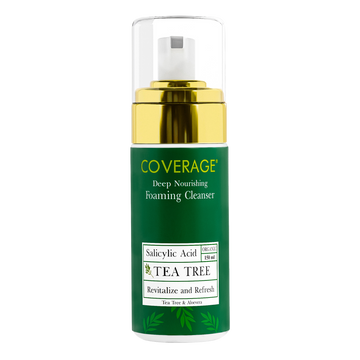
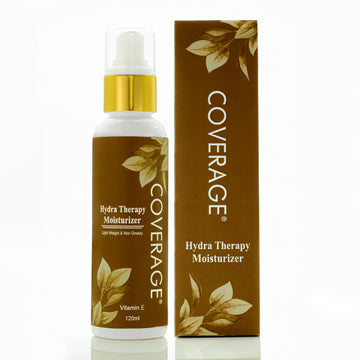
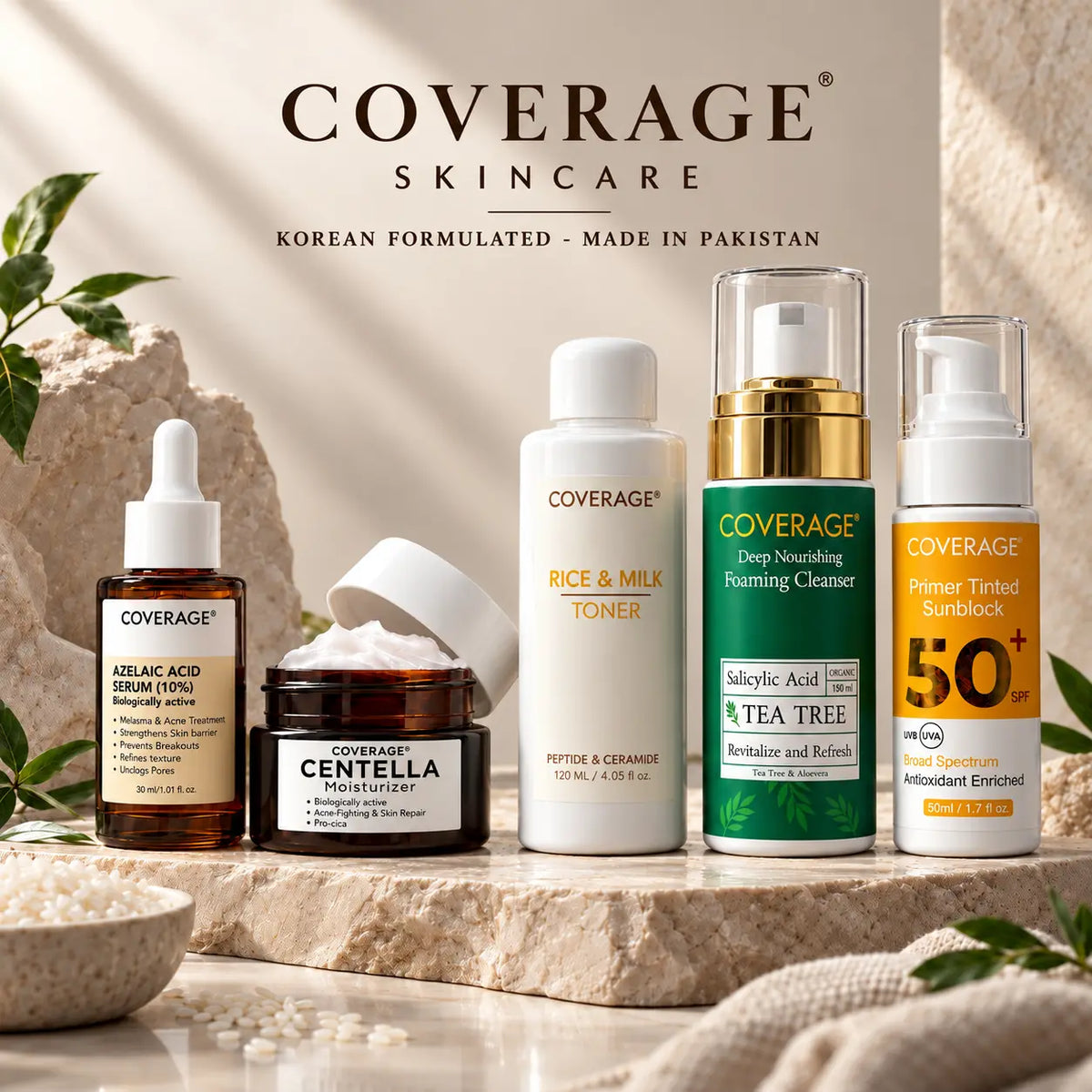
COVERAGE® is Korean-formulated, not Korean-imported: its products are developed using Korean skincare formulation principles but manufactured in Pakistan, at a facility the founding family operates directly.

By the definitions established in this article, that places COVERAGE® in a different category from a Korean-imported product like a Korean-made joint venture (a distinction worth naming explicitly for clarity: one Pakistan-facing K-beauty brand markets itself as "Pakistan's first Korean skincare brand," while its own website states its formulas are "developed, tested, and made in Korea" — that is a company-reported claim, and by the definitions used throughout this article, a product manufactured in Korea and sold in Pakistan is Korean-imported, regardless of how a brand frames its market positioning). COVERAGE®'s model is the other one: Korean formulation principles, applied through manufacturing based entirely in Pakistan, with a shorter, more directly traceable supply chain from facility to customer.
According to information provided by the brand, COVERAGE® comes from a family manufacturing background of roughly 40 years, and the current formulation and production side is led by chemical engineers within the family. The brand's own reporting states its manufacturing takes place at a GMP-certified, ISO 9001-certified facility with lab testing built into production, and that the brand holds Halal certification. These are company-reported claims included here because they are directly relevant to the article's central distinction between formulation origin and manufacturing origin — readers evaluating any brand's certifications, including COVERAGE®'s, should apply the same verification standard outlined in the authenticity and consumer-framework sections above. (See the full brand background in why COVERAGE® is manufactured the way it is.)
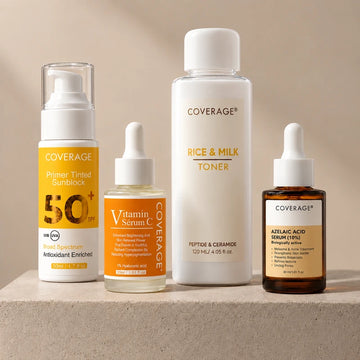
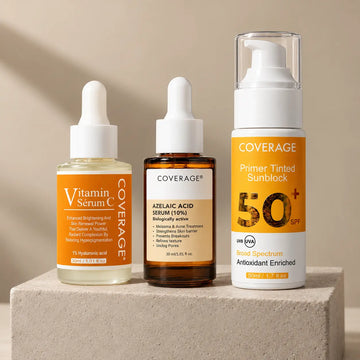
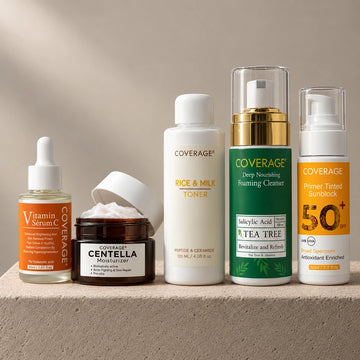
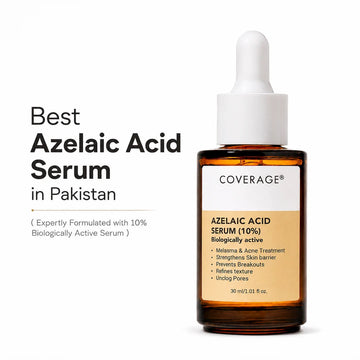
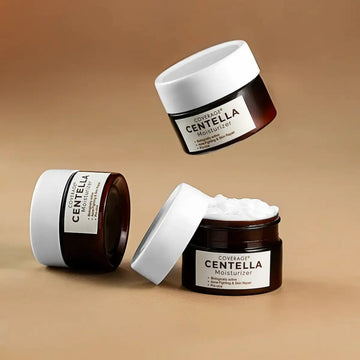
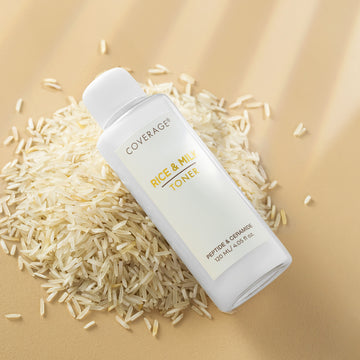
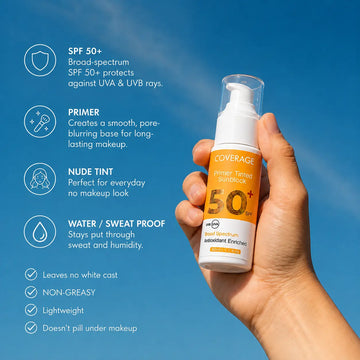
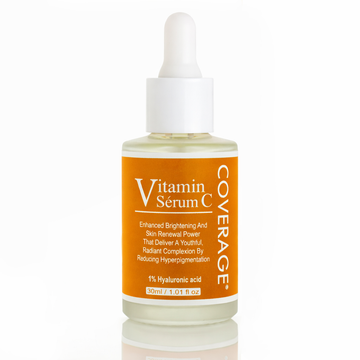
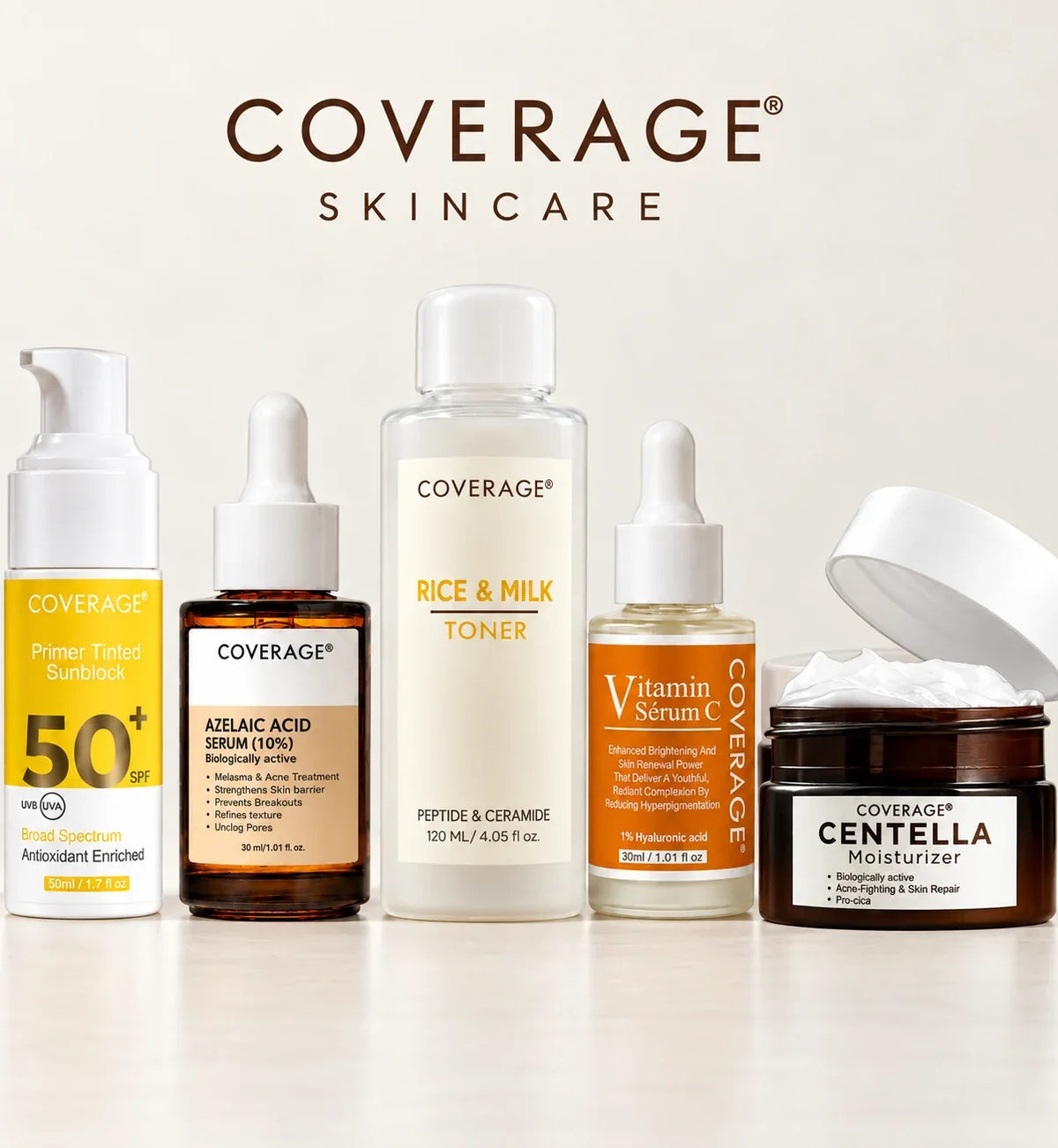
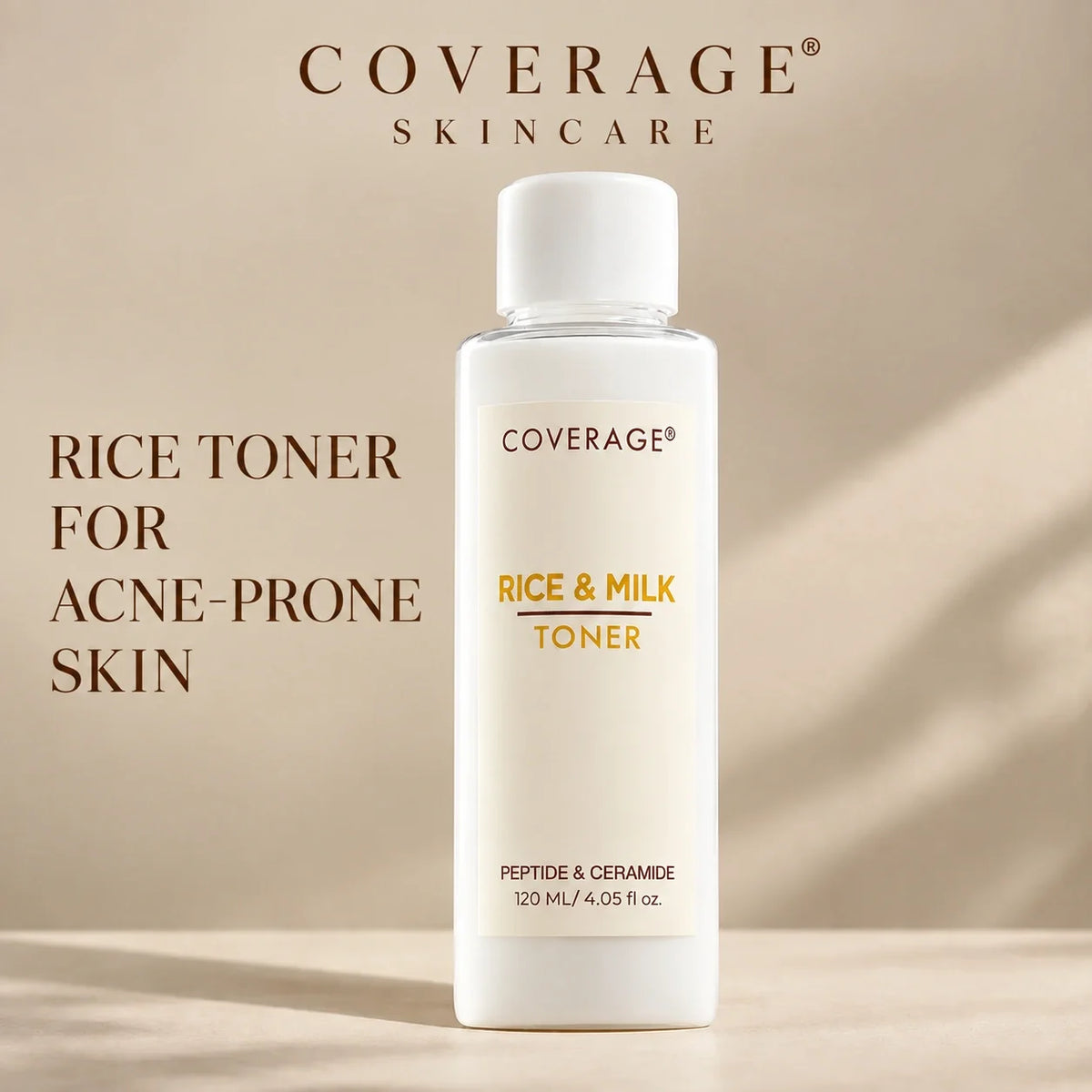
Products built on this model include the Azelaic Acid Serum 10%, the Vitamin C + 1% HA Skin Serum, the Centella Moisturizer, the Rice & Milk Toner, and the Primer Tinted Sunblock SPF 50+ — all formulated on Korean principles and manufactured at the family's Pakistan facility.
This article does not claim that COVERAGE®'s locally manufactured, Korean-formulated model is inherently superior to Korean-imported alternatives. It is a different model, with different structural tradeoffs — shorter supply chain and more direct traceability, versus a Korean-imported product's direct link to Korean manufacturing — and the right choice for an individual consumer depends on the specific product, not the category it falls into.
Frequently Asked Questions
Is Korean skincare always imported from South Korea?
No. Some products marketed as Korean in Pakistan are formulated on Korean principles but manufactured locally, including in Pakistan. Whether a specific product is imported or locally made depends on that brand's actual manufacturing setup.
What does "Korean-formulated" mean?
It means the product's formula was developed using Korean cosmetic science or formulation principles. It does not by itself indicate where the finished product was manufactured.
Does "Korean-formulated" mean the product is made in Korea?
No. A product can be Korean-formulated and manufactured entirely outside Korea, including in Pakistan.
What does "Korean-imported" mean?
It refers to a finished cosmetic product manufactured, filled and packaged in South Korea and then brought into Pakistan through an import supply chain.
Are Korean ingredients automatically better than ingredients from other countries?
No. An ingredient's country of origin doesn't by itself determine formulation quality. What matters is the ingredient's purity, concentration, stability, and how it functions within the whole formulation system.
Is Korean skincare better than Pakistani-manufactured skincare?
Neither is automatically better. Quality depends on the specific formula, manufacturer, testing and storage of an individual product, not the country associated with it.
Is Korean skincare good for Pakistani skin?
It depends on the specific formula and whether it was developed or adapted for Pakistani climate and skin needs — being Korean-formulated or Korean-imported doesn't answer this by itself. There is also no single "Pakistani skin type"; consumers range across oily, dry, combination, sensitive and acne-prone skin.
Why is imported Korean skincare more expensive in Pakistan?
Because its retail price includes freight, customs and import-related costs, currency conversion, warehousing, and distributor and retailer margins added on top of the original Korean price — not necessarily because the ingredients themselves cost more.
Does a lower price mean a product is fake or lower quality?
Not automatically, but an unusually low price is a reason to investigate the seller and supply chain rather than assume authenticity.
How can I check if Korean skincare sold in Pakistan is authentic?
No single check is conclusive. Buy from authorised sellers, check batch and manufacturing information, review seller reputation and return policies, and treat any single "fake-checking hack" as a supporting signal rather than proof.
Can counterfeit products copy Korean packaging convincingly?
Yes. Packaging, logos, fonts, boxes and even batch codes can be replicated closely enough that visual inspection alone cannot reliably confirm authenticity.
Does locally manufactured skincare eliminate counterfeit risk?
It removes some structural risk points, such as the international grey-market chain, but it does not make local manufacturing automatically counterfeit-proof or inherently more trustworthy than every properly authorised import.
What regulates cosmetics in Pakistan right now?
As of September 2026, general cosmetics fall under standards published by the Pakistan Standards and Quality Control Authority (PSQCA), while medicated/therapeutic cosmetics fall under the Drug Regulatory Authority of Pakistan (DRAP). A dedicated Pakistan General Cosmetics Act passed in 2023 was never implemented and its regulatory authority was dissolved in 2025; a replacement bill was advancing through parliament as of September 2026.
Is the Pakistan General Cosmetics Act, 2023 currently in force?
No. It was passed and gazetted but never implemented, and its regulatory authority (PGCRA) was dissolved by the Federal Cabinet in January 2025.
What regulates cosmetics in South Korea?
South Korea's Ministry of Food and Drug Safety (MFDS) regulates cosmetics under the Cosmetics Act, distinguishing between General Cosmetics and Functional Cosmetics (which require prior evaluation for claims like whitening, wrinkle improvement or UV protection).
Does MFDS approval in Korea guarantee a product suits Pakistani skin or climate?
No. MFDS regulation governs what a product can legally claim and how it's manufactured in Korea — it does not evaluate suitability for a different country's climate or skin needs.
Is Korean sunscreen better than other sunscreens?
Not automatically. Korean sunscreens are known for lightweight, cosmetically elegant textures, but individual products should still be checked for SPF level, UVA/PA rating, water resistance claims, and authenticity — the "Korean" label alone doesn't confirm performance.
Can a Pakistani brand legitimately use Korean formulation principles?
Yes. There's no barrier preventing a Pakistani-manufactured brand from developing formulas based on Korean cosmetic science while manufacturing entirely in Pakistan.
Why might a locally manufactured, Korean-formulated product be easier to repurchase consistently?
Because it doesn't depend on international shipping cycles, customs clearance, or overseas distributor stock levels to restock.
Does "Korean technology" mean anything specific?
Not on its own. It's a vague phrase that could refer to a real, specific process or nothing verifiable at all — ask the brand to name the specific technology.
Is oily or acne-prone skin better suited to a particular type of Korean-labeled product?
Lightweight, non-comedogenic textures with disclosed active concentrations are generally more useful evaluation points for oily or acne-prone skin than any country-of-origin claim.
What should I check before buying any skincare marketed as "Korean" in Pakistan?
What's actually claimed (made in Korea, formulated on Korean principles, or just "Korean-inspired"), where it's manufactured, whether the ingredient list is fully disclosed, whether there's a real quality system behind it, who you're buying from, and whether it was actually tested for local conditions if that's part of the claim.
This article is for general informational purposes only and is not a substitute for professional medical advice. All information and claims referenced above are drawn from publicly available dermatological studies and expert sources. Always consult a dermatologist for advice specific to your skin.

Leave a comment
This site is protected by hCaptcha and the hCaptcha Privacy Policy and Terms of Service apply.